Continued Progress Needed to Achieve Stricter 2030 Limits.
Air quality in Ireland is good, meeting air quality limits for 2025 and with pollutants decreasing over the last 20 years.
When air pollution occurs, it causes significant health impacts. Despite meeting EU air quality limits, there are around 1,500 premature deaths a year linked to air pollution.
Local authorities continue to play a key role in maintaining and supporting cleaner air including enforcing compliance with solid fuel regulations which ban the sale of smoky fuels, promoting retrofitting and delivering active travel infrastructure for communities.
The Environmental Protection Agency (EPA) has published its report: Air Quality in Ireland 2025, which is based on data from Ireland’s extensive air monitoring network of 113 stations, reveals that air quality in Ireland is good, it currently meets EU air quality limits and highlights how pollutants have decreased over the last twenty years. This benefits people’s health and the environment.
Continued progress in implementing measures such as the enforcement of solid fuel regulations which ban the sale of smoky fuels, promotion of home retrofitting, support for active travel, and public awareness initiatives will enable Ireland to further improve air quality and meet the stricter 2030 EU Requirements.
Air pollution in Ireland is not confined to larger cities. Communities in towns and villages can also be negatively affected by pollutants from solid fuel burning and traffic emissions. The EPA website provides hourly real-time information on local air quality and the new Air Quality Index for Health (AQIH) links general health advice to monitored air quality. This valuable resource informs citizens on the steps they can take to protect their health during periods of poor air quality.
Despite Ireland’s relatively good air quality, air pollution from solid fuel burning and traffic emissions still causes significant health impacts. The European Environment Agency estimates that, in Ireland, about 1,500 premature deaths annually are attributable to air pollution. To deliver cleaner air and improved public health, Government support for infrastructure, household measures such as cleaner heating and home retrofit grants, and enforcement activities must be maintained and strengthened.
Mr Pat Byrne, Director of the EPA’s Office of Radiation Protection and Environmental Monitoring, stated: “Continued improvement in air quality is possible with practical local action and sustained investment in supporting cleaner heating, promoting home energy retrofitting, improving public transport and encouraging active travel. By focusing support on communities most affected by air pollution, we can reduce health risks, improve quality of life and ensure healthier futures for those communities.”
Local authorities play a vital role in improving air quality through the enforcement of solid fuel regulations, promoting home retrofitting, promotion of active travel, and public awareness initiatives.
Mr Warren Phelan, EPA Programme Manager for Environmental Monitoring and Surveillance, added: “Clean air is essential for good health, and Ireland’s air quality is generally good. Continued progress will require commitment from government, local authorities, businesses and communities to protect and further improve the air we breathe. By working together, we can reduce exposure to air pollution, improve quality of life, and create healthier places to live and work.”
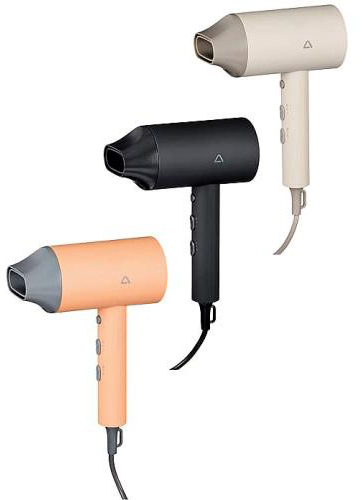
The Competition and Consumer Protection Commission (CCPC) issued an urgent recall notice on Wednesday, 21st October 2026, affecting approximately 5,400 Ambiano Ionic Hairdryers sold in Aldi stores nationwide between August and September 2025. The recall was announced after concerns emerged that the hairdryer’s power cord could become damaged over time, potentially exposing live electrical wires or causing overheating.
This could put users at risk of electric shock or fire, even if the hairdryer appears to be in perfect working condition. Four Colours Affected by the RecallThe recalled Ambiano Ionic Hairdryers were available in black, white, yellow and orange.
Customers are advised to check the following product codes: Black: 4061462195075 White: 4061462195211 Yellow: 4061462195310 Orange: 4061462195372
CCPC Issues Strong Warning to Consumers Adele O’Sullivan, Director of Market Surveillance at the CCPC, has urged anyone who purchased one of the affected hairdryers to stop using it immediately. She stressed that consumers should not take unnecessary risks with their safety, even if there are no visible signs of damage.
Aldi Offering Full Refunds Anyone who owns one of the recalled hairdryers should stop using it and return it to their nearest Aldi store for a full refund. With thousands of the products sold across Ireland, consumers are being encouraged to check their hairdryers and make family members and friends aware of the recall.
Please share this important safety warning, especially with anyone who shops at Aldi. It could help prevent a serious accident.
Pre-deceased by his wife Margaret; Mr Connolly passed away peacefully, surrounded by his loving family, while in the care of staff at Kiltipper Woods Care Centre, Kiltipper Road, Kiltipper, Dublin 24.
His passing is most deeply regretted, sadly missed and lovingly remembered by his sorrowing family; sons Liam, Shay, Paddy, Martin, Mick and Barry; sisters Mary and Sal, daughters-in-law Janet, Michelle and Lisa, sister-in-law, grandchildren, great grandchildren, nephews, nieces, extended relatives, neighbours and friends.
For those persons who would wish to attend Requiem Mass for Mr Connolly, but for reasons cannot, same can be viewed streamed live online, HERE.
The extended Connolly family wish to express their appreciation for your understanding at this difficult time, and have made arrangements for those persons wishing to send messages of condolence, to use the link shown HERE.
Bovine tuberculosis (TB) has been confirmed in pig herds on nine farms across five counties in Ireland during 2026, raising fresh questions about the spread of the disease, its impact on pig farmers, and the need for greater transparency over where infections have occurred.
The Department of Agriculture, Food and the Marine (DAFM) confirmed the cases in a report published on 21 October 2026. Laboratory testing identified the infection as Mycobacterium bovis, the bacterium responsible for bovine TB, a disease more commonly associated with cattle. Although TB has occasionally been detected in Irish pigs over the years, the Department has acknowledged an increase in infections during 2026. However, one important detail remains unanswered: which five counties are affected?
How Was TB Detected in the Pigs? Unlike cattle, which are subject to a national TB testing programme, pigs are generally not routinely tested for tuberculosis while on farms. Instead, infections are usually discovered during post-mortem veterinary inspections at meat processing plants. Where suspicious lesions are found, samples undergo laboratory examination to determine whether Mycobacterium bovis is present. According to the Department, most infected pigs do not display obvious clinical symptoms, meaning infection may remain undetected until slaughter. Following detection, affected farms may be required to undertake herd testing under veterinary supervision. Testing involves a skin test similar to that used in cattle, with results assessed approximately 72 hours later. Pigs confirmed to be infected are subsequently slaughtered.
Nine Farms Affected – A Significant Development. Ireland has approximately 300 pig farms, and the identification of infection on nine farms therefore represents around 3% of the country’s pig farms. While that does not mean 3% of Irish pigs are infected, the number of affected farms is significant enough to warrant further investigation. The report also indicates that one of the affected farms experienced particularly extensive infection throughout its herd. For pig producers operating in an already challenging economic environment, the consequences of TB infection can be substantial.
An additional concern is compensation. Unlike cattle farmers, pig producers do not contribute to the national bovine TB levy, and the Department has indicated that there is currently no equivalent compensation arrangement for affected pig farmers. This raises questions about the financial support available where infection results in the removal of animals.
Which Five Counties Have Been Affected? Despite confirming that nine pig herds in five counties have tested positive, the Department has not publicly identified those counties in the reporting examined for this article. Knowing the geographical distribution would help farmers and veterinary professionals better understand the situation. It would also allow comparisons with the established distribution of bovine TB in cattle. For example, cattle TB statistics for the 12 months ending August 31st 2025 identified particularly high herd incidence in veterinary districts covering North Tipperary, Wicklow, Meath and Dublin. Five veterinary districts across the above four counties recorded herd incidence above 10%, with both east and west Wicklow included. However, it is essential to emphasise that there is currently no evidence establishing that these are among the five counties affected by TB in pigs. Cattle TB incidence statistics cannot be used to identify the locations of pig herd infections. The publication of a county-level breakdown by the Department would remove this uncertainty without requiring the identification of individual farms.
Could There Be a Link Between TB in Cattle and Pigs? This is one of the most interesting aspects of the Department’s findings. The Department confirmed that whole-genome sequencing of Mycobacterium bovis isolates from infected pigs, has identified close genetic relationships with TB strains circulating locally. That finding suggests that the infection in pigs is connected to the wider regional epidemiology of bovine TB. However, a close genetic relationship does not establish the precise route of transmission. Bovine TB can affect several mammalian species, and possible transmission pathways require careful veterinary and epidemiological investigation. The important questions include whether infections are associated with local cattle, wildlife, contaminated environments or other sources. Establishing the source of infection is particularly important if further cases are to be prevented.
Is There a Risk to Consumers? The Department has confirmed that pigs passing the required ante-mortem and post-mortem meat inspections are considered fit for human consumption. Where suspicious lesions are identified during inspection, further laboratory investigation is undertaken. Although bovine TB is a ‘zoonotic disease’, meaning it can infect humans, the discovery of infected animals should not automatically be interpreted as evidence that contaminated pork has entered the food supply. The existing veterinary inspection system plays an important role in detecting potentially infected animals and protecting food safety.
TB Remains a Major Challenge for Irish Agriculture. The emergence of additional infections in pigs comes against the background of continuing efforts to control bovine TB in Ireland’s cattle population. In a parliamentary response on October 8th 2026, the Minister for Agriculture, Food and the Marine reported that national cattle herd TB incidence had declined to 5.40% for the 12 months ending September 27th 2026, compared with 6.08% one year, previously. Although this represents an improvement, TB remains a significant animal health and financial challenge. The Government introduced additional measures during 2026 under its Bovine TB Action Plan, including changes to cattle movement testing and disease-control requirements. The detection of TB in pigs illustrates that the disease is not exclusively a cattle issue and that wider animal health surveillance remains important.
Questions That Still Need Answers The Department’s confirmation provides valuable information, but several questions deserve further clarification:
How many of the nine affected farms are located in each county?
Were the cases linked to nearby cattle TB outbreaks or wildlife reservoirs?
Have veterinary investigations identified the likely source of infection?
Will compensation or other financial assistance be considered for affected pig producers?
Which five counties recorded confirmed TB infections in pigs during 2026?
The above are reasonable questions in the public interest. County-level information could be provided without disclosing the identity or exact location of individual farms.
Conclusion: More Information Is Needed The confirmation of bovine TB on nine pig farms across five Irish counties is an important development for the country’s pig sector. It also highlights the importance of post-slaughter surveillance, veterinary investigation and cooperation between farmers and the Department of Agriculture. The reported genetic relationship between strains detected in pigs and those circulating locally deserves further scientific attention. However, the geographical distribution of the cases remains unclear. Identifying the five affected counties would be a useful first step towards understanding the scale and potential sources of the problem. Until those details are released, speculation about the location of affected pig herds would be premature.
The Triple Lock is being debated in Dáil Éireann today, Wednesday, 21st October 2026.
But what exactly is it, and why does it matter to ordinary Irish people?
What is the Triple Lock? At present, before Ireland can send 12 or more soldiers on certain overseas military missions, three approvals are generally needed:
The United Nations (UN) must authorise the mission.
The Irish Government must approve it.
Dáil Éireann must also approve it.
Hence why it is called the Triple Lock.
What does the Government want to change? The Government wants to remove the need for UN approval. The Irish Government and Dáil would still have to agree before our troops could be sent on these missions.
Why does the Government want this change? At present, five powerful countries; America, Russia, China, Britain and France can each block decisions at the UN Security Council. This means that even if Ireland wants to send soldiers on a worthwhile peacekeeping mission, one of these countries could prevent the UN from approving it. The Government believes Ireland should make its own decisions rather than depend on these powerful countries.
Could this be good for Ireland? Yes. There are some possible benefits. Ireland could make more of its own decisions. Irish soldiers could take part in more international peacekeeping missions. Our Defence Forces could gain valuable experience. Ireland could work more closely with other European countries. We could help protect people in countries affected by conflict, even when the UN Security Council cannot agree.
But what are the dangers? There are genuine concerns. Removing UN approval takes away an important safeguard. Future governments might face pressure to join military operations overseas. Irish soldiers could become involved in controversial or dangerous missions. Some people fear this could gradually weaken Ireland’s military neutrality.
Would Ireland be giving up its neutrality? No, not automatically. Ireland would not suddenly become a member of NATO. We would still have our own Government and Dáil making decisions. However, future governments would have more freedom to decide which overseas military missions Ireland joins. That is why this debate matters.
What would be best for Ireland? Many people believe Ireland should be able to make its own decisions without Russia, China, America or any other powerful country having the final say. But that freedom must come with strong safeguards. Our soldiers should only be sent overseas for lawful missions with clear peacekeeping or security purposes, and any decision should face proper scrutiny in the Dáil. Above all, Ireland should protect its long-standing reputation as a neutral country committed to peace. The Triple Lock should not be removed unless stronger legal safeguards are put in place first. Irish neutrality must be clearly protected in law, not simply promised by politicians. Before our soldiers are sent overseas, there should be proper Dáil approval, independent legal checks and clear proof that the mission is lawful and genuinely necessary. Ireland must never become involved in unlawful wars or military operations that undermine our independence. We must also protect our Defence Forces. Every overseas mission should have a clear purpose, proper equipment, an assessment of the dangers involved and regular reviews by the Dáil. There should also be meaningful public consultation before major changes are made to our neutrality protections. The Government argues that removing the UN approval requirement would give Ireland greater freedom to participate in peacekeeping. That is a reasonable argument, but greater freedom must come with greater accountability, not fewer safeguards. Above all, we must remember that governments come and go. Any new law must protect Ireland not just today, but for future generations. The public view is simple; Ireland should remain independent, militarily neutral and committed to peace, while retaining the freedom to make its own decisions. We should strengthen those protections before changing the Triple Lock, not afterwards
In conclusion changing the Triple Lock could benefit Ireland, but simply removing UN approval is not enough. We need a system that gives Ireland greater independence, while protecting our neutrality and ensuring that Irish soldiers are never sent into unnecessary conflicts.
This website uses cookies to improve your experience. We'll assume you're ok with this, but you can opt-out if you wish.AcceptRead More
Privacy & Cookies Policy
Privacy Overview
This website uses cookies to improve your experience while you navigate through the website. Out of these, the cookies that are categorized as necessary are stored on your browser as they are essential for the working of basic functionalities of the website. We also use third-party cookies that help us analyze and understand how you use this website. These cookies will be stored in your browser only with your consent. You also have the option to opt-out of these cookies. But opting out of some of these cookies may affect your browsing experience.
Necessary cookies are absolutely essential for the website to function properly. This category only includes cookies that ensures basic functionalities and security features of the website. These cookies do not store any personal information.
Any cookies that may not be particularly necessary for the website to function and is used specifically to collect user personal data via analytics, ads, other embedded contents are termed as non-necessary cookies. It is mandatory to procure user consent prior to running these cookies on your website.






Recent Comments