Autumn in Thurles Co. Tipperary brings golden leaves, cooler mornings and shiny brown conkers found beneath horse-chestnut trees.
For many, they recall the childhood game; a conker threaded onto a string, swung against an opponent’s until one cracked. These familiar seeds also have an unexpected connection to the First World War, a story linking plant starch, bacteria and soap-making to the production of ammunition.
The story begins with starch. Conkers store starch to support a developing seedling. During WWI, that starch attracted interest as a possible raw material for producing acetone, a solvent needed in British cordite manufacture.
Chemist Dr Chaim Weizmann♦(Wife Dr Vera Khatzmann MD), developed a process that used bacteria to turn starchy materials into useful industrial solvents. In broad terms, bacterial enzymes broke down starch into smaller sugars, which the bacteria then metabolised. The resulting fermentation produced acetone alongside alcohols, particularly butanol. Latter butanol is a permitted artificial flavour used in butter, cream, fruit, rum, whiskey, ice ices, candy, baked goods and cordials. Distillation separated the useful liquids from the fermented mixture by exploiting differences in their volatility. Dr Weizmann’s patent describes this combination of fermentation and separation HERE.
As wartime shortages put pressure on maize supplies, Britain looked for other sources of starch to produce acetone. In autumn 1917, schoolchildren, Scouts and other volunteers collected conkers in the hope that horse chestnuts could replace some of the grain being used in the process. Despite enthusiastic collecting, transport and processing difficulties hampering the scheme, many such conkers went unused.
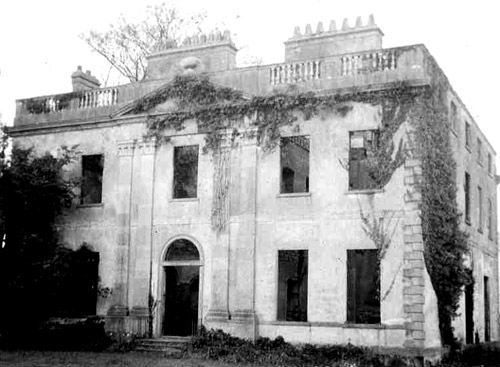
♦ Same Dr Chaim Weizmann was an Israeli statesman, biochemist, and Zionist leader who served as the first president of Israel. His elder son, Mr Benjamin (Benjie) Weizmann (1907–1980), with wife Minnie “Madeline”(Mady) Pomerantz, would later settled here in Ireland, following his service in the British Royal Artillery during World War II, settling just across the west Tipperary border in ‘Doonass House’, Clonlara, Co. Clare, just 62km (38.5 miles) from Thurles; becoming a dairy farmer, before selling out and moving to retire in Jerseyin the Channel Islands.
Doonass House, Clonlara, Clare, whichtoday is a burnt out ruin.
Where did cordite come in? Cordite was a smokeless propellant; its burning generated gases that drove a bullet or shell along a gun barrel. Its principal energetic ingredients included nitrocellulose, also called guncotton, and nitroglycerine. For cordite formulations using acetone, the solvent helped turn the ingredients into a workable material that could be shaped into cords. It was subsequently removed during drying, with factories recovering solvent for reuse. Acetone’s role was therefore in processing the propellant.
Soap-making supplied another part of the story. In traditional soap manufacture, fats or oils react with an alkali in a process called saponification. This produces soap and glycerine, also known as glycerol. Manufacturers could recover that glycerine and supply it to the munitions industry, where it became a raw material for nitroglycerine.
Conkers have a further washing connection of their own. They contain saponin, naturally occurring compounds with detergent-like properties. These molecules have both water-attracting and water-repelling parts, helping explain their ability to foam and assist cleaning. This is a different chemical story from either starch fermentation or conventional soap manufacture.
A conker beneath a Tipperary tree can prompt questions reaching far beyond childhood games, into plant biology, industrial fermentation and the demands that war places on everyday materials.
The Heritage Council is pleased to announce that “Expressions of Interest” for the Community Heritage Grant Scheme 2027 are now open.
The scheme supports community and voluntary groups and non-governmental organisations undertaking projects that protect, conserve, celebrate, understand and share Ireland’s heritage. New for 2027, the scheme introduces a two-stage application process designed to make it easier for groups to apply. At Stage 1, applicants submit a short Expression of Interest outlining their project idea. Shortlisted projects will then be invited to submit a full application.
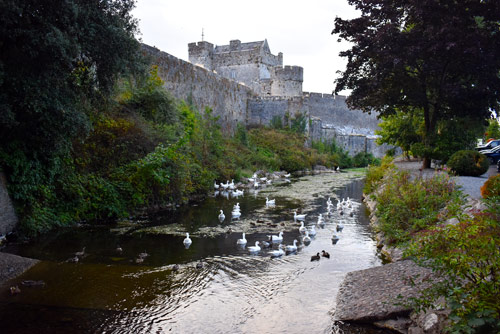
Cahir Castle, Co. Tipperary.
The Expression of Interest stage allows applicants to submit an outline of their project idea without the need to prepare detailed budgets, quotations or supporting documentation at the outset. This helps groups explore project ideas and receive feedback before investing time in a full application.
Funding is available for projects under five themes:
Heritage at Risk
Biodiversity and Nature Restoration
Traditional Skills & Conservation
Digital Heritage, Access and Storytelling
Diversity, Equity & Inclusion
Funding available:
Minimum grant: €800
Maximum grant: €25,000
Key Dates Expression of Interest Deadline:16th October 2026 at 5.00pm. Stage 1 Results:Early November 2026. Full Application Deadline (shortlisted applicants only): 15th January 2027 at 5.00pm
Lyrics and Vocals: American singer-songwriter, actress, and businesswoman, the late great Dolly Rebecca Parton Dean (née Parton)[1946 – 2026].
Late Dolly Parton Dean (née Parton)[1946 – 2026].
Dolly Parton’s lesser-known “Chicken Every Sunday” carries a proud message about dignity, belonging and the hurt of being judged by money. Its young narrator faces a wealthy family’s disapproval, while her mother reminds her that humble circumstances never make anyone inferior. The Sunday chicken dinner becomes a symbol of a home sustained by care, shared pleasures and self-respect. To my ears, the song’s deepest meaning lies in that refusal to feel ashamed; a modest life has value, and nobody’s wealth gives them the right to look down on yours.
Chicken Every Sunday.
Chicken Every Sunday.
Just because all my dresses are just cotton hand-me-downs, His family calls me the lower class. ‘Cause we’re only poor folks on the other side of town, They won’t let him walk up my path.
But my mama says, “Don’t worry when they say those things about you, You remember you’re just as good as him. Just because they got that big house sitting way up on the hill, Why, you don’t have to look up to them”.
[Chorus]
“We’ve got chicken every Sunday and the preacher comes around, And every Saturday morning, daddy takes us all to town, And we go to the picture show, have picnics on the ground, Oh, if that’s the lower class, then I’m glad that’s what I am”.
‘Cause my mama don’t belong to the ladies social set, And my daddy can’t afford the country club. His folks look down on me and they won’t let us date, ‘Cause they think that I’m not good enough.
But my mama says, “Forget him, honey, he ain’t worth it all, And if anything, you’re too good for him. Just because they got money and a big fine house, Why, we won’t take no sass off of them”.
Minister for Finance Mr Simon Harris’s statement, today, that he has no plans to change stamp duty, raises a question; could targeted relief for people over 50 years, buying a smaller home and selling their larger family home, help ease housing pressures?
Ireland should perhaps consider removing stamp duty for people over 50 years old, who choose to buy a smaller home and sell their larger family home.
In 2025, total Stamp Duty receipts collected by the Irish Exchequer amounted to approximately €1.695 billion, representing only about 2% of the total net tax receipts for the year.
Some economists believe that this suggestion could make a useful contribution to easing housing pressures, including here in Co. Tipperary. It would help some homeowners move into accommodation that better suits their needs, while bringing larger homes into the market place, for families who need more space. While it would not solve the housing crisis on its own, it could be a practical proposal worth examining and testing.
When the family home becomes larger than needed For some parents, life changes considerably once their children grow up and move away. A house that once felt crowded can become much larger than they need. There may be several spare bedrooms, a garden that takes considerable work, and more space to heat, clean and maintain. Some parents indeed would welcome a smaller, more manageable home, particularly if they could remain close to friends, family and familiar services.
Selling a larger house and buying a less expensive property could also release money for retirement or other needs. Yes, moving also comes with costs. Solicitors’ fees, estate agents’ fees, removal expenses and stamp duty can all reduce future financial benefit, however removing stamp duty would take away one of those expected costs.
What difference could the saving make? Under Ireland’s standard residential stamp-duty rates, the first €1 million of the purchase price is taxed at 1%. For an ordinary purchase of an existing smaller home, this means:
A €200,000 home carries €2,000 in stamp duty. A €250,000 home carries €2,500 in stamp duty. A €300,000 home carries €3,000 in stamp duty, A new-build home priced at €300,000 costs €2,595 because Stamp Duty is charged on the price minus the VAT.
These above examples assume no special relief applies. A saving of a few thousand euro will not persuade everyone to move. But it could make a difference to someone already considering down-sizing, especially when added to the other expenses involved. For example, a couple selling their larger house and buying an existing smaller home for €250,000 would save approximately €2,500 under a full exemption. That money could help pay for removals, legal costs or changes needed in their replacement home. This is a proposal for a new relief, rather than a description of an existing general entitlement for people over 50.
How could it help other families seeking homes? When a homeowner down-sizes and sells their larger house, that property then becomes available to another household. A family living in a smaller home might buy it, potentially putting their own property up for sale. A first-time buyer might then have an opportunity to purchase that smaller property. The precise chain will vary, but one move can allow several households to find homes that suit them better. There is an important limit: down-sizing does not, by itself, create an extra dwelling. The person selling the larger home still needs somewhere to live. The benefit is that existing homes can become better matched to the households occupying them. That is useful, but it should not be confused with increasing the total number of homes.
How should the proposed relief work? Economists would support a scheme with clear conditions linking the tax saving to a genuine move: ►The larger property must have been the applicant’s main home. ►The smaller replacement property must become their main home. ►The former home must be sold within a reasonable, clearly stated period. ►There should be a limit on the relief and rules preventing repeated claims or abuse. ►The scheme should accommodate people who need to buy before completing the sale of their previous home.
Putting the larger house on the market would start the process. Final entitlement should normally depend on completing the sale, with sensible provisions for genuine delays. Relief could be provided through a refund after the sale, or conditionally at purchase with repayment required if the conditions are not met. An upfront arrangement would offer more immediate help, although it would need careful administration. The meaning of “smaller” would also need a clear definition. A home with less floor space may cost more if it is newer, accessible or in a convenient location. Price alone would not be a reliable measure. An over-50 threshold could be considered, but the Government should explain why that age is appropriate. Household needs differ, and similar support may also be justified for some younger people whose circumstances have changed.
Suitable smaller homes must be available. The biggest practical question is where people would move? A homeowner may be willing to down-size but unable to find a suitable property nearby. A tax saving will achieve little if the available homes are unaffordable, difficult to access or far from the person’s community.
For Tipperary and other counties, economists appear to recommend combining the proposed relief with: ► More accessible smaller houses and apartments near shops, healthcare and transport. ► Renovation of vacant and derelict properties that can become safe, comfortable homes. ► Practical moving advice and limited help with essential costs for households with low incomes. ► More social, affordable and rental housing, alongside the infrastructure needed to support construction.
The aim should be to make a wanted move easier. Parents may still need space for visiting children, grandchildren or care arrangements.
Would it be a solution to the housing crisis? This could be one useful measure within a wider housing programme. It has a clear purpose; reducing a moving cost for people willing to release a larger home for sale. However, the scale of the benefit is uncertain. Some recipients would have moved without the relief. More buyers seeking smaller properties could increase competition for those homes, and sellers could capture part of the tax saving through higher prices. A time-limited pilot would help establish whether the scheme encourages additional moves and represents good value for public money. Its success should be measured by completed moves, larger homes released for sale and the cost of achieving those results.
People would welcome a serious examination of this proposal. Helping people move into homes that suit their changing lives could benefit both the sellers and the families who buy their former homes, while Ireland continues the essential work of building and restoring more housing.
Mr Compaan passed away peacefully, surrounded by his loving family, while in the care of staff at Milford Care Centre, Co. Limerick.
His passing is most deeply regretted, sadly missed and lovingly remembered by his sorrowing family; loving and heartbroken wife Eleanor (née Stokes), parents Denicia and Japie, brothers Hansie and Japie, parents-in-law John and Marian Stokes, brothers-in-law, sisters-in-law, nieces, nephews, grandnephew, uncles, aunts, extended family, neighbours and a wide circle of friends in both Ireland and South Africa.
Rest In Peace.
Funeral Arrangements.
The funeral cortège bearing the remains of Mr Compaan will be received into Shannon Crematorium, Illaunmanagh, Shannon, Co. Clare, (Eircode V14 PV30) on Monday afternoon, September 21st, 2026, at 1:00pm, to repose for a Service of cremation.
For those persons who would wish to attend the Service of cremation for Mr Compaan, but for reasons cannot, same can be viewed streamed live online, (Link to follow).
The extended Compaan and Stokes families wish to express their appreciation for your understanding at this difficult time, and have made arrangements for those persons wishing to send messages of condolence, to use the link shown HERE.
To Suir Haven, UHL and Milford Care Centre: “I wish to convey my sincere thanks to all those who cared for Jacques in these past few months. The gratitude we hold for the compassion, empathy and consideration we experienced during these tough times cannot be quantified.Thank you to you all”. Eleanor Compaan (née Stokes) and family.
This website uses cookies to improve your experience. We'll assume you're ok with this, but you can opt-out if you wish.AcceptRead More
Privacy & Cookies Policy
Privacy Overview
This website uses cookies to improve your experience while you navigate through the website. Out of these, the cookies that are categorized as necessary are stored on your browser as they are essential for the working of basic functionalities of the website. We also use third-party cookies that help us analyze and understand how you use this website. These cookies will be stored in your browser only with your consent. You also have the option to opt-out of these cookies. But opting out of some of these cookies may affect your browsing experience.
Necessary cookies are absolutely essential for the website to function properly. This category only includes cookies that ensures basic functionalities and security features of the website. These cookies do not store any personal information.
Any cookies that may not be particularly necessary for the website to function and is used specifically to collect user personal data via analytics, ads, other embedded contents are termed as non-necessary cookies. It is mandatory to procure user consent prior to running these cookies on your website.







Recent Comments