In her 100th year and pre-deceased by her husband Pat and her brother Jerry; Mrs Ryan passed away peacefully, surrounded by her loving family, while in the care of staff at The Residence Nursing Home, Bohernatounish Road Roundabout, Loughboy, Co. Kilkenny.
Her passing is most deeply regretted, sadly missed and lovingly remembered by her sorrowing family; loving daughter Norah (Keogh), sons Tom, EJ, Gerard (Bishopstown) and Dermot (Kiltoom), son-in-law Kevin, daughters-in-law Phil, Alma, Irene and Helen, grandchildren, great grandchildren, sister Mollie (Bourke), sister-in-law Eileen (Dunne), nieces, nephews, extended relatives, neighbours and many friends.
Requiem Mass for Mrs Ryan will be offered on Saturday morning, October 10th, at 11:00am, followed by interment, immediately afterwards in Kilbride Cemetery, Callan, Co. Kilkenny.
For those persons who would wish to attend Requiem Mass for Mrs Ryan, but for reasons cannot, same can be viewed streamed live online, HERE.
The extended Ryan and Dunne families wish to express their appreciation for your understanding at this difficult time, and have made arrangements for those persons wishing to send messages of condolence, to use the link shown HERE.
The Irish Government has decided that RTÉ will receive €240 million in public funding in 2027 instead of the €260 million previously promised.
That statement raises two important questions: Is the Government justified in holding back the extra €20 million? And has RTÉ delivered the reforms it promised in return for such substantial public funding?
RTÉ Director General Mr Kevin Bakhurst strongly disagrees with the Government’s decision. He says RTÉ planned its future on the basis of a three-year Government funding commitment and that changing the figure at this late stage will affect its five-year strategy. And he has a point. But taxpayers are also entitled to look at what RTÉ promised to deliver in return. What happened to the promised staff reductions? One of RTÉ’s major reform commitments was to become a smaller and more efficient organisation. RTÉ’s strategy proposed reducing its workforce by up to 400 positions, roughly 20% of its workforce, over the five-year transformation programme. Its 2025 Voluntary Exit Programme was therefore an important first test. RTÉ received 325 applications from staff wishing to leave, and RTÉ itself said its target for 2025 was “over 100” exits under the voluntary scheme. What actually happened? Only 67 employees left through the Voluntary Exit Programme in 2025. RTÉ also abolished or “suppressed” another 30 posts, giving a headline figure of 97 positions removed.
But there is an important distinction. Sixty seven people actually left through the redundancy programme. The additional 30 were posts removed following other departures or organisational changes. Therefore, against RTÉ’s own stated target of more than 100 voluntary exits in 2025, only 67 were achieved. That means the actual redundancy programme delivered roughly two-thirds of its first-year target. And RTÉ still has a very considerable distance to travel if it is to achieve its overall ambition of reducing staff numbers by up to 400.
RTÉ’s own internal review subsequently acknowledged that the voluntary exit scheme failed to produce departures on the scale required. It found that the criteria were restrictive, the application period was too short and that, if the experience were repeated, RTÉ might have to make around 500 offers to achieve 300 exits. That surely strengthens the Government’s argument that the promised transformation has not progressed as quickly as expected.
What about RTÉ’s €22.5 million surplus?
RTÉ reported a €22.5 million surplus for 2025. At first glance that produces an obvious question: Why does an organisation reporting a €22.5m surplus need another €20m from Government? The answer is more complicated. RTÉ says some planned expenditure was postponed into 2026 and that part of the surplus arose from accounting adjustments rather than cash sitting unused. It also says €9.6 million resulted from the release of accounting provisions and accruals, so that portion should not simply be regarded as spare cash.
Nevertheless, taxpayers are entitled to ask:
Exactly which projects were postponed?
How much did each project cost?
How much of the €22.5m surplus represented genuine underspending?
And why isn’t that information presented in a simple, easily understood breakdown?
RTÉ receives much more than €240 million overall. There is another important point often overlooked in this debate. RTÉ does not operate on €240 million alone. In 2025 its total revenue was approximately €383.4 million. That included licence-fee income, additional Government funding and substantialcommercial income from advertising and other activities. So the €240m being discussed is RTÉ’s public-funding allocation, is not the broadcaster’s entire annual income. RTÉ operates television channels, radio stations, news services, RTÉ Player, digital services, regional reporting, Irish-language broadcasting, sport, drama, entertainment, documentaries and cultural programming. Nobody seriously suggests all of this can be provided for nothing. But when hundreds of millions of euro of public money are involved, the public is entitled to know exactly what it is buying.
Where is all the money going? There should be a straightforward annual statement telling taxpayers:
How much goes on staff?
How much goes on management?
How much goes on television and radio programmes?
How much goes on sports rights?
How much goes to independent producers?
How much goes on buildings and property?
How much goes on technology?
How much has actually been saved?
And crucially, How many of the promised redundancies and staff reductions have actually happened?
The Government certainly has questions to answer. It publicly committed itself to predictable multi-year funding and RTÉ understandably made plans on that basis, but RTÉ also made commitments. It promised a smaller, more agile organisation and proposed reducing staffing by up to 400 positions. In the first major voluntary redundancy programme, RTÉ sought more than 100 exits. Despite receiving 325 applications, only 67 people ultimately departed under that scheme. That cannot reasonably be described as the level of progress originally envisaged. Public funding should come with public accountability. So perhaps the real question is not simply whether RTÉ should receive €240m or €260m.
It is this: Before another €20 million of taxpayers’ money is handed over, shouldn’t RTÉ be required to show clearly how the money already provided has been spent, why its redundancy programme fell short of its own target, how it intends to achieve the promised reduction of up to 400 positions and exactly what measurable reforms the public/taxpayer is getting in return?
Two of County Tipperary’s most famous visitor attractions, Cahir Castle and the Rock of Cashel, have an unexpected connection to a new showbusiness love story after “The Wayfinders” co-stars Issy Knopfler(English television actress and producer) and Sam Buchanan(English television and film actor) announced their engagement.
Issy, the daughter of ‘Dire Straits’ legend Mark Knopfler, and actor Sam Buchanan met while working on the fantasy adventure series, which made extensive use of Ireland’s and Tipperary’s historic landscapes.
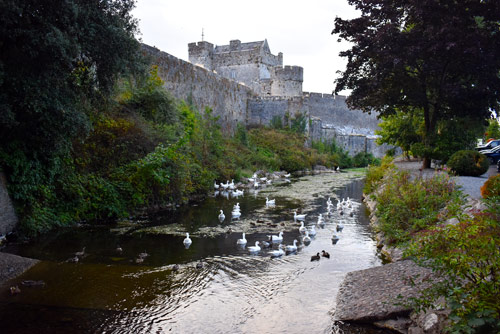
Cahir Castle.
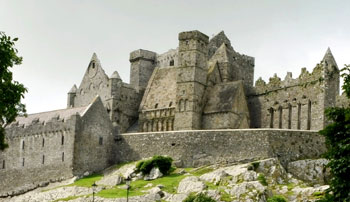
Of particular interest to Tipperary is the fact that filming for “The Wayfinders” took place at Cahir Castle and beside the spectacular Rock of Cashel. The production also filmed around counties Limerick and Clare, using the Mid-West’s castles, woodland and ancient sites to create its medieval fantasy world. Battle scenes were among those shot in the Cashel area.
That gives two of Tipperary’s best-known tourist landmarks another screen credit. Cahir Castle, dramatically positioned on a rocky island in the River Suir, is one of Ireland’s largest and best-preserved medieval castles, while the Rock of Cashel is among the country’s most instantly recognisable historic sites. Their imposing towers, stone walls and remarkable settings make both natural choices for a fantasy production centred on a medieval world.
Rock of Cashel.
“The Wayfinders” follows three high-school students who are transported into a dangerous realm of swords, magic and monsters and must find a route home. Issy plays ‘Aurora’, while Sam stars as ‘Kavan’. Their working relationship developed into romance, and the couple have now revealed their engagement following Sam’s proposal during a romantic break. The announcement was made in early October 2026, two years after the pair first met while working on the series. Both actors were already familiar faces. Sam previously appeared as ‘Fitzy’ in EastEnders, while Issy’s television credits include “Silent Witness” and “Before We Die”. The couple have also moved behind the camera together, launching independent production company ‘Silent Knight Productions’, in November 2025.
For Tipperary, however, the story provides another reminder of the extraordinary screen potential of Cahir Castle and the Rock of Cashel; two historic attractions now forming part of the backdrop to a fantasy series and the real-life romance that grew from it.
As Halloween approaches, communities are being reminded of the very real dangers associated with illegal fireworks.
Fireworks can cause devastating burns, serious eye and facial injuries, permanent damage to hands and fingers, and other life-changing injuries. Their unpredictable nature means they can ignite unexpectedly, explode while being held or carried, or become dangerous projectiles when thrown or placed on bonfires.
The impact goes far beyond the person using them. Sudden explosions can cause significant distress to older people, young children, people with disabilities and other vulnerable members of the community. They can also place additional pressure on firefighters, paramedics, Gardaí and other emergency services during an already busy period.
Animals can suffer greatly too. The loud and unpredictable bangs can cause extreme fear and anxiety for pets, horses, livestock, birds and other wildlife. Frightened animals may bolt, escape from homes or gardens, or injure themselves while trying to get away. For Guide Dogs, Assistance Dogs and other working dogs, the effects can be particularly serious. Fireworks-related trauma can affect a dog’s ability to work, potentially impacting the independence and mobility of the person who relies on them.
There can also be serious legal consequences. Illegal possession, supply and misuse of fireworks can result in prosecution. Certain offences can carry penalties of up to €10,000 in fines and five years’ imprisonment. Parents and guardians are encouraged to speak to young people about these risks and not to purchase illegal fireworks for them. Instead, enjoy Halloween safely by attending professionally organised and authorised fireworks displays in your local area.
Halloween should be memorable for the right reasons.Think before using fireworks. Protect yourself, protect animals, respect your neighbours and help keep your community safe.
Not before time, owners of derelict properties across Co. Tipperary are facing a tougher new regime as the Government moves to increase pressure on long-neglected buildings and bring more vacant properties back into use.
Budget 2027 has put dereliction firmly back on the agenda, with plans for a new ‘Derelict Property Tax’ intended to strengthen enforcement nationally. For Tipperary, however, the crackdown is already well under way. Tipperary County Council says the number of properties on its Derelict Sites Register rose from 84 in January 2025 to more than 120 by the end of that year, as its Vacant Homes Team stepped up efforts to identify neglected buildings and engage with owners. The Council has also initiated compulsory purchase proceedings, with one property already transferred into Council ownership.
Owners face a clear choice. At present, once a property is entered on the Derelict Sites Register, Tipperary County Council can require its owner to carry out works to remove the dereliction. Failure to act can lead to financial penalties, an annual levy equivalent to 7% of the property’s market value, court proceedings or, ultimately, the property being acquired through a Compulsory Purchase Order.
That means the message to owners is becoming increasingly clear:
Repair it. Sell it. Bring it back into use. Or face escalating intervention.
Tipperary is already identifying more properties The increase in properties appearing on the county’s register is significant. Rather than waiting for complaints alone, the Council says its teams have been actively identifying vacant and derelict sites throughout Co. Tipperary and intensifying engagement with owners. Residents can also report suspected vacant or derelict properties, which the Council’s Vacant Homes Team can then investigate and follow up with the owner. This could have major implications for all towns and villages where abandoned houses, former shops and deteriorating buildings have remained unused for years.
But there is money available to save these buildings The Government’s approach is not based solely on taxation and enforcement. Owners and purchasers of qualifying properties in Tipperary can currently receive up to €50,000 through the Vacant Property Refurbishment Grant, with an additional €20,000, where the building is confirmed as derelict. That means a qualifying derelict property could receive grant assistance of up to €70,000 to bring it back into residential use. The scheme is already having a substantial impact locally. By the time Tipperary County Council prepared its 2026 budget, it had received 784 applications, approved 576 of them and recorded more than €33 million in housing investment through the programme. More than 200 completed properties had already returned to occupation.
Empty rooms over shops are also being targeted. A further initiative launched this year could make a significant difference to Tipperary’s town centres. Since March 2026, grants of up to €135,000 have been available to help convert qualifying vacant space above commercial premises into homes. There is also additional funding where an entire former commercial building is being converted into multiple residential units. These measures could prove particularly important in traditional Tipperary town centres, where many street-level shops remain in use, while upper floors have stood empty for decades.
A major test for Tipperary, The policies are now in place. The real question is whether enforcement will follow. Tipperary has hundreds of buildings and sites capable of becoming homes, businesses or community facilities instead of remaining boarded up and deteriorating. The Government and local authorities are increasingly combining grants for those willing to act with financial penalties and compulsory purchase powers for properties that remain derelict. For owners, the days when an abandoned building could simply be left untouched indefinitely may be coming to an end. For the people of Tipperary, the hope will be that this new push does more than add names to a register.
The real measure of success will be seeing boarded-up and crumbling properties restored, occupied and brought back into the life of our towns and villages.
This website uses cookies to improve your experience. We'll assume you're ok with this, but you can opt-out if you wish.AcceptRead More
Privacy & Cookies Policy
Privacy Overview
This website uses cookies to improve your experience while you navigate through the website. Out of these, the cookies that are categorized as necessary are stored on your browser as they are essential for the working of basic functionalities of the website. We also use third-party cookies that help us analyze and understand how you use this website. These cookies will be stored in your browser only with your consent. You also have the option to opt-out of these cookies. But opting out of some of these cookies may affect your browsing experience.
Necessary cookies are absolutely essential for the website to function properly. This category only includes cookies that ensures basic functionalities and security features of the website. These cookies do not store any personal information.
Any cookies that may not be particularly necessary for the website to function and is used specifically to collect user personal data via analytics, ads, other embedded contents are termed as non-necessary cookies. It is mandatory to procure user consent prior to running these cookies on your website.







Recent Comments