|
|
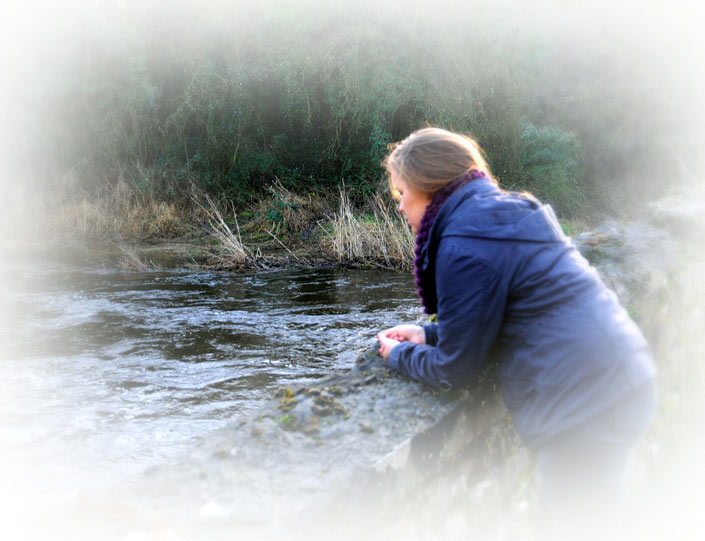
The Bright Side Of Loneliness
© Author & Poet Tom Ryan.
I have lived my life on the bright side of loneliness.
Scorned the darkest secrets of within,
Laughed at them nervously and then
Resolved to on and onward go again,
Till those dark shadows
Steal around my soul once more.
Unbidden, unexpected and dark as black,
Memories of some deep hurt of yore.
Life is what is, you can’t take back,
But yet I hold this world a splendid place,
And splendid too each feeling, human heart.
And every girl I loved had special grace,
And every man some virtue to respect.
Little after that I sought – a roof, a bed and fire,
A little bit to eat and drink and love.
And I have all and no more to desire
From this great earth or from my God above.
End
Tom Ryan, “Iona”, Rahealty, Thurles, Co.unty Tipperary
You have all heard of the Cliff’s of Moher; the Doolin Cave; the Aillwee Cave; the Tipperary – Mitchelstown Caves and now here in Co. Tipperary a new tourist attraction has been developed by Tipperary Tourism; welcome to the “Potholes of Ballycahill“, situated near, Thurles, here in Co. Tipperary.
No brown directional signposts have been erected as yet, but one such heart-shaped hole can be found coming up to the 80k speed sign, found when exiting this most picturesque of rural village. (See photograph below.)

It was right here that last Friday a motorist, travelling to Limerick, seriously damaged a front brake disk, resulting in one his front wheels heating up to such an extent that it buckled, forcing him to abandon his vehicle.
Meanwhile on the direct route from Thurles to Templetuohy, again here in Co. Tipperary; local residents appear to be filling their own tourist attractions after dark, much to the annoyance of local County Councillors.
Same Councillors are aware that if our young people, forced to emigrate for work from the area since 2008, were attracted to return home on holidays from abroad, they could claim evidence of higher tourism figures visiting the Premier County.
Ah Yes, Tipperary, the Place, the Time.
 It was with great sadness that we learned of the death, on Wednesday last, May 9th 2018, of Mrs Mona Pollard (née Pearson), formerly of Finglas Park, Dublin 11; late of Navan Road, Dublin 7; and Grange, Thurles, Co. Tipperary.
Loving wife of the late Joseph; Mrs Pollard passed away peacefully at her home surrounded by her loving family.
Her passing is most deeply regretted by her daughters Linda, Marian and Kathleen; sons in law Jimmy, Declan and Michael; grandchildren; great-grandchildren; sisters Hilda and Doris; extended relatives; neighbours and friends.
Funeral Arrangements
The earthly remains of Mrs Pollard lay in repose at her home yesterday, Thursday 10th May, from 6.00pm to 8.00pm.
She further lay in repose at Doyle’s Funeral Home, Urlingford, Co. Kilkenny, today Friday, May 11th, from 6.00pm to 8.00pm.
A funeral service will be held, at Kilcooley Abbey, on tomorrow afternoon, Saturday May 12th, at 3.00pm, followed immediately afterwards by interment in Kilcooley Abbey Cemetery, Kilcooley Abbey, Thurles, Co. Tipperary.
A special thanks is expressed to the loving carers of Mrs Pollard; namely Margaret, Michaela, Tracey, Colette and all the team.
At Rest
Seamus O’Driscoll’s Garden Centre on the Mill Road, here in Thurles, Co. Tipperary, is as far as you need to travel over the next week or so, should you be on the lookout for something extremely rare and truly exotic.
By rare and exotic, I refer in particular to “The Handkerchief Tree” (Davidia involucrata ‘Birr Gold’) just one of the many rare trees, shrubs and plants located at this ‘Mecca’ of garden cultivation and management; all specimens which are strikingly unusual and delightfully strange, both in visual effect and in appearance.
 Pictures Left to Right: (1) French Lazarist missionary Catholic priest, zoologist, botanist and naturalist, Fr. Armand David, (1826 to 1900); (2) Davidia involucrata (The Handkerchief tree); (3) Kew Garden’s trained gardener, botanist, plant collector / hunter & explorer Ernest Henry Wilson, (“Chinese” Wilson – 1876 to 1930). The tree Davidia involucrata, was first named after French Lazarist missionary, Roman Catholic priest (Lazarist – A Catholic organization founded in 1625, at the priory of St Lazare in Paris, by St. Vincent de Paul, latter renowned for his compassion, humility and generosity to those found impoverished) and naturalist Fr. Armand David, who first described it, and who coincidently was also the first westerner to describe the Giant Panda Bear, native to south central China.
This deciduous Chinese native ‘Handkerchief Tree’ is also referred to as the ‘Dove Tree’; which can grow up to 20 metres in height (or 66 ft.) and is best acknowledged for its striking display of floral bracts in late spring. Its small, reddish purple flower heads surrounded by a pair of large, white bracts, same up to 30cms (1 ft) in length, said to resemble dangling handkerchiefs or doves perched on its branches. Foliage here is vivid green, heart shaped leaves with serrated edges and with fine points developed at each tip. Here also you will find that the very young leaves are strongly scented.
Henry Veitch (1840 – 1924)
The obituary of Henry Veitch, published in the Gardeners’ Chronicle on 12th July 1924 stated; “Sir Harry Veitch may be regarded as the most outstanding figure in contemporary horticulture, and during the last fifty years no one has exercised so great an influence on all things pertaining to gardening”.
It took some 35 years, following Fr. Armand David’s formal description given back in 1868, before the ‘Handkerchief Tree’ eventually arrived into Britain. While preserved specimens of Davidia involucrata had been sent to Kew Gardens, it was the eminent English horticulturist and nurseryman, Sir Henry Veitch, (Latter instrumental in establishing the now famous Chelsea Flower Show), who insisted on obtaining some seeds from which to propagate the tree. In 1899 he commissioned a bright young prize-winning botanist, Ernest Wilson, to travel to China to locate the ‘Handkerchief Tree’. This proposed trip presented something of a challenge for the 22-year-old Wilson, who had had never travelled abroad previously and did not speak one solitary word of the Chinese language.
Nevertheless, following some six months stay at Veitch’s Coombe Woods Nursery, Wilson then travelled west towards China, staying for five days at the Arnold Arboretum in Boston, Massachusetts. Here he studied identified and established techniques involving the shipping of seeds and plants, without causing damage, before continuing to cross the United States by train; eventually sailing from San Francisco, to reach Hong Kong in June of 1899.
With difficulty, he eventually located a specimen of ‘Handkerchief Tree’ in Yichang city, in the western Hubei province of China. It was from this same first trip that Wilson would also introduce to Britain ‘Actinidia deliciosa’, or the Chinese gooseberry, better known today to supermarket shoppers as Kiwifruit.
Irish Botanist and Sinologist, Professor Dr. Augustine Henry (1857 to 1930).
Just a 53 minute drive, travelling north some 55.7 km via the N62, we reach the town of Birr in Co. Offaly. Here in the formal garden at Birr Castle, a “Handkerchief Tree” grew, before its death in 1980. This was propagated by Hillier’s Nursery in Ampfield, Hampshire and young plants were, I believe, planted at Birr Castle.
It is believed that the cultivar that resulted in ‘Birr Gold’ may have been a seedling from one of the original introduced here into Ireland. Certainly, Professor Dr. Augustine Henry; latter an Irish Botanist and Sinologist (Sinologist meaning person with knowledge pertaining to all things Chinese including language, literature, culture and history), further prompted the sending of Ernest Wilson to China with secret instructions to locate the ‘Handkerchief Tree’.
If you are around Thurles in the coming days, why not find your way to O’Driscoll’s Garden Centre, Mill Road, to view “up close and personal”, this rare and unusual tree, and marvel, while recognising the sheer beauty, complexity and equilibrium that is openly displayed to our world, courtesy of Mother Earth.
 WEEE Ireland [ Waste Electrical and Electronic Equipment (Scroll down to bottom of page for to view and confirm stated attendance dates)], will be collecting, free of charge, old and broken electrical appliances, here in Thurles and in Templemore in the coming weeks.
Remember WEEE material is anything with a plug normally attached and WEEE Ireland will be making their next collection here in Thurles on Saturday May 19th 2018, between the hours 10.00am and 4.00pm. The central collection area chosen on the above date is the Mid-Tipperary Mart Yard, Stradavoher, Thurles.
Our Templemore readers should note that a similar collection is taking place in their area from Templemore Mart Car Park, Templemore, just one week later, on Saturday 26th May, 2018.
Remember: TVs and their Aerials, Radios, Microwaves, IT Equipment, Printers, Dishwashers, Cookers, Fridges, Freezers, Power Tools, Vacuum Cleaners, Battery Operated Toys, Electric Toothbrushes, Kettles, Toasters, Batteries and all other associated items are totally acceptable.
So here is the perfect opportunity to bring along your old electrical appliances, currently left clogging up your shed /garage and have same recycled.
Remember also this is a completely FREE service, which eliminates that temptation to dump illegally in our most beautiful of Irish counties, Co. Tipperary.
|
Support Us Help keep Thurles.info online by donating below. Thank you.
Total Donated 2026: €300.00
Thank You!
Daily Thurles Mass Livestream
|



Recent Comments