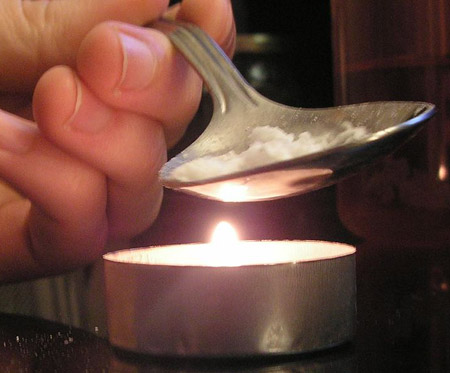
Yesterday, (14/08/2019), a male in his 30’s was arrested by Gardaí after they discovered cannabis herb worth €40,000 and cocaine worth €70,000, in a motor vehicle driven by the accused.
Following a search, the arrest took place on the R503 close to the Limerick border, in the vicinity of Garracummer, Kilcommon, Thurles, Co. Tipperary.
The arrested man remains detained at Tipperary Town Garda Station; held there under Section 2 of the Drug Trafficking Act.
Further investigations are continuing into the incident.
Back in October 2018 it was reported that the remains of 796 children, buried in an unmarked mass grave at a former Bon Secours Mother and Baby Home in Tuam, Co. Galway, were to be exhumed as part of a major forensic investigation.
The story emerged from research undertaken by Irish amateur historian Mrs Catherine Corless. The latter had decided to write an article about this mother and baby institution, based on her own childhood memories of the said institution; having gained an interest in local history, through her attendance at evening history courses.
A slow news day saw national and international media take up the story, likening same to Rwandan genocide, Ireland’s own Holocaust and the Srebrenica massacre of the mid 1990’s. Leading members of our Irish Parliament, the Irish Senate and the Northern Ireland Parliament, latter despite supposedly being well educated, were unaware of Ireland’s past history and now all spent valuable hours in debate, many strongly condemning Roman Catholic church authorities regarding this issue.
But all of Irish society remained defined by its very silence and its total complicity in what was accomplished, in an effort to cover up what we must regarded today as the most shameful of chapters in our Irish history and a crime against Irish women and children.
Since then, the current Fine Gael Minister for Children, Ms Katherine Zappone has confirmed that it is the current governments intention to exhume and if possible, to identify remains. The Minister has further ratified the costs of this project at being between €6m and €13m. The Roman Catholic religious congregation of the Sisters of Bon Secours have offered “a voluntary contribution” of €2.5m.
Thurles & Dublin Foundling’s Hospital
The Dublin Foundling’s Hospital(today the St. James’s Hospital campus and sometime in the future to become part of the new National Children’s Hospital at a cost in excess of €1.4bn) was first established in the early part of the 18th century (1702), with Dean Jonathan Swift and Arthur Guinness being amongst those who served on the Board of Governors. Its purpose was to prevent the deaths, brought about through neglect; malnourishment; climate exposure and murder, all caused due to severe poverty. The Dublin Foundling’s hospital also had one other aim; to educate and rear the children taken into charge, in the Reformed or Protestant Faith, and thereby to strengthen and promote the Protestant Interest in Ireland.
Foundling
A foundling refers to an infant child that has been abandoned by one or both parents at birth. Same is brought about usually due to the mother feeling unable to care for her infant, usually for reasons of poverty, or quite often due to pressures both from family and society in general, latter being unable to accept the existence of an infant born “outside the blanket” or outside of wedlock.
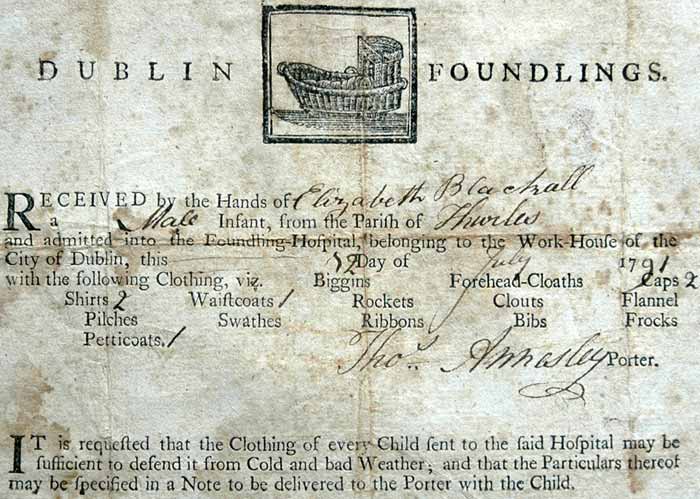
You will note from the picture show above of a billet (A billet in today’s language means a ‘ticket’ or a ‘receipt’ in French, but it originally meant a ‘short note’), that a male child “by the hands of Elizabeth Blackall” from the Church of Ireland parish of Thurles, was admitted to the Dublin Foundlings Hospital on July 12th 1791. The Porter’s name is shown as Thomas Annesley.
Note from the billet, shown above, certain of the clothing names no longer in use today. Biggins – A bonnet tied behind the neck and made of wool or linen. Clouts – Diapers or nappies. Flannel – A square of fabric wrapped around a child over the diaper or a long undergarment. Forehead Clothes – Strip of cloth tied across the forehead to behind the ears for added warmth. Pilches – Layers of cloth tied around the diaper in an effort to prevent leakage. Swathes – Strips of cloth, usually of wool, wrapped around an infant’s body for warmth and to put pressure on the navel. Parents will be aware of the term Swaddling.
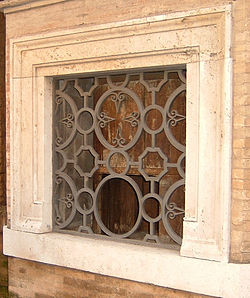
Foundling hospital’s turning wheel appliance.
A levy, of £5 per year, would have been imposed on the parish from which the child was sent.
A feature of most foundling hospitals was a turning-wheel type mechanism set in a wall near the building’s main entrance. This particular system was so designed as to encourage mothers to bring their unwanted children anonymously to the hospital building, rather than to abandon them on doorsteps or in other out-of-the-way areas.
The hospital’s turning wheel appliance allowed for a basket to be attached, into which an infant could be placed at any time, day or night. A bell was attached to attract the attention of the hospital porter then on duty. The porter would then rotate the wheel mechanism, thus bringing the infant into the building’s interior. Such porters were instructed to take in all infants left in the basket / cradle and not to have any direct conversation with the individuals who had lodged a child.
Child abandonment due to poverty and illegitimacy has always been a problem in the past, and viewed in private by governments as the unacceptable face of unnecessary expense on state coffers. In medieval times babies were often abandoned in church or monastery doorways, in the hope that the religious, of all denominations, would take on the task of providing sustenance. After all, did not Jesus Christ insist, in the Gospel according to St. Matthew (Chapter 19 – Verse 14), that Christians should – “Suffer little children, and forbid them not, to come unto me: for of such is the kingdom of heaven”.
Once an infant was taken in charge, it was assumed that a mother gave up all future control. Mothers whose circumstances changed and who tried to contact their child, risked having it ‘exchanged’. This was undertaken by transferring infants to a sister institution in Cork in exchange for any Cork infants, who were also considered by authorities to be in similar danger of being re-contaminated by Papist parents.
Death Rates
In the year 1752, of the 691 children taken in charge by the Dublin Foundling’s Hospital, 365 children were dead by the end of that particular year. In 1757, burial of these children was described as being chucked, naked into a hole, some eight or ten infants at a time.
A report ordered by the Irish House of Commons regarding child mortality over the previous twelve years, ending in June 1796; same would reveal that of the 25,000 admitted more than 17,000 had died. Worse facts would be revealed in the five-year period between 1791 to 1796. Here, of the 5,016 infants sent to the Dublin Foundling’s Hospital infirmary, only one solitary child had survived.
The Select Committee to inquire into the Irish Miscellaneous estimates, published in 1829, recommended that no further financial assistance should now be given to the hospital. It stated the Dublin Foundling’s Hospital had not preserved life or and had failed to educate those placed in their care. Overall it found that the mortality rate amongst the foundlings were almost 4 death to every 5 infants taken in charge, while the total expenditure to the state was £10,000 per year. It was eventually shut down in 1838, by Charles Grant, 1st Baron Glenelg (Lord Glenelg then Irish Secretary) to be later used to accommodate South Co. Dublin Union Workhouse inmates.
The Modern-Day Solution to Ireland’s Unwanted Children In our modern-day Ireland; supported by numerous politicians, currently both in government and in opposition, we have now found a new solution to this age-old problem. With effect from May 25th 2018, the Irish people to everyone’s shame, voted by 66.4% to 33.6%, to kill all unwanted infants, but this time while still in the womb.
Today, such wilful murder must be seen as an abuse of children once again funded by the Irish state, without the full consent of Irish taxpayers.
According to the State Examinations Commission (SEC) seventy one (71) students, who sat their Leaving Certificate examinations this year, have not been given full Leaving Cert results, following fears that they may be in breach of examination regulations.
Of the seventy one (71) results withheld, twenty (20) of same are suspended on a non-prejudicial basis, each pending further communication with both the candidates themselves and the various schools they attended.
A final decision in each case, currently listed, now remains open to appeal procedure.
The seventy one (71) cases withheld in 2019 relate comparatively with seventy two (72) such results which were permanently withheld in 2018. In 2017 fifty seven results were permanently withheld; an increase of fourteen when compared to current 2019 figures.
Results withheld can come about through the examiner detecting similar composition from more than one candidate, when correcting work from the same venue / exam centre or an examination superintendent discovering notes or paper aids being brought in by an exam candidate, thus attempting to cheat.
According to the Food Safety Authority of Ireland, a Chinese Restaurant in Tipperary was one of eight Closure Orders served on food businesses during the month of July 2019. All orders were for breaches of food safety legislation, pursuant to the FSAI Act, 1998 and the EC (Official Control of Foodstuffs) Regulations, 2010.
An inspector visiting Tang City, Kickham Street, Nenagh, Co. Tipperary was concerned by several practises within the outlet, including a chicken carcass, ribs and chicken balls, latter found in a thawing-out state in a walk-in freezer unit. The inspector stated in his report that “This unit was not operating correctly and not fit for purpose”.
Some of the reasons for the eight Enforcement Orders in July.
Temperature and cleaning records being filled out in advance with non-factual details; evidence of fly infestation in a kitchen; a lack of evidence of staff having being trained in food safety procedures; a bag of frozen breaded chicken was thawing at room temperature; evidence of a cockroach infestation; a bird observed flying out of a kitchen through the back door; no hot water in the wash hand basin in the food worker sanitary accommodation; cleaning throughout a butchery area on surfaces and equipment was poor.
Dr Pamela Byrne, Chief Executive, FSAI has criticised those businesses who are failing to keep accurate records, as well as failing to train staff adequately in food safety procedures.
Dr Byrne stated, “It is extremely disturbing that a food business would fill out their records in advance with completely non-factual information. This behaviour demonstrates a reckless attitude to food safety and a disregard for the health of their customers. During the month of July, food inspectors detected numerous serious breaches of food safety legislation. It is completely unacceptable that workers in some food businesses are unable to demonstrate adequate food hygiene knowledge and skills. Some food businesses are failing to provide high food safety standards in their premises and among their staff. These failures have the potential to cause a serious risk to consumer health, which has been identified in this month’s enforcements. Food businesses must act responsibly to prevent these serious breaches of food legislation.”
Details of the food businesses served with Enforcement Orders are published here on the FSAI’s website. Closure Orders and Improvement Orders will remain listed on the website for a period of three months from the date of when a premises is adjudged to have corrected its food safety issue, with Prohibition Orders being listed for a period of one month.
Others premises served with Closure Orders were in Dublin, Kilkenny, Limerick, Carlow and Kildare.
I was handed this rhyming, possibly local, poetic gem recently. Perhaps some of our regular readership may be able to cast further light as to the full identity of these three bardic composers, named hereunder.
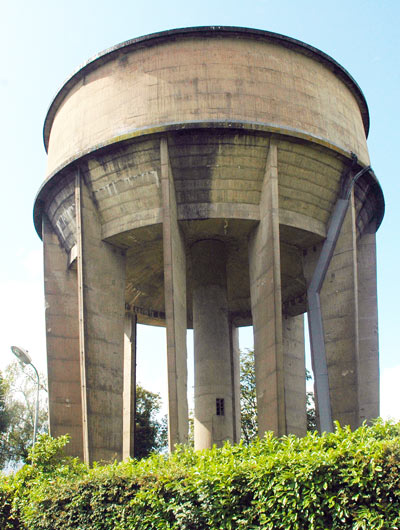
Thurles Water Tower, Loughtagalla.
Great Big Water Tower
[Gaynor, Rochford, Reynolds – Christmas ’59]
Thurles town has several wonders the traveller loves to tell. ‘The Factory’ and ‘The Station’, the works at ‘Ladyswell’. But now the greatest wonder – sure it went up in just an hour, It stands on Loughtagalla Hill – that great big Water Tower.
The town took up the challenge in the year of ’53. They filled the roads with trenches, they were there for all to see. They laid ten miles of piping, which soaked in every shower, And brought it up through Mitchel Street, to that great big Water Tower.
From Upperchurch and Littleton the workforce did arrive. They made our noble Quarry Street look as busy as a hive. They used pick-axe and shovel and great pneumatic power To bring our water rations from that great big Water Tower.
And now the work is ended, from miles around ’tis seen. It stands just like a rocket base above the Bowling Green. You can talk about Cape Canaveral, which made Nikita Khrushchev cower, But what would Joseph Stalin say, if he saw our Water Tower.
But then there was a failure, we thought that all was lost, When in the year of ’59 it was broken by the frost. But now there’s streams of water for those hot baths in Clongour, (Which in Saxon means “Goats Meadow”), from that same big Water Tower.
This website uses cookies to improve your experience. We'll assume you're ok with this, but you can opt-out if you wish.AcceptRead More
Privacy & Cookies Policy
Privacy Overview
This website uses cookies to improve your experience while you navigate through the website. Out of these, the cookies that are categorized as necessary are stored on your browser as they are essential for the working of basic functionalities of the website. We also use third-party cookies that help us analyze and understand how you use this website. These cookies will be stored in your browser only with your consent. You also have the option to opt-out of these cookies. But opting out of some of these cookies may affect your browsing experience.
Necessary cookies are absolutely essential for the website to function properly. This category only includes cookies that ensures basic functionalities and security features of the website. These cookies do not store any personal information.
Any cookies that may not be particularly necessary for the website to function and is used specifically to collect user personal data via analytics, ads, other embedded contents are termed as non-necessary cookies. It is mandatory to procure user consent prior to running these cookies on your website.





Recent Comments