Scientists are closely watching the developing 2026 – 27 El Niño, but what does that actually mean?
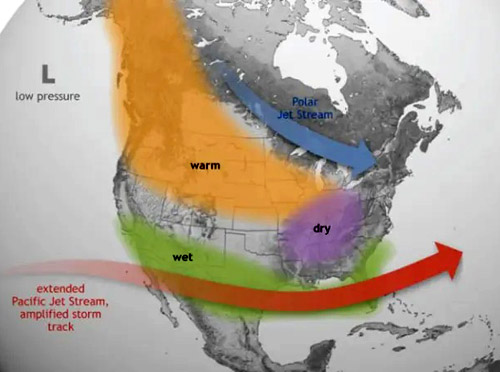
El Niño (Spanish for ‘the boy’) is a natural weather pattern that begins in the tropical Pacific Ocean. Normally, steady winds push warm surface water towards Asia and Australia. During an El Niño, those winds weaken, allowing unusually warm water to spread eastwards across the Pacific.
That might sound like a small change, but the Pacific Ocean is enormous. When its temperature and rainfall patterns shift, they can influence weather around the world. According to the latest update from the US National Oceanic and Atmospheric Administration, El Niño is already under way and is expected to become stronger towards the end of 2026. Scientists currently estimate a 97% chance that it will continue into early spring 2027. There is also a significant possibility that it could become a very strong event.
A strong El Niño can increase the chances of: ► Heavy rain and flooding in some places. ► Drought and extreme heat in others. ► Greater wildfire and crop-failure risks. ► Disruption to fishing, especially near South America. ► A temporary rise in average global temperatures.
Could El Niño affect Ireland? Yes, but its influence on Ireland is usually indirect and much less predictable than in countries closer to the Pacific Ocean. Ireland’s weather is mainly controlled by the Atlantic Ocean, the jet stream and the North Atlantic Oscillation. El Niño can sometimes influence these systems, potentially increasing the chances of a colder, calmer and drier winter, but it does not guarantee this outcome. Met Éireann says there is currently no clear evidence that El Niño alone will cause unusually warm weather in Ireland, and it is still too early to say exactly how the 2026–27 event will affect us. The best approach is to follow Met Éireann’s seasonal forecasts as the event develops.
El Niño can also reduce Atlantic hurricane activity overall, although dangerous hurricanes can still occur. This does not mean every country will experience extreme weather. El Niño changes the odds of certain weather conditions, but its effects vary depending on location, season and other climate patterns.
Scientists will continue watching ocean temperatures, winds, rainfall and atmospheric pressure to understand how powerful this El Niño may become and which areas could be most affected.
Where Tipperary Childhood Can Run Free – A Magical Day at Leahy’s East Cork Open Farm.
There are childhood days that disappear almost as soon as they are over, and then there are days that seem to glow in children’s memory for years. A family visit to Leahy’s Open Farm in the green countryside of East Cork belongs firmly in the second category. For families travelling from Tipperary, the journey to Dungourney feels like the beginning of the adventure. Familiar streets gradually give way to winding country roads, hedgerows, open fields and the soft colours of rural Ireland. By the time the farm comes into view, everyday routines already feel far behind. Yet it is when children discover the play areas that the true magic begins.
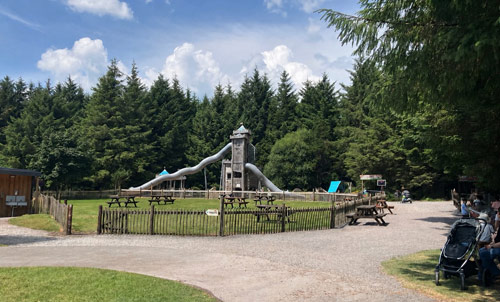
Playground Made for Big Imaginations. Pic: G. Willoughby.
A Playground Made for Big Imaginations Leahy’s is not simply a place where children look at animals and move quietly from one enclosure to another. It is a place created for movement, curiosity and joyful noise. Across the farm, play spaces invite young visitors to climb, race, dig, slide and explore. Adventure trails stretch ahead like secret pathways, while climbing towers challenge children to rise a little higher and become a little braver with every step. The playgrounds feel less like ordinary equipment and more like stages for childhood stories. A wooden tower becomes a castle. A bridge becomes a crossing over a mysterious valley. A slide becomes a thrilling escape route from an imaginary dragon. Sure, Parents may see timber, ropes and platforms, but children see entire worlds waiting to be conquered.
The Thrill of the real Digger Park For many young visitors, the Digger Park is where dreams suddenly become real. Here, children can take control of real machinery and experience the irresistible satisfaction of scooping, lifting and moving earth. Small hands grip the controls in safety with serious concentration. Faces light up when the bucket finally rises. For a few exciting minutes, they are no longer visitors to a farm; they are builders, engineers and expert machine operators with important work to complete. It is hands-on play at its best; exciting, physical and wonderfully absorbing. This attraction is especially memorable because it offers something children do not often experience elsewhere. They are not merely pressing buttons on a screen or watching someone else having fun. They are participating, experimenting and discovering what they can do.
Laughter on the Barrel Train. Then comes the Barrel Train, rumbling along its route with a cheerful collection of passengers. Children climb aboard with bright eyes and waving hands, ready to be carried around the farm. As the little carriages follow one another, laughter drifts across the countryside. Parents stand nearby, smiling as the train passes, cameras raised to capture expressions of complete delight. The ride may last only a short while, but to a child it can feel like a grand journey through a faraway land. It is one of those simple family experiences that asks for nothing more than everyone being present; children laughing, parents watching and a day unfolding without hurry.
Indoor Adventures When the Rain Appears. Irish skies have a habit of changing their minds, but rain does not have to end the adventure at Leahy’s Farm. The Play Barn and other indoor attractions provide plenty of space for energetic children to continue exploring. When showers tap against the roof, families can step inside rather than packing up and heading for home. The covered play areas also give the day a pleasant rhythm. Children can race around outdoors while the weather is bright, retreat indoors when the clouds gather and return to the fresh air when the sun reappears. This mixture of indoor and outdoor entertainment makes the farm particularly reassuring for parents planning a full day away from home.
Gentle Moments Among the Excitement. Although the play areas are filled with action, Leahy’s also offers quieter moments. Between climbs and train rides, families can wander through the farm, meet its animals (friendly Alpacas, Goats, Sheep, Donkeys, Horses, Rabbits, Snakes, Pigs and Chickens) while discovering displays celebrating Irish rural life. The farm museum introduces visitors to tools, machinery and traditions from earlier generations, adding a sense of heritage to the day.
There is something lovely about watching a child move from the excitement of a playground to the gentle wonder of meeting an animal. One moment they are racing towards a climbing tower; the next, they are standing perfectly still, fascinated by a goat, donkey or rabbit. These contrasts give this farm its special character. Adventure and education sit naturally beside one another, without the day ever feeling organised like a classroom lesson.
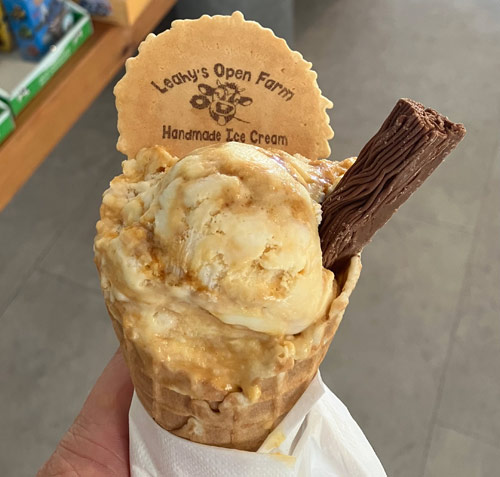
Homemade Ice cream. Pic: G. Willoughby.
A Sweet Ending to the Adventure. After hours of climbing, digging, running and exploring, there is still one final pleasure to enjoy. Leahy’s is also known for its ice cream and chocolate experiences, offering families a suitably sweet conclusion to their visit.
Tired children can sit down with a treat, while parents enjoy a well-earned pause and talk about the day’s favourite moments. Perhaps it was the Barrel Train. Perhaps it was the biggest slide, the diggers or the animals. Every child will carry home a different memory. For Tipperary families searching for more than an ordinary afternoon out, Leahy’s Open Farm offers space to reconnect, play and make memories together. Its playgrounds are not simply places to burn off energy. They are places where confidence grows, imaginations awaken and childhood is allowed to run gloriously free.
Long after the muddy shoes have been cleaned and the final photographs have been shared, the laughter of that East Cork adventure will still feel wonderfully close.
RATE Leahy’s East Cork Open Farm with regards Enjoyment and Value for Money: An exceptional 10/10 rating – something increasingly rare in Ireland today.
Pre-deceased by her beloved husband Thomas and son Martin; Mrs Buggle passed away peacefully, surrounded by her loving family, while in the care of staff at St. Francis Hospice, Blanchardstown, Co, Dublin.
Her passing is most deeply regretted, sadly missed and lovingly remembered by her sorrowing family; sons Philip, Thomas, Andrew, James and Gerard, daughter Sarah, sons-in-law, daughters-in-law, grandchildren, great-grandchildren, brothers, sisters, brothers-in-law, sisters-in-law, nieces, nephews, extended relatives, neighbours and friends.
Requiescat in Pace.
Funeral Arrangements.
The earthly remains of Mrs Buggle will be received into the Church of St Mary, Lucan, Co. Dublin, to repose for Requiem Mass on Wednesday morning at 10:00am, July 22nd, followed by a service of cremation in Newlands Cross Crematorium Ballymount Road, Ballymount, Dublin 24, (Eircode D24 KICY), at 12.30pm, same afternoon.
For those persons who would wish to attend Requiem Mass for Mrs Buggle, but for reasons cannot, same can be viewed streamed live online, HERE. Her service of cremation may also be viewed (Note live only) streamed live online, HERE.
The extended Buggle and Bracken families wish to express their appreciation for your understanding at this difficult time, and have made arrangements for those persons wishing to send messages of condolence, to use the link shown HERE.
Note Please: Family flowers only. Donations in lieu, if desired, to St. Francis Hospice, Blanchardstown, Co. Dublin in memory of Mrs Margaret (Peggy) Buggle.
Pre-deceased by her husband Michael; Mrs McGrath passed away peacefully while in the care of staff at Padre Pio Nursing Home, Holycross, Thurles, Co. Tipperary.
Her passing is most deeply regretted, sadly missed and lovingly remembered by her sorrowing family; loving daughter Jane, son Eamon, grandchildren Sarah, Rebecca, Cian and Emily, sister, brothers, sisters-in-law, nieces, nephews and friends.
Requiescat in Pace.
Funeral Arrangements.
The earthly remains of Mrs McGrath will repose for Requiem Mass in the Church of Jesus Christ our Saviour, Rossmore, Co. Tipperary, on Tuesday afternoon, July 21st, at 3:00pm, followed by interment, immediately afterwards in the adjoining graveyard.
For those persons who would wish to attend Requiem Mass for Mrs McGrath, but for reasons cannot, same can be viewed streamed live online, HERE.
The extended McGrath family wish to express their appreciation for your understanding at this difficult time, and have made arrangements for those persons wishing to send messages of condolence, to use the link shown HERE.
Pre-deceased by her parents Hubert and Stella and her sisters Marion and Annette; Ms Killackey passed away peacefully at her place of ordinary residence, surrounded by her loving family.
Her passing is most deeply regretted, sadly missed and lovingly remembered by her sorrowing family; loving son Daragh, daughters Nessa and Breffni, grandchildren Caoimhe, Ruairí, Eabha, Mia and Lucie, daughter-in-law Niamh, sons-in-law Leo and Jack,sisters Carol and Philomena, nieces, nephews, grandnieces, grandnephews, extended relatives, neighbours and a wide circle of friends.
For those persons who would wish to attend Requiem Mass for Ms Killackey, but for reasons cannot, same can be viewed streamed live online, HERE.
The extended Killackey family wish to express their appreciation for your understanding at this difficult time, and have made arrangements for those persons wishing to send messages of condolence, to use the link shown HERE.
Those attending the funeral are asked to wear bright colour to celebrate her brilliant personality.
Note Please: No flowers. Donations in lieu, if desired, to Dementia Ireland.
The family of Ms Killackey would like to take this opportunity to express their deep gratitude to Noelle, Michelle, Geraldine, Stephanie, Caoimhe, Jacinta, Ackil, Orla and the management and staff at St. Theresa’s Nursing Home.
Solas na bhflaitheas agus leaba i measc na n-aingeal di.
This website uses cookies to improve your experience. We'll assume you're ok with this, but you can opt-out if you wish.AcceptRead More
Privacy & Cookies Policy
Privacy Overview
This website uses cookies to improve your experience while you navigate through the website. Out of these, the cookies that are categorized as necessary are stored on your browser as they are essential for the working of basic functionalities of the website. We also use third-party cookies that help us analyze and understand how you use this website. These cookies will be stored in your browser only with your consent. You also have the option to opt-out of these cookies. But opting out of some of these cookies may affect your browsing experience.
Necessary cookies are absolutely essential for the website to function properly. This category only includes cookies that ensures basic functionalities and security features of the website. These cookies do not store any personal information.
Any cookies that may not be particularly necessary for the website to function and is used specifically to collect user personal data via analytics, ads, other embedded contents are termed as non-necessary cookies. It is mandatory to procure user consent prior to running these cookies on your website.






Recent Comments