Older people across Ireland could be missing out on valuable help with household bills through the Household Benefits Package.
The package provides approximately €420 a year towards electricity or gas, plus a free television licence worth €160—a combined annual value of around €580. People aged 70 or over qualify without a means test, but an application is still required. Read more about the scheme.
You must be fully resident in Ireland, and only one person per household can receive the package. Some people under 70 can also qualify through specified pensions, disability payments or Carer’s Allowance, or through a means test where applicable.
Recent reporting suggests that as many as 116,000 households with someone aged 70 or over may be missing out. However, the Department of Social Protection cautions that this estimate may be too high because some households already receive the benefit through another member.
Your electricity MPRN or gas GPRN, found on your utility bill.
Your TV licence reference, if applicable.
Your household and relationship details.
Your bank account details or preferred post office account details, for payment.
If you need a paper application or help applying, please contact the Department of Social Protection on Tel: 071 915 7100 and ask about form HB1.
If you have an older relative, friend or neighbour, consider helping them check whether their household already receives this support. A conversation could help someone access assistance they are correctly entitled to claim.
“Paper never refused ink,” as the old saying goes. Publication alone does not establish accuracy; public statements should be supported by clear information and visible results. I refer of course to a press release by Refresh Thurles Tidy Towns and published HERE by the Tipperary Star local newspaper.
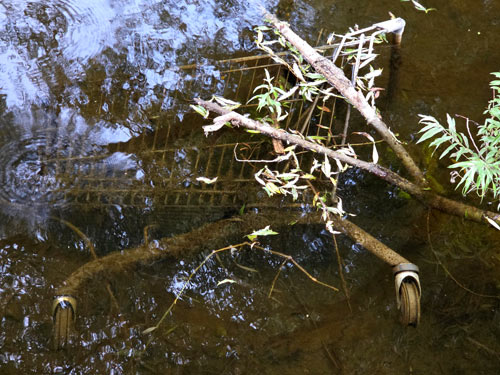
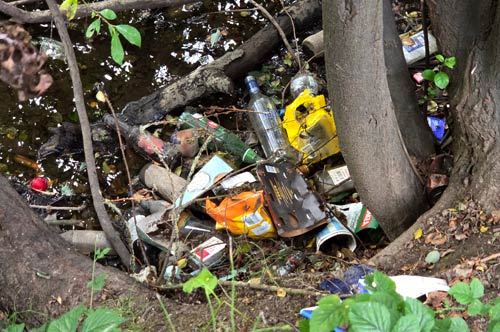
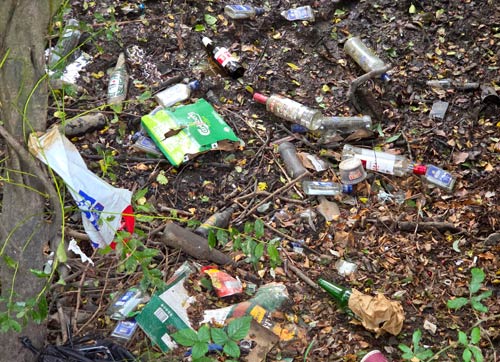
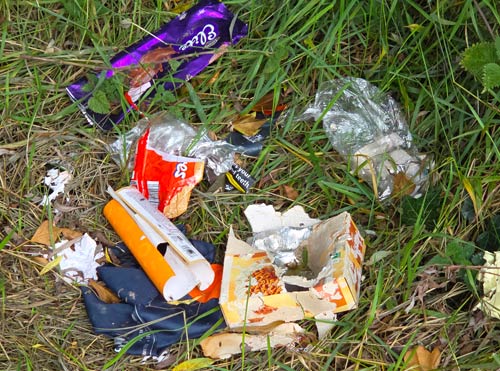
Refresh Thurles Tidy Towns’ concern about the River Suir is, at last, indeed to be welcomed. However, the accompanying photographs show substantial litter; numerous discarded drinks bottles, food wrappers, cartons and other rubbish among the trees and along the bank, together with shopping trolleys submerged beneath branches; today evidenced remaining untouched for almost 2 years.
One supermarket trolley overlooked in River Suir since 2025.
These currently submerged trolleys present another practical question; when were they first reported, who is responsible for arranging their safe removal, and when will that happen? Despite the water being shallow, nobody should expect volunteers to enter the river to retrieve them, but residents deserve a clear answer about who will act.
Litter overlooked in Thurles town park since 2025
The group reports regular litter picks and the recent collection of eight bags of rubbish. That work deserves acknowledgement. Nevertheless, the conditions pictured raise a fair question: when were these particular areas last cleaned, and are they included in the regular litter-picking route?
There is also a question about the photograph accompanying this week recent Tipperary Star report. [See HERE] My understanding is that it previously appeared on Refresh Thurles’ Facebook page on 25th April 2026. If it is an older photograph, its date should be made clear, so readers of local press do not mistake it for evidence of this current week’s activity.
Uncollected litter dumped between 2025/26, due to absence of litter bins.
My concern is that litter problems here, have persisted since the 2025 music festival. These photographs can prove that no cleaning has occurred since then, and they do show places that need immediate attention. If access or safety difficulties prevent volunteers from collecting this rubbish, have those locations been reported to the council, and what response has been received?
The timing of the press statement also merits clarification. Has Refresh Thurles previously raised these concerns publicly or in writing with the relevant authorities? If so, when, and with what outcome?
Please do take the time to fully view the video hereunder, to fully understand what must be observed as Ireland’s shame.
Why Ireland’s Rivers Are Dying?
Finally, the published statement’s reference to installing wildlife information boards needs clarification. My understanding is that Thurles Municipal District Council installed the signage. Could the respective roles in commissioning, funding, designing and installing the boards be explained, so everyone’s contribution is accurately acknowledged?
Uncollected riverbank litter since August 12th, 2026, still visible this wet morning.
These are reasonable questions, not a dismissal of voluntary effort. Those who discard rubbish bear responsibility for their behaviour, and volunteers deserve thanks for the work they do.
But appreciation and accountability can and must sit together. What matters now is an accurate account of the work completed, a clear allocation of responsibility and dates for addressing the problems shown in above accompanying pictures shown here and with no remedial action taken for months.
Some newspapers are happy to publish public relations (PR) material from politicians and other organisations, without verifying the facts. The favourable accounts they present are often far removed from the truth.
Paper may never refuse ink. The River Suir, at this stage, needs more than words.
Pre-deceased by his father Patrick; Mr O’Reilly passed away peacefully, surrounded by his loving family, while in the care of staff at Milford Hospice.
His passing is most deeply regretted, sadly missed and lovingly remembered by his sorrowing family; loving wife Margarite (née Butler Lloyd), sons Jack and Andrew, mother Anne, sisters Deirdre and Jennifer, nephews Mark, James and Nicholas, nieces Laura, Emily, Ruth, Sophie and Alex, brothers-in-law Willie and Colin, sisters-in-law Audrey, Claire and Ronnie, aunts, cousins, extended relatives, colleagues in the legal profession, kind neighbours and friends.
Rest in peace.
Funeral Arrangements.
The remains of Mr O’Reilly will repose at Hugh Ryan’s Funeral Home, Slievenamon Road, Thurles(Eircode E41 CP59) on Thursday afternoon next, September 10th from 5:00pm until 7:00pm, same evening, A private service of cremation will take place on Friday morning, September 11th.
The extended O’Reilly and Butler Lloyd families wish to express their appreciation for your understanding at this difficult time, and have made arrangements for those persons wishing to send messages of condolence, to use the link shown HERE.
Note Please: House strictly private. Family flowers only. Donations in lieu, if desired, to Milford Care Centre, in Memory of Mr Kevin O’Reilly.
“The O’Reilly family would like to express their sincere gratitude to all who cared for Mr O’Reilly during his illness”.
Pr-edeceased by his parents Larry and Nellie, brother Michael; Mr Hickey passed away peacefully, after a long illness most bravely borne, while in the care of staff at Cork University Hospital, Co. Cork and Tipperary University Hospital, South Co. Tipperary.
His passing is most deeply regretted, sadly missed and lovingly remembered by his sorrowing family; loving wife Bernadette (née Judge), sons Kenneth, Anthony and Jason, daughter Pamela, grandson Isaac, son-in-law Darren, brothers Sean, Eugene, Danny and Larry, sisters Maurine, Helen, Ann, Veronica and Connie, nephews, nieces, brothers-in-law, sisters-in-law, extended relatives, neighbours and friends.
Requiescat in Pace.
Funeral Arrangements.
The earthly remains of Mr Hickey will repose at Hugh Ryan’s Funeral Home, Slievenamon Road, Thurles, (Eircode E41 CP59) on Friday afternoon, September 11th, from 5:00pm until 7:00pm, same evening. His funeral cortège will be received into the Cathedral of the Assumption, Cathedral Street, Thurles, (Eircode E41 A528), on Saturday morning, September 12th, at 10:30am, to further repose for Requiem Mass at 11:00am, followed by a service of cremation in Shannon Crematorium Illaunmanagh, Shannon, Co. Clare, (Eircode V14 PV30) at 4:00pm.
For those persons who would wish to attend Requiem Mass for Mr Hickey, but for reasons cannot, same can be viewed streamed live online, HERE.
The extended Hickey and Judge families wish to express their appreciation for your understanding at this difficult time, and have made arrangements for those persons wishing to send messages of condolence, to use the link shown HERE.
Farmers Must Be Supported To Prepare For Ever More Compounding Climate Extremes Says Climate Change Advisory Council.
Council calls for farmers to be supported with land-specific climate information, technology and practical advice to prepare for a changing climate.
The Agriculture sector has not met its commitment to reduce emissions by 10% by 2025, and without a stronger push, will not meet its 2030 commitments.
Just 2,527 hectares of new forest were planted in 2025 against an annual target of 8,000 hectares.
Progress on bio-methane remains far behind the pace required.
Mr Alex White – (Chairperson Climate Change Advisory Council).
Launching the Agriculture and Land Use, Land Use Change and Forestry chapter of its Annual Review 2026 today, the Climate Change Advisory Council said farmers are increasingly having to manage very different risks throughout the year due to extreme conditions including excessive rainfall, heatwaves and drought.
Rather than reacting to individual weather crises as they occur, the Council says farmers should be better equipped to understand the long-term risks facing their land and businesses in a climate that is becoming increasingly extreme. It is calling on the Department of Agriculture, Food and the Marine (DAFM) to develop and deploy, within 12 months, a practical climate-risk toolkit tailored to individual land parcels.
Alongside better information, farmers need access to practical advice, financial support and viable alternatives to existing practices that are more climate resilient. Restoring soil, water and ecosystem functions can help farms absorb extreme-weather shocks and maintain productivity, while some farmers may choose to adapt existing practices or diversify into new sources of income.
The Review also warns that Ireland’s reliance on imported fruit and vegetables leaves the food system vulnerable to climate-related crop failures elsewhere and supply-chain disruption, and calls for a review of how domestic horticulture could strengthen food security.
Agriculture emissions fell by just 0.2% in 2025 and are now 4.7% below the 2018 baseline – less than half of the 10% reduction commitment from government for 2025. EPA projections indicate that the ‘with additional measures’ scenario would deliver an approximately 19% reduction in Agriculture emissions by 2030, compared with the 25% target. The Council notes that the 25% target remains achievable if additional diversification measures identified in the Climate Action Plan are also fully implemented.
To close this gap, DAFM should develop and begin implementing, a time-bound and properly resourced plan to accelerate emissions-reduction measures on farms, informed by structured dialogue with farmers, rural communities and workers.
The Forestry sector remains a particular concern. Ireland is not close to meeting its annual afforestation target of 8,000 hectares, leaving Ireland substantially off track for 18% forest cover by mid-century and contributing to a weakening forest carbon sink. The next Forestry Programme must address the financial, administrative and practical barriers preventing greater participation.
Significant public funding has been committed to anaerobic digestion under the Biomethane Strategy, but delays to the Renewable Heat Obligation are holding back the market certainty needed to unlock investment and demand. Progressing the obligation is essential if bio-methane is to support farm diversification and energy security.
Mr Alex White, (Chairperson of the Climate Change Advisory Council), said:
“Farmers are increasingly having to manage extremes – this year we have seen too much water at one time of year and too little at another. We cannot keep treating every prolonged wet period or drought as an isolated crisis. Climate change is challenging some of the established practices involved in agriculture and land management. Practical support will be essential, whether that means making land and farms more resilient, adapting existing practices or pursuing viable opportunities for diversification, including forestry, carbon farming and renewable energy. The transition has to be shaped in collaboration with rural communities and farmers, and not simply designed for them. Policy will be more effective if it reflects the practical realities, costs and opportunities on the ground, while delivering the emissions reductions Ireland needs.”
View News from the Climate Change Advisory Council HERE.
This website uses cookies to improve your experience. We'll assume you're ok with this, but you can opt-out if you wish.AcceptRead More
Privacy & Cookies Policy
Privacy Overview
This website uses cookies to improve your experience while you navigate through the website. Out of these, the cookies that are categorized as necessary are stored on your browser as they are essential for the working of basic functionalities of the website. We also use third-party cookies that help us analyze and understand how you use this website. These cookies will be stored in your browser only with your consent. You also have the option to opt-out of these cookies. But opting out of some of these cookies may affect your browsing experience.
Necessary cookies are absolutely essential for the website to function properly. This category only includes cookies that ensures basic functionalities and security features of the website. These cookies do not store any personal information.
Any cookies that may not be particularly necessary for the website to function and is used specifically to collect user personal data via analytics, ads, other embedded contents are termed as non-necessary cookies. It is mandatory to procure user consent prior to running these cookies on your website.







Recent Comments