The Cost-of-Living Crisis And Its Impact On Mental Health.
We need to stop pretending that the cost-of-living crisis is only about money. It is about stress. It is about anxiety. It is about lying awake at night wondering how the next electricity bill will be paid. It is about standing in a supermarket adding up the cost of groceries before reaching the checkout. It is about parents cutting back on their own needs so their children do not go without. It is about people working hard, doing everything they were told they were supposed to do, and still feeling as though they are falling further behind.
Increasingly, all of the above is becoming a mental health crisis. Yes, the growing cost-of-living crisis is having consequences that reach far beyond household finances. It is increasingly affecting people’s mental health, emotional wellbeing, and sense of security.
Recent research from St Patrick’s Mental Health Services found that almost three-quarters of more than 1,000 adults surveyed, identified the cost of living as the leading factor negatively affecting their mental health. The same research found that 92% of respondents believe there is a worrying level of anxiety in society.
These findings should be taken seriously. Behind these statistics are individuals and families facing the daily pressure of rising food prices, rents, energy bills, housing costs, childcare expenses, and other essential living costs. For many people, financial stress is no longer an occasional concern. It has become a constant presence in their everyday life. This pressure can have a profound impact on mental wellbeing. Financial insecurity can affect sleep, concentration, relationships, confidence, and a person’s sense of hope for the future. People may continue going to work, caring for their families, and carrying out their daily responsibilities, while privately struggling with anxiety and fear.
It is important that we continue encouraging people to seek support when they are struggling with their mental health. Counselling, professional services, community supports, family networks, and open conversations all have an essential role to play. However, we must also recognise that mental health does not exist separately from the daily circumstances in which people live. It is difficult to reduce anxiety when someone is unsure how they will pay their rent or mortgage. It is difficult to manage stress when a household is choosing between heating, food, childcare, and other essentials. It is difficult to tell people simply to “look after themselves” without acknowledging the real and continuing financial pressures many are experiencing.
For some people, anxiety is a direct response to difficult and uncertain circumstances. That means our conversations about mental health must also include honest discussions about housing, wages, energy costs, food prices, childcare, poverty, and financial security. There are encouraging signs that more people are willing to seek help for mental health difficulties, and that progress should be welcomed. No person should ever feel ashamed for admitting that they are struggling or for asking for support. At the same time, too many people continue to suffer in silence. Some do not want to worry their families. Others feel embarrassed about financial difficulties or believe they should simply be able to cope. Many appear outwardly well while carrying significant stress privately.
We need a culture in which people feel able to say, without shame, “I am struggling,” or “The financial pressure is becoming too much.” We also need to recognise that meaningful responses to mental health difficulties cannot focus solely on helping people cope with pressure. We must also address the conditions contributing to that pressure. People need accessible mental health services, strong community supports, secure housing, financial stability, and the dignity of knowing that working hard should provide a reasonable standard of living. This is not about creating fear or hopelessness. It is about acknowledging the reality facing many people and responding with compassion, seriousness, and practical action.
The question we should be asking is not only, “Why are so many people experiencing anxiety?” We must also ask what pressures people are being expected to carry every day and what can be done to reduce them.
The cost-of-living crisis is not simply an economic issue. It is a social issue. It is a family issue and increasingly, it is a mental health issue. We must continue to support those who are struggling, encourage open conversations about mental health, and work towards a society in which people can live with greater security, dignity, and hope for the future.
Political Parties And Their Response To Concerns. The pressure created by the cost of living should also encourage the public to look carefully at how political parties respond to these concerns. Governments must ultimately be judged on the decisions they make, the measures they implement, and the results those measures produce. Opposition parties, meanwhile, have an important responsibility to challenge Government policy and present alternatives, but those alternatives should be examined with the same seriousness. Promises made in opposition can sound attractive, particularly when households are under severe financial pressure, but voters are entitled to ask whether those commitments have been properly costed, whether they can realistically be delivered, what trade-offs would be required, and how they would be funded over the longer term.
Ireland already has mechanisms through which political parties can have proposals independently costed by the Department of Finance and Department of Public Expenditure, while the Parliamentary Budget Office also provides independent analysis of fiscal and budgetary proposals.
For that reason, public debate on the cost-of-living crisis should not become simply a competition over which parties can make the largest or most appealing promise. The same standard of scrutiny should apply to everybody seeking political power; those in Government should be questioned about what they have actually delivered and whether existing policies are working, while those seeking to replace them should be challenged to demonstrate that their alternatives are financially sustainable and practically achievable.
Previous analysis of Irish election manifestos has shown that substantial spending commitments can be made across both Government and Opposition parties and that questions can arise about whether the total package of promises fits within prudent fiscal limits.
When families are already experiencing financial stress and anxiety, political debate should therefore be grounded not only in promises, but in true credible figures, realistic implementation plans and an honest explanation of the choices and the consequences involved.
Mr Ryan passed away peacefully, surrounded by his loving family, while in the care of staff at Our Lady’s Hospice and Care Services, Harold’s Cross, Dublin.
His passing is most deeply regretted, sadly missed and lovingly remembered by his sorrowing family; loving wife Karen, son John, daughter Susan, their partners Julie-Ann and Scott, brothers Walter (Maureen), Liam (Joanie), Martin (Mary), and Paddy (Caroline), sisters Aileen (Donal), Noreen (Nigel) and Ann (Ciarán), father-in-law Liam and the Clancy family, nieces, nephews, extended relatives, neighbours, staff and customers and many friends.
For those persons who would wish to attend Requiem Mass for Mr Ryan, but for reasons cannot, same can be viewed streamed live online, HERE.
The extended Ryan family wish to express their appreciation for your understanding at this difficult time, and have made arrangements for those persons wishing to send messages of condolence, to use the link shown HERE.
“Fortes Fortuna Adiuvat” – [Fortune favours the brave].
A new season begins for the athletes of Thurles Special Olympics Basketball Club.
Club Chairperson Mr Enda Bourke (Secretary) Reports:-
Activities kick off at Thurles Golf Club on Thursday 1st October at 5:30pm with a golfing skills lesson, chipping and putting, from the Club Pro, Mr Raymond Ryan. The athletes and their families will be treated to refreshments afterwards in the clubhouse.
Basketball training restarts on Wednesday 7th October at 7:00pm, in the Presentation sports hall and will continue weekly at the same time.
The Club has planned a Halloween disco for later in October, details to follow.
New athletes and volunteers are always welcome at our Club. Contact details are: Mary: Tel: 086 0818135 and Enda: Tel: 087 6060772.
We look forward to another season of continued dedication and commitment from our athletes, with the support of parents, carers and volunteers throughout the months ahead.
In his 90th year and pre-deceased by his infant son Philip, parents Johanna and Philip, brothers Dan, Mick, Billy, Philip and Richie, sister Leana; Mr Croke passed away peacefully at his place of ordinary residence, surrounded by his loving family.
His passing is most deeply regretted, sadly missed and lovingly remembered by his sorrowing family; loving wife Rita (née Donnelly), daughters Siobhan, Annmarie, Eithne and Jacinta, sons Criostóir, Fergal and Camillus, adored grandchildren, great-grandchildren, sons-in-law Michael, Ted and Rodger, daughters-in-law Carmel, Grainne and Katy, brothers Tommy and Albert, sister Jennie, nephews, nieces, sisters-in-law Nancy and Ruby, brother-in-law Dan, extended relatives, neighbours and friends.
Requiescat in Pace.
Funeral Arrangements.
The earthly remains of Mr Croke will repose at Hugh Ryan’s Funeral Home, Slievenamon Road, Thurles, (Eircode E41 CP59), on Tuesday afternoon, September 29th, from 5:00pm until 7:00pm, before being received into the former Cistercian Monastery Abbey, Holycross, Thurles, Co. Tipperary, (Eircode E41 PH01), at 8:00pm, same evening. Requiem Mass for Mr Croke will be offered on Wednesday morning, September 30th, at 11:30am, followed by interment, immediately afterwards, in the adjoining graveyard.
The extended Croke and Donnelly families wish to express their appreciation for your understanding at this difficult time, and have made arrangements for those persons wishing to send messages of condolence, to use the link shown HERE.
Dr James Carr, Associate Professor in the Department of Sociology at the University of Limerick, has been appointed as Ireland’s member of the Council of Europe’s European Commission against Racism and Intolerance (ECRI) for a five-year term.
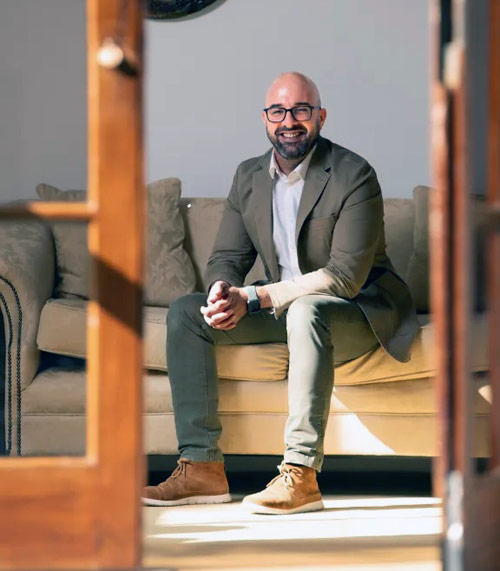
Associate Professor Dr James Carr.
The appointment recognises Dr Carr’s extensive academic, research and professional experience in the areas of racism, racial equality, anti-Muslim racism and discrimination.
Dr Carr has considerable familiarity with the work of the European Commission against Racism and IntoleranceECRI, having previously worked as a consultant adviser in relation to its General Policy Recommendations and having engaged with ECRI members during work associated with the Commission’s sixth-cycle monitoring of Ireland.
His wider European work has included engagement with the European Commission as an expert adviser on anti-Muslim hatred and anti-racism.
At the University of Limerick, Dr Carr’s research focuses on racism, anti-Muslim racism, racial literacy and public sociology. His work combines academic research with practical initiatives aimed at understanding racism, documenting lived experiences and developing approaches to tackling discrimination.
He is the author of Experiences of Islamophobia: Living with Racism in the Neoliberal Era and has contributed extensively to research examining experiences of Islamophobia and anti-Muslim racism in Ireland and internationally.
Dr Carr has also led and participated in a number of European-funded research initiatives. These include the Sustainable Alliances Against Anti-Muslim Hatred (SALAAM) project, which brought together academic and community organisations to develop anti-racism initiatives, and more recent European collaborative research examining anti-Muslim discrimination and racism.
In Ireland, he has served on national advisory structures concerned with racial equality and racism, contributing his research expertise to the examination of how racism is experienced and how effective responses can be developed.
His appointment to ECRI will see him contribute to the work of one of the Council of Europe’s principal independent human-rights monitoring bodies dealing specifically with racism, discrimination, xenophobia and related intolerance.
The role provides an opportunity for Irish academic expertise and research experience to contribute to wider European work examining discrimination, promoting equality and developing measures to address racism across Council of Europe member states.
This website uses cookies to improve your experience. We'll assume you're ok with this, but you can opt-out if you wish.AcceptRead More
Privacy & Cookies Policy
Privacy Overview
This website uses cookies to improve your experience while you navigate through the website. Out of these, the cookies that are categorized as necessary are stored on your browser as they are essential for the working of basic functionalities of the website. We also use third-party cookies that help us analyze and understand how you use this website. These cookies will be stored in your browser only with your consent. You also have the option to opt-out of these cookies. But opting out of some of these cookies may affect your browsing experience.
Necessary cookies are absolutely essential for the website to function properly. This category only includes cookies that ensures basic functionalities and security features of the website. These cookies do not store any personal information.
Any cookies that may not be particularly necessary for the website to function and is used specifically to collect user personal data via analytics, ads, other embedded contents are termed as non-necessary cookies. It is mandatory to procure user consent prior to running these cookies on your website.






Recent Comments