Alongside the famous early versions of “Help Me Make It Through the Night”; written by the late Kris Kristofferson, Anne Murray also put her own warm, clear stamp on the song, recording it for her album “Country Croonin”, released back on October 22nd, 2002.
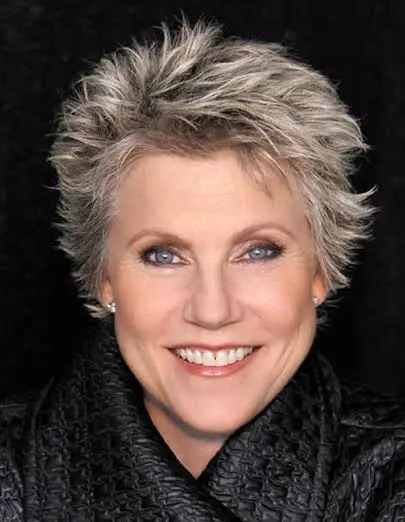
MsAnn Murray.
A beloved Canadian vocalist known for her smooth, comforting delivery across country and pop, Ms Murray approaches the lyric less like a bar-room confession and more like a gentle, late-night request for closeness, proof that this classic can feel just as powerful when it’s sung softly as when it’s sung raw.
Help Me Make It Through The Night.
Help Me Make It Through The Night.
Take the ribbon from my hair, Shake it loose and let it fall, Lay it soft against your skin, Like the shadow on the wall. Come and lie down by my side, ‘Til the early morning light, All I’m takin’ is your time, Help me make it through the night. I don’t care what’s right or wrong, And I won’t try to understand, Let the devil take tomorrow, Lord, tonight I need a friend. Yesterday is dead and gone, And tomorrow’s out of sight, And it’s sad to be alone, Help me make it through the night. I don’t care what’s right or wrong, And I won’t try to understand, Let the devil take tomorrow, ‘Cause tonight I need a friend. Yesterday is dead and gone, And tomorrow’s out of sight, And it’s sad to be alone, Help me make it through the night. I don’t want to be alone, Help me make it through the night. END
“She’s a Mystery to Me” is a song written by Bono and The Edge of Band U2 and recorded by American rock legend, singer, songwriter and guitarist, the late Roy Kelton Orbison, (1936–1988). It was released in 1989 as a single from Orbison’s Mystery Girl album, his final release, and features Orbison’s signature emotive vocals on a dreamy, romantic track penned by the U2 members.
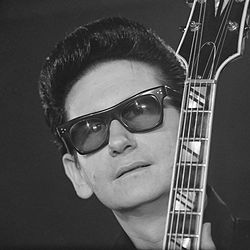
The Late Roy Orbison.
Recognizing the song’s potential, Bono and The Edge developed it as a tribute to Orbison’s timeless style. Orbison later recorded the song with Bono producing, adding his signature vocal depth to its dreamy, mysterious lyrics about love’s elusive nature.
She’s A Mystery To Me.
She’s A Mystery To Me.
Darkness falls and she will take me by the hand, Take me to some twilight land, Where all but love is grey, Where I can’t find my way, Without her as my guide. Night falls I’m cast beneath her spell, Daylight comes our heaven turns to hell, Am I left to burn and burn eternally, She’s a mystery to me. She’s a mystery girl. She’s a mystery girl. In the night of love words tangled in her hair, Words soon to disappear. A love so sharp it cut, Like a switchblade to my heart, Words tearing me apart. She tears again my bleeding heart, I want to run she’s pulling me apart, Fallen angel cries and I just melt away, She’s a mystery to me. She’s a mystery girl. She’s a mystery girl. She’s a mystery girl. She’s a mystery girl. Haunted by her side it’s the darkness in her eyes, That so enslaves me. But if my love is blind, Then I don’t want to see, She’s a mystery to me. Night falls I’m cast beneath her spell, Daylight comes our heaven turns to hell, Am I left to burn and burn eternally, She’s a mystery to me. She’s a mystery girl. (repeated).
Accepting the award at the ceremony in Dublin, Ms Buckley described the past year as a “roller-coaster” and said it was an honour to “come home” to celebrate with the Irish creative community, reflecting on how storytelling, music and art shaped her upbringing.
In her remarks, she also paid tribute to her co-star Mr Paul Mescal, who portrays Shakespeare in the film, adding that she loves him. Mr Mescal was named Supporting Actor (Film) for Hamnet , but was not present to collect the award. Hamnet was among the night’s standout winners, also receiving the International Film award and Script (Film) honour and shared between Ms Maggie O’Farrell and Ns Chloé Zhao.
Ms Buckley, who formerly attended the Ursuline Secondary School here in Thurles, has also been recognised during the current awards season for her work in Hamnet, including major international nominations.
Lyrics: Canadian singer/songwriter guitarist, and music historian Allister MacGillivray. Vocals: Canadian retired country, pop music and 4 Grammy Award singer Anne Murray.
Anne Murray.
“Song for the Mira” was written in 1973. The “Mira”isn’t a person or a made up place-name for the lyric and video shown hereunder; it’s the actual Mira River in Cape Breton Island, at the eastern end of the Canadian province of Nova Scotia, and by extension the easy-going river communities along its banks.
Song For The Mira.
Song For The Mira.
Out on the Mira on warm afternoons, Old men go fishing with black line and spoons, And if they catch nothing they never complain, I wish I was with them again. As boys in their boats call to girls on the shore, Teasing the one that they dearly adore, And into the evening the courting begins, I wish I was with them again. Can you imagine a piece of the universe, More fit for princes and kings? I’ll trade you ten of your cities, For Marion Bridge and the pleasure it brings. Out on the Mira on soft summer nights, Bonfires blaze to the children’s delight, They dance ’round the flames singing songs with their friends, And I wish I was with them again. Can you imagine a piece of the universe, More fit for princes and kings? I’ll trade you ten of your cities, For Marion Bridge and the pleasure it brings. Now I’ll conclude with a “wish you go well” Sweet be your dreams, and your happiness swell, I’ll leave you here, for my journey begins, I’m going to be with them, Going to be with them, I’m going to be with them again. Can you imagine a piece of the universe, More fit for princes and kings? I’ll trade you ten of your cities, For Marion Bridge and the pleasure it brings. Can you imagine a piece of the universe, More fit for princes and kings? I’ll trade you ten of your cities, For Marion Bridge and the pleasure it brings.
Songwriters: American folk singer, guitarist, producer and songwriter, the late Fred Hellerman(1927-2016) and American lyricist, librettist, singer, songwriter and director, the late Marshall Barer(1923-1998). Vocals: American country music singer, songwriter, and 2010 inductee into the Country Music Hall of Fame, the late Don Williams(1939-2017).
The Late Don Williams.
One of the gentlest country No. 1s of the late ’70s – ‘I’m Just a Country Boy’, – a 1977 hit from that era.
I’m Just A Country Boy.
I ain’t gonna marry in the fall. Ain’t gonna marry in the spring, ‘Cause I’m in love with a pretty little girl, Who wears a diamond ring. And I’m just a country boy, Money have I none, But I’ve got silver in the stars, And gold in the mornin’ sun. Gold in the mornin’ sun. Never gonna kiss the ruby red lips, Of the prettiest girl in town. Never gonna ask her if she’d marry me, I know she’d turn me down. ‘Cause I’m just a country boy, Money have I none, But I’ve got silver in the stars, And gold in the mornin’ sun. Gold in the mornin’ sun. I never could afford a store bought ring, With a sparklin’ diamond stone. All I could afford is a lovin’ heart, The only one I own. ‘Cause I’m just a country boy, Money have I none, But I’ve got silver in the stars, And gold in the mornin’ sun. Gold in the mornin’ sun.
This website uses cookies to improve your experience. We'll assume you're ok with this, but you can opt-out if you wish.AcceptRead More
Privacy & Cookies Policy
Privacy Overview
This website uses cookies to improve your experience while you navigate through the website. Out of these, the cookies that are categorized as necessary are stored on your browser as they are essential for the working of basic functionalities of the website. We also use third-party cookies that help us analyze and understand how you use this website. These cookies will be stored in your browser only with your consent. You also have the option to opt-out of these cookies. But opting out of some of these cookies may affect your browsing experience.
Necessary cookies are absolutely essential for the website to function properly. This category only includes cookies that ensures basic functionalities and security features of the website. These cookies do not store any personal information.
Any cookies that may not be particularly necessary for the website to function and is used specifically to collect user personal data via analytics, ads, other embedded contents are termed as non-necessary cookies. It is mandatory to procure user consent prior to running these cookies on your website.







Recent Comments