|
|
The word on every person’s lips here in Thurles today is ‘JEEP’ – which as you know stands for ‘Jump Excitedly into Every Pothole’.
Around the year 1650, McRickard Butler’s workforce knew how to build a bridge. Using construction materials consisting of a combination of rubble and dressed limestone, and with their skilled hands they chiselled large lumps of limestone rock creating triangular cut-water pillars to meet the southward flowing water of the river Suir. On top of these same cut-water pillars, they formed seven round arches with dressed voussoirs, (latter wedge-shaped or tapered stones used to construct the arches), visible from both north and south elevations.
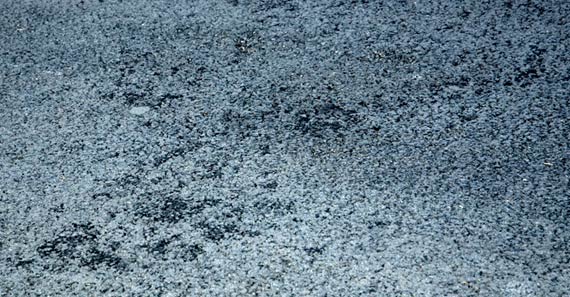 Barry’s Bridge Thurles begins to unravel after 4 days. This limestone road bridge served us well, until around 1820, when it was reconstructed. In more recent years it was widened, its old stone walls replaced by footpaths and steel railings; its road resurfaced by concrete.
Today, 2018, despite major strides in education and communication the knowledge on how to fill a pothole has been lost. On Friday, March 30th last after three weeks of tolerating single lane, “Stop & Go” twenty-minute, traffic management delays, Barry’s bridge was reopened, having been resurfaced.
One hopes no cheques have changed hands, as yesterday, just 4 days later, already this new surface has begun to unravel. Someone in Tipperary Co. Council’s engineering department remains convinced that it is possible to glue tarmac to a sloping road surface and then run heavily laden 12-wheeler trucks over it.
You can only get from people what they are willing or able to give was always the definition of the quote, “You can’t squeeze blood from a turnip.” But it appears that when it comes to the ratepayers and taxpayers of Thurles Town; yes, we turnips do actually produce blood and can be continuously squeezed.
Meanwhile, here in Ireland, there are still several streets in existence with no pot holes. These streets are now some 60 years old. Back then they used a miracle product for such surfaces. It was considered environmentally friendly; could be recycled, and contained no expensive petroleum. The miracle product was called cement.
Here in Thurles again today, the Council truck did its daily sweep of the town, filling an occasional water laden hole with cold tarmac, which will be reduced to gravel within 48 hours.
There is still no confirmation on the promised Thurles Bypass, initially pledged some 16 year ago.
There were just 6 votes separating Mary Newman and Garrett Ahearn at the recent Fine Gael selection convention here in Thurles, and it’s now thought that the Cashel woman may be added to the ticket for the next general election in October. One wonders will “The Bypass” arrive before then.
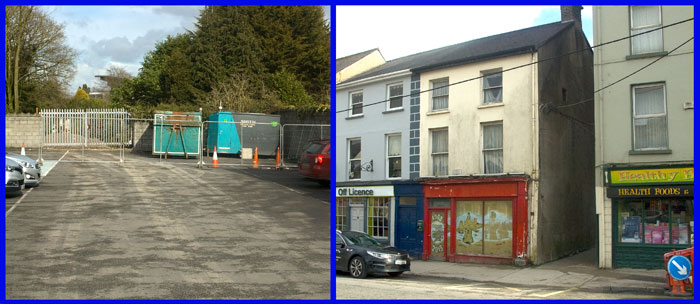
The long established Co. Limerick based company of Smith Demolition, based in Newcastle West, has been awarded the contract to demolish Griffin’s shop, (Red Shop Front pictured right above), on the ‘Money Side’, South on Liberty Square here in Thurles.
Smith Demolition, who operate throughout Ireland and the United Kingdom, will also clear the site for the proposed car park, behind this soon to be demolished building and directly opposite the 18th-century, Hayes Hotel. It is understood that full site clearance will take approximately 10 weeks to fully complete.
Smith Demolition have today removed a portion of the east wall of the public car park (See picture left above), situated at Slievenamon Road, Thurles; and have cordoning off a small portion (two car parking spaces), of this public parking area, to initially facilitate their site office and lock-up.
Slievenamon Road Works
Meanwhile the long awaited roadworks which were scheduled to begin on the Slievenamon Road last October 2017, and announced on TippFM this morning as beginning today, April 3rd 2018, have so far failed to materialise.
We understand however that work may begin on this area tomorrow, following the completed upgrade to the Barry’s Bridge project. The Slievenamon Road project is expected to take up to 7 weeks to complete.
 The Swiss Cottage Cahir Access to most OPW-managed heritage sites will remain free to visit on the first Wednesday of every month, again this year.
Families looking for a cheap day out in areas around Ireland, now have no excuse to remain caged up at home, over the coming weekends, for the duration of the upcoming holiday season.
So if you want to visit the towns of Thurles, Cashel, Cahir, Clonmel, Roscrea, Nenagh, or even further afield, with your family, now is your chance at very reasonable cost for your outing.
Do remember that Tickets are allocated on a first-come, first-served basis, and visitors are advised to arrive early to avoid delays at some of the busier sites.
Visit heritageireland.ie for more information.
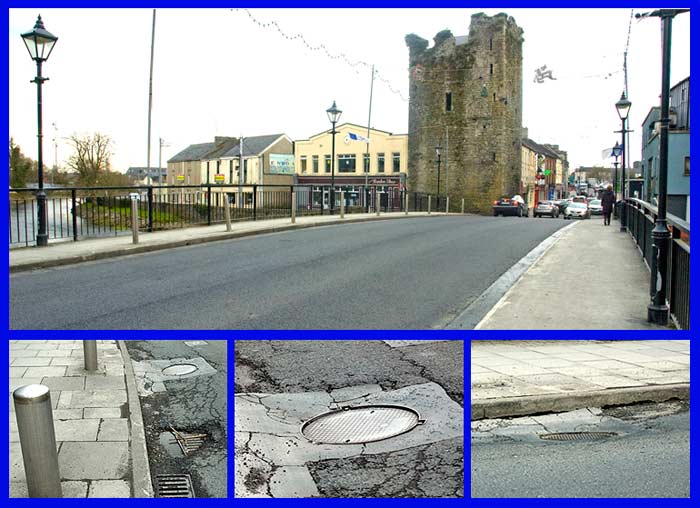
Business people in the heart of Thurles and indeed in the streets surrounding Liberty Square are heaving a sigh of relief this morning, following the news that the necessary repairs to the Barry’s Bridge crossing, have at last come to an end. The single lane “Stop & Go” traffic system, which they and road users were also forced to experience over the past three weeks, is now at an end, or is it?
It would seem that our busy decision making, municipal engineers didn’t make it to Specsavers Opticians this year.
Less than 8mtres (24ft) away from the newly re-glued bridge surface, a collapsed drain under the road has gone unnoticed, despite its sunken state being in existence long before the previous glued surface, on this same Barry’s bridge, had decided to surrender and disintegrate. Yes and even before the “Beast from the East” could have obscured it, swallowing it in a white blank canvas. The clue for engineers was the obvious fact that the road surface had dropped 2ins below kerb foundations, thus leaving questions to be answered.
One would have thought that when all the heavy machinery; tar trucks, heavy duty breakers, rollers, tarmac trucks and other thingamajigs, were in place over the past three weeks, this very small close-by repair, could also have been included; thus cutting major costs for the taxpayer.
Not so; money does not seem to be a problem for the Templemore /Thurles Municipal District engineers, so expect the heavy machinery to return again, and that accompanying single lane of traffic also, to materialise yet again, and to hell with with the tax payer.
There is, however, one great saving having been made in all of this; the 2017 Christmas lights still remains in place this Easter; in plenty of time for next Christmas. This could mean that there will be no rise in Property Tax next year.
Emissions from three important air pollutants increased in 2016 – Ireland’s emissions going in the wrong direction for people to benefit from cleaner air.
EPA reports 2016 emission levels for the five main air pollutants.
 The figures show that emissions of three of the five air pollutants increased – ammonia, nitrogen oxides and non-methane volatile organic compounds. The figures show that emissions of three of the five air pollutants increased – ammonia, nitrogen oxides and non-methane volatile organic compounds.
Emissions of ammonia have been increasing since 2011 and were above the specified EU emission limit in 2016 for the first time.
Emissions of two of the other air pollutants, nitrogen oxides and non-methane volatile organic compounds, while in compliance with EU limits for now, are increasing.
Emissions of sulphur dioxide continue to decrease. These were well below the required EU emission limits, substantially due to the use of lower sulphur content fuels in electricity generation and transport.
Particulate matter emissions declined in 2016. Future emissions will depend largely on the quantity and quality of solid fuel used in the residential and commercial sectors.
The EPA today published figures for emissions of five key air pollutants. These pollutants impact air quality in Ireland and further afield, causing respiratory problems, pollution of soil and surface water, and damage to vegetation.
Stephen Treacy, Senior Manager with the EPA, said, “Our figures show that emissions of three of the five main pollutants are going in the wrong direction. Higher emissions of these pollutants will cause damage to air quality and health and make future compliance with EU limits more challenging.”
This latest information from the EPA shows that Ireland exceeded its emission limits for ammonia for the first time in 2016 and emissions of this gas are increasing. The agriculture sector accounts for virtually all (99 per cent) ammonia emissions in Ireland arising from the application of fertilisers – 40 million tonnes of animal manures are used annually together with 300,000 tonnes of nitrogen in fertilisers.
“Ammonia limits have been breached due to the rapid expansion of dairy and beef production in Ireland in recent years. This underlines the challenge in designing appropriate policies that protect our environment in a growing economy”, Stephen Treacy said.
The 2016 figures show that Ireland remains in compliance with its nitrogen oxide and non-methane volatile organic carbon emission limits, though these emissions are also increasing. Transport is the principal source of nitrogen oxide emissions, contributing approximately 41 per cent of the total in 2016. Agriculture is the second biggest source, contributing approximately 29.6 per cent of the 2016 total, mainly due to synthetic fertiliser application and emissions from urine and dung deposited by grazing animals.
The figures published today show that Ireland’s level of sulphur dioxide continues to be well below the EU emission limits. The reduction in the emission of this pollutant is positive for the environment, public health and the economy. The main sources of sulphur dioxide emissions are the power generation, residential and commercial sectors. Effective licencing and enforcement by the EPA has contributed to reductions in these pollutants as well as the use of cleaner fuels in power generation and transport.
Stephen Treacy concluded: “On the positive side, Ireland has significantly cut emissions of sulphur dioxide, greatly reducing the environmental damage caused by this pollutant, via behaviour change and response to regulatory interventions. While overall emissions of particulate matter also declined in 2016, localised problems can arise because of residential solid-fuel use.”
For further detail on these figures see the EPA web published report Ireland’s Air Pollutant Emissions 2016.
|
Support Us Help keep Thurles.info online by donating below. Thank you.
Total Donated 2026: €40.00
Thank You!
Daily Thurles Mass Livestream
|





Recent Comments