Sadly, a 19-year-old teenager lost his life last evening, while four other persons have been injured, following a collision on the N24 at Ballykisteen, near Tipperary Town, Co Tipperary.
The collision, which involved two motor vehicles, occurred shortly before 9:00pm.
The body of the deceased has since been removed to the mortuary at University Hospital, Waterford, where a postmortem examination is expected to take place.
The male driver and another male passenger, latter occupying the same vehicle, were taken to University Hospital Limerick, where the passenger is understood to be in a serious condition.
Two occupants of the second vehicle were also taken to University Hospital Limerick, understood to be suffering with serious, but non-life threatening injuries.
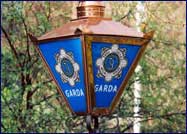
The section of the N24 collision site remained closed over night to facilitate a technical examination by Garda Forensic Collision Investigators and local diversions have been put in place.
Gardaí have appealed for witnesses to immediately contact them and should anyone have further information; same are asked to contact Tipperary Garda Station on Tel: 062 80670 or the Garda Confidential Line on Tel: 1800 666 111 or indeed any Garda station.
Sadly, following a fatal incident, the railway line between Thurles and Portlaoise remains closed.
Irish Rail have confirmed that services were paused shortly after 8am and the line will remain closed until further notice.
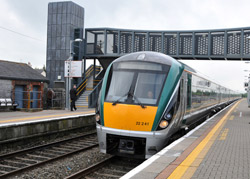
The 6.40am Limerick to Heuston train is currently stopped between Thurles and Templemore following the incident. Emergency services remain in attendance at the scene.
Significant knock-on delays can be expected for all Cork, Kerry and Limerick commuter services, while Portlaoise-Heuston services have remained operating.
Further updates on the situation will be issued by Irish Rail in the coming hours.
Ireland’s 2022 Greenhouse Gas Emissions show a welcome decrease, but much work remains to be done
Ireland’s greenhouse gas emissions decreased by 1.9% (1.19 Mt CO2eq) in 2022, driven by higher fuel prices, increased renewable energy, behavioural change and regulation.
Power generation emissions decreased by 1.9% due to a reduction in coal, oil and peat use and more renewable energy.
Agriculture emissions decreased by 1.2% driven by reduced fertiliser use which offset the impact of an increase in livestock numbers.
Residential emissions decreased by 12.7% with the impact of higher fuel prices, new regulations that ban the use of smoky fuel and milder weather evident.
Transport emissions increased by 6% in 2022 as the COVID rebound continues.
The Environmental Protection Agency (EPA) has today published its provisional greenhouse gas emissions for Ireland for 2022. The figures show a reduction of 1.9% compared to 2021, with emission reductions in all key sectors, except Transport.
In total, 60.76 million tonnes of carbon dioxide equivalent (Mt CO2eq) were emitted excluding emissions from Land Use, Land Use Change and Forestry (LULUCF).
The report highlights that 47% of Ireland’s Carbon Budget for 2021-2025 has been used in the first 2 years. An extremely challenging annual reduction of 12.4% is required for each of the remaining years if Ireland is to stay within the Budget.
The figures also show that Ireland exceeded its 2022 annual limit under the European Union’s Effort Sharing Regulation (EU 2018/842). These annual limits have been reduced further from 2023 onwards as Ireland’s Effort Sharing commitment increased from a 30% reduction on the 2005 level by 2030 to a 42% reduction.
Commenting on the figures Ms Laura Burke, Director General, EPA said: “An overall emissions reduction is welcome, and it is encouraging to see the impact of action across key economic sectors. Drivers for this reduction were higher fossil fuel prices and associated behavioural change, more renewable energy, and the impact of regulation such as the nationwide ban on smoky fuels in home heating.
She added “While welcome, this decrease in emissions needs to be significantly ramped up. We need faster progress on the actions set out in national climate action plans to decarbonise and transform all sectors of Ireland’s economy, to stay within National Carbon Budgets and reduce our Greenhouse Gas emissions by 51 per cent by 2030.”
A summary of the trends from key sectors:
Energy Industries: Emissions decreased by 1.8% despite a 2.1% increase in overall electricity demand. The reductions were driven by reductions in coal, oil and peat used in electricity generation (-16.1, -29.1 and -24.8% respectively). These reductions, however, were largely offset by the highest gas usage since 2010 (up 12.6% compared to 2021). The emissions intensity of electricity generation declined to 331g CO2/kWh in 2022 (from 348g CO2/kWh in 2021) due to increased renewable energy, but remained above 2020 levels.
Agriculture: Emissions overall decreased by 1.2% or 0.29 Mt CO2eq in 2022. A welcome decrease of 14% in nitrogen fertiliser use, to 343,000 tonnes, made significant progress towards the 330,000 tonne target for 2025 in the Climate Action Plan and resulted in 0.44 Mt CO2eq less emissions from agriculture. These reductions offset the impact of higher dairy cow numbers which increased for the 12th successive year. Total milk production increased by 0.7% in 2022, with milk output per cow decreasing slightly (-0.2 per cent).
Residential: Emissions decreased significantly by 12.7 per cent to 6.1 Mt CO2 eq. The main drivers for the decrease included a large rise in fossil fuel prices, warmer weather and new nationwide solid fuel regulations that ban the use of smoky fuel in home heating.
Transport: Emissions increased by 6% (to 11.63 Mt CO2 eq), following a similar increase in 2021. Overall higher transport activity – both private cars and freight transport – is eroding the impact of electric vehicles. In 2022, there were 72,000 battery electric (BEVs) and plug-in hybrid electric (PHEVs) which is approximately 37% of the Climate Action Plan target for 2025. Emissions in this sector in 2022 were 4.6% below the pre-pandemic level seen in 2019.
Land-Use, Land-Use Change and Forestry (LULULCF): This sector accounted for 10.7% of the total emissions in 2022 (including LULUCF) and decreased by 0.5%. The main source of emissions is from grasslands on organic soils that have been drained for agricultural production. Net grassland emissions were 6.8 Mt CO2 eq in 2022 while Forest land became a net source in 2022 (0.4 Mt CO2 eq) as more trees reached harvesting age.
Commenting, Ms Mary Frances Rochford, Programme Manager, EPA said: “Current decarbonisation actions are being outpaced by increased energy demand across the economy and dependence on fossil fuels for energy generation. A significant increase in Transport emissions in 2022 highlights the fact that a growing economy, with high employment, will continue to produce emissions if we do not break the link and decouple emissions from increased activity by using cleaner and alternatives sources of energy.”
The Greenhouse Gas Emission Inventory 1990 to 2022 is available on the EPA website and the EPA Greenhouse Gas web resource is also available online HERE.
Further information: Emily Williamson, EPA Media Relations Office Tel: 053-9170770(24 hours) or media@epa.ie
Junction of Clongour Road west & Slievenamon Road east (N62).
People entering Thurles from the west via Clongour Road, travelling unto Slievenamon Road should be aware that the traffic lights are out of sequence. Motorists are playing Russian Roulette in their efforts to cross the area, attempting to gain access to Lidl Supermarket on the east side; the N62 travelling south to the Horse & Jockey and the N62 entering Thurles Town travelling north.
While the sensor sequence, does work sometimes, this evening, traffic was held up for some 20 minutes eventually forcing vehicles to drive through a red light.
Locals in the area state that sensors on the road were affected by the recent upgrading of the road and since Thurles Municipal District Officials don’t get out that much, same has gone unnoticed for over a week. Best to avoid the Clongour Road junction, instead use the Stradavoher Road, entering Thurles town centre via Friar Street or Croke Street.
Contrary to what I thought; this female Jackdaw photographed hereunder, working on Kickham Street, Thurles, is not suffering from Bird Flu symptoms and hence she is not attempting to blow her nose.
No, truth is that due to the failure to employ a sufficient number of employees with which to deliver services, Thurles Municipal District Council officials supported by Thurles elected councillors and Tipperary Co. Council have decided to teach Jackdaws to pick up “indiscriminate littering” from under parked cars, where a recently purchased mechanical street sweeper has failed to reach. Read HERE. Same project, if successful could lead to less drains becoming blocked within the town and leave areas more litter free, before the arrival of King Charles III to Thurles, expected next month.
King Charles III, as you are probably aware, has been invited by councillors to visit the grave of his ancestor Lady Liz of Thurles, despite nobody knowing where she is buried, since no grave site exists. [Don’t tell Alison O’Reilly in the Cork Examiner Newspaper.]
This new experiment with Jackdaws, if proven successful, could see a reduction in the Councils already badly depleted workforce, leading to a reduction in the amount of Local Property Tax paid by Thurles householders, who get absolutely nothing in return for their forced annual generosity.
Jackdaw collecting litter in Kickham Street, Thurles. Pic: George Willoughby.
Now, all humour aside and speaking of ‘Local Property Tax’; I was sick of not being replied to by local Fianna Fáil TD Mr Jackie Cahill and his friend Independent TD Mr Michael Lowry; so one year ago, I wrote to the Fianna Fáil leader, the then Taoiseach Mr Micheál Martin and his coalition partner, the Fianna Gael leader and now Taoiseach Mr Leo Varadkar.
My reason for communicating with both men, was the possibility of acquiring the possible acquisition of a waiver in relation to this same Local Property Tax (LPT), due to the failure by Tipperary Co. Council to sort out, over the previous 5 year period, the road surface and drainage issues effecting every home on Kickham Street.
As everyone is aware, Kickham Street remains the busiest road, both for exiting and accessing Thurles town. I had pointed out that Tipperary Co. Council officials were trying to make the homes of residents uninhabitable. A link shown HERE, was forwarded, in the vain hope that same would achieve even some reaction.
The office of Mr Leo Varadkar as expected, failed to reply, while the office of Mr Micheál Martin sent a prompt notification to me, redirecting my communication to the then Minister for Finance, Mr Paschal Donohoe TD.
The reply came from Mr Alex Costello (Private Secretary to the Minister for Finance) on April 12th, 2022 at 09:22am.
Dear Mr Willoughby.
The Minister for Finance, Mr Paschal Donohoe TD, has asked me to refer to your recent email, addressed to the Taoiseach, Mr Micheál Martin TD, concerning a waiver of Local Property Tax. Your correspondence was passed to Minister Donohoe for attention and direct reply to you, in view of his responsibility for the Local Property Tax.
Local Property Tax (LPT) proceeds collected by the Revenue Commissioners are subsequently transferred to the Local Government Fund which comes under the responsibility of the Minister for Housing, Local Government and Heritage. The funds are ultimately redistributed to local authorities in accordance with Government policies on funding allocations. Annual LPT allocations to local authorities are published on the Gov.ie website HERE
LPT along with other revenue streams is used to fund essential local services such as, public parks; libraries; open spaces and leisure amenities; planning and development; fire and emergency services; maintenance and cleaning of streets and street lighting – all benefiting citizens directly. LPT income supplements income from commercial rates, from the provision of goods and services and from other Government grants. All of a local authority’s LPT allocation is used to help provide services within the local authority area. The benefits of these services accrue to all members of society. The decisions on and implementation of these services are matters for each individual local authority and the councillors for each.
The LPT legislation provides for exemptions from LPT in relation to properties that are unoccupied for an extended period due to illness of the owner; purchased or adapted or built for use by incapacitated persons; used by a charity or public body providing special needs accommodation; owned by charities for recreational services; registered nursing homes; properties certified as having pyritic damage; properties constructed using defective concrete blocks; properties fully subject to commercial rates and properties of North-South implementation bodies. As you can see there is no LPT exemption in relation to the circumstances outlined in your correspondence.
The Programme for Government commits to requiring each council to publish an annual statement of accounts to all homeowners and ratepayers, giving a breakdown of how revenue was collected and how it was spent. Information on individual local authority expenditure is generally available from their respective websites including Annual Budget documents and Annual Financial Statements and Annual Reports. In addition, the Annual Service Delivery Plan is prepared in accordance with Section 134 (A) of the Local Government Act 2001 which requires that each local authority prepare such a plan. The plan sets out the principal services that the local authority intends to deliver in the relevant year and is to be consistent with the provisions in the local authority budget of the expenditure estimated to be necessary for the local authority to carry out its functions during the local financial year to which that plan relates. The Annual Service Delivery Plan of Tipperary Co. Council is at this link HERE A number of councils also publish documents outlining how LPT monies are spent in their area or divisions thereof and the effects of local variation decisions. An example is at this link HERE. [No it is not, for same has been moved with no forwarding address.]
The Local Authority Performance Indicator Report is published annually by the independent National Oversight and Audit Commission (NOAC) to provide independent oversight of the local government sector. This is a matter for the Minister for Housing, Local Government and Heritage. The NOAC reports present the performance of local authorities for a wide range of services. The performance indicators are categorised by local government functions: housing, roads, water, waste/environment, planning, fire services, library/recreational, youth/community, corporate, finance and economic development. NOAC’s report for 2020 is accessible HERE.
I hope the foregoing is of assistance.
Yours sincerely Alex Costello, (Private Secretary to the Minister for Finance).
So there you go folks, I relate to you all this, in the event that you might want to review your voting preferences, come next elections.
Over the next day or two tune in for “Kickham Street, Thurles, Co. Tipperary Saga Part 4”.
This website uses cookies to improve your experience. We'll assume you're ok with this, but you can opt-out if you wish.AcceptRead More
Privacy & Cookies Policy
Privacy Overview
This website uses cookies to improve your experience while you navigate through the website. Out of these, the cookies that are categorized as necessary are stored on your browser as they are essential for the working of basic functionalities of the website. We also use third-party cookies that help us analyze and understand how you use this website. These cookies will be stored in your browser only with your consent. You also have the option to opt-out of these cookies. But opting out of some of these cookies may affect your browsing experience.
Necessary cookies are absolutely essential for the website to function properly. This category only includes cookies that ensures basic functionalities and security features of the website. These cookies do not store any personal information.
Any cookies that may not be particularly necessary for the website to function and is used specifically to collect user personal data via analytics, ads, other embedded contents are termed as non-necessary cookies. It is mandatory to procure user consent prior to running these cookies on your website.








Recent Comments