|
|
Starting next Thursday July 28th, Tipperary’s longest running festival, International Miss Macra, will celebrate it’s 40th Anniversary. Joan Pollard Carew, (Michael’s Jewellers’, Friar Street, Thurles.) Macra Sponsor, Published Poetess, and Thurles Community Activist writes:-
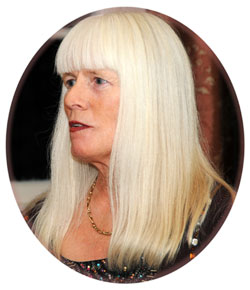 Joan Pollard Carew “I am both proud and honoured to state that I have been involved with International Miss Macra almost since its inception, forty years ago. In 1987, I was invited to join the adjudicating panel and was thrilled to accept. I am delighted to be one of the longest standing adjudicators and sponsors of this successful festival.
Over the years I was privileged to sit on the ‘Judging Panel,’ with Patsy Lawlor (Farmers Journal) Martin Ryan (Limerick Leader) Deputy Teresa Ahern (RIP) Jim Dockery, Matt O’Keefe, Eileen Leamy, Alma Heffernan, Deirdre Crowe and Declan Ryan to name just a few.
I have met and interviewed hundreds of contestants from every county in Ireland. Since the festival became International, we have had contestants from Germany, Holland, Russia, Poland, Scotland and New York. I am proud of all the decisions made by me and my fellow adjudicators over the years.
Our task is difficult, but very enjoyable, as we meet, chat and share time with a wonderful group of young ladies all eager to carry the title home.
I have been privileged to work with numerous Macra Committee Members, all who put their own stamp on the International Miss Macra festival. In the earlier years Paddy Heffernan, Michael Slattery and Tom Horan were among the founder members of the event, Paddy is still very involved today. I worked with Simon Loughman, John Ryan, Eamon and Geraldine Coleman, Jim Dockery, Eileen Leamy, Pat Fogarty, Declan Ryan, Claire Ryan, and the present Chairperson Mary Lyng.
I have fond memories of the earlier years of the festival and the field evenings (Held to raise funding.) up in the cattle mart, at Cabra Road, Thurles. My husband Michael and I were approached for sponsorship by Tim Curran from Clonoulty. That year we sponsored trophies for the field evening. This was our introduction to this wonderful festival as sponsors.
Thurles was the host town of the festival in the earlier years. Clonoulty Rossmore Macra Na Feirme brought a tremendous festival to the town over the August bank holiday weekend, for over thirty years. This added greatly to the economy of the town.
The festival usually started on the last Friday evening in July. Contestants arrived in the car park in Cathedral Street, Thurles, on floats and then were paraded up Liberty Square, to a specially erected platform, usually Dwan’s lorry, decked out in beautiful flower arrangements. The competing young ladies were escorted on to the stage and introduced to the huge assembled crowd. The job of introducing the contestants was very ably conducted over the years by numerous personalities including Jackie Griffin, (RIP) Philip Ryan, PJ Broderick, Eamon Coleman and Mike Egan.
Saturday morning Hayes Hotel in the Square was buzzing as the girls arrived for interviews. Saturday night saw The Premier Hall hosting the Cabaret, then it was dancing time and fun as contestant’s locals and visitors danced chatted and strangers became friends.
The sports day followed Sunday mass in Rossmore. Contestants, host family’s, locals and visitors travelled the short distance to the hurling field in Clonoulty. This was followed by a BBQ, prepared and cooked by the local ICA ladies.
Sunday night was Banquet Night and over the years this was held in Hayes Hotel or The Anner Hotel. Contestants were then coached to The Premier Hall to dance to The Paddies and the announcement and crowning of the winning girl.
International Miss Macra Festival has become the highlight in our calendar of events here in Co Tipperary. The festival has brought thousands of visitors from all over Ireland and parts of Europe to Co Tipperary for this August bank holiday period over the years. The festival is instrumental in helping us showcase Co Tipperary as a destination for holidaymakers who enjoy historical buildings, good fishing, equine activities, forest walks, traditional music / dancing and superb high street shopping.
We are the Premier County in the heart of the Golden Vale and extend a hand of friendship to all who visit us, small wonder that we have holidaymakers returning every year to our beautiful county.
International Miss Macra festivals has gone from strength to strength thanks to the foresight and hardworking committees over the years.”
The festival is now hosted in Dundrum House Hotel and Golf Resort. The ambiance of this great house and resort is a perfect location for this truly prestigious festival.
This festival begins Thursday 28th July and runs until Sunday July 31st, 2011 inclusive.
From Thursday 28th July to Sunday July 31st, 2011 tractors, silage harvesters and milking machines will go silent. Farms throughout the thirty-two counties will have all the appearance of being abandoned, when the young farmers of Ireland converge on the villages of Dundrum and Clonoulty, Co. Tipperary. One Summer weekend for the last 39 years here in Tipperary has been set aside to make friendships, enjoy festivity and fun, and this years 40th International Miss Macra festival and celebration promises, yet again to guarantee all three.
The scenic village of Clonoulty is once again honoured to host this annual festival, as beautiful young ladies from Ireland and abroad get set to compete for the prestigious title of 40th International Miss Macra 2011. Indeed if the International Miss Macra press conference was a reflection of the festival to come, then this years event could be seriously challenged for space and bed accommodation locally.
Nowadays, when members of the press are invited to to such conferences, they expect to find a handful of “the usual suspects,” neatly rounded up, but not our International Miss Macra committee. To a tightly packed conference room, the organisations Chairperson Mary Lyng addressed host families, sponsors, judges, committee and press members, together with over 16 of this years competing 26 gorgeous competitors, all taking part in this years competition. Some contestants had travelled from places as far away as Scotland, Tyrone, Dublin, Sligo, Cork and Clare for the evening, to the palatial Dundrum House Hotel and Golf Resort here in County Tipperary, latter all staking their claim to the title 40th International Miss Macra 2011.
In her opening address Chairperson Mary Lyng stated:-
On behalf of the organising committee of International Miss Macra Festival 2011, it gives me great pleasure to welcome you to the Official Launch of our Festival. Now in its 40th year, we are delighted to have 26 contestants taking part in this year’s festival.
To the contestants, I welcome you and hope you have an enjoyable weekend. I would like to especially welcome back Annabelle Keohe, International Miss Macra 2010, who has travelled from Wicklow to be with us this evening.
I would like to welcome our Host Families and thank them for all their support and assistance. Each year they so generously open their doors to the contestants for the weekend. I would also like to thank our many kind sponsors. The success of the festival depends greatly on them and we thank them for their continued support. Particularly I would like to pay tribute to Michaels Jewellers’ and Dundrum House Hotel.
Our adjudicators have a difficult task ahead of them for the weekend, but I have no doubt that Joan, Declan and Catherine are more than capable of the task. I wish them the best of luck!
I wish also to thank National President of Macra Alan Jagoe and Munster Vice President Tommy Myles, for their support, and finally to all members of Clonoulty Rossmore Macra na Feirme, I thank them for all the work they have put into this year’s festival and look forward to the next two weeks of final preparations!
Mary Lyng also informed the large gathering that RTÉ had confirmed that Nationwide would be sending their camera’s to cover this years event, latter hosted by the popular duo of Mary Kennedy and Michael Ryan.
Outline of the Weekend’s Activities
Thursday 28th July: 6.00-7.30 pm – Contestants arrive in Dundrum House Hotel to meet organising committee and at 9.oopm contestants get to meet and greet with their Host Families in Clonoulty Community Centre, followed by a ceilí and other entertainment. The launch of a 40th celebration and Commemorative Booklet will also be held here.
Friday 29th July: 10.30am – 4.30pm The Queen Elizabeth II Guided Tour of Coolmore Stud and the Rock of Cashel will take place, broken briefly by lunch hosted by Macra National President, Alan Jagoe.
10.00pm sharp begins a 70’s Theme Night, Fancy dress and dancing to the “Wig Wham Glam,” band, followed by a disco in ‘The Venue,’ Dundrum House Hotel’s premier night spot..
Saturday 30th July: 9.00am begins Interviews for all the contestants in ‘The Multeen Suite,’ in Dundrum House Hotel.
1.00pm – Sound rehearsals for the cabaret. 2.00pm – Hairdresser appointments. 7.00pm – Mass in Rossmore Church. 8.00pm – Cabaret in marquee adjacent to ‘The Venue,’, followed by dancing to ‘No Recession,’ and late night disco.
Sunday 31st July: 12.00pm Sports Day, Barbecue and ‘Know your Neighbour,’ Family Fun Day in Clonoulty G.A.A. Grounds.
6.00pm – Official Photographs for all contestants. 6.45pm – Champagne Reception. 7.30pm – International Miss Macra Gala Banquet 2011.
10.30pm – Dancing to ‘Silver Dollar.’ Midnight Announcement of International Miss Macra 2011. 12.30 – Late Farewell Disco
Prizes:
The chosen 40th International Miss Macra 2011 will receive:- The International Miss Macra Perpetual Silver Trophy, together with a specially commissioned Perpetual Tiara, designed by Michael’s Jewelers’, Thurles, Co Tipperary, a cash prize of €1000 and a Tipperary Crystal trophy sponsored by Dundrum House Hotel.
First Runner up in this International Miss Macra festival will receive a specially commissioned piece of Tipperary Crystal and a prize fund of €500, while the second Runner up will receive a specially commissioned piece of Tipperary Crystal and a cash prize of €300, sponsored by Tipperary Co-Op.
Each of the 26 contestants will receive a momento of the weekend, also kindly sponsored by Michael’s Jewelers’, Thurles, Co Tipperary.
Marking System
Personality will receive 30 marks, Involvement in Macra 25 marks, Hobbies and Interests 15 marks, Knowledge of Macra 10 marks, General knowledge 10 marks and finally Beauty and deportment 10 marks. Total 100 marks awarded.
This years event has all the hallmarks of being the largest Macra event yet with the winners from the previous 39 Miss Macra competions expected to be in attendance at the Sunday nights Banquet.
See UPDATE:
For tourists visiting North Tipperary and the Thurles area, who enjoy walking, geology, climbing, history, photography, legendary tales, or simply recording images to “flash upon that inward eye,” then there is no place more enjoyable, than a trip to The Devils Bit.
In the Irish language, Bearnán Éile, (Translated into English – Little Gapped Hill of Éile.) this area offers the visitor, on a clear day, an expansive and breathtaking view of the surrounding countryside, taking in not just Tipperary county itself, but also areas of counties Clare, Galway, Kilkenny, Laois, Limerick, Offaly, and Waterford.
Local legend states the mountain got its name when the hungry Devil, flying overhead, took a bite out of the rock. Indeed the large gap in the mountain between the two remaining outcrops of rock, bring the viewer to the same imaginary conclusion. Legend also informs us that the devil broke his teeth while chewing and his mouthful of hard rock was spat out, falling to earth, where it now forms the base to the well known tourist attraction, known as the Rock of Cashel.
(Special thanks goes to Thurles videographer Mr Brian Corbett for sharing the following film clip.)
In 1789, the Book of Dimma was supposedly discovered in a small cave on the mountain. The little known Book of Dimma, written possibly late in the 8th century at nearby St. Cronan‘s Monastery, Roscrea, was preserved by Thady O’Carroll, Prince of Ely, and later during possibly the mid-twelfth century was encased in a rich gilt case. The book is a copy of the four Gospels written in Old Latin and is representative of Irish ‘Pocket Gospel’ manuscripts. The book which had a blessing to the sick and dying added in the 10th or 11th century, can be viewed in Trinity College, Dublin, together with many other articles of Ireland’s rich historical treasures found in Tipperary, now bringing prosperity to our capital city’s economy at Tipperary and rural Ireland’s expense.
This mountain holds indeed a rich history. It was the scene of a mass Anti-Tithe meeting on July 25th 1832, which, according to press reports, was attended by over 50,000 people. Samuel Lover in “Legends and Stories of Ireland,” (1831-1834), refers to a mock burial of the tithes by local peasantry.
The limestone round tower built in the 1650’s, on the approach to the summit of this 478m (1570 feet) mountain, is known locally as “Carden’s Folly,’ and built by John Carden, a follower of Oliver Cromwell and involved in the battle of Marston Moor July 2nd, 1644, when the forces of Parliament defeated their enemies, largely because of the military brilliance of Cromwell. After Cromwell’s conquest of Ireland in 1649 John was rewarded with an estate at Templemore, Tipperary, where he built a manor house and eventually this round tower. He and subsequent family members would go on to become the principal landlords in this area, with the most notable of the Carden family undoubtedly John Rutter Carden III (1811-1866), better known as ‘Woodcock Carden’, so nicknamed by his tenants, because of his ability to survived numerous assassination attempts by tenants. It was said he was as difficult to shoot as the Irish wading bird known as the ‘Woodcock,’ or it’s closest relative the ‘Snipe,’ when in flight. (We will be discussing certain little known and very personal aspects of Mr John Rutter Carden’s life in the not too distant future.)
A large 45 ft cross was erected on the Rock and officially blessed by Upperchurch native, and Archbishop of Cashel and Emly’s, the Most Rev. Dr. Jeremiah Kinane, on Sunday, August 22nd 1954, in celebration of the ‘Marian Year,’ pronounced by Pope Pius XII, the first in Church history. The base of this cross is 5 feet squared and 10 feet deep. Construction was carried out by Duggan Bros. building contractors at Templemore at a cost then of approximately €2,000. The cross was previously illuminated at night and in 1988, to compliment its existence, a statue of the Virgin Mary was erected on the eastern side of the Rock.
Geologists should note that in this area we find the earliest record of fossil flora containing Cooksonia type Sporangia, latter an extinct grouping of primitive leafless land plants. The earliest Cooksonia dates from the middle of the Silurian geologic period and system. This group continues to be an important component of flora until the Early Devonian period, a total time span of 428 to 398 million years ago.
When visiting this attraction, tourists are asked to respect the rights of those farming this fertile area.
Australian breakfast TV watchers will this week get a glimpse of some of Ireland’s key tourist attractions, including outlaw Ned Kelly’s Tipperary connection.
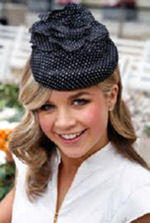 Emma Freeman ‘Today’s,’ weather presenter the lovely Emma Freeman will entice Aussie holidaymakers to come to visit Ireland, as she delivers live weather bulletins from various locations across Ireland over a three day period.
The breakfast TV show ‘Today,’ which appears on channel 9, is broadcasting live from Ireland this week to over 1 million people across Australia. The broadcasts will begin each evening at 9.00pm, which is 6.00am in Australia the following day, and will go out live during this top-rated show.
Ms Freeman also took the opportunity this evening to highlight County Tipperary, broadcasting from McCarthy’s Bar, in Fethard, Co Tipperary, where she explored the horse-racing traditions of this beautiful part of Ireland and looked at Tipperary outlaw Ned Kelly’s connection with the county.
Emma was contacted by the new “Hidden Tipperary” Thurles tourism group, with a view to her visiting Thurles, but alas the broadcasts will finish in Dublin tomorrow, where she will show off some of the city’s main tourist attractions to Australian viewers, broadcasting live from Trinity College.
Regrettably Australian viewers will not see the hidden primary sources relating to the 19th century leader Thomas Francis Meagher, transported for life to Van Diemen’s Land in Australia, or indeed the Borrisoleigh home of the parents of Ben Chifley, their 16th Prime Minister of Australia, to name just two connections.
But then of course no one is marketing North Tipperary as a tourist attraction. It’s such a shame really.
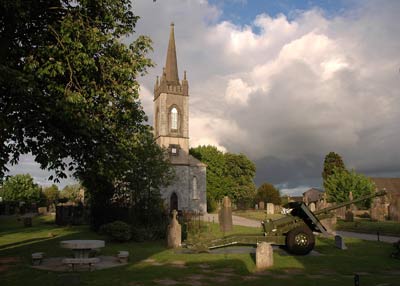 St. Mary's Famine Museum, Thurles. Tipperary. The British market is by far the most important source market for visitors to the island of Ireland, accounting for over 3.5 million or over half of all International visitors to Ireland. The market profile of British visitors to the Shannon Region, shows that the ‘Over 50’s,’ market is one of the most important segments of visitor trading.
As part of the Shannon Region’s overseas marketing strategy this year, Shannon Development is actively targeting this market segment in Great Britain. Shannon Development will take a stand at the ‘Over 50’s Show,’ taking place at the Olympia London, 15th and 16th July next. They will have a stand over the course of the two days at this show, which attracts over 10,000 visitors. They will also be targeting visitors to the show with a Seniors supplement and also with a bespoke brochure, featuring heavily discounted offers from participating trade partners.
They would like to invite you to attend this show on their stand, the cost for your attendance is €150. Note: There are a limited number of spaces available, so positions will be allocated on a first come first served basis.
If you are interested in attending the show, please contact Shannon Development by close of business on Thursday, 16th June next.
The €150 cost only covers participation at the event and a feature in the bespoke brochure to be distributed at the event. You can attend on one day or both if you wish for this single cost. Each participant must cover the costs for their own hotel, food, flights and transport while in London.
Contact Details:- Tel: 353 (0)61-710268. Mail To: leydonma@shannondevelopment.ie
By the way; If you do not pay €150 you are not included on the “bespoke brochure / flier.”
This is as good as ‘Shannon Development,’ gets as far as Tipperary, east of the Shannon is concerned, perhaps this development group should be renamed, maybe ‘Shannon Self Development.’
A message now for my critics, please consider the following CASE STUDY:
Tralee Co. Kerry, fully developed as a tourist attraction, can easily afford to send a trade partner for €150 and easily cover that trade partners costs for hotel, food, flights and transport while in London. Millions of Euros in tourist promotion has been correctly spent here.
Thurles, Co. Tipperary, never developed as a tourist attraction, cannot easily afford to send a trade partner for €150 and cannot easily cover that trade partners costs for hotel, food, flights and transport while in London. By comparison, no Euros spent east of the Shannon River in tourist promotions, what a shame, what deceit. Perhaps Shannon Tourism would like to comment and disclose funding spent east of the Shannon, by comparison of course with the west bank.
Recently an application for funding of €4,000, to provide an up-to date website (Click Here.) for Co. Tipperary, was refused by Shannon Development. While they saw much merit in the proposed project, funding was refused on the grounds of (You guessed.) ” No Funding.” The aim of the website was to provide state of the art High Definition Video (Latter with ‘free to use,‘ embedding code, which would be of huge advantage to other communities in Tipperary) together with appropriate text, and aimed at identifying, for the first time, our numerous, little-known attractions in the whole county of Tipperary. Behind this project was a group of top IT, Photographic, Media and Script professionals, all working free of charge and together, for the common good of tourism in the county. (All thanks to a small dedicated, patriotic group, with no hidden agenda, I may add.)
I am happy to announce (I sound like a TD.) that despite no financial assistance being received from any “Development Organisation,” this website is now up and running. While currently in it’s infancy, and as yet not properly structured, over the coming weeks, this site will deliver large amounts of new and exciting information to the ‘world and his mother,’ and hopefully attract at least a small amount of tourism to this beautiful, historic, welcoming, yet unknown county.
Perhaps the tourism guide book titled “Ireland : A Rough Guide,” when ‘travelling the internet,’ will find something worthy of writing about and now stop writing drivel like:- “Thurles is of very little interest in itself.” “Having seen the Rock of Cashel, most people head out of Tipperary for the west, and frankly this isn’t a bad idea – the north of the county (Tipperary) has little to distract you.” “Templemore is even less interesting than Thurles.”
Meanwhile Dublin Museums, at the gateway to Ireland, will continue to reinforce their local economies at rural Irelands’ and, in particular, Tipperary’s expense.
I ask all my recent critics the following question; “When a visitor calls to your home, do you ask them to wait at your gate or do you invite them into your home ?” Those given responsible for Irish Tourism in Ireland, are now asking our visitors to ‘wait at the gate.’
Remember our Thurles Motto “Fleadh agus Failte.” (Translated from Irish:- “Banquet (or Party) and Welcome.”)
Anyone out there with a little spare funding and unfilled bedrooms, anxious to assist or support the cause? You will get a return on your investment – we promise, so talk to us.
Here in Thurles we have adopted a Chinese Proverb approach, normally associated with the Third World, “Give a man a fish and you feed him for a day. Teach a man to fish and you feed him for a lifetime.”
|
Support Us Help keep Thurles.info online by donating below. Thank you.
Total Donated 2026: €300.00
Thank You!
Daily Thurles Mass Livestream
|



Recent Comments