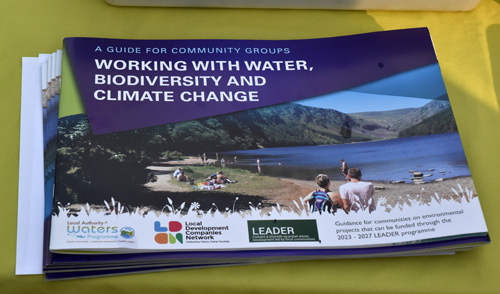
Community Water Officer Mr Darragh Kelly with LAWPRO (Local Authority Waters Programme) reports:
I am delighted to announce that the 2026 Small Grants & Events Scheme is now open for applications. I attach a copy of the revised 2026 guidelines and also a link HERE to the Small Grants and Events Scheme 2026 portal.
This grant scheme is designed for community groups seeking support for small-scale initiatives and events that fall outside of LAWPRO’s targeted funding calls. It supports activities such as World Wetlands Day, Biodiversity Week, Science Week, and similar events.
Funding may also be used for awareness-raising initiatives including surveys, action plans, citizen science projects, meetings, workshops, litter picks, publications, biodiversity signage, and other small-scale projects.
Note: All applications must demonstrate a clear focus on water quality or water awareness. Please Also Note: This application form must not be used for events taking place during Heritage Week (15th–23rd August 2026). A separate application process for Heritage Week funding will be announced in advance.
Download Guidelines for LAWPRO Small Grants and Events Scheme 2026. → Please ensure you are logged in as a registered user, before you start completing a form. ◘ You must contact your local Community Water Officer before making an application. → Contact details for LAWPRO’s CWOs can be found HERE. ◘ Each application will be assessed based on its merits as it is submitted. → There is no obligation on LAWPRO to request any outstanding or supporting information. ◘ Please read the Guidelines carefully before making an application.
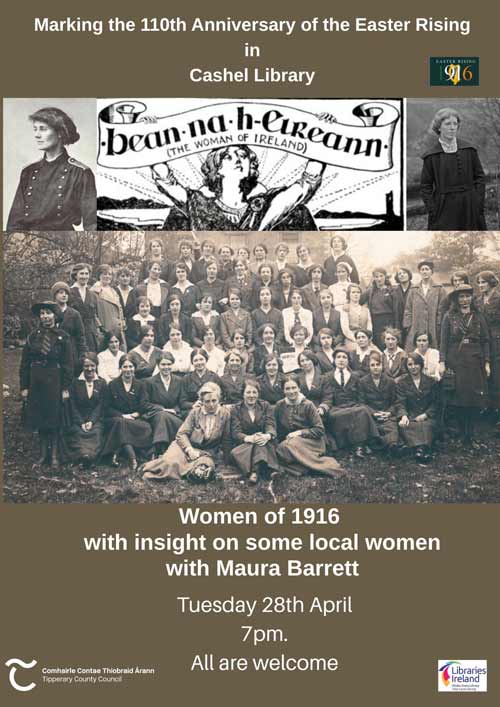
Cashel Library, Co. Tipperary will host a special commemorative lecture marking the 110th anniversary of the 1916 Easter Rising on Tuesday, 28th April 2026 at 7:00pm sharp.
This event will honour the vital yet often overlooked contributions of women to Ireland’s struggle for independence. During the Easter Rising, women played a central role across a wide range of activities, including combat, intelligence gathering, medical support, and communications, many as members of organisations such as Cumann na mBan and the Irish Citizen Army. Despite their significant involvement, their contributions have historically received limited recognition.
The lecture will be delivered by Ms. Maura Barrett, Cashel Librarian, and will focus particularly on women with connections to Cashel and the wider Tipperary region.
NOTE PLEASE: Booking is essential. To reserve your place, please contact Cashel Library at Tel: 062-63825.
People wishing to attend the above events can locate the Cashel Library building; situated on Friar Street, Lady’s Well, Cashel, Co. Tipperary, HERE. (Eircode E25 K798).
All are welcome to attend this insightful and commemorative event.
On any given weekday in Templemore, Co. Tipperary, the now-familiar sight of a queue outside One19 Coffee House tells its own story; a story of quality, community, and something special quietly brewing.
What began as a modest takeaway coffee spot has grown into a thriving café culture hub, serving everything from expertly crafted coffee to fresh sandwiches, cakes, and vibrant açaí bowls. Over time, it has evolved into a destination, drawing loyal customers, not just from the Templemore area, but from Thurles and across the county.
And Now… Thurles Welcomes One19. Tomorrow, April 8th, 2026, marks the beginning of a new chapter.
Welcome One19.
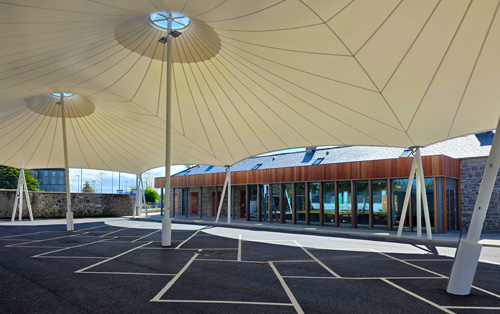
In the beautifully restored Market 54 area, just southeast of The Source Arts Centre building on Cathedral Street, One19 Coffee opens its doors once more, this time bringing its unmistakable charm to the heart of Thurles. There’s something quietly romantic about it; a café that once drew people away from Thurles, now finally arrives to meet them where they are living.
A Place for Mornings, Middays & Moments: From the very first light of day tomorrow, One19 Thurles will hum with life. Open 7 days a week. Weekdays:7:30am – 5:00pm. Weekends:Slightly reduced, slower-paced hours.
Just like its Templemore home, it will offer: Freshly prepared breakfasts and lunches. Artisan coffee brewed with care. Sweet treats, light bites and wholesome options. A space to pause, meet, and simply be.
More Than A Coffee Shop. This isn’t just another opening, it feels like a natural continuation of something already loved. A café built on: Community spirit – Consistency and quality and the simple pleasure of a really good cup of coffee.
Now set against the old historic great famine stonework and the renewed energy of Thurles’ Market Quarter, “One19” is poised to become not just a stop, but a regular supported destination.
Final Thought. Where once people travelled for One19; now One19 comes to them. And from tomorrow morning, as the doors open and the first coffees are poured, Thurles will gain something more than a café, it will gain a new gathering place.
This Wednesday, April 1st, history comes alive across Ireland, but nowhere more vividly than in the heart of Tipperary. As part of the popular “Free Wednesday” initiative, visitors are invited to step beyond the everyday and into centuries of rich heritage, with free access to nearly 40 iconic sites nationwide. From majestic castles to hidden architectural gems, this unique opportunity opens doors, literally and figuratively, to Ireland’s past, offering unforgettable experiences for families, explorers, and culture enthusiasts alike.
The Swiss Cottage, Cahir, Co. Tipperary.
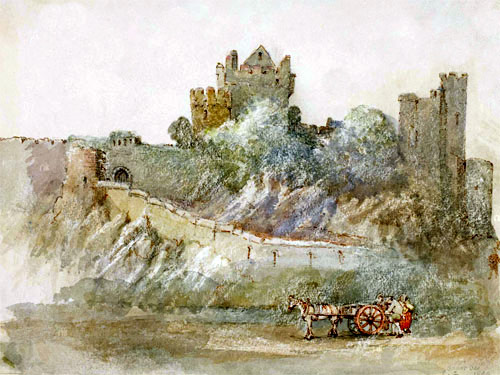
In Co. Tipperary, the spotlight shines brightly on a remarkable collection of historic landmarks, including Cahir Castle, Ormond Castle, Roscrea Castle, and the enchanting Swiss Cottage. These sites, steeped in stories of medieval power, elegant design, and rural life, showcase the county’s extraordinary contribution to Ireland’s built heritage. Many locations across the country have also recently reopened following conservation efforts, adding a renewed sense of discovery for returning and first-time visitors alike.
With no booking required and access granted on a first-come, first-served basis, this is a rare chance to immerse yourself in Ireland’s cultural legacy; completely free of charge. Whether wandering through ancient halls, admiring intricate craftsmanship, or simply soaking up the atmosphere of centuries gone by, tomorrow Wednesday promises a journey through time not to be missed.
As we already stated on Tuesday last March 17th, Thurles was alive with atmosphere and community pride as the town celebrated St Patrick’s Day with a well-attended parade that brought people together from across the area.
Video: Courtesy G. Willoughby.
Despite cold and cloudy conditions, large crowds gathered along the streets of Thurles, creating a vibrant and welcoming scene throughout the day. Families, friends, neighbours and visitors turned out in great numbers, with a strong sense of occasion evident from beginning to end.
The parade was a fitting reflection of the spirit of Thurles and the wider mid-County Tipperary community. It showcased the town’s warmth, resilience and pride, while also highlighting the importance of St Patrick’s Day as one of the most significant dates in Ireland’s cultural and civic calendar.
People of all ages joined in the celebrations, lining the route in good spirits, applauding participants and embracing the event with enthusiasm. The day offered a strong expression of local identity and community togetherness, as residents and visitors alike came together to celebrate Irish heritage and shared belonging.
Thurles continues to be a thriving and proud town in County Tipperary, and this year’s St Patrick’s Day parade once again demonstrated the strong community values for which it is so well known. The lively crowds and positive atmosphere underlined the town’s reputation as a friendly, welcoming and united place.
The celebration was a reminder of the enduring importance of community events in bringing people together and strengthening local connections. In Thurles, St Patrick’s Day 2026 was marked not only with colour and festivity, but with a genuine sense of pride, unity and shared celebration.
This website uses cookies to improve your experience. We'll assume you're ok with this, but you can opt-out if you wish.AcceptRead More
Privacy & Cookies Policy
Privacy Overview
This website uses cookies to improve your experience while you navigate through the website. Out of these, the cookies that are categorized as necessary are stored on your browser as they are essential for the working of basic functionalities of the website. We also use third-party cookies that help us analyze and understand how you use this website. These cookies will be stored in your browser only with your consent. You also have the option to opt-out of these cookies. But opting out of some of these cookies may affect your browsing experience.
Necessary cookies are absolutely essential for the website to function properly. This category only includes cookies that ensures basic functionalities and security features of the website. These cookies do not store any personal information.
Any cookies that may not be particularly necessary for the website to function and is used specifically to collect user personal data via analytics, ads, other embedded contents are termed as non-necessary cookies. It is mandatory to procure user consent prior to running these cookies on your website.





Recent Comments