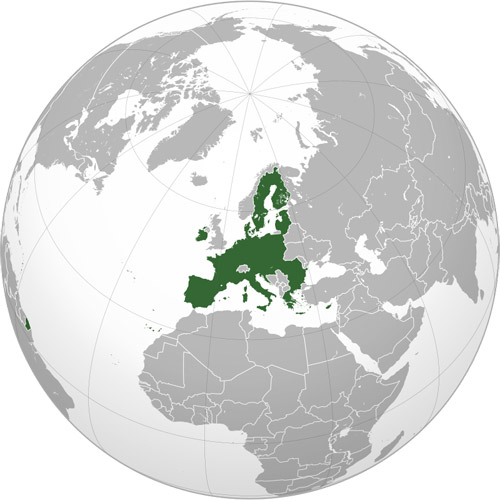
The European Commission has taken a significant step in enforcing the European Union’s cybersecurity framework by referring Ireland, Spain, France and the Netherlands to the Court of Justice of the European Union over delays in implementing the NIS2 Directive.
The case centres on the four countries’ failure to fully notify the Commission of national measures transposing the Directive into domestic law. NIS2 is one of the EU’s key cybersecurity laws and is designed to strengthen the resilience of essential and important services across the bloc. It applies to organisations operating in 18 critical sectors, including healthcare, energy, transport, public administration, digital infrastructure and other services vital to the functioning of society and the economy.
The Commission’s action follows earlier stages in the infringement process. Letters of formal notice were sent on 28 November 2024, followed by reasoned opinions on 7 May 2025. Since the Commission considers that complete transposition has still not been notified, it has now escalated the matter to the EU’s highest court.
This move comes at a time when cyberattacks against governments, public bodies and private companies are becoming more frequent, more sophisticated and more disruptive. Across Europe, ransomware incidents, attacks on public services and threats to critical infrastructure have underlined the need for consistent cybersecurity standards across all Member States.
The NIS2 Directive is intended to reduce fragmentation by setting common rules on cybersecurity risk management, incident reporting, supervision and enforcement. Its full implementation is important not only for individual countries, but for the EU as a whole, because cyber threats rarely stop at national borders. Weaknesses in one jurisdiction can create vulnerabilities across wider supply chains, public networks and cross-border services.
By asking the Court to impose financial sanctions, including a lump sum and daily penalties until full notification is made, the Commission is signalling that cybersecurity implementation is not optional. The referral also sends a wider message to Member States that delays in transposing critical digital and security legislation will attract consequences.
For organisations operating in affected sectors, the development is another reminder that NIS2 compliance remains a priority. Even where national laws are still being finalised, businesses and public bodies should be preparing their cybersecurity governance, risk management processes and incident response capabilities now.
The Commission’s decision marks an important enforcement moment for EU cyber policy. As cyber threats continue to grow, the EU is pushing to ensure that its legal framework is not only adopted on paper, but implemented in practice.
Ireland’s new approach to AI chatbots is not a blanket ban on automated customer service. It is more subtle, and potentially more important; consumers should not be trapped inside an automated system when the issue is serious, confusing or financially significant.
The immediate change comes from Ireland’s implementation of updated EU consumer rules for financial services sold online or remotely. The new rules give consumers a right to request human intervention instead of being forced to rely only on an AI chatbot or automated online tool when dealing with certain distance-marketed financial services. The point is practical; if a person is buying, cancelling or trying to understand a financial product online, they should be able to speak to a real person where automated tools are not enough. Recent Irish reporting described this as a consumer-protection measure aimed at giving online buyers protections closer to those they would expect in person.
That matters because chatbots are no longer simple FAQ boxes. Many are becoming front doors to essential services. They answer billing questions, process account requests, triage complaints and increasingly use generative AI to produce conversational answers. Vodafone Ireland’s TOBi is a useful example. IBM says Vodafone Ireland worked with IBM Expert Labs to redeploy TOBi on watsonx Assistant, using generative AI capabilities, large language models and retrieval-augmented generation designed to ground answers in Vodafone’s own content.
For customers, that may mean faster answers and more convenient support. But it also raises a basic consumer-rights question: when does “digital assistance” become a barrier between the customer and a human being?
TOBi is not automatically caught by the new finance-specific right to human intervention in every situation. Vodafone is primarily a telecoms provider, so ordinary mobile, broadband, top-up, billing, roaming or account-support queries are not the same as buying a regulated financial product online. The finance rules are targeted at financial services contracts concluded at a distance, not every chatbot used by every company.
However, that does not mean TOBi or similar systems sit outside regulation. First, the EU AI Act introduces transparency duties for AI systems that interact directly with people. In simple terms, users should be told when they are dealing with an AI system, unless that is already obvious from the circumstances. EU guidance on Article 50 states that providers must inform users when they are interacting directly with an AI system, and that AI-generated or manipulated content may also need to be clearly marked.
Second, GDPR still applies where personal data is processed. A chatbot dealing with account details, identity checks, complaints, billing information or customer history is likely to involve personal data. That means companies must consider lawful basis, transparency, data minimisation, security, retention, accuracy and user rights. If a generative AI assistant produces inaccurate information about a customer’s account, mishandles personal data, or makes it difficult to exercise rights, the issue is not just bad customer service; it may become a data-protection problem.
Third, Ireland is preparing a broader AI enforcement framework. The Irish Government published the Regulation of Artificial Intelligence Bill 2026 to give effect to the EU AI Act domestically. The Department of Enterprise says the Bill will establish the AI Office of Ireland as an independent institution at the centre of Ireland’s AI regulatory system and give competent authorities investigative and sanctions tools. The European Commission says the AI Act entered into force in 2024 and becomes fully applicable on August 2nd 2026, with some provisions applying earlier.
So where does this leave Vodafone’s TOBi? A fair reading is that TOBi should, at minimum, be transparent, accurate, privacy-conscious and supported by clear escalation routes. Customers should know they are using an automated or AI-powered assistant. They should be able to reach a human where the issue cannot reasonably be resolved by automation, especially where the matter involves complaints, cancellation, vulnerability, account access, fraud, security, disputed charges or important contractual consequences.
The strongest legal right to human intervention currently appears in the financial-services context. But the direction of travel is wider. Regulators and lawmakers are recognising that automated customer service can create real-world harm when it blocks access to help. A chatbot that works well can be useful. A chatbot that traps people in loops, gives wrong answers, refuses escalation or hides human support can become a consumer-protection issue.
For companies, the lesson is clear: AI assistants should not be designed only to reduce call-centre demand. They should be designed around customer rights. That means clear disclosure, good records, safe handling of personal data, tested accuracy, accessible alternatives and visible routes to a human.
For consumers, the message is equally important. When dealing with a chatbot such as TOBi, keep screenshots or transcripts if the issue is serious. Ask clearly for a human agent where the automated answer is inadequate. Use formal complaints channels where necessary. And where the matter involves regulated financial services, remember that the new rules strengthen the case for human intervention.
Ireland’s chatbot clampdown is not anti-technology. It is a reminder that automation should serve people, not replace their rights.
Three-Month Delay in Thurles: Homeowners Left Without Written Notice or Clear Responsibility for Fibre/Telecoms Cabling Repairs
Have you looked up to check the overhead electric and fibre connection to your home recently?
Residents of some Thurles houses have raised serious concern about fibre/telecoms infrastructure attached to their property, which will remain unresolved for at least the next three months.
This is not a minor cosmetic issue. The current cabling/connection point is interfering with ordinary property maintenance, including gutter cleaning and house painting. It also raises legitimate questions about safety, responsibility, and whether the correct qualified personnel are being sent to deal with the matter.
While fibre itself does not normally conduct electricity, because the glass/plastic optical fibre carries light, not current. However, some telecoms cables or fixings can include metallic elements, and any cable routed close to damaged electrical wiring can become hazardous through contact, arcing (when electricity jumps from one circuit to another), induced faults, water ingress, or poor separation. The HSE lists electric shock, burns, arcing, and fire from faulty installations as key electrical hazards.
A further concern is that Virgin Media Ireland, who own and lease these connections, never contacted affected homeowners about this issue by post, telephone, email, or by any other communication. Homeowners were not properly informed about who was responsible, what work was required, whether there were safety implications, or when repairs would be completed. That lack of communication is unacceptable where infrastructure on or near private homes is affecting potentially safety, access, and maintenance.
Virgin Media Ireland has entered into wholesale arrangements allowing it to provide services over SIRO-enabled premises. SIRO itself is the ESB/Vodafone joint venture which uses existing ESB Networks infrastructure, including poles, ducts, overhead and underground routes, to deliver fibre broadband. Contractors such as TLI Group are also involved in designing and building fibre networks, including overhead, underground and façade installations.
Given that structure, it is not acceptable for a customer or homeowner to be left waiting months while Virgin Media, SIRO, ESB Networks, or contractors decide who is responsible. If the connection was installed as part of a wider fibre rollout, then there should be a clear line of accountability for repairs, relocation, safety checks, homeowner notification, and making good any obstruction to normal property maintenance.
Residents concerns are not simply whether broadband is working. The issue is that telecoms infrastructure appears to have been left in a condition that affects access to gutters and external painting, and may be close to electrical infrastructure. If specialist personnel are required, then the matter should be escalated to the correct party immediately rather than repeatedly delayed or left unexplained.
Thurles residents are asking for written confirmation of the following:
Who owns the cable, connection point, and any associated equipment on or near their property?
Who is responsible for repairing or relocating it?
Whether Virgin Media, SIRO, ESB Networks, TLI Group, or another contractor must attend.
Whether the installation has been checked for safe separation from electrical wiring.
Why affected homeowners were not contacted by mail, phone, email, or other written communication.
A confirmed date for permanent repair, not a temporary wrap or further delay.
A three-month delay is unreasonable where the issue affects gutter cleaning, painting, and the safe maintenance of a home. The absence of direct communication with homeowners makes the matter worse. If there is a shortage of suitable personnel, or if multiple companies are involved, that should be stated clearly in writing. The homeowner should not be left carrying the inconvenience, risk, or cost of unresolved infrastructure works.
Residents therefore are requesting urgent escalation, a named responsible party, a written explanation for the lack of communication, and a confirmed repair date. If this cannot be resolved promptly, residents should consider referring the matter to ComReg, the Commission for Communications Regulation, seeking reimbursement for any additional costs caused by the continued delay.
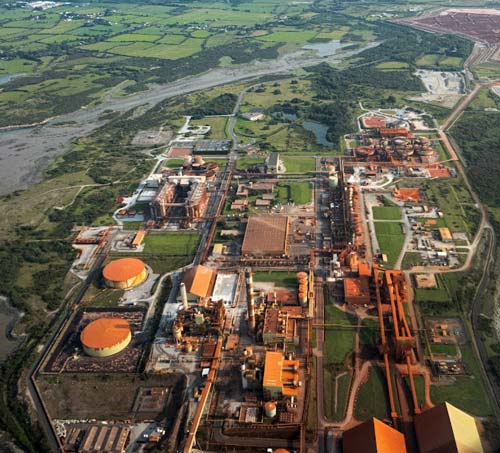
Russian-owned refinery, Aughinish, County Limerick.
Ireland says it stands with Ukraine. Our politicians speak about democracy, freedom, sovereignty, and the right of a nation to defend itself against invasion. But there is now a deeply uncomfortable question Ireland can no longer avoid; why is a Russian-owned refinery on the west coast of Ireland still sending alumina to Russia?
The refinery at Aughinish, County Limerick, is one of Europe’s largest alumina plants. Alumina is not a harmless by-product. It is the key raw material used to make aluminium, latter a metal that is essential across modern industry, including military production.
Recent investigations have raised serious concerns that alumina exported from Ireland is entering Russian supply chains connected to arms manufacturers. The evidence does not allow us to say that Irish alumina has been directly identified inside a specific missile or drone. But it does point to something almost as alarming; Irish-refined alumina appears to be feeding a Russian aluminium system linked to companies supplying Russia’s war industry.
That distinction matters, but it does not make the situation acceptable. There is also an unavoidable comparison with Ireland’s attitude towards Israel. Irish politicians have often been outspoken in condemning Israel’s actions in Gaza, calling for accountability, sanctions, and a tougher international response. Many of those criticisms may be justified on humanitarian grounds. But that only makes the silence around Russia-linked alumina exports more striking. If Ireland is willing to take a strong moral position on one conflict, it must be prepared to apply the same standard to another. Selective outrage weakens Ireland’s credibility. Human rights, civilian protection, and international law cannot depend on which country is easier to criticise.
Russia’s war is not sustained by tanks and soldiers alone. It is sustained by finance, logistics, raw materials, shipping routes, shell companies, legal structures and loopholes. Every supply chain that keeps Russian industry moving deserves scrutiny, especially when that industry is connected to the weapons used against Ukrainian civilians.
The Irish Government argues that sanctioning alumina could hurt Europe. That may be a real concern. Jobs matter. Energy security matters. Industrial supply chains matter. But so does moral consistency.
Ireland cannot claim to stand with Ukraine while allowing a Russian-owned company here to continue exporting a critical raw material into Russia without the highest level of public scrutiny.
The question is not whether workers in Limerick should be protected. They should be. The question is whether protecting jobs should mean protecting a supply chain that may benefit Russia’s war economy. If the Government believes these exports are safe, then it should show the evidence. Where exactly is the alumina going? Which smelters receive it? Who buys the aluminium produced from it? What due diligence has been done to ensure it does not reach sanctioned arms manufacturers? And why has it taken so long for Irish politics to confront this issue openly?
Neutrality should never mean looking away. Ireland’s position should be clear; no Irish-based industry should help sustain Russia’s capacity to wage war on Ukraine. If this trade cannot be proven clean, it should not continue.
A new law to legalise nuclear energy is set to come before the Dáil in the coming months.
On the surface, it is framed as a pragmatic response to high energy prices and climate pressure. But scratch beneath that surface, and what emerges is something far less reassuring; a political system once again flirting with an idea it has repeatedly rejected, often for reasons that remain unresolved.
The Ghost of Chernobyl Still Matters Any serious discussion of nuclear power in Ireland that does not grapple with Chernobyl disaster is either incomplete or deliberately selective. Ireland’s anti-nuclear stance did not appear out of thin air. It was shaped by a combination of domestic protest and global catastrophe. The planned nuclear plant at Carnsore Point, Co. Wexford collapsed not just because of local activism, but because nuclear accidents abroad fundamentally changed public perception.
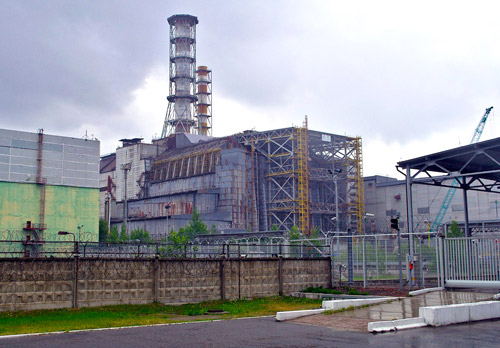
Chernobyl, forty years on from the events of April 26th, 1986in Russia.
A Pattern of Crisis-Driven Thinking. What is striking about the current proposal is not its novelty, but its timing. Ireland tends to rediscover nuclear energy whenever its energy model comes under stress.
In the 1970s: oil shocks → nuclear proposed. In the 1980s: public backlash + global disasters → nuclear notion abandoned. In the 2020s: energy prices + climate targets → nuclear once again revived.
This is not strategic thinking—it is reactive policymaking. Even today, nuclear power remains explicitly banned under the Electricity Regulation Act 1999. So before any plant is even discussed, the State must first undo decades of settled law; a process that signals just how far removed this proposal is from practical delivery.
The Uncomfortable Contradiction. Supporters often point out that Ireland already imports electricity generated by nuclear power. That is true, and it exposes a possible contradiction in policy. Ireland bans domestic nuclear generation while quietly relying on it through interconnectors. But this argument cuts both ways. If nuclear energy is acceptable when produced elsewhere, why has there been no sustained effort to build domestic capability in the past 25 years? The answer is simple, because when the issue moves from abstraction to implementation, political support tends to evaporate.
The Cost Illusion. There is also a persistent tendency to present nuclear power as an Irish solution to high energy prices. This is, at best, misleading. Modern nuclear projects in Europe have been plagued by delays and spiralling costs. The UK’s Hinkley Point C, for example, has seen its projected cost balloon dramatically over time. For Ireland, a small grid, limited capital capacity, and no nuclear infrastructure; the barriers would be even higher. Even optimistic timelines suggest nuclear would not deliver power for well over a decade. That makes it irrelevant to the current cost-of-living crisis it is being used to attempt justification.
History Has Already Tested This Idea. Ireland did not “miss out” on nuclear power by accident. No it tested the idea thoroughly before rejecting it. The Nuclear Energy Board, established in the 1970s, pursued nuclear development seriously. Plans were advanced, sites selected, and policy aligned. Yet the project ultimately failed due to:-
Public opposition.
Safety concerns amplified by global events.
Overestimation of future energy demand.
These are not trivial footnotes, they are structural barriers. And many of them still exist.
A Debate Without Honesty. What is missing from the current discussion is intellectual honesty. Proponents frame nuclear as:-(1) A solution to high prices. (2) A route to energy independence. (3) A necessary complement to renewables. But they often underplay:- (A) The decade-plus delivery timeline. (B) The multi-billion euro upfront costs. (C) The lack of domestic expertise or infrastructure and (D) Continued public scepticism. Even recent polling shows a divided public, not a mandate for change.
Conclusion: Reopening or Repeating? The upcoming Dáil debate may feel like a turning point, but it risks becoming something more familiar: another cycle of political curiosity followed by practical retreat. Ireland is not debating nuclear energy for the first time, it is revisiting a question it has already answered, under pressure, multiple times. The shadow of Chernobyl still looms, not because the technology hasn’t evolved, but because the political, economic, and societal challenges it exposed were never fully resolved. Until those are addressed directly, rather than sidestepped, the latest push to legalise nuclear energy may prove less a bold new direction, and more a repetition of history.
This website uses cookies to improve your experience. We'll assume you're ok with this, but you can opt-out if you wish.AcceptRead More
Privacy & Cookies Policy
Privacy Overview
This website uses cookies to improve your experience while you navigate through the website. Out of these, the cookies that are categorized as necessary are stored on your browser as they are essential for the working of basic functionalities of the website. We also use third-party cookies that help us analyze and understand how you use this website. These cookies will be stored in your browser only with your consent. You also have the option to opt-out of these cookies. But opting out of some of these cookies may affect your browsing experience.
Necessary cookies are absolutely essential for the website to function properly. This category only includes cookies that ensures basic functionalities and security features of the website. These cookies do not store any personal information.
Any cookies that may not be particularly necessary for the website to function and is used specifically to collect user personal data via analytics, ads, other embedded contents are termed as non-necessary cookies. It is mandatory to procure user consent prior to running these cookies on your website.





Recent Comments