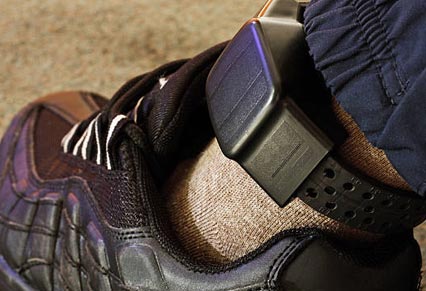
Minister for Justice, Home Affairs and Migration Mr Jim O’Callaghan has announced that a contract has been signed with Allied Universal Electronic Monitoring for Ireland’s first 12-month electronic-monitoring pilot.
The programme is expected to begin tagging selected individuals by the end of 2026. It will have the capacity to monitor approximately 90 to 150 people during the pilot period. Budget 2026 allocated €2.1 million for staffing, procurement and other establishment costs. These details are confirmed by the Department of Justice, Home Affairs and Migration.
The initiative is intended to help relieve pressure on Ireland’s prisons, while protecting the public. Decisions about suitability will reportedly take account of the individual’s risk profile and the nature, seriousness and circumstances of the alleged or proven offence.
Electronic monitoring can offer several advantages. It enables authorities to supervise compliance with curfews, movement restrictions and exclusion zones without automatically resorting to imprisonment. In appropriate cases, this may allow individuals to retain employment, accommodation and family connections; all factors that can support successful reintegration. It could also make community-based supervision more practical and provide authorities with information when restrictions are breached.
However, an electronic tag is a supervision tool, not a guarantee of public safety or rehabilitation. International evidence about its effect on reoffending remains limited and highly dependent on how, and for whom, it is used. The UK Government has acknowledged that relatively few studies reliably establish its impact on reoffending. Its assessment stresses the importance of context.
There are also legitimate concerns about privacy, location data security, equipment failures and false alerts. Wearing a tag can create stigma, discomfort and tension within a household. Overuse could also widen the reach of criminal-justice controls by imposing intensive surveillance in cases where a less restrictive condition might otherwise have been used.
For the pilot to command public confidence, monitoring must be proportionate, individually assessed and accompanied by clear data protection safeguards. Rapid procedures will be needed for responding to breaches and correcting technical errors. Electronic monitoring should also complement properly resourced probation, treatment and rehabilitation services rather than replace them.
However, the pilot is a significant development in Irish justice policy, but its success should be judged by evidence, not simply by the number of tags deployed. The eventual evaluation should examine public safety, compliance, reoffending, costs, technical reliability, privacy impacts and participants’ access to rehabilitation.
Only then will it be possible to decide whether electronic monitoring deserves a wider and permanent role in Ireland.
Employment in IDA Ireland client companies across the Mid-West has increased by 18% over the past five years, according to figures provided to Clare TD Mr Joe Cooney.
Mr Joe Cooney TD.
There are now 28,125 people directly employed by 158 IDA client companies across Tipperary, Limerick and Clare, A further 22,500 jobs are estimated to be supported indirectly in the region. Co, Clare accounts for 67 of the companies, employing 6,136 people directly and supporting an estimated 4,909 indirect jobs.
The Department of Enterprise, Tourism and Employment said IDA Ireland recorded 55 facilitated site visits across the three Mid-West counties during 2025. Co.Tipperary recorded only three visits; while Limerick recorded the highest number with 33 visits, followed by Co. Clare with 19 visits. A further 17 visits were recorded across the region in the first quarter of 2026, including two in Tipperary, nine in Limerick and six in Clare.
Deputy Cooney said the increase in employment demonstrated the continued strength of the Mid-West in attracting foreign investment. “An 18% increase in employment among IDA client companies across the Mid-West over the past five years is very positive news for the region, he said. “It shows that the Mid-West is continuing to attract and retain major international employers and that the region has the skills, infrastructure and business environment needed to support high-value jobs.”
He said Co. Clare was playing a significant role in that growth, with more than 6,000 people now directly employed by IDA client companies in the county.
The Department said the Mid-West had attracted significant investment across technology, life sciences, international financial services, and engineering and industrial technologies. It said the availability of suitable property and strategic sites remained critical to attracting new investment.
The Department also cautioned that IDA site visits were only one measure of investor interest and did not necessarily translate into an investment. Potential investors may visit more than one county or return to a location more than once, while final decisions on where to locate an investment are made by individual companies. The Department said IDA Ireland’s regional strategy aims to secure 550 foreign direct investment projects outside Dublin between 2025 and 2029. Deputy Cooney said continued investment in infrastructure, skills and enterprise supports would be important if the Mid-West is to build on the growth of recent years.
Serious questions must be answered about the Government’s decision to exclude the FalconEye enhanced-vision system from Ireland’s new €53 million Dassault Falcon 6X.
Delivered shortly before Christmas 2025, the aircraft replaced the increasingly unreliable Learjet. It is not merely a ministerial transport. The State acquired it as a multi-purpose Strategic Reach Aircraft capable of undertaking long-distance medical evacuations, repatriating Irish citizens and Defence Forces personnel, and supporting operations in hostile or hazardous locations.
Ireland’s new €53 million Dassault Falcon 6X.
While I haven’t been on board myself; inside the cabin fit-out is understood to show cream coloured executive-style seating, polished wood panelling, cabin tables, and sofa-style seating.
Multiple sources have now reported, that the FalconEye Enhanced-Vision System has been omitted because its acquisition would have required the Irish State to enter into an agreement with its Israeli manufacturer, Elbit Systems.
FalconEye uses cameras, infrared sensors and synthetic imagery to give pilots substantially greater situational awareness in darkness, fog and other low-visibility conditions. Dassault says the system can reveal runways, lighting, airport structures and potential obstacles during final approach. An Air Corps pilot has explained that its practical advantage is enabling landings in weather conditions in which aircraft without it may have to divert.
This does not mean the Falcon 6X is unsafe or incapable of operating in poor weather. The Department of Defence insists that there are “no current limits on the operational capability of the aircraft.” Nevertheless, aviation sources say the omission reduces the options available to pilots in difficult conditions. That distinction demands examination, not evasive wording.
Political and ethical procurement policies are legitimate matters for government. But where a decision may affect the capability of an aircraft used for medical evacuation, emergency transport and the rescue of citizens, operational requirements and expert safety advice must be transparent and demonstrably paramount.
The Government should now disclose who authorised the omission, what operational and safety assessments were obtained, what alternatives were considered, and whether the consequences for emergency missions were fully evaluated. It should also explain the apparent inconsistency whereby other recently acquired Air Corps aircraft reportedly contain Israeli-manufactured technology considered integral to their operation.
Claims that this decision breaches EU procurement law should now be examined independently. Any decision regarding the aircraft’s procurement specification, including the reported request to exclude FalconEye, would have arisen within the Department of Defence procurement process during Mr Micheál Martin’s tenure. (Contract dated December 18th 2024). However, we are unable to establish which individual minister or government official personally authorised that particular exclusion.
This is not principally an argument about Israel. It is about responsible procurement, public safety and democratic accountability. On those matters, the Government owes the public clear answers not carefully constructed silence.
Parents and guardians across Ireland are being urged to speak to their children about dangerous online networks that manipulate young people into harming themselves, committing violence or producing sexually explicit material.
Irish cases connected to this disturbing online culture have reportedly been referred to Tusla, while An Garda Síochána has participated in an Europol operation targeting a network known as “The Com.” One of the best-known groups associated with this network is called “764.”
These are not necessarily organised groups with easily identifiable members. They operate through changing usernames, private chats and online communities. Children may encounter those involved through social media, messaging services or online games. Gardaí have specifically warned that individuals associated with groups such as 764 may encourage or pressure children to commit crimes, self-harm or adopt violent and radicalised beliefs. The manipulation can begin with friendship, attention or a shared interest. An offender may then obtain private information or intimate images and use threats, humiliation or blackmail to control the child. Demands can escalate into self-harm, violence, cruelty towards animals or abuse of another person.
Warning signs for parents – Watch for sudden changes such as: Secretive online activity or several new accounts. Panic when a phone or gaming device is removed. Messages from unknown people at unusual hours. Unexplained injuries, self-harm or violent behaviour. Threats involving private photographs or personal information. A child being instructed to record, photograph or livestream something. Sudden withdrawal, fear, shame or extreme anxiety. The above signs do not necessarily prove that a child is involved, but they should never be ignored.
What parents should do. Have a calm conversation rather than immediately blaming or punishing the child. Make it clear that they will not be in trouble for telling you what has happened. Do not confront suspected offenders yourself. Preserve usernames, messages, dates and links where it is safe to do so. Do not download, copy or forward sexual images involving anyone under 18. Report an immediate threat to life or safety by calling 999 or 112. Other suspected criminal activity should be reported to your local Garda station.
Suspected illegal online material, sexual exploitation or sexual blackmail can also be reported confidentially and where appropriate anonymously, through Hotline.ie latter who has reported a sharp increase in sexual material created by children themselves, demonstrating why regular, non-judgmental conversations about images, privacy and online pressure are essential.
The most important message for every child is: No online threat is too serious to tell a trusted adult about. Images can be reported, accounts can be blocked and help is available. They do not have to obey the person threatening them.
Please share this warning with other Irish parents, schools, clubs and youth organisations. Awareness and early intervention could protect a child from serious harm.
Ten suspected illegal IPTV resellers across Ireland have been served with legal warnings as authorities step up efforts to disrupt the sale and distribution of unauthorised television subscriptions.
The latest action by the Federation Against Copyright Theft and Sky targeted suspected operators in Carlow, Cork, Dublin, Kildare, Galway, Laois and Limerick. The individuals were identified following investigations into services allegedly providing customers with unlawful access to premium television channels, films and live sporting events. Cease-and-desist notices have instructed the suspected resellers to stop supplying illegal IPTV subscriptions immediately. Those who continue operating could face civil proceedings or be referred to An Garda Síochána.
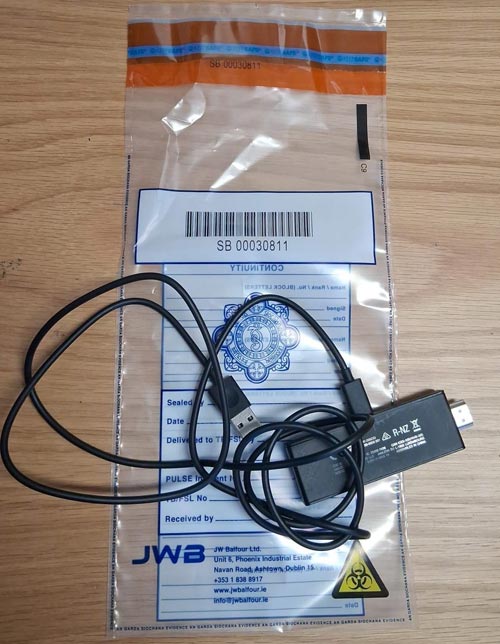
The services are believed to have supplied thousands of customers. Users have also been warned that information held by illegal providers, including names, contact details and payment records, could potentially be identified during investigations and passed to the relevant authorities. The action follows a Garda operation in Thurles, County Tipperary, in March. Gardaí searched a residential property as part of an investigation into suspected illegal streaming and money laundering offences. Electronic equipment was seized for examination and more than 500 accounts believed to be receiving illegal streaming services were shut down. No arrests were made during the Tipperary search, but a file was being prepared for the Director of Public Prosecutions.
The latest developments show that enforcement is expanding beyond major suppliers to include local resellers and the customers connected to their services. Illegal IPTV operations are frequently promoted through social media, messaging applications and personal recommendations. Authorities and broadcasters have also highlighted the risks associated with these services, including fraud, malware, theft of personal information, sudden loss of access and possible legal consequences.
The operation is part of a continuing nationwide campaign aimed at dismantling the networks that advertise, sell and distribute unauthorised television, film and sports content.
This website uses cookies to improve your experience. We'll assume you're ok with this, but you can opt-out if you wish.AcceptRead More
Privacy & Cookies Policy
Privacy Overview
This website uses cookies to improve your experience while you navigate through the website. Out of these, the cookies that are categorized as necessary are stored on your browser as they are essential for the working of basic functionalities of the website. We also use third-party cookies that help us analyze and understand how you use this website. These cookies will be stored in your browser only with your consent. You also have the option to opt-out of these cookies. But opting out of some of these cookies may affect your browsing experience.
Necessary cookies are absolutely essential for the website to function properly. This category only includes cookies that ensures basic functionalities and security features of the website. These cookies do not store any personal information.
Any cookies that may not be particularly necessary for the website to function and is used specifically to collect user personal data via analytics, ads, other embedded contents are termed as non-necessary cookies. It is mandatory to procure user consent prior to running these cookies on your website.






Recent Comments