|
|
 The Easter egg, distributed widely to children at Easter time, symbolises the start of new life, just as when a chick hatches from it’s shell, a new life is born. The Easter egg, distributed widely to children at Easter time, symbolises the start of new life, just as when a chick hatches from it’s shell, a new life is born.
The western name for the festival of Easter derives from the Germanic word Eostre. The pre-Christian Saxons had a spring goddess called Eostre, whose feast was held on the 21st March, the Vernal Equinox. Some believe that Eostre was associated with eggs and hares symbolising the rebirth of the land in spring and the more modern introduction of the Easter bunny.
The ancient Persians painted eggs for Nowrooz, their New Year celebration, which falls on each Spring equinox. The Nawrooz tradition has existed for 2,500 years. The decorated eggs are one of the core items to be placed on the Haft Seen, which is the Persian New Year display. The sculptures on the walls of Persepolis show people carrying eggs for Nowrooz, to their king.
It was St. Gregory or Pope Gregory the Great who first ordered his missionaries to make use of old religious sites and festivals, and absorb them into Christian rituals where possible. The Christian celebration of the Resurrection of Christ was ideally suited for merging into the Pagan feast of Eostre, and many of the pagan traditions were then adopted into the Christian Easter festivities, thus encouraging pagans to turn to the Christian faith. It is through this folklore, the association between hares, and eggs originated.
The modern world has seen the introduction of the ‘Virtual Easter egg‘. Latter is an intentional hidden message, which can be secreted into movies, CDs, DVDs and computer programmes. With the rise of cybercrime and the increase in malware, many companies and government offices now forbid the use of software containing Easter eggs for security reasons, as there is now genuine concern that programmers could hide undocumented code, thus making it easy to access stored personal or confidential information.
A happy Easter to all our readers.
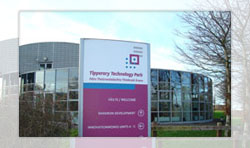
Shannon Development have announced the appointment of the Galway based Glenman Corporation Ltd to undertake their €3.5m expansion at the Tipperary Technology Park in Thurles, Co. Tipperary.
Glenman Corporation Ltd was first established in 1994 by brothers Michael and Albert Conneally. The company is widely regarded as one of Ireland’s most progressive General Building and Civil Engineering Contractors with over a decade’s experience of complex and high value projects in a variety of sectors across the building industry. Currently employing 180 permanent employees and a turnover in excess of €70m they have experienced strong steady growth over the past 10 years which they attribute to their ability to complete projects to the highest quality standards within the specified budget and on target.
Announcing the project, the Chief Executive of Shannon Development, Mr Vincent Cunnane stated:
“In turbulent economic times, it is critical that we continue to invest in high-quality infrastructure to entice all potential investors. We must send an unequivocal message to all developers, investors and entrepreneurs that Ireland is still an attractive and competitive business location, with a skilled, highly educated, and flexible workforce. This is why Shannon Development is undertaking this €3.5 investment at our Tipperary Technology Park and by doing so, we are sending a clear message that we are open for business.”
Since the first opening of the Tipperary Technology Park in 2000, Shannon Development has invested approximately €3.8m in developing two buildings presently at the park, thus providing property solutions for indigenous and foreign direct investors. The third building will now bring total investment at the Park to €7.3m.

UPDATE! The IMC Cinema is now open! To see cinema times, pricing and facilities offered by the IMC Cinema in Thurles, please visit our latest article here.
April 9th next, will see the opening of the new five screen IMC Cinema in Thurles, situated at the newly revamped Thurles Shopping Centre
Irish Multiplex Cinemas (IMC), one of Ireland’s leading innovators in the film entertainment business, and RealD, the world’s leading outfitter of 3D-enabled theatres, announced today that IMC will add RealD 3D capabilities to this multiplex location in Thurles. The rollout will begin immediately with completion of all RealD 3D installations expected in April in time for the release of Monsters vs. Aliens (Dreamworks Animation).
Paul Ward, director of IMC said,
“The RealD 3D technology being installed in all IMC Cinemas shows IMC’s commitment to providing not only the best in customer service, but also the best customer enjoyment of the cinema going experience by the early introduction of the newest technological advances available.”
Bob Mayson, managing director of RealD Europe Ltd. said,
“Ireland is an important market for us in Europe and we’re extremely pleased to be working with IMC to outfit all of their multiplex locations. Paul Ward and his team understand the potential of RealD 3D and are grasping the opportunity with both hands.”
RealD uses a single projector that alternately projects the right-eye frame and left-eye frame, and circularly polarizes these frames, clockwise for the right eye and counter clockwise for the left eye, using a liquid crystal screen placed in front of the projector lens. Circularly polarized glasses make sure each eye sees only “its own” picture, even if the head is tilted. The very high frame rate, which is 72 frames per second per eye, makes sure the image looks continuous. In RealD Cinema, each frame is projected three times to reduce flicker.
RealD’s next-generation technology is deployed across the world’s largest 3D platform in more than 34 countries with over 8,000 screens under contract and nearly 2,600 RealD 3D screens today. RealD is the global leader in 3D, bringing the most advanced and realistic digital 3D experience to cinemas worldwide.
Tipperary Institute in Thurles has now officially, this week, opened its Games Development Laboratory. The laboratory, sponsored by Microsoft is equipped with the very latest technology to give students access to a state of the art learning facility. The laboratory is designed to assist students to build their own software and games portfolios and to develop the skills which are now much sought by the fast growing game development and entertainment technology industry, both in Ireland and abroad.
The opening, which took place during Engineers Ireland Week of Wonder, saw over seventy students from Tipperary, Limerick and Dublin take part in workshops at this new laboratory. The students used the latest Microsoft games development technology XNA to create their version of the classic Atari computer game Asteroids. XNA Game Studio expands on all the offerings of earlier iterations to include additional functionality to appeal to game developers of every level and enable them to create games to distribute through Xbox LIVE Community Games on the Xbox 360 as part of the New Xbox Experience.
James Greenslade, Director of ICT at Tipperary said,
“Innovation has never been as important as it is in today’s economic climate. Tipperary Institute views investment in technology as crucial to our students’ learning experience and for the future development of a knowledge driven economy. We aim to develop students who are innovative and dynamic – something which is vital for our economy. To achieve this we must have access to technology and to networks, something Microsoft is providing for us through its generous sponsorship.”
Dr. Kevin Marshall, Academic Programme Manager for Microsoft Ireland, who opened the laboratory officially, stated.
“We need to embrace innovation in business, in technology and in society at large if we are to position Ireland in a true knowledge economy. There is a demand for skills in games technology both from established global players and also from smaller companies based here and abroad. The growth of online technology means that the skills students will learn on the course will be relevant and in demand,”
 The new laboratory has been completed in time to host the 2009 annual Games Fleadh which brings the games industry and secondary and higher education students from across the island of Ireland, together. Games Fleadh, Ireland’s largest computer and console games programming festival now incorporates the following major events; The new laboratory has been completed in time to host the 2009 annual Games Fleadh which brings the games industry and secondary and higher education students from across the island of Ireland, together. Games Fleadh, Ireland’s largest computer and console games programming festival now incorporates the following major events;
Robocode Ireland
XNA Ireland Challenge
XNA Ireland Challenge for Schools
SchoolBots Challenge
Gaming Tournament
GamesPro Talks
Games studios expert will deliver a series of talks on all aspects of games design and development on the 11th March. On the 12th March experts will judge portfolio entries from college and school participants.
Games Feadh has been running for the past five years. In 2008 the XNA Ireland Challenge was added to the competition series. The XNA event honored the 30th anniversary of SPACE INVADERS(c) Taito Corp. 1978, 2008. Entries were received from University of Ulster, University of Limerick, Galway Mayo Institute of Technology, Carlow Institute of Technology, Dublin Institute of Technology, Tipperary Institute and winning team Gort Community School. In total, sixteen third level institutes and fourteen second level schools took part in Games Fleadh 2008.
Games Fleadh 2008 was attended by representatives from Microsoft, SEGA, Rare, Blitz Games Studios, BlackRock Studios and Activision – DemoWare, all of whom are planning a return trip to Games Fleadh 2009.
XNA Ireland Challenge ’08 entrants have been already offered work placement and graduate employment within the participating studios. It is becoming an important portfolio opportunity for those students. Games Fleadh has also created an opportunity for industry development organisations to network with games specialists to identify and cultivate opportunities.
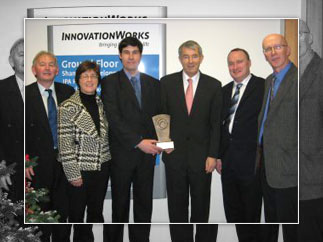 HKPB Scientific is a new biotechnology company, headquartered in the Technology Park in Thurles, Co. Tipperary has come away with a prize as the best Start up company in Munster at a recent awards ceremony. HKPB Scientific is a new biotechnology company, headquartered in the Technology Park in Thurles, Co. Tipperary has come away with a prize as the best Start up company in Munster at a recent awards ceremony.
The company was founded in 2008 by two local scientists, Dr. Brendan Kennedy and Dr. Donncha Haverty, and has developed rapidly into one of the most promising start-up companies on the Ireland.
In the All Ireland Seedcorn Business competition, a panel comprising representatives of the Irish venture capital community and cross-border state agencies analysed the business plan of the company and judged it to be the best start-up in Munster.
The company has already accessed € 300,000 in equity and state funding just one year after incorporation.
Having a strong research relationship with the University of Limerick, the company has developed four technologies and progressed two patents in the high-technology, biomedical space to an advanced stage of international protection. In addition the company is successfully implementing its business strategy to enter global markets totalling $ 20 billion annually and already has a permanent presence in the United States of America.
When asked to comment on the challenges facing scientists in the commercial space Dr. Kennedy said:
“It has been our experience that the skill-set of a scientific research Ph. D. are readily transferable to the start-up business environment. The core analytical abilities central to science are the same as those needed to assess a market and devise a viable business strategy. We would advise other scientists to consider the commercial potential of their research and we would have no hesitation in sharing the benefit of our experience to date in this regard.”
North Tipperary TD Michael Lowry speaking to Thurles.Info, praised the achievements of the fledgling company and hailed its success as a model for other local companies to emulate.
“I am delighted that a local company in the mid west has made such an impact at this early stage. We all continually hear that the development of the ‘knowledge economy’ is the key to our economic recovery and development and I hope that we see further local companies linking up with the region’s educational institutions to deliver a much needed jobs and a boost to our economy“
The company has had the support of Shannon Development from the outset and in particular the Tipperary Technology Park. The company is also supported by Enterprise Ireland.
Dr. Kennedy said:
“We are delighted with the support we have received in Thurles. Dr. Vincent Cunnane, CEO of Shannon Development and Brian Keating, director of the Tipperary Technology Park have been of enormous help in getting our company off the ground. The facilities available to HKPB Scientific, a company that is part of the knowledge economy, are excellent, particularly in terms of telecommunications. Enterprise Ireland have committed significant resources to the company to get it through its initial stages of development not just in terms of finance but also in relation to the ancillary supports they provide to facilitate start-up companies accessing markets at home and overseas” .
The core promoters of HKPB Scientific are Ph. D. graduates of the University of Limerick and two full-time academics from the Materials and Surface Science Institute at the University of Limerick, Prof. Tony Pembroke and Dr. Seamus McMonagle, sit on the company’s science advisory board.
Prof. Tony Pembroke said:
“The MSSI is committed to playing its’ role in supporting entrepreneurial researchers, such as Dr. Kennedy and Dr. Haverty, who are willing to take their innovations beyond the university environment into the commercial space.“
Dr. McMonagle added:
“The MSSI is a world class research institute and is well equipped to provide the research facilities that HKPB Scientific requires.”
|
Support Us Help keep Thurles.info online by donating below. Thank you.
Total Donated 2026: €290.00
Thank You!
Daily Thurles Mass Livestream
|





Recent Comments