|
|
Motorists are being urged to remain on high alert after reports of a fraudulent website impersonating the National Car Test (NCT) booking service, designed to mislead people into making payments without actually securing any test appointment.
This scam site has been reported as closely resembling the legitimate NCT booking pages and is understood to be appearing through search engine results, where drivers searching to book a test may be diverted to the counterfeit platform.
Recent reports indicate victims have been charged amounts ranging from approximately €60 up to €600 for what is presented as an “NCT booking” or “service fee”, but no valid booking is then made.
Only use the official NCT booking site.
The only official and legitimate website for booking or managing an NCT appointment is: ncts.ie
Motorists are advised to type the address directly into their browser rather than clicking on sponsored links or unfamiliar results.
How to protect yourself – Key advice for motorists
Book only via ncts.ie (avoid lookalike sites and “booking agents” charging extra fees).
Check the web address carefully before entering any personal or payment details.
Be cautious of sites that demand unexpected additional payments or apply pressure to pay quickly.
If in doubt, leave the page and go directly to ncts.ie in a fresh browser window.
If you think you have been scammed!
Anyone who believes they may have made a payment to a fraudulent site should act immediately:
Contact your bank or card provider without delay to report the transaction and seek advice on stopping or disputing payment.
Report the matter to your local Garda station, bringing any relevant evidence (screenshots, emails, transaction confirmations, and the web address used).
The Government is to publish new legislation that will allow An Garda Síochána to use biometric recognition technologies, including facial image analysis, in the investigation of serious crime; matters relating to State security and missing persons cases.
The Garda Síochána (Recording Devices) (Amendment) Bill 2025 will provide a clear legal basis for the retrospective analysis of images and footage already in Garda possession, such as CCTV and mobile phone recordings. The technology will allow Gardaí to sort, filter and compare relevant images far more quickly than is currently possible.
This move will save Gardaí thousands of work hours and speed up complex investigations where officers can currently spend months manually reviewing large volumes of footage. It is also expected to reduce the exposure of Garda members to distressing material, particularly in cases involving child sexual abuse and human trafficking.
The use of biometric analysis will be tightly controlled and operate only as an investigative tool, with no automated decision-making. All results will be reviewed by a trained Garda member, and use of the technology must be necessary and proportionate in each case.
The Bill also provides for a statutory Code of Practice, to be drafted by An Garda Síochána in consultation with stakeholders and approved by the Oireachtas. The Code will set out detailed safeguards, including strict data protection and human rights standards, and will be published to ensure transparency.
The Government has separately approved the drafting of a General Scheme to provide for retrospective and live biometric identification, in line with the EU AI Act, including for use in missing persons investigations and in protecting the security of the State and protecting those at risk.
National Cyber Security Centre Launches 2025 National Cyber Risk Assessment revealing Escalating Threat Landscape.
Rapidly evolving cyber risks put country’s critical infrastructure at risk.
Today (December 2nd) the National Cyber Security Centre (NCSC) launched its 2025 National Cyber Risk Assessment. This is a comprehensive review of the cyber threats, systemic risks, and sectoral vulnerabilities facing the State.
Launched at the NCSC’s annual conference, the assessment provides the most detailed national overview to date of Ireland’s cyber risk environment and builds on the foundation laid by the 2022 assessment.
The assessment identifies key developments in the national and global cyber threat landscape, including increasingly sophisticated nation-state activity, the accelerating pace of cybercrime, and the growing likelihood of cascading impacts across interconnected sectors such as energy, transport, healthcare, and financial services.
Key findings of the 2025 National Cyber Risk Assessment include:
As technology has advanced and reliance on digitalisation has intensified, the cyber threat landscape has become more complex with an increased risk of incidents, leading to significant cross sectoral impacts.
Taking an all-hazards approach, the 2025 National Cyber Risk Assessment has identified three key systemic risks:
- The dynamic geopolitical environment,
- Evolving technology and its implications on security.
- Supply chain security.
If any or all these risks were to be realised, it could undermine Ireland’s delivery of essential services, disrupt its critical sectors, and erode trust in government, institutions, and organisations.
To mitigate Ireland’s identified risks, five recommendations have been identified:
- Strengthen visibility and detection – investing systems and structures to enhance national visibility will reduce systemic blind spots and allow the State to be better positioned to anticipate and respond to risks before they escalate.
- Implement proactive cyber defence capabilities – reactive responses alone are not sufficient to protect society and the economy from the potential cascading effects of attacks on critical systems. Ireland must enhance its proactive cyber defence posture, disrupting the cyber-attack lifecycle earlier to prevent incidents at scale.
- Enhance national resilience –by implementing EU frameworks in full and extending resilience beyond infrastructure to society itself, Ireland will ensure that both services and democratic institutions remain robust in the face of systemic cyber risks.
- Secure critical supply chains – the State must strengthen our supply chain through strengthening procurement rules in government, embed security-by-design and risk management practices, and increase visibility of vendor ownership.
- Invest in national cyber resilience – investment in people, innovation and our indigenous industrial base will ensure that Ireland has the capacity not just to respond to today’s threats but to anticipate and shape the next generation of resilience measures.
These recommendations provide a framework for the next National Cyber Security Strategy, ensuring that systemic vulnerabilities are reduced and national resilience strengthened.
The 2025 National Cyber Risk Assessment is now available HERE.
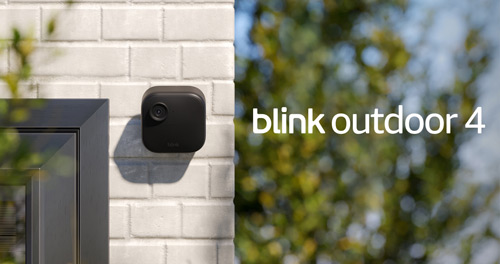
The Blink Outdoor 4, a wireless HD smart security camera with a two-year battery life and IP65 weatherproof rating, has to stands out this Black Friday as one of the most compelling home-security bargains online. With this 2-camera system bundled with the Sync Module Core, now reportedly reduced by around 59%, the value proposition is hard to ignore.
In a season when home burglaries tend to rise, particularly over darker winter evenings and especially around Christmas, when homes may be unoccupied or gifts visible through windows, investing in reliable external surveillance is increasingly prudent.
View the HD smart security camera HERE.
What it does well.
Long battery life & low maintenance: Blink claims up to two years on two AA lithium batteries, a rare advantage among battery-powered outdoor cameras.
Hassle-free, wireless installation: The wireless design avoids messy complicated wiring, making it easy for homeowners to place cameras where they are most needed.
Weather resistance & durability: With IP65 rating, Blink Outdoor 4 is built to withstand rain, wind, and cold, essential for Irish winter conditions.
Good video quality & effective motion detection: Users in the Thurles area report satisfactory 1080p HD video and reliable motion-activated alerts.
Local storage option (no mandatory subscription): The included Sync Module Core allows for local USB storage, (latter not included but can be purchased cheaply HERE) giving homeowners control over their surveillance footage without needing to pay for a cloud plan.
High quality outdoor adjustable brackets, (also not included), can be purchased cheaply HERE.
Why this deal matters, especially now:
With many discounts across the board this Black Friday, the steep reduction in price makes Blink Outdoor 4 a very attractive entry point for homeowners seeking upgraded security, especially for those living alone, in a period where opportunistic burglaries tend to increase. The balance of ease of installation, decent video quality, weather-proofing and low maintenance makes it a very sound choice for people who want visible deterrence and peace of mind, without investing in a fully wired CCTV system.
Given the current price drop, this looks very much like one of the “best deals online” for outdoor, battery-powered home-security cameras.
The introduction of new legislation allowing consumers to exit mobile and broadband contracts in the event of price hikes is a welcome and long-overdue step. For years, customers have faced routine annual increases, often quietly applied and seldom explained, leaving households paying more for the same level of service.
However, while this new move addresses unfair price rises, it fails to tackle an equally serious issue: with providers continuing to charge full price even when their services are down for extended periods. Across the country, customers routinely experience outages lasting hours or even several days, yet no automatic refunds or meaningful compensation are offered.
This situation is unacceptable. It is fundamentally unfair that consumers are expected to honour their contracts in full when providers do not honour theirs. Reliable service is not a luxury; it is an essential utility, particularly for families working from home, students relying on online learning, and older people depending on digital communication.
Mobile and broadband companies have for too long enjoyed strong profits while delivering inconsistent service, placing the burden on customers who often have little choice of an alternative provider. A voluntary refund system is not good enough.
Regulators and the Irish Government must now go further by compelling providers to:
- Introduce automatic compensation for outages, without requiring customers to chase refunds.
- Publish clear service-level commitments, including timelines for restoring faults.
- Be held accountable for persistent service failures, with penalties for repeated non-compliance.
While this new legislation empowers consumers to walk away from unfair price increases, it is only one part of a wider problem. True consumer protection requires not just the right to leave a contract, but assurance that the service being paid for is delivered reliably and responsibly.
It is time to hold mobile and broadband providers to a higher standard. Irish customers deserve no less.
|
Support Us Help keep Thurles.info online by donating below. Thank you.
Total Donated 2026: €290.00
Thank You!
Daily Thurles Mass Livestream
|







Recent Comments