|
|
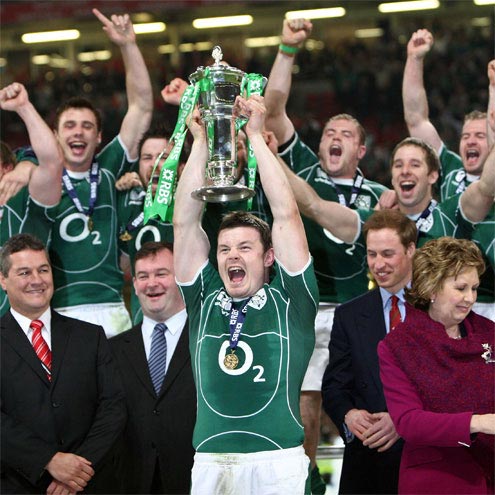 As a unit, the Irish rugby team have been magnificent in recent weeks and for sheer spirit, hard work, and talent this squad and its management team deserve every plaudit. As a unit, the Irish rugby team have been magnificent in recent weeks and for sheer spirit, hard work, and talent this squad and its management team deserve every plaudit.
However, has this teams skill, grit and determination set an example for more than just the future of rugby.? Journalist Jerome Reilly (Independent) seems to think so and I am inclined to agree.
Jerome writes:
“If the Golden Generation can cast off the shackles of more than half a century of Grand Slam famine then just maybe the Irish people can summon the determination of will to tackle our economic ills.
Only a rugby game? Nonsense. A squad of men from north and south showed a resolution and unity of will that cannot but inspire.
The triumph of this all-Ireland team was proof, if we needed it, how much can be achieved if we put aside petty differences and sectional squabbles and pull together.
There is a stark message here to the unions and the social partners and those who seek a national retrenchment. Strikes at a time when we need full production is a folly.
Taoiseach Brian Cowen, who was at the match with the President Mary McAleese, summed up the nation’s elation.
“I applaud the team’s courage and remarkable determination and will to win for Ireland. It was outstanding. The Irish team’s performance was nothing short of superb. The players have brought great distinction to themselves and to our country”
The nation’s hopes and dreams were finally realised with this 17-15 win over Wales in Cardiff’s packed Millennium stadium.
Those are the bare facts, but they can hardly convey the exultation of the 25,000 supporters who were in Cardiff for this momentous day — not just in Irish sport, but in Irish life.
If a team reflects the nation it represents, then things are not too bad. We are made of the right stuff.”
Food for all our thoughts at this time, don’t you think.?
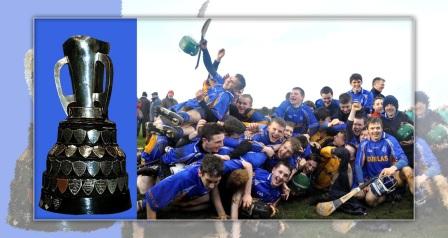 After an absence of 31 years The Dr Harty Cup is back in Tipperary. Triumphant heroes Thurles CBS carry home the cup for the first time since 1956, thanks to their 3-16 to 0-9 victory over St. Caimins Community School, Shannon in the 2009 Dr. Harty Cup final on Sunday last at MacDonagh Park Nenagh. After an absence of 31 years The Dr Harty Cup is back in Tipperary. Triumphant heroes Thurles CBS carry home the cup for the first time since 1956, thanks to their 3-16 to 0-9 victory over St. Caimins Community School, Shannon in the 2009 Dr. Harty Cup final on Sunday last at MacDonagh Park Nenagh.
Thurles CBS beat North Monastery Cork in 1956 to last win this much coveted trophy.
Templemore CBS previously had the distinction of being the last Tipperary school to win this coveted and prestigious competition back in 1978.
With the aid of a strong wind in the first half, Thurles CBS led by 2-11 to 0-2 at half time following goals by Michael O’Brien and David Butler.
St. Caimins scored their nine points but failed to make any real inroads into the Thurles pack and victory was assured following a late goal by Aidan McCormack from Thurles CBS.
Many of the players from the 1956 Team, including their team captain Tommy Gleeson were in attendance to watch this glorious CBS team battle to a well deserved victory.
Dermot Clifford, Archbishop of Cashel and Emly Archdiocese and GAA patron was on hand to present the coveted cup at full time to CBS team Captain James Barry.
For school principal Martin Quirke and all sports masters and pupils at Thurles CBS, it was an emotional day, plus a historic day for Thurles town.
Emails and other messages of congratulations continue to flood into the school from past pupils, well wishers and other sporting associations.
 This year, 2009, will see the Gaelic Athletic Association (GAA) celebrate its 125th anniversary. The man most credited with the original impetus behind this formation was a west of Ireland man, Michael Cusack, a native of County Clare. Cusack’s original dream was to resurrect the ancient Tailteann Games and establish an independent organisation to promote young athletes, however hurling and Gaelic football would over the following years eventually predominate. This year, 2009, will see the Gaelic Athletic Association (GAA) celebrate its 125th anniversary. The man most credited with the original impetus behind this formation was a west of Ireland man, Michael Cusack, a native of County Clare. Cusack’s original dream was to resurrect the ancient Tailteann Games and establish an independent organisation to promote young athletes, however hurling and Gaelic football would over the following years eventually predominate.
Michael Cusack, a native Gaelic speaker, was born in Carron, County Clare in 1847. Regarded by many as having a rather complex personality, he had developed a passion for Gaelic games which was matched only by his love of his native local environment the wild and beautiful limestone landscape of the Burren, where he had been born and raised. Cusack pursued an academic career, eventually becoming a teacher at Blackrock College, in Dublin. In 1877 he set up his own school, known as the Civil Service Academy. The aim of the latter was to prepare students for examinations, necessary to gain them admission into the British Civil Service. This school which was better known as “Cusack’s Academy,” was extremely successful. The many pupils then attending this establishment, were encouraged to get involved in all and any forms of physical exercise. Cusack greatly disappointed by the apparent decline in Irish native games established a hurling clubs at his Academy and thus began his dream to re-establish hurling as the national pastime.
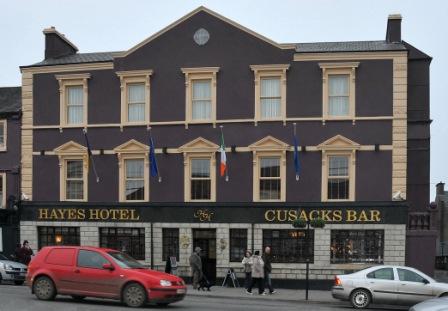
Meanwhile, a farmer from Carrick-on-Suir, Maurice Davin, an outstanding athlete who won international fame in the 1870’s had been actively campaigning for a body to control Irish athletics, so at 3.00pm on Saturday,1st November 1884 at the Haye’s Hotel, Thurles, Co.Tipperary, a meeting of like-minded individuals took place.
This day was chosen for its mythological significance, for according to Irish legends, November 1st was the day when the power of the Fianna died and Cusack’s choice of day was meant to symbolise the rebirth of these mythological Irish heroes, whose aims were; Glaine ár gcroí (Pureness of heart); Neart ár ngéag (Strength of limb); and Beart de réir ár mbriathar (Deeds to match words).
Following this meeting, a committee called The Gaelic Athletic Association for the Cultivation and Preservation of National Pastimes was established. Those elected to form this committee were John Wyse Power, John McKay, J. K. Bracken, Joseph O’Ryan, Maurice Davin, Michael Cusack and Thomas St. George McCarthy. This name was eventually shortened to “The Gaelic Athletic Association“. Others believed to be in attendance at this inaugural meeting included Frank Moloney, Nenagh, William Foley,Carraig-on-Suir, William Delehunty, Thurles, John Butler, Thurles, and William Cantwell, Thurles. Maurice Davin who had presided at this meeting was elected the GAA’s first president and historically the only president ever to serve two terms in office.
The aims now set by this committee were as follows:
• To foster and promote native Irish pastimes
• To open athletics to all social classes
• To establish hurling and football clubs which would organise matches between counties
Within a few weeks of the organisation’s foundation, the then Archbishop of Cashel, Thomas Croke gave this organisation his approval and became its first patron. Its other patrons included both Michael Davitt and Charles Stewart Parnell.
Archbishop Croke would later introduce a new rule to the organisation which forbade members of the GAA from playing foreign games, such as tennis, cricket, polo and croquet. Given later controversies which concerned the playing of ‘foreign games’ and the banning of members of the British armed forces and police from joining, it is notable that one founder member, Thomas St. George McCarthy a native of Bansha, Co.Tipperary was a capped international rugby player, having played for Ireland against Wales in 1883 and was also a District Inspector of the Royal Irish Constabulary (RIC). Also, founder J.K. Bracken, latter the father of Brendan Bracken,who was to become Winston Churchill’s closest friend and Minister for Information in Churchill’s wartime government and then later became a member of the British Cabinet during World War II.
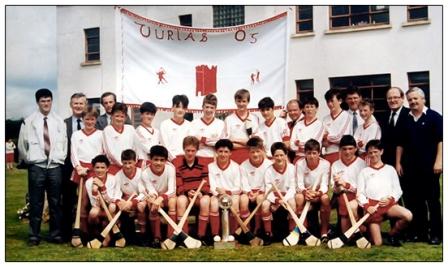 Durlas Óg, the juvenile G.A.A. club serving the parish of Thurles, will celebrate its 30th anniversary this year. Durlas Óg, the juvenile G.A.A. club serving the parish of Thurles, will celebrate its 30th anniversary this year.
The club was founded at an Inaugural Meeting on the 2nd February 1979 at the historic Haye’s Hotel here in the town.
To mark this, the 30th anniversary of its foundation, Durlas Óg will host a function in The Premier Hall, Thurles, on Saturday 7th February 2009.
This club has come a long way since 1979 and now enjoy the status of being one of the most targeted clubs to beat at both Mid and County level. Since its foundation it has had a remarkable run of success. County titles have been won at Under 12, Under 14 and Under 16 levels in both football and hurling.
In 1990 Durlas Óg won the All Ireland Division 1 Feile na nGael title becoming the only Tipperary club ever to win this competition outright.
Saturday 7th February is a date to keep free in your diary and all former players, officers, committee members, mentors and supporters are invited to this very special night for Durlas Óg. So many players have passed through this club since 1979 it would be only fitting, if as many as possible could made a special effort to attend and thus make this a night to remember.
Tickets are available, priced at €25.00 each, from Billy Crowley or any other committee member.
Picture shows:
Back Row (L. to R.): Seamus Maher (R.I.P.), John Dunphy, Michael Kennedy, Br. Hickey, Colin Coppinger, Mark King, Barry Long, Raymond O’Riordan, Pat Hackett, Pat Lawlor, Pat McEvoy, Gary Mernagh, Matty Dowd, Bill D’Arcy, Johnny Enright, Gerry Spain, Jimmy Coppinger.
Front Row (L. to R.): Ollie Geoghegan, John O’Dwyer, David Dunne, Mark Wade, Jimmy D’Arcy, Darren Molumby (R.I.P.), Liam Scully, David O’Riordan, Mark Ryan, John Bowe.
Remember Folks:
Date: Saturday 7th. February 2009.
Venue: Premier Hall, Thurles, Co.Tipperary.
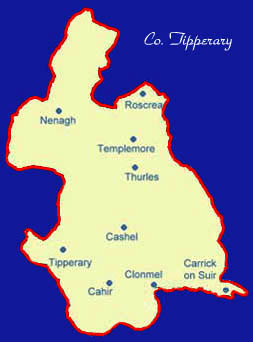 The figures given in the report released today under the National Development Plan 2007 -2013, while provisional, give us some indication of how Tipperary fared in the national share out. Actual expenditure and grant aid approved will be available early in 2009 from each of the relevant Government Departments. The figures given in the report released today under the National Development Plan 2007 -2013, while provisional, give us some indication of how Tipperary fared in the national share out. Actual expenditure and grant aid approved will be available early in 2009 from each of the relevant Government Departments.
FÁS – Skills & Training: In 2008, 340 Tipperary people participated in a wide range of FÁS training courses and a variety of other programmes, including apprenticeships, vocational training and in-company training. This compares with Kildare 800 persons, Donegal 1000 persons, Kilkenny and Laois – no known figures, Louth 2000 persons, Waterford 3000 persons, Cork 3,300 persons and Wicklow 122 persons.
Road networks: In Tipperary, over €70 million was allocated for national road improvements and maintenance in the county. National roads that received funding include the N7 Limerick to Nenagh, N7 Castletown to Nenagh and N8 Cashel to Mitchelstown, which opened in July. The M8/N8 Cullahill to Cashel, which was opened this month at a cost of €434 million and which bypasses the towns of Littleton and Horse and Jockey. This compares with Westmeath €96.7 million, Cavan €13.24 million, Clare €6.24 million, Galway €134 million, Kilkenny €240 million and Offaly €32.7 million. The improvement of non national roads in Co.Tipperary benefited by a further €27.8 million for local projects including the Ballysloe to Clonmicklin, Templemore to Templetuohy, New Inn to Whitelands, Gormanstown to Castlegrace and Rearcross to Newport roads.
Tourism and Hospitality Sector: This sector supports 250,000 jobs throughout all Ireland. In 2008, €19 million was allocated nationally for this programme. Under the Tourism Capital Investment Programme, County Tipperary received an allocation of €1.9 million for tourism projects in 2008. Funds were approved for the Beara Breifne Walk, Terryglass Amenity Area, Cahir Brown Trout Angling Centre of Excellence and a heritage driving route in the Comeragh Mountains. Funding were also approved for Historic Trails in Carrick-on-Suir, Cashel and Tipperary Town and the Tipperary Heritage Trail. Over €1.6 million in funding was allocated in County Tipperary under the Local Authority Swimming Pool Programme for replacement of the swimming pools in Thurles and Roscrea.
Sports: Under the NDP funded Sports Capital Programme, €4.93 million in grants was allocated to sporting clubs and facilities in Co. Tipperary. Beneficiares were Roscrea Leisure Centre, Thurles Gaelic Sports field Society Ltd. and Holycross Ballycahill GAA Club.
Rural Economy Development: Under the Commercial Horticulture Sector scheme over €437,000 was allocated to 12 schemes in Co. Tipperary in 2008 to assist growers to produce high quality products.
Education: In County Tipperary Primary and Post-Primary schools received capital funding of over €24.3 million; schools that benefited include Silvermines National School, Kilruane National School, St. Joseph’s CBS in Nenagh and Borrisokane Community College. The Tipperary Institute received over €157,000 for minor capital works.
Childcare services: Co. Tipperary were allocated funding of over €3.5 million in 2008. Services that benefited include Holycross Community Childcare and Whizz Kids Montessori in Thurles, Ballingarry Community Council and Learning Through Fun, Nenagh.
Housing Funding: Over €2 million was allocated for voluntary housing provisions during the year, and projects funded include homes at Roscrea, Thurles, Cashel and Clonmel.
Water Services Investment Programme 2007 – 2009: Funding to upgrade and expand water treatment capacity, improve drinking water quality and supply and improve and expand waste water treatment in County Tipperary was over €213 million. Schemes funded in 2008 which were completed include Thurles Waste Water Treatment Plant.
Enterprise Boards: During 2008, the Tipperary County Enterprise Board was allocated €1.6 million. Among the companies supported were Feileacan Accessories in Clonmel, The Apple Farm in Cahir and Digino Ltd. in Ballina.
|
Support Us Help keep Thurles.info online by donating below. Thank you.
Total Donated 2026: €40.00
Thank You!
Daily Thurles Mass Livestream
|





Recent Comments