Thurles & Tipperary Says Stop The “Junket” Slur – Start the Accountability – Publish the Outcomes of St Patrick’s US Missions.
Ireland must travel, must engage, and must report back, in black and white.
Ireland should maintain the St Patrick’s Day diplomatic programme within the United States, including the Taoiseach’s White House engagement, because it is one of the few annual moments when a small island reliably gets direct access to the world’s most consequential decision-makers, investors and influencers.
But if we are truly serious about ‘people before posturing’, then every travelling politician and councillors must also be required to prove value for money and publish measurable outcomes on return.
That is the missing piece in this annual debate: loud accusations of “junkets” on one side, defensiveness on the other, and far too little mandatory, standardised reporting to the public.
It has been reported that nine or ten ministers are expected to travel to up to 15 US states around St Patrick’s Day. Meanwhile, FOI figures reports show €1,096,493 spent on 569 St Patrick’s Day events globally, with an average cost per event of €1,927.
That is not inherently scandalous. It can be excellent diplomacy. But it must be auditable diplomacy. Engagement is not endorsement, it’s statecraft.
Tourism matters too; and we should never insult the American people. The United States is one of Ireland’s most important tourism markets and supports jobs right across this island, from hotels and restaurants to visitor attractions, guides and local festivals. Tourism Ireland notes that in 2023 the island welcomed over 1.2 million US visitors, who spent about €1.7 billion here, making the US the most important overseas market for revenue. Tourism Ireland’s USA Market Profile 2024 reports 1.3 million American tourists, €2.0 billion in spend, and 11.4 million bed nights; figures that underline just how much Irish employment depends on maintaining goodwill with ordinary American people, not just the political class in Washington. You can disagree robustly with any US administration, while still showing respect to the American public, the diaspora, and the millions who choose Ireland in good faith.
Diplomacy that drifts into contempt is not “taking a stand” – it is self-harm.
Some opposition voices argue our Taoiseach should not go to Washington at all. People Before Profit TD Mr Richard Boyd Barrett has said it is “not appropriate” for Mr Martin to present President Donald Trump with shamrock this year. Labour MEP Mr Aodhán Ó Ríordáin has also publicly taken a “No to the Shamrock ceremony” position. Labour leader Ms Ivana Bacik has also ‘raised conditions’ around any visit if threats continue. Whatever the merits of ‘snub the White House’ rhetoric, it is just gesture politics unless those calling for such a boycott can set out a credible alternative strategy, which of course they haven’t.
Yes, they are entitled to their stance. But the public is entitled to ask a harder question: what is their alternative plan to protect Irish jobs, Irish exports and Irish leverage, in real time, when the stakes are highest?
Ireland cannot clap itself on the back for moral purity, while leaving Irish workers, exporters and inward investment exposed. The national interest is not served by boycotts that make headlines at home and achieve nothing in Washington.
The public interest test: show the receipts and the results. If critics insist on calling these trips “junkets”, and who can blame them, then the answer is simple: remove the ambiguity. From this year onwards, every minister and senior office-holder travelling on St Patrick’s missions should be required to publish a short, standard “Outcomes Report” within 30 days of returning, laid before the Oireachtas and posted publicly.
That report should include:
Full itinerary (meetings, organisations, purpose).
Total cost (travel, accommodation, hospitality), itemised.
Follow-up actions with named officials/agencies and deadlines.
What did not happen (meetings refused, issues parked, risks flagged).
This is not bureaucracy, it is basic democratic accountability. If nearly €1.1m is being spent globally on St Patrick’s Day events, the public should see, clearly, what Ireland gets in return.
A direct challenge to the “boycott brigade”. It is easy to demand that Ireland “takes a stand” from a safe distance. It is harder to sit across the table from power and argue Ireland’s case, on trade, immigration, investment, peace and international law, and then come home and account for what was achieved.
If the likes of People Before Profit and a Labour MEP want to oppose engagement, let them publish their own alternative: a costed, credible strategy that protects Irish livelihoods and advances Irish values, without access, without dialogue, and without influence. Otherwise, it is politics as performance. Who elected these people anyway?
Ireland should go – and Ireland should know.
Ireland should absolutely maintain the St Patrick’s diplomatic programme in the US, and Irish politicians should visit American cities beyond Washington because that is where investment decisions, diaspora networks and industry clusters live.
But also the era of “trust us” travel must end.
Go. Engage. Promote Ireland. Protect jobs. Defend values, and then report back to the over taxed individuals who fe..ing paid for it all.
From Ultra-Processed Foods To Hormone Residues: Food Safety, Public Health & Corporate Accountability Collide.
A landmark lawsuit filed by the City of San Francisco against major food and drink manufacturers has signalled a new phase in public health enforcement, one that treats diet-related harm not as an individual failing, but as a market and regulatory failure demanding immediate accountability.
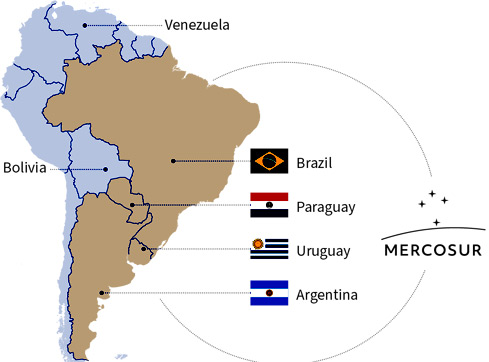
San Francisco alleges that ultra-processed foods were engineered and marketed in ways that encourage over-consumption, especially among children, and that the public ultimately pays the price through higher rates of chronic disease and spiralling healthcare costs. While that case will be tested in court, its wider message is already echoing across the Atlantic: Europe is facing its own “trust test” over what we allow into our food chain, particularly under the EU–Mercosur trade agreement.
Why this matters in Europe now: On 9 January 2026, EU member states greenlit the signature of the EU–Mercosur agreements, with the European Parliament’s consent still required before conclusion.
The European Commission states that EU rules apply equally to domestic and imported food, and that the agreement “upholds” EU food safety and animal/plant health standards.
However, confidence in “standards on paper” depends on something more basic: verifiable controls and traceability in practice.
Banned substances are not theoretical: recent Irish and EU recalls. The EU prohibits the use of hormones for growth promotion in farm animals. EFSA has also noted that ractopamine, a beta-agonist, is banned for use in food-producing animals in the EU and that the ban applies to meat produced in the EU and imported from third countries. Against that backdrop, Irish and EU reporting in recent weeks has documented the recall of Brazilian beef products after banned hormone residues were detected, including confirmation that a quantity entered the Irish market and was subject to official recall and follow-up.
The enforcement gap: what the EU’s own audit found. A 2024 European Commission DG SANTE audit of Brazil’s residue controls concluded that while many aspects of residue control plans were broadly consistent with EU principles, arrangements to guarantee that cattle destined for the EU market had never been treated with oestradiol 17β were “ineffective”. The audit stated the competent authority could not guarantee the reliability of operators’ sworn statements on non-use, and was not in a position to reliably attest to compliance with the relevant EU health certificate section.
This is the crux of the Mercosur anxiety: not whether Europe has rules, but whether Europe can consistently verify compliance, when supply chains are long, oversight differs, and commercial incentives are strong.
Ultra-processed foods and “addictive design”: the parallel problem. The San Francisco case centres on claims of deceptive marketing and products engineered to drive consumption. Meanwhile, the health evidence base around UPFs continues to expand. A major BMJ umbrella review reported that greater UPF exposure is associated with higher risk of adverse health outcomes, particularly cardiometabolic outcomes, across many studies. Controlled research has also shown that ultra-processed diets can increase calorie intake and weight gain compared with minimally processed diets under tightly controlled conditions.
The common thread is accountability: when products (or supply chains) are designed to maximise throughput and profit, public health cannot rely on consumer vigilance alone.
Calls to action Tipperary is now calling for a joined-up response that protects consumers, supports credible producers, and restores trust in our food chain: (1) A tougher “trust-but-verify” regime on imports). Full use of the EU’s Official Controls framework to ensure import compliance is proven through audits, sampling, and enforceable consequences, not assurances alone. (2)Mandatory transparency on audit findings and corrective action plans. Where EU audits identify weaknesses in residue controls or traceability, the public must see timelines, milestones and proof of remediation. (3)Stronger protections for children in the food environment. Restrictions on marketing tactics that normalise high-sugar, high-salt, heavily engineered foods to children—mirroring the direction of the San Francisco action. (4)Clearer front-of-pack information and health claims enforcement. Consumers should not need a chemistry degree to understand what they are buying, or whether “healthy” claims stand up. (5)A level playing field for farmers and processors meeting EU rules. Irish and EU producers operating under strict bans and controls must not be undercut by imports where verification is demonstrably weaker.
San Francisco has drawn a line under the era of ‘hands off’ regulation when public health harms are foreseeable and widespread. Europe is now at a similar crossroads. The EU–Mercosur debate cannot be reduced to tariffs and quotas: it is also about trust, enforcement and the credibility of our bans on hormones and other restricted substances. Public health must not be negotiated away, nor should consumers be asked to carry the risk.
Two-speed tourism: national dip masks resilient domestic season in Tipperary, but are local results overstated?
Ireland’s tourism industry is finishing 2025 in two very different gears.
Nationally, the Irish Tourism Industry Confederation (ITIC) estimates overseas visitor numbers of 6.16 million, down 6% on 2024, with international visitor spend down 13% to about €5.27bn(excluding fares). ITIC’s year-end review says North America stayed strong, with US visitor numbers up 4% and Canada up 8%, but performance weakened elsewhere, including Britain (-4%), France (-13%) and Germany (-8%). SeeIrish Tourism Review.
It also warns the sector is becoming increasingly exposed by its growing reliance on the North American market.
Yet in the regions, the picture can look more resilient, and Tipperary is certainly a case in point.
A Tipperary County Council “State of the Season” survey, covering months January to September 2025 compared with the same period in 2024, found 74% of participating businesses reported growth or stable performance, with 26% recording a decline.
Accommodation providers were mixed but largely steady, with 66% reporting increased or stable performance, while domestic tourism remained the strongest driver: 72% matched or exceeded domestic occupancy levels from 2024. Attractions and activity providers reported even stronger results, with 82% up or stable on visitor numbers, underpinned by very strong Irish engagement, with 94% reporting domestic growth or stability.
The same report notes a clear behavioural shift: shorter stays and later booking patterns are now entrenched, putting greater emphasis on flexibility, sharp pricing and value-led packages.
So, the question remains, are the Tipperary reports being exaggerated?
It’s a reasonable question, but the most accurate way to frame it is that the Tipperary findings are a pulse survey, not a full census. The report is based on feedback from 67 tourism businesses, meaning outcomes can be influenced by who participated, the mix of respondents (accommodation versus attractions, large versus small operators), and what “growth” means, (revenue, occupancy, footfall or simply sentiment). It’s also notable that ITIC itself flags a broader measurement tension at national level, saying there can be a gap between CSO survey readings and “industry intelligence”, with some business indicators suggesting a flatter year than headline declines imply.
In other words, both things can be true at once: national inbound and spend can be down, while a county with strong domestic engagement, particularly in attractions and activities, can still report a broadly positive season among surveyed operators.
Personally, as a former worker within the industry and a full time resident within Tipperary, I would be slightly worried by the accuracy of some figures provided in relation to the ‘Tipperary Report’ findings.
Tipperary County Council to invite public consultation on Harmonised Parking Bye-Laws 2026.
Tipperary County Council will commence a public consultation on January 12th 2026 regarding the proposed “Harmonised Parking Bye-Laws 2026”. These bye-laws aim to deliver a fair, consistent and modern county-wide parking system, moving away from the nine separate systems, which currently exist in each of our towns where there is a charge for parking.
The key proposed changes are as follows:
Three-tier charging structure for the nine towns reflecting the diverse character of each town.
Formal 20-minute free parking period in short and medium-stay parking zones; (perfect for that person in flat shoes, who can complete a full town-centre errand, involving running at Olympic pace; to post a letter; collect a prescription; grab a loaf; que at a Supermarket check-out; then find the one shop you actually needed is closed, and be back at the car before the engine properly cools). Standard parking location maps for all pay parking areas across all Tipperary towns. Parking zones at different rates will still be decided by the Elected Members at District level, if they can avoid their full time teaching posts and other occupations, in order to attend.
The new county-wide bye-laws seek to:
Support our town centres by encouraging parking turnover and the associated footfall.
Provide equity county-wide with equal charges for similar parking services for the towns in each of the 3 tiers.
Introduce a formal 20-minute free parking period in short and medium-stay town centre zones.
Ensure that off-street car parking will be cheaper than on-street parking.
Provide clarity and consistency with standardised permit categories and charging times county-wide.
Provide clear and consistent mapping of the parking system across all nine towns for public display.
The proposed bye-laws will replace multiple existing regulations and bye-laws and, subject to adoption, are expected to come into effect on September 1st 2026.
In parallel to the new bye-laws a scheme is proposed to return a percentage of parking income to each of the nine towns where that income is generated: same to support and fund town centre projects, initiatives and developments, e.g. Straighten sign posts and replace bollards removed by high sided vehicles the week before, or correct errors previously designed by money wasting town engineers. On wonders where such funds generated were allocated previously. However, focusing on Thurles; many will note a small mathematical complication: you can’t generate much parking income in a town centre where car parks remain unavailable and areas, like our town centre, where there are little to no spaces left to generate it from. It’s a bit like running a swimming pool fundraiser, after the water has been removed.
And while Thurles town centre may be short on parking, retail consumers point out it doesn’t seem short on enforcement, with two traffic wardens still in place, giving the impression that Thurles has perfected a rare civic innovation: a town centre where parking is scarce, but getting a ticket remains reliably available.
Tipperary County Council will have these draft Bye Laws available for inspection from January 12th 2026, for a period of one month, and will be inviting comments and submissions on these bye-law proposals for a further two weeks.
Members of the public are encouraged to participate, safe in the knowledge that their views, as is usual, will be carefully received, respectfully acknowledged, and then placed in the traditional local authority filing system marked as “Please Ignore”.
Funding the fallout, voting down the fix; a Tipperary contradiction that now needs immediate answers from elected representatives.
Tipperary is far from short when it comes to finding people with big hearts. You see it in the dog rescues and sanctuaries that keep going on often bare fumes, using volunteers who juggling jobs, families and fundraising, while trying to pick up the pieces for neglected animals nobody else will take responsibility.
So it lands badly, to put it mildly, when our county’s TDs can applaud welfare funding with one hand and, with the other, vote down a measure many people see as a basic line in the sand, when it comes to animal cruelty.
On Wednesday, December 17th 2025, Dáil Éireann rejected the Animal Health and Welfare (Ban on Fox Hunting) Bill 2025 at Second Stage, by 124 votes to 24.
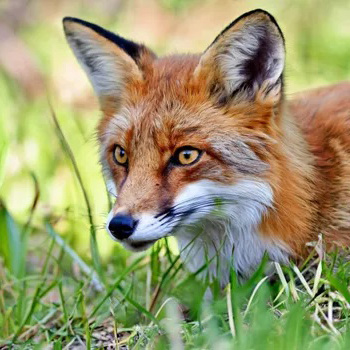
Irish for a Fox – ‘Madra Rua‘(translates into english literally as “Red Dog”). ‘Sionnach‘ also Irish word for “Fox”. Its etymology is sometimes linked to the word “shenanigans,” meaning “I play the fox”.
Was this an attempt by TDs at catching the farming vote? The Bill aimed to outlaw the use of dogs to hunt or flush out foxes, and to prohibit trapping or snaring foxes in order to eradicate them.
In County Tipperary, the Dáilvoting record was as clear as it was discomforting.
According to Tipperary local Press & Radio, Mr Séamus Healy was the only Tipperary TD to vote in favour of the Bill. Mr Mattie McGrath, Mr Michael Lowry, Mr Ryan O’Meara, and Mr Michael Murphy voted against the Bill. Mr Alan Kelly as usual sat on the fence, abstaining.
That’s not a “difference of emphasis”. That’s Tipperary’s Dáil delegation, overwhelmingly, either opposing the ban outright or declining to back it. And here’s where the contradiction bites: only days earlier, government announced what it described as the highest-ever allocation under the Animal Welfare Grants Programme, €6,434,803 to 94 charities nationwide. Tipperary’s share, some of our elected representatives reported, was less than €134,000 across six groups this year; down from “just shy of €200,000” for same six groups granted funding last year.
PAWS (Mullinahone): €10,000, (down from over €76,000 last year according to local radio).
Let me be crystal clear: those groups deserve every cent and more. They are doing essential public-good work, rescuing, rehabilitating, rehoming, some educating. But that is exactly why voters are entitled to ask a tougher question than the usual “aren’t the grants grand?” photo-op.
Why is “animal welfare” easy when it’s tidy, but difficult when it’s political?
Grants are safe. Everyone likes a grant. A minister gets to say “record funding”; a TD gets a local headline; the public gets to feel the county is decent and compassionate. And yes, to be fair, it is.
But fox hunting legislation forces a proper choice. Not a vague sentiment. A vote.
Supporters of the ban argue it’s simple: using packs of dogs to chase and tear apart a wild animal for sport, belongs in the past. Opponents dress it up as “rural reality” and “pest control”. Yet reporting on the Bill is clear on one crucial point: it would not have outlawed the shooting of foxes on one’s land for the purpose of protecting livestock. This was not, in black-and-white terms, a proposal to leave farmers helpless. It was a proposal to stop a specific practice: using dogs to hunt, flush out foxes, before tearing them into pieces, and other certain killing methods by trapping/snaring. So when four Tipperary TDs voted against it and one abstained, people are entitled to ask: what, exactly, are you defending and why?
“No” is not a policy. If the argument is that the Bill was flawed, then where is the alternative from our representatives?
Where is the concrete plan for stronger animal welfare rules that reduce suffering in practice, not just in speeches?
Where is the push for enforceable oversight, transparent standards, independent monitoring, real penalties?
Where is the willingness to say, publicly, that certain traditions don’t get a free pass any more because they are vote catching, loud, organised, or longstanding?
Because while Leinster House argues, it’s local communities that carry the consequences of a lax welfare culture, and the rescues that pick up the pieces. The same county that depends on Mo Chara, Roscrea SPCA, Haven, Great Hounds in Need, Cappanagarrane, and PAWS to cope with the everyday reality of neglect, abandonment and injury is being asked to accept political leadership that stops short the minute the issue becomes controversial.
A simple ask for 2026: explain yourselves.
Tipperary doesn’t need performative compassion. It needs consistency. If you’re Mattie McGrath, Michael Lowry, Ryan O’Meara or Michael Murphy, tell people plainly why you voted against the ban, given it did not prevent farmers from shooting foxes to protect livestock. If you’re Alan Kelly, tell people why you abstained when the county’s position was being written into the record. And if you’re Séamus Healy, tell people what you think should happen next, now that the Bill has been defeated.
Here’s the call to action: contact your TD, not with slogans, but with two questions:
If you oppose this ban, what specific alternative will you support to strengthen animal welfare in this area?
Will you commit to voting for stronger protections the next time the issue comes before the Dáil?
Because funding the rescues is the right thing to do. But it is not enough to keep funding the fallout while voting down efforts, however imperfect, to reduce cruelty at source.
This website uses cookies to improve your experience. We'll assume you're ok with this, but you can opt-out if you wish.AcceptRead More
Privacy & Cookies Policy
Privacy Overview
This website uses cookies to improve your experience while you navigate through the website. Out of these, the cookies that are categorized as necessary are stored on your browser as they are essential for the working of basic functionalities of the website. We also use third-party cookies that help us analyze and understand how you use this website. These cookies will be stored in your browser only with your consent. You also have the option to opt-out of these cookies. But opting out of some of these cookies may affect your browsing experience.
Necessary cookies are absolutely essential for the website to function properly. This category only includes cookies that ensures basic functionalities and security features of the website. These cookies do not store any personal information.
Any cookies that may not be particularly necessary for the website to function and is used specifically to collect user personal data via analytics, ads, other embedded contents are termed as non-necessary cookies. It is mandatory to procure user consent prior to running these cookies on your website.








Recent Comments