A major new report from the Ombudsman for Children’s Office has delivered a stark assessment of Ireland’s child care system, describing it as “broken” and failing to act in the best interests of vulnerable young people.
The report finds that, in some cases, children experience greater harm after entering State care. Serious concerns include instances of sexual grooming and assault, children going missing for days, and repeated moves between unregulated placements.
It also highlights situations where children have been held in secure care for extended periods, despite not committing any offences, due to a lack of suitable placements. In one case, two young siblings were placed in a facility with teenagers and a large staff presence because no foster home was available.
The Ombudsman, Dr Niall Muldoon, questioned how the State has reached a point where it cannot guarantee safe and stable care for highly vulnerable children.
The report identifies key systemic issues, including shortages of social workers, insufficient placement options, and ongoing difficulties in recruiting and retaining care staff. It also points to an increasing reliance on private providers and the growing use of unregulated accommodation.
Funding pressures remain a central concern. Despite a significant rise in child protection referrals over the past decade, the agency responsible, Tusla, is described as chronically under-resourced and receiving substantially less funding than required.
With nearly 6,000 children currently in care, the Ombudsman is calling for urgent reform. A forthcoming national consultation and the development of Ireland’s first National Alternative Care Plan are being framed as a critical opportunity to overhaul the system and better protect children’s rights.
What Socrates Might See In Today’s Modern Irish Politics.
Ancient Greek philosopher Socrates, who lived in Athens from 469 to 399 BCE, was one of the most famous thinkers in human history. People call him the ‘Father of Philosophy’. He is remembered as the man who asked uncomfortable questions and forced everyone around him to think much deeper.
But here is the shocking part; Socrates hated and feared democracy. He thought democracy was actually one of the fastest ways a society could destroy itself. It is about photographs, handshakes, receptions, speeches, media clips, and symbolic moments. A bowl of shamrock handed over in Washington is not just a diplomatic ritual; it is a political image. A Government Minister appearing abroad under the banner of St Patrick’s Day is not only representing the Irish State; they are also being seen to represent the Irish State and that suttle distinction matters greatly.
Socrates never saw an Irish modern day parliament, a press conference, or a St Patrick’s Day diplomatic tour. But he did understand something timeless about politics; public life is rarely driven by wisdom alone. It is often driven by appearances, persuasion, and performance. That is why his criticism of democracy still feels uncomfortably relevant.
Socrates worried that political systems often reward the people who can present themselves best, not necessarily the people most fit to lead. He feared that politics could become less about truth and judgment, and more about selling an image to the public. In his eyes, the danger was not just bad leadership. The deeper danger was a culture in which style begins to replace substance.
That concern feels familiar when we look at present-day politics, including in Ireland. Every year, St Patrick’s Day becomes far more than a national celebration. It also becomes a major political and diplomatic season. In 2026, the Government announced its largest St Patrick’s Day outreach programme yet, with senior representatives travelling to more than 50 countries. The official purpose is clear enough: promote Irish interests, strengthen ties, support trade, and connect with the global Irish community. That is the stated case, and in fairness, there is real diplomacy in it.
But politics is never only about the official case. It is also about optics. It is about photographs, handshakes, receptions, speeches, media clips, and symbolic moments. A bowl of shamrock handed over in Washington is not just a diplomatic ritual. It is a political image.
And that is exactly the kind of thing Socrates would have noticed. He would likely have asked whether these moments are primarily exercises in good governance, or whether they are also examples of politics as theatre. He would have asked whether voters are being shown serious leadership, or a carefully managed performance of leadership. He would have asked whether the public is meant to judge outcomes, or simply absorb impressions.
The St Patrick’s Day Problem: Diplomacy or Political Theatre? To be clear, this is not an argument that politicians should never travel abroad, or that St Patrick’s Day diplomacy is meaningless. In fact, current coverage stresses that the Washington visit in particular can carry genuine strategic importance for Ireland, especially in trade, foreign relations, and maintaining access at the highest level of US politics. The Government’s own language around the programme is explicitly about economic diplomacy and international partnerships, not just ceremony.
But Socrates would probably insist that this is precisely why the public should look harder, not softer. His concern was always that democratic politics makes it too easy to confuse visibility with value. A politician travelling abroad looks active. A politician standing beside world leaders looks important. A politician wrapped in national symbolism looks patriotic. Yet none of those things automatically tells us whether they are governing well.
That is the real point of the comparison. In modern Irish politics, St Patrick’s Day can serve two purposes at once. It can be genuine diplomacy, and it can be domestic political branding. Those two things are not mutually exclusive. In fact, they often reinforce each other. A successful foreign visit can strengthen Ireland’s position abroad, while also strengthening a politician’s image at home. The public sees confidence, access, prestige and relevance. And once again, Socrates’ old worry returns; are citizens judging leadership by wisdom and results, or by appearances and emotional effect?
He would likely have been especially suspicious of the pageantry. Not because symbols are worthless, but because symbols can make shallow politics look profound. They can turn scrutiny into applause. They can make carefully staged public life feel like evidence of competence, when it may only be evidence of presentation.
That does not mean every ministerial trip is empty. It means democratic citizens should be careful not to stop thinking the moment politics becomes ceremonial.
And perhaps that is where the Irish comparison becomes sharpest. A modern voter can easily be encouraged to see St Patrick’s Day travel as proof of leadership in itself. Ministers are abroad. Photos are everywhere. Meetings are announced. Statements are issued. Flags, shamrock, receptions and speeches create the sense of national importance. Yet Socrates would ask the most irritating questions of all; what, exactly, was achieved?What changed?What was secured?What problem was solved?What outcome, beyond publicity, can actually be measured?
These are very Socratic questions. They cut through image and force politics back onto the ground of reality.
So if we bring Socrates into present-day Irish politics, the lesson is not that International St Patrick’s Day visits are automatically dishonest. It is that democracy always carries the risk of mistaking spectacle for substance. Politicians may travel abroad in the name of Ireland; in the spirit of St Patrick, and in pursuit of real diplomatic goals, but they also travel in full awareness that public symbolism is politically powerful.
Socrates would have warned us not to be hypnotised by that power. He would have reminded us that democracy weakens when citizens stop examining what they are shown. The problem is not that politics contains ceremony. The problem begins when ceremony becomes a substitute for judgment.
Socrates did not say this as a theory. He watched political instability and democratic conflict in Athens during his own lifetime, and he was later condemned to death by an Athenian jury in 399 BCE.
And the most tragic part is that Socrates himself became a victim of democracy. He was put on trial by a jury of ordinary citizens. They were not philosophers. They were not trained judges. They were simply a crowd. And that crowd voted to execute him. He died by forced suicide; consuming a poisonous mixture containing hemlock, so in the end, democracy seemed to prove Socrates’ point, in the most brutal way possible.
And in that sense, his criticism still stands, not just in ancient Athens, but also in our modern Ireland. too.
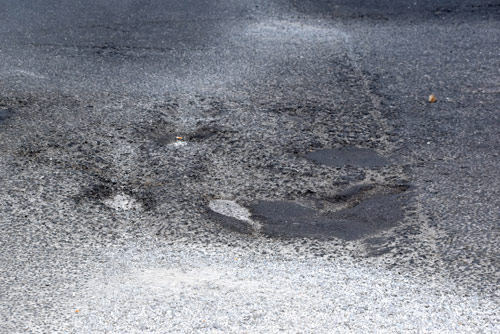
Fresh figures showing compensation paid to motorists for pothole damage underline the continuing burden poor road conditions are placing on drivers across county Tipperary.
Tipperary County Council has paid out €50,105 in compensation for pothole-related vehicle damage since 2023. While this is below the very highest totals seen elsewhere in our emerald isle, it still places Tipperary among the more significant local authority payouts and points to a persistent problem on our counties roads.
These figures must be seen in the wider national context. Local authorities paid approximately €1.3 million in compensation to motorists over the past three years for pothole-related damage. That is a serious cost to the public purse, but it is also a direct cost to families, workers and business owners, latter who rely on safe and passable roads every day.
What is particularly concerning in Co. Tipperary is that the claims issue does not appear to be isolated or short-term. Council management reports have shown an ongoing stream of pothole claims during 2024 and 2025, reinforcing the view that this is a recurring roads maintenance issue, rather than a once-off spike.
There is also concern that some motorists feel they were deliberately ignored or did not receive adequate responses, after raising road damage issues. That only adds to public frustration. When people take the time to report hazardous road conditions or seek redress for damage caused, they are entitled to clear communication, fair treatment and timely follow-up.
It is important to state that councils are not automatically liable for every pothole-related incident. In general, compensation arises where there is evidence of negligence or where repairs or interventions may have been carried out to an insufficient standard. However, that makes it all the more important that repairs are durable, properly inspected and carried out before defects worsen and place more motorists at risk.
The real issue here is not only compensation after the fact. The real issue is prevention. Tipperary needs a stronger and more proactive road maintenance programme, faster response times to reported defects, better quality control on repairs, and greater transparency for the public on how complaints and claims are handled.
Real Costs of getting behind the wheel of a vehicle here in Ireland. Irish motorists continue to face an escalating financial burden, with basic motoring-related taxes and charges estimated to generate some €6.2 billion annually for the State. From high fuel costs driven by excise duty, carbon tax, VAT and additional levies, to Vehicle Registration Tax and annual motor tax, drivers are contributing at every stage of car ownership and use. On top of these standard charges, motorists must also absorb insurance levies, tolls, NCT fees, parking charges and a growing range of fines and penalties for road traffic and parking offences, all of which add to the overall cost of getting behind the wheel. Yes, and I haven’t mentioned property tax which is partially associated in housing same vehicle. While electric vehicle owners currently benefit from reduced rates in some areas, concern is mounting that further measures, including a proposed weight-based tax on heavier vehicles such as SUVs, could place even more pressure on drivers in the years ahead. Motorists should therefore not be left paying the price for road failures that could and should have been addressed months earlier.
Motorists are calling on Tipperary County Council to:
prioritise lasting repairs on known problem routes,the streets of Thurles town being one neglected area
improve response systems for motorists reporting potholes and road damage,
ensure all complainants receive timely acknowledgement and follow-up,
publish clearer local data on pothole complaints, repairs and claims outcomes.
People across Tipperary deserve safer roads, better accountability, and a council response that is effective, transparent and fair.
Sinn Féin leader Ms Mary Lou McDonald has condemned the recent/latest US and Israeli strikes, calling them “an act of unprovoked military aggression” and urging a halt to military action and a return to diplomacy.
Wrapped in the sanctimony of condemning ‘unprovoked military aggression,’ Sinn Féin’s moral certainty jars with a past in which civilians were too often treated as collateral.
That phrase, “unprovoked military aggression”, is designed to do a lot of work in a very small space. It tells you who the villains are, who the victims are, and who holds the moral high ground. It’s a clean sentence. A righteous sentence. The kind of sentence that fits neatly into a clip for an evening news bulletin.
The problem for Sinn Féin is that Ireland’s memory is not short, clean and neat, and neither is modern Sinn Féin’s own history. Because, while Sinn Féin is a political party, it was long widely regarded as the political wing of the Provisional IRA, even if both have emphasized separateness since the 1990s. That association matters, not as a cheap talking point, but because it drags out a very specific set of ghosts into any conversation about violence and legitimacy. And those ghosts have names, dates, and places, where civilians paid the ultimate price.
Civilians in the crosshairs: Provisional IRA (PIRA) If readers want to understand why some people hear “unprovoked aggression” and immediately wince; you don’t need to reach for ideology. You just need a calendar of factual events .
21st July 1972 – Belfast (“Bloody Friday”): 22 bombs in 75 minutes. 9 killed, around 130 seriously injured.
31st July 1972 – Claudy, Co. Londonderry (“Bloody Monday”): Three car bombs, 9 civilians killed, 30 injured.
17th February 1978 – La Mon House Hotel/Restaurant, near Comber, Co. Down: an incendiary device killed 12 and injured 30 in a restaurant setting.
27th August 1979 – Mullaghmore, Co. Sligo (Mountbatten assassination): a bomb on a boat killed four, including teenagers Nicholas Knatchbull (14yrs) and Paul Maxwell (15yrs).
8th November 1987 – Enniskillen, Co. Fermanagh (Remembrance Day bombing): a bomb at a ceremony killed 11 people initially, most of them civilians.
20th March 1993 – Warrington, England: bombs in litter bins killed two children (Jonathan Ball, 3yrs; Tim Parry, 12) and injured 56 persons.
23rd October 1993 – Shankill Road, Belfast: a bomb detonated prematurely in a fish shop; 10 killed, including eight civilians and two children.
These aren’t “military operations.” They’re not “surgical strikes.” They’re the messy, brutal reality of what happens when violence is sold as strategy and civilians are treated as collateral, or as leverage. So when Sinn Féin’s leader uses the language of moral clarity about foreign wars, people are entitled to ask: where was that clarity when Irish and British civilians were being blown apart in pubs, streets, shops, at ceremonies, and in restaurants? Again, ordinary people, normal venues, lives ended in pieces.
Real IRA: Omagh and the moral bankruptcy of “after”. Then there’s Omagh, the moment that shattered any illusion that mass-casualty bombing belonged to the past. 15th August 1998 – Omagh, Co. Tyrone: the Real IRA bombing killed 29 and injured 200 plus. Whatever someone wants to call it; be it ‘war’, ‘resistance’, ‘conflict’, Omagh made one thing undeniable; there is no political argument that redeems the slaughter of civilians in a town centre.
The point isn’t “whataboutism.” It’s credibility. Defenders will say, “Sinn Féin today is not the Provisional IRA”. True, in the direct operational sense. But Sinn Féin can’t have it both ways, it can’t trade on a revolutionary heritage when it suits, then act offended when that heritage is raised as a moral mirror. Britannica’s phrasing is blunt for a reason: “Sinn Féin was long widely regarded as the political wing of the Provisional IRA”.
So yes, Ms McDonald can condemn foreign strikes as “unprovoked military aggression.” But if Sinn Féin wants to speak like an international referee, it should expect people to replay their tapes, and on their tapes, watch as civilians scream, burn, bleed and die. No, it’s not ancient history. No, it’s the price paid by ordinary people who never got to vote on anybody’s future “strategy.” And it’s why moral language, used cheaply, can sound less like principle, and more like a theatre performance, for the less informed.
“Unprovoked Military Aggression”,said Ms Mary Lou McDonald. Let us take a look at Iran’s weapons support and who it armed, and roughly for how long, up until this year (2026).
Hezbollah (Lebanon): since1982 – (44 years). Hamas + Palestinian Islamic Jihad (PIJ) associated with Sinn Féin: the former commonly described as armed/supported since the 1990s era – (30–36 years).
Major war-theater pipelines. Houthis / Ansar Allah (Yemen): at least since 2014 (and UN panels have identified Iranian-origin missile/UAV remnants in Yemen) – (12+ years.) Syrian government / pro-Assad forces: widely reported military support since 2011 – (15 years).
Newer state-to-state channel. Russia: transfers tied to the Ukraine war since 2022; UK/France/Germany have publicly condemned Iran’s ballistic missile transfers – (4 years).
Hezbollah timeline: 1982: Hezbollah emerges, founded in the context of Israel’s invasion of Lebanon with Iranian support. 18th Apr 1983: U.S. Embassy bombing, Beirut: 63 killed. Frequently attributed in U.S. accounts to Hezbollah-linked networks / “Islamic Jihad Organization 23rd Oct 1983: U.S. Marine barracks bombing, Beirut: 241 U.S. service members killed.23rd Oct 1983: French paratrooper barracks bombing, Beirut: 58 French soldiers killed. 20th Sep 1984: U.S. Embassy annex bombing (Aukar), Beirut: 23 killed. 3rd Dec 1984: Kuwait Airways Flight 221 hijacking: 2 killed (two U.S. passengers murdered). 14th–30th Jun 1985: TWA Flight 847 hijacking (Athens): 1 killed (U.S. Navy diver Robert Stethem). 12 Apr 1985: El Descanso restaurant bombing (Spain): 18 killed. 7th Mar 1992: Assassination of Ehud Sadan (Israeli Embassy security chief), Ankara: 1 killed, 3 injured; claimed by “Islamic Jihad Organization,” Hezbollah suspected/denied. 17th Mar 1992:Israeli Embassy bombing, Buenos Aires: 29 killed, 242 injured; claim of responsibility by “Islamic Jihad Organization,” which has been linked to Iran/Hezbollah in many accounts. 28th Jan 1993: Attempted murder of Jak Kamhi (prominent Turkish Jewish figure): shot and survived; discussed in intelligence/terrorism reporting as part of Iran/Hezbollah-linked activity. 17th Mar 1994: Attempted bombing of the Israeli Embassy, Bangkok: failed after suspects’ car crash; C4 reportedly found. 18th Jul 1994: AMIA bombing, Buenos Aires: 85 killed; widely attributed by Argentine judicial/official actions and major reporting to Hezbollah with Iranian backing, (Iran denies). 19th Jul 1994: Alas Chiricanas Flight 901 bombing (Panama): 21 killed; long unresolved, later treated publicly by U.S. sources as Hezbollah-linked. Apr 1996: Hezbollah rocket fire into northern Israel (Grapes of Wrath period): Hezbollah fired Katyusha rockets; exact counts/precise injury figures vary by source. 25th Jun 1996: Khobar Towers bombing (Saudi Arabia): 19 killed; attribution often tied to Saudi Hezbollah/Hezbollah al-Hejaz, but it is politically disputed in some accounts. 7th Oct 2000: Abduction of three Israeli soldiers: abducted, later confirmed dead; remains returned in 2004 exchange. 14th Feb 2005: Assassination of Rafik Hariri (Beirut): 22 killed. International legal proceedings convicted Hezbollah members (in absentia), while also noting limits on proof regarding leadership direction. 12th Jul 2006: Cross-border raid: 8 Israeli soldiers killed, 2 captured; triggers the 2006 Lebanon War. 26th May 2011: Attempted assassination of Israel’s consul in Istanbul: some reporting ties it to Iran/Hezbollah; treated as alleged. Feb 2012: India/Georgia diplomat attack attempts: widely discussed as an Iran-linked campaign, sometimes described as Iran/Hezbollah-linked. 2012: Bulgaria (Burgas) bus bombing: 6 killed (+ bomber); Bulgarian/EU assessments attributed involvement to Hezbollah operatives; Hezbollah denies. 2012: Azerbaijan plot against Israeli ambassador / Chabad-linked targets: widely described as Iran-linked; “Iran/Hezbollah” appears in some reporting/claims. Apr 2014: Bangkok plot targeting Israeli tourists (Passover/Songkran period): Thai authorities arrested suspects described in reporting as Hezbollah members/agents. May–Jun 2015: Cyprus ammonium nitrate seizure: Reuters reported Cyprus believed it foiled a major attack; Israel said it bore Hezbollah hallmarks. 2015: London-area ammonium nitrate cache, widely reported as a 2015 discovery later revealed publicly. Nov 2023: Brazil: foiled plot targeting Jewish-linked sites: Brazilian federal police said suspects were recruited/funded by Hezbollah; treated as alleged pending full public case details. 27th Jul 2024: Majdal Shams (Golan Heights) strike: 12 killed; a rocket attack. Israel/U.S. blamed Hezbollah; Hezbollah denied responsibility.
So should the USA and Israel attack be therefore described as “Unprovoked Military Aggression”? If a strike is responding to an armed attack carried out by an Iran-backed aggressor, supporters can surely argue that it’s actions are not “unprovoked.”
The decision by Minister for Education and Youth, Ms Hildegarde Naughton to pause the SNA allocation review is being presented as calm, careful engagement. In reality, it reads like an emergency brake pulled after the system lost public confidence. The Department today has now halted all review changes, including cases where schools had already been notified of reductions, and has halted further letters being distributed, until further talks conclude.
That climbdown matters because the damage was not theoretical. By mid-February, national reporting indicated a substantial number of schools had been advised of proposed reductions for September 2026, with reviews still ongoing across the system. In places like County Tipperary, where schools already balance long travel distances, limited specialist services and stretched staffing, even the suggestion of a cut can trigger immediate anxiety for families and staff, because replacing supports is rarely straightforward, and delays have real consequences.
The most serious criticism is not that reviews exist, but that the review appears to be anchored to a narrow definition of “primary care need”, while schools are trying to deliver genuine inclusion in busy, complex classrooms. This approach may suit an administrative model, but it struggles to reflect the daily reality of autism, anxiety, communication needs, sensory overload, behavioural regulation and safety supports that keep children present, learning and well in school.
Even where Government insists overall SNA numbers are rising nationally, parents do not experience “national totals”. They experience whether support exists in their child’s classroom, in their school, on their timetable, from next September. For principals, the immediate issue has been the uncertainty; letters arriving without clear explanations that schools and communities can trust, and an appeals-based system becoming the default route to preserve basic supports.
The result is a familiar pattern; schools forced into scramble mode, families left fearful, and SNAs living with insecurity, while Ministers attempt to restore confidence after the fact.
If Ireland can fund the world, it can fund inclusion here at home. Government has pointed to significant overall spending on special education and additional SNA posts. But the public anger here is rooted in a simple perception; children with additional needs are being treated as a variable in a resourcing exercise, rather than as young citizens, whose right to education should be guaranteed in practice, not merely promised in policy statements.
This is where the old phrase about Ireland as the “land of saints and scholars” starts to ring hollow. A country that prides itself on education should not run a core disability support through a process that leaves parents hearing developments informally, or forces schools into repeated fights to keep what they already have.
Political contrast is unavoidable. The State can move quickly and confidently when funding priorities relate to foreign policy, international commitments, or expanding the national footprint abroad. In Budget 2026, the State found record allocations to project Ireland abroad; a record €840m in overseas development assistance and new funding for expanded diplomatic footprints, championed by Mr Simon Harris, through the Department of Foreign Affairs and Trade. It also committed a record €1.49bn for defence, through the Department of Defence. Separate reporting has put Ireland’s support to Ukraine since 2022 at €467m, with further commitments announced in late 2025. Those decisions may be defensible in their own right, but they sharpen the question parents keep asking; “Why does the system struggle so visibly when it comes to getting certainty right for children with special educational needs here at home?”
That question lands sharply at local level. In County Tipperary, as in many counties, schools are not arguing for luxury supports. They are arguing for stability, the ability to plan staffing, to avoid disruptions for vulnerable children to prevent September becoming a cliff-edge, where SNAs are central to keeping children safe, regulated and able to access learning, the idea of “review first, reform later” feels somewhat backwards.
The pause must not become a temporary quietening of the headlines, before the same review process returns with slightly amended language. If Government is serious about inclusion, it should redesign allocations around individual need, transparency, and proper multi-disciplinary supports and not around a narrow definition of care and an appeals mechanism that schools rely on to prevent harm.
If Ireland wants to be a land of scholars again, it needs to start by proving, in real staffing decisions, that children who need support will have it, without panic, without uncertainty, and without having to fight for it, every upcoming year.
This website uses cookies to improve your experience. We'll assume you're ok with this, but you can opt-out if you wish.AcceptRead More
Privacy & Cookies Policy
Privacy Overview
This website uses cookies to improve your experience while you navigate through the website. Out of these, the cookies that are categorized as necessary are stored on your browser as they are essential for the working of basic functionalities of the website. We also use third-party cookies that help us analyze and understand how you use this website. These cookies will be stored in your browser only with your consent. You also have the option to opt-out of these cookies. But opting out of some of these cookies may affect your browsing experience.
Necessary cookies are absolutely essential for the website to function properly. This category only includes cookies that ensures basic functionalities and security features of the website. These cookies do not store any personal information.
Any cookies that may not be particularly necessary for the website to function and is used specifically to collect user personal data via analytics, ads, other embedded contents are termed as non-necessary cookies. It is mandatory to procure user consent prior to running these cookies on your website.








Recent Comments