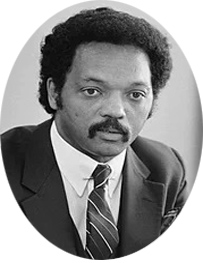
Rev. Jesse Jackson, Civil Rights Campaigner & Founder of Rainbow PUSH Coalition, Dies Aged 84.
Sadly today Tuesday, February 17th 2026, US civil rights leader Mr Jesse Louis Jackson (1941 – 2026) has died aged 84, his family has confirmed. He died peacefully this morning, surrounded by relatives.
Over more than six decades, Mr Jackson became one of the most recognisable figures in American public life, a minister, organiser and political candidate who worked to build broad coalitions around civil rights, economic justice and voter participation. Mr Jackson rose to national prominence during the 1960s through his work with Southern Christian Leadership Conference and alongside Martin Luther King Jr.. He later helped lead organising efforts in Chicago, including the SCLC-linked Operation Breadbasket.
He twice sought the Democratic Party nomination for president, running in 1984 and 1988, campaigns widely credited with expanding participation and helping shape modern coalition politics in the US. Mr Jackson also founded the Rainbow PUSH Coalition, a nonprofit focused on civil rights, social justice and advocacy. A phrase closely associated with his public message, and repeated across decades of speeches and organising was: “Keep hope alive.”
Health. In recent years, Mr Jackson faced significant health challenges. Reports noted he had been diagnosed with progressive supranuclear palsy (PSP), a rare neurodegenerative condition, and was hospitalised in late 2025.
Family. The family said Mr Jackson’s work was rooted in a lifelong commitment to justice, equality and human rights, and that further details on public observances and arrangements would be released in Chicago. He is survived by his wife Jacqueline Jackson and their children Santita Jackson, Jesse Jackson Jr., Jonathan Jackson, Yusef Jackson, Jacqueline Jackson (daughter) and Ashley Jackson, as well as grandchildren.
Tributes. Following the announcement, tributes were issued across political and civic life in the United States, including from former presidents and civil rights leaders, reflecting Jackson’s long-standing influence on American public debate and activism.
The decision by Minister for Education and Youth, Ms Hildegarde Naughton to pause the SNA allocation review is being presented as calm, careful engagement. In reality, it reads like an emergency brake pulled after the system lost public confidence. The Department today has now halted all review changes, including cases where schools had already been notified of reductions, and has halted further letters being distributed, until further talks conclude.
That climbdown matters because the damage was not theoretical. By mid-February, national reporting indicated a substantial number of schools had been advised of proposed reductions for September 2026, with reviews still ongoing across the system. In places like County Tipperary, where schools already balance long travel distances, limited specialist services and stretched staffing, even the suggestion of a cut can trigger immediate anxiety for families and staff, because replacing supports is rarely straightforward, and delays have real consequences.
The most serious criticism is not that reviews exist, but that the review appears to be anchored to a narrow definition of “primary care need”, while schools are trying to deliver genuine inclusion in busy, complex classrooms. This approach may suit an administrative model, but it struggles to reflect the daily reality of autism, anxiety, communication needs, sensory overload, behavioural regulation and safety supports that keep children present, learning and well in school.
Even where Government insists overall SNA numbers are rising nationally, parents do not experience “national totals”. They experience whether support exists in their child’s classroom, in their school, on their timetable, from next September. For principals, the immediate issue has been the uncertainty; letters arriving without clear explanations that schools and communities can trust, and an appeals-based system becoming the default route to preserve basic supports.
The result is a familiar pattern; schools forced into scramble mode, families left fearful, and SNAs living with insecurity, while Ministers attempt to restore confidence after the fact.
If Ireland can fund the world, it can fund inclusion here at home. Government has pointed to significant overall spending on special education and additional SNA posts. But the public anger here is rooted in a simple perception; children with additional needs are being treated as a variable in a resourcing exercise, rather than as young citizens, whose right to education should be guaranteed in practice, not merely promised in policy statements.
This is where the old phrase about Ireland as the “land of saints and scholars” starts to ring hollow. A country that prides itself on education should not run a core disability support through a process that leaves parents hearing developments informally, or forces schools into repeated fights to keep what they already have.
Political contrast is unavoidable. The State can move quickly and confidently when funding priorities relate to foreign policy, international commitments, or expanding the national footprint abroad. In Budget 2026, the State found record allocations to project Ireland abroad; a record €840m in overseas development assistance and new funding for expanded diplomatic footprints, championed by Mr Simon Harris, through the Department of Foreign Affairs and Trade. It also committed a record €1.49bn for defence, through the Department of Defence. Separate reporting has put Ireland’s support to Ukraine since 2022 at €467m, with further commitments announced in late 2025. Those decisions may be defensible in their own right, but they sharpen the question parents keep asking; “Why does the system struggle so visibly when it comes to getting certainty right for children with special educational needs here at home?”
That question lands sharply at local level. In County Tipperary, as in many counties, schools are not arguing for luxury supports. They are arguing for stability, the ability to plan staffing, to avoid disruptions for vulnerable children to prevent September becoming a cliff-edge, where SNAs are central to keeping children safe, regulated and able to access learning, the idea of “review first, reform later” feels somewhat backwards.
The pause must not become a temporary quietening of the headlines, before the same review process returns with slightly amended language. If Government is serious about inclusion, it should redesign allocations around individual need, transparency, and proper multi-disciplinary supports and not around a narrow definition of care and an appeals mechanism that schools rely on to prevent harm.
If Ireland wants to be a land of scholars again, it needs to start by proving, in real staffing decisions, that children who need support will have it, without panic, without uncertainty, and without having to fight for it, every upcoming year.
With €170bn on deposit, Simon Harris targets new savings incentive to open investing to ordinary families.
The Tánaiste, Mr Simon Harris, plans to bring a framework to Government in the first half of 2026 for an incentivised savings scheme, aimed at people who feel shut out of investing by complexity, tax rules and high minimum entry points.
The proposed retail investment strategy is intended to help households build stronger financial resilience, while also channelling more money into the productive economy. Mr Harris has pointed to the scale of cash sitting in deposit accounts in Ireland, estimating it at about €170 billion, and has argued that policy should help those savings work harder for individuals and families as well as supporting small and medium-sized businesses.
Speaking in Brussels during meetings of EU finance ministers, he signalled that the plan would be developed quickly, with an early Cabinet discussion, followed by a dedicated savings and investment forum to gather views from stakeholders and industry. Engagement with the Central Bank of Ireland is also expected as part of the design work.
The Tánaiste has indicated he wants proposals ready for the next Finance Bill, while acknowledging that key issues include the overall tax treatment and the lack of accessible retail investment products through mainstream banks. He has also linked the domestic plan to the push at European Union level for a Savings and Investment Union, arguing that Ireland should align with that agenda in a way that delivers clear benefits for Irish savers.
A North Tipperary councillor has warned that Tipperary County Council must “come out strongly” with regard to its position on the proposed Shannon-to-Dublin water transfer scheme, as the multi-billion euro project moves through the planning process.
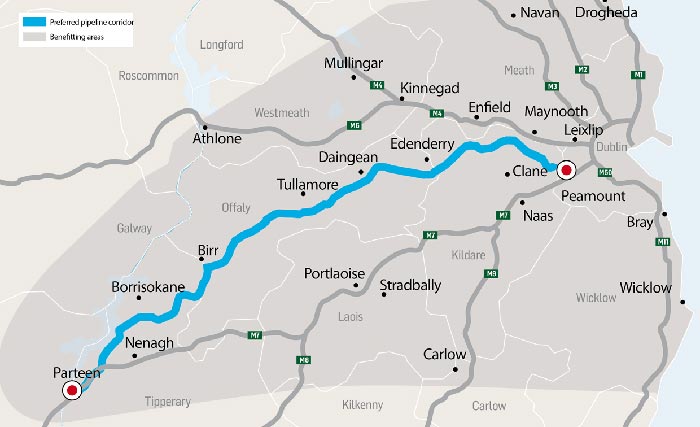
Uisce Éireann states the abstraction would be a maximum of 2% of the long-term average flow at Parteen Basin. The volume most commonly cited in public reporting is roughly 330–350 million litres per day(depending on the source and whether a rounded “up to” figure is used).
Cost estimates are varied. Uisce Éireann has referenced a preliminary indicative range in the €4.58bn–€5.96bn bracket, while other reporting has noted higher “worst-case” risk scenarios discussed in official correspondence.
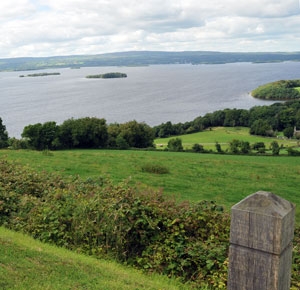
“A legacy of a beautiful lake that’s destroyed” Speaking on local radio, Councillor Bugler said she fears the council will not oppose the project strongly enough when it finalises its submission. She said she raised her concerns directly with council Chief Executive Ms Sinéad Carr, warning against any temptation to prioritise potential local “community benefit” funding over environmental impact. She has urged the council not to “sell us out” and said she was worried about damage to Lough Derg for future generations.
Uisce Éireann has said it is proposing a “bespoke Community Benefit Scheme” linked to communities hosting construction and permanent infrastructure.
Criticism after Killaloe meeting. The councillor also criticised Uisce Éireann’s public engagement after a recent information meeting in Killaloe, saying she was dissatisfied with the answers provided on how the project would operate during low-flow or drought periods. In particular, she questioned how a 2% abstraction figure based on long-term averages would translate during dry spells and whether abstraction would be reduced or suspended, and what that would mean for the reliability of supply to Dublin and the wider region.
Proposed Tipperary – Dublin Pipeline.
“What turns this from local frustration into national hypocrisy is the scale of spending Ireland is willing to contemplate elsewhere. The Irish Government has backed the Water Supply Project for the Eastern and Midlands region, intended to bring a new long-term water source from the Shannon system towards the greater leaking Dublin area“. See Link Here
Ms Bugler further claimed that some representatives displayed limited familiarity with local water and wastewater infrastructure, including the source of supply for towns Ballina and Newport from the Mulcair River, and raised concerns about treatment levels at Ballina’s wastewater facility. These are allegations made by the councillor in media reports; Uisce Éireann has not, in the published material cited here, issued a point-by-point response to those specific claims.
Council submission in preparation. Meanwhile, Tipperary County Council is preparing its formal submission to the planning authority. Separate coverage has reported that consultants have been appointed to assist the council in drafting its response. With the application now before An Coimisiún Pleanála, we learn that stakeholders and members of the public can also make submissions as part of the statutory process, ahead of a decision on whether the project proceeds and, if so, under what conditions.
Reducing the voting age to 16 is often sold as a simple, modern reform, to bring young people into the ‘democratic tent’ earlier, to boost turnout, and strengthen civic culture. In practice, it is neither simple nor risk-free. If voting is the most consequential act of civic membership, then lowering the threshold should only happen where the benefits are clear, durable and supported by institutional scaffolding to make sure it work. Right now, there are strong reasons not to entertain it.
First is principle and coherence: Eighteen is widely understood as the point at which the State recognises full adult status. Voting sits alongside other “full membership” rights and responsibilities, and it matters that this package is intelligible. Lowering the voting age, while leaving most other adult thresholds intact, either creates a new inconsistency, or invites pressure to “tidy up” the rest of the law to match. Either way, it is not a neat reform; it changes the logic of adulthood in public policy.
Second. The lived reality of 16-year-olds is structural dependence. Many teenagers are financially dependent, living under parental authority, and constrained by school and household expectations. That does not mean they cannot form political views. It does mean their ability to cast an independent vote can be narrower than it is for adults. In some cases, the risk is that a ballot becomes a proxy for household influence, not a genuinely autonomous civic voice.
Third. The modern information environment makes younger cohorts more vulnerable to manipulation. Politics is increasingly shaped by micro-targeting, influencer pipelines and rapid misinformation loops. Expanding the electorate to include minors increases the premium on strong media-literacy and civic preparation. Even advocates of votes at 16 regularly acknowledge that early, structured political education is essential. The problem is that civic education is uneven and often contested, so the reform risks outpacing the safeguards.
Fourth concern: Schools become an unavoidable political battleground. If 16-year-olds are voters, schools are the most efficient point of contact. Teachers and principals would face intensified pressure to “balance” content; parents would worry about politics being smuggled into classrooms; campaign groups would seek access through “non-partisan” resources. International discussions of votes at 16 frequently stress education as a prerequisite, but that is exactly where the most polarising arguments land.
Fifth. There are serious administrative and safeguarding complications around registration. An electoral register must be usable and transparent, but the Irish State also has a duty to protect under 18s’ personal data. Where 16–17s have been enfranchised, special arrangements have been needed to manage this tension. It is not a reason never to do it, but it is a reason not to treat the change as cost-free or merely symbolic.
Sixth. The political and constitutional “bandwidth” argument matters, especially in Ireland. Changing the national voting age is not a routine legislative tweak; it carries constitutional implications and would demand major political energy. In a country with multiple urgent reform priorities; housing, health capacity, infrastructure, cost-of-living etc., there is a fair question; “Is this the best use of this scarce reform capital?”
And Finally. The promised benefits are not guaranteed. Events that feel unusually important, visible, and emotionally charged, can see strong youth participation, but that does not automatically translate into higher turnout in ordinary elections or lasting engagement. Research from countries that have lowered the age are encouraging findings in some contexts, mixed results in others, and a recurring theme that outcomes depend heavily on preparation and political environment. In other words, the evidence is conditional not a clear mandate.
None of this denies that young people deserve a stronger voice. It argues that lowering the voting age is a blunt tool with real downsides. If the aim is youth influence and civic strength, there are lower-risk steps; better civic education and media-literacy; easier registration at 18; structured youth assemblies with real consultation power; even pilots at local level where issues are closer to daily life. Before redefining who gets a vote, we should fix the foundations that make democratic participation meaningful in the first place.
This website uses cookies to improve your experience. We'll assume you're ok with this, but you can opt-out if you wish.AcceptRead More
Privacy & Cookies Policy
Privacy Overview
This website uses cookies to improve your experience while you navigate through the website. Out of these, the cookies that are categorized as necessary are stored on your browser as they are essential for the working of basic functionalities of the website. We also use third-party cookies that help us analyze and understand how you use this website. These cookies will be stored in your browser only with your consent. You also have the option to opt-out of these cookies. But opting out of some of these cookies may affect your browsing experience.
Necessary cookies are absolutely essential for the website to function properly. This category only includes cookies that ensures basic functionalities and security features of the website. These cookies do not store any personal information.
Any cookies that may not be particularly necessary for the website to function and is used specifically to collect user personal data via analytics, ads, other embedded contents are termed as non-necessary cookies. It is mandatory to procure user consent prior to running these cookies on your website.









Recent Comments