IFA calls for housing order to protect poultry as avian flu confirmed in Co Carlow.
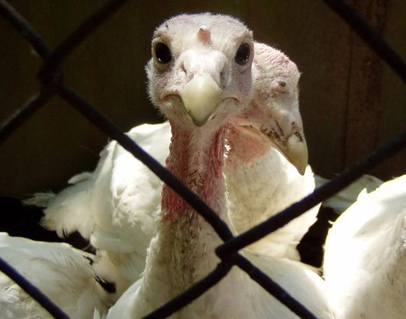
The Irish Farmers’ Association (IFA) has called for the introduction of a housing order requiring free-range poultry farmers to keep their birds indoors, as authorities confirm an outbreak of avian flu in a commercial turkey flock in Co Carlow, a county bordering on Co. Tipperary.
The virus, which causes the disease, is known as HPAI H5N1 and has been in circulation among wild birds over the past year.
Mr Nigel Sweetnam, Chair of the IFA National Poultry Committee, said the measure is urgently needed to help contain the spread of the highly contagious disease and safeguard farmers’ livelihoods. He urged all poultry farmers to be on high alert and to contact their vet and the Department of Agriculture, immediately, if they suspect any signs of avian flu.
Mr Sweetnam said farmers should watch for indicators such as high mortality and lethargic birds, and highlighted the importance of establishing exclusion zones around affected farms where movement of birds in and out is tightly controlled under veterinary supervision.
With the whole pattern of bird flu changing/mutating; the virus has appeared earlier than usual this year and in different geographical areas, with two outbreaks in Co. Cork.
Mr Sweetnam believes that a housing order should be comparable to restrictions in place during the Covid-19 pandemic, thus limiting movement and requiring birds to be kept indoors. The IFA continues to engage with the Department of Agriculture on measures to contain the outbreak and protect Ireland’s poultry sector. The Department is reminding all flock owners to maintain the highest standards of biosecurity, including disinfecting footwear and equipment, restricting visitors, and preventing contact between domestic poultry and wild birds.
2025 marks the highest number of deportations from the Irish State in over 20 years.
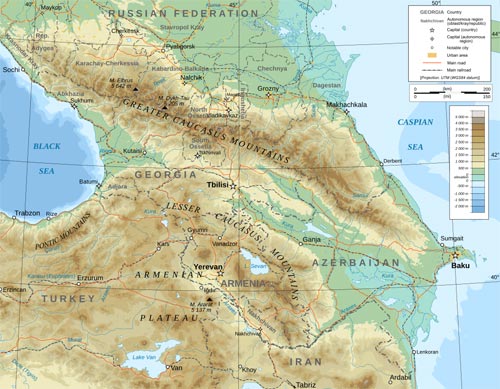
The Government today confirms the successful completion of a deportation operation from Ireland to Georgia. A charter flight departed from Dublin at approximately 9:30pm on Monday November 3rd carrying 52 individuals subject to removal orders to Tbilisi, arriving at 2:30am Irish time this morning.
Of the 52 passengers, 45 were adults and 7 were minors, with the minors all travelling as part of family units. This marks the sixth charter-flight removal operation carried out out of the State so far this year.
Charter operations, despite their significant cost, have meaningfully enhanced the capacity of An Garda Síochána to enforce a higher number of deportation orders, forming part of the broader suite of measures to strengthen immigration enforcement and removal pathways.
With yesterday’s operation, the total number of people removed by charter flights this year now stands at 205, with a further 146 individuals removed on commercial flights. This year is shaping up to be the highest number of removals by charter and commercial flights from the State in over 20 years, underscoring the Government’s commitment to ensuring the integrity of the Irish immigration system.
A voluntary return programme remains available for persons who have no lawful status in the Irish State or whose applications for international protection have been withdrawn or refused.
The returnees on yesterday’s flight were accompanied throughout by Garda officers, medical staff, an interpreter and a human-rights observer, thus ensuring that all necessary supports and safeguards were in place.
The Irish Department of Justice and Equality is responsible for immigration policy, international protection, enforcement of removal orders and the maintenance of an immigration system that is fair, efficient and respectful of human rights.
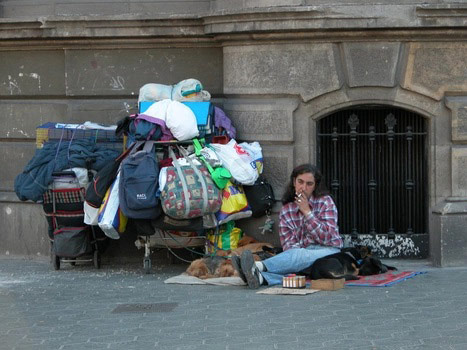
Ireland’s homelessness crisis has deepened to its worst level on record, with 16,614 people living in emergency accommodation during the week of September 22nd to 28th 2025, according to the latest figures from the Department of Housing, Local Government and Heritage.
The data show 11,376 adults without a home, same up from 10,683 in January, marking a 6.5% increase in just nine months. Even more alarming is the rise in child homelessness: 5,238 children were recorded as homeless in September, compared with 4,603 in January, a jump of 13.8%; more than double the rate of increase among adults.
Breaking down the adult figures, male homelessness rose by 232 people (3.5%), while female homelessness climbed by 461 people (11.2%), significantly narrowing the gender gap.
Year-on-year, the total number of people in emergency accommodation is up by 1,854(12.6%) compared with the same period in 2024.
These statistics exclude people who are sleeping rough, “couch-surfing”, or staying in hospitals, asylum-seeker centres or domestic-violence refuges—meaning the true scale of homelessness is even higher.
The Simon Communities of Ireland described the figures as “deeply worrying”. Executive Director Mr Bér Grogan said: “Children should be thinking about dressing up and going trick or treating, not wondering where they’ll sleep tonight. Families should be planning fun activities – not counting how many nights they have left in an emergency bed. Young people should be starting their lives, not starting adulthood in homelessness.”
With homelessness numbers climbing month after month, pressure on the housing system remains acute, fuelled by rising rents, ongoing evictions, and a shortage of secure, long-term accommodation.
The Simon Communities are urging Minister for Housing Mr James Browne to ensure that the forthcoming housing and homelessness strategy focuses on eradicating long-term homelessness, with an emphasis on prevention, targeted supports, and the rapid delivery of social and affordable housing.
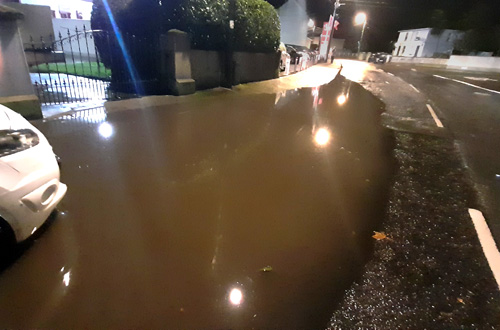
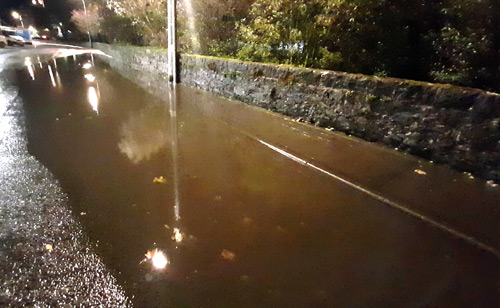
A flooded Stradavoher, Thurles. Pic: G. Willoughby.
Thurles has in recent years has become increasingly vulnerable to flooding, following heavy rainfall, with drainage systems across the town found frequently struggling to cope with pluvial (rain-related) flood events.
A Tipperary County Council document on flood risk management notes that several parts of the county are exposed to flooding from multiple sources, including groundwater and intense rainfall, highlighting Thurles as an area of particular concern. The Office of Public Works (OPW) has also designated Thurles Town as an “Area for Further Assessment” under its national flood risk programme.
Emmet Street Thurles. Pic: G. Willoughby.
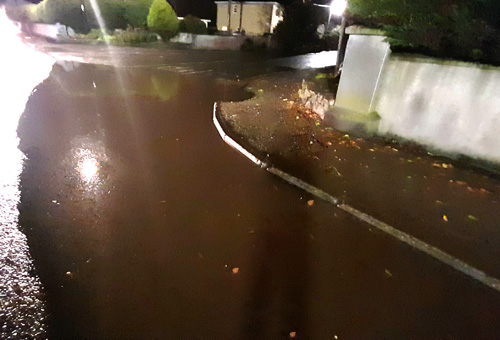
This evening, several areas of Thurles; including Friar Street, Railway Road, Stradavoher, Junction atSarsfield Street, an area at Slievenamon road Traffic lights, Emmet Street, and the Mitchel Street/Borroway junction, all experienced severe flooding, following a heavy downpour at around 6:00pm this evening. Local reports indicate that inadequate drain cleaning and blockages contributed significantly to the surface water build-up.
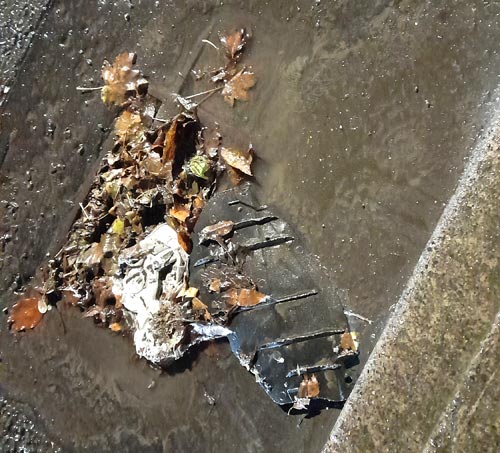
Blocked Thurles drains due to litter and fallen leaves. Pic: G. Willoughby.
While there is broad agreement that extreme rainfall events are becoming more frequent, the issue in Thurles is often compounded by insufficient maintenance of the town’s drainage network, particularly during autumn when falling leaves and litter exacerbate blockages.
Legacy development on flood-prone lands, including housing estates, car parks, and other construction in low-lying areas, has further increased vulnerability.
Junction at Sarsfield Street, ThurlesPic: G. Willoughby.
Such conditions are calling for an enhanced early warning systems, such as MapAlerter, to deliver real-time alerts on severe weather and localised hazards. We also stress the need for ongoing drainage upgrades and regular maintenance, ensuring that gullies, storm drains, and car park outlets are capable of managing heavy rainfall surges.
The economic and social consequences of this flooding in smaller towns like Thurles can be severe, damaging homes and businesses, disrupting commerce, reducing property values, and potentially affecting insurance availability.
Unlike larger urban centres, smaller towns often lack extensive flood defence infrastructure, making local planning, awareness, and preventative maintenance essential.
Community cooperation remains key. Local councils, residents, and business owners are urged to work together to strengthen resilience and ensure Thurles is better prepared for the challenges of increasingly unpredictable weather.
However, Thurles has endured recurring flooding during the autumn and winter months for years, and the local authority has consistently failed to address or resolve the problem.
Ms Catherine Connolly has been elected Ireland’s 10th President following a lacklustre campaign.
In an election marked by voter apathy and political disillusionment, Teachta Dála Ms Catherine Connolly has been elected as Ireland’s 10th president, securing an overwhelming victory that nonetheless leaves the Government politically bruised.
Ms Catherine Connolly.
While the presidency is a largely ceremonial office, with limited constitutional powers, the result represents a symbolic blow to the coalition led by Taoiseach Mr Micheál Martin. The centre-right parties, Fianna Fáil and Fine Gael, suffered from weak campaigns and uninspiring candidates, paving the way for Ms Connolly’s decisive win.
Aged 68, Ms Connolly has lived in the Claddagh area of Galway City since 1988 with her husband, retired woodwork teacher Mr Brian McEnery, latter now aged in his early 70s. The couple have two adult sons. Her brother-in-law is Sligo-based socialist politician Mr Declan Bree.
Ms Connolly’s election marks the third time a woman has held Ireland’s presidency, following Mary Robinson and Mary McAleese.
A clinical psychologist by training, she previously worked with the Western Health Board in Ballinasloe and Connemara before practising as a barrister. She is fluent in Irish and also speaks German, having studied psychology in Germany. Raised a Roman Catholic, she has described herself as not practising any religion.
Throughout the campaign, Ms Connolly faced scrutiny over past associations and her personal judgement. A long-time advocate of Irish neutrality, she has voiced opposition to what she describes as “the creeping militarisation of Europe” and has cautioned against efforts to dilute Ireland’s traditional stance of non-alignment. While supported in this election by left-leaning parties, including Sinn Féin, she has reiterated that Irish unity can only be pursued peacefully and with the consent of voters in both jurisdictions, a stance that may in time test her future relationship with Sinn Féin.
Presidential Election does not reflect a surge of enthusiasm for the left as the left would have people believe. Despite her clear victory, voter turnout tells a more complex story. Just 46% of the electorate cast a ballot, with 13% of those votes spoiled. Overall, only one in three of the total electorate voted for a candidate, while 54% stayed at home. In total, 67% of voters were either disengaged or disillusioned, many citing dissatisfaction with the non availability of candidates.
Analysts note that Ms Connolly’s vote share represents support from around just 20% of the total electorate; less than the combined vote secured by Sinn Féin and other left-wing parties in the last general election. Her success, they argue, reflects not a surge of enthusiasm for the left, but rather the collapse of confidence in the traditional parties.
Low turnout, disaffected voters, and an opposition campaign run with ruthless efficiency combined to produce Saturday’s result. For Fianna Fáil and Fine Gael, it was a political humiliation, years in the making. Both parties, critics argue have drifted from the values that once defined them and appear increasingly out of touch on core issues such as housing, healthcare, and the cost of living.
In chasing narrow blocs of voters that distrust them, the two main government parties stand accused of abandoning the liberal, economically moderate, centre ground that long anchored Irish politics. The resulting vacuum, political observers warn, will have to be filled before the next Irish general election.
This website uses cookies to improve your experience. We'll assume you're ok with this, but you can opt-out if you wish.AcceptRead More
Privacy & Cookies Policy
Privacy Overview
This website uses cookies to improve your experience while you navigate through the website. Out of these, the cookies that are categorized as necessary are stored on your browser as they are essential for the working of basic functionalities of the website. We also use third-party cookies that help us analyze and understand how you use this website. These cookies will be stored in your browser only with your consent. You also have the option to opt-out of these cookies. But opting out of some of these cookies may affect your browsing experience.
Necessary cookies are absolutely essential for the website to function properly. This category only includes cookies that ensures basic functionalities and security features of the website. These cookies do not store any personal information.
Any cookies that may not be particularly necessary for the website to function and is used specifically to collect user personal data via analytics, ads, other embedded contents are termed as non-necessary cookies. It is mandatory to procure user consent prior to running these cookies on your website.




Recent Comments