The death of Edward “Ted” Howell in January 2025 brought renewed attention to one of the most influential yet least publicly known figures in modern Irish republicanism. While names such as Mr Gerry Adams and more recently, Ms Mary Lou McDonald have become synonymous with Sinn Féin’s political rise; Mr Howell operated largely behind the scenes. Yet those who knew the movement best often described him as its most significant strategists. His life also highlights one of the enduring tensions at the heart of Sinn Féin’s history: the complex relationship between the party’s political leadership and the legacy of the Provisional IRA.
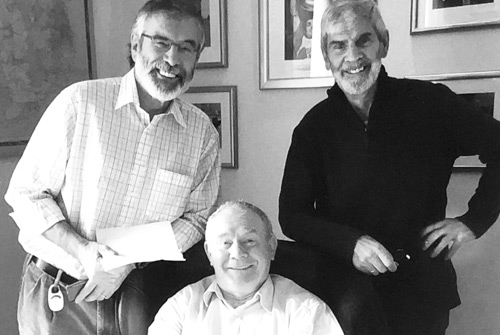
L-R: Mr Gerry Adams; late Mr Ted Howell and seated late Mr Martin McGuinness.
Born in Belfast in 1947, Mr Howell became involved in republican activism during the early years of “The Troubles”. Public records and contemporary reporting show that he was associated with the Provisional IRA and was interned during the 1970s. Like many republicans of his generation, his political development occurred during a period of intense conflict, marked by violence, imprisonment, and political upheaval.
In February 1982, Mr Edward Howell and fellow republican Mr Desmond Ellis were both arrested by U.S. immigration authorities while attempting to cross illegally from Canada into the United States at the Whirlpool Bridge near Niagara Falls. Contemporary accounts state that the pair, accompanied by three Canadians, were carrying false documentation and what authorities described as a “shopping list” for weapons, including detonators and other materials associated with then IRA operations. U.S. officials refused them entry, placed them in immigration detention, and began deportation proceedings. Reports from the period indicate that Mr Howell, oddly, was accused of only attempting to enter the United States using false documents, rather than being criminally charged with weapons trafficking. During deportation arrangements via Canada and France, Howell reportedly escaped from escort at Paris airport before later being found located in Ireland. This incident however, then formed part of a now wider U.S. investigation into IRA fundraising and arms-procurement networks operating through Canada and North America during the early 1980s.
A lesser-known aspect of Mr Ted Howell’s political activity was his involvement in Sinn Féin’s international engagement. According to public statements by Mr Gerry Adams, Mr Howell accompanied senior Sinn Féin representatives on visits to the Middle East and took part in meetings with Hamas representatives. Sinn Féin stated that these discussions focused on sharing lessons from the Irish peace process and encouraging political dialogue as an alternative to conflict. The contacts attracted controversy because Hamas is designated as a terrorist organisation by the European Union, the United States and several other countries. Howell’s involvement reflected Sinn Féin’s long-standing support for the Palestinian cause, a position that continues to influence the party’s strong criticism of Israeli government policies today and its advocacy for Palestinian statehood.
For critics of republicanism, the 1982 incident reinforced concerns about Howell’s involvement in the IRA’s international activities. For supporters, it became part of a broader narrative of a republican activist engaged in a struggle that they believed was political as well as military.
What is beyond dispute is that Howell emerged from the turbulent years of the conflict as one of Sinn Féin’s most trusted strategic thinkers. His relationship with Mr Gerry Adams was particularly significant. Adams was the public face of republicanism’s political transformation, but numerous accounts from journalists, former negotiators, and party insiders suggest that Howell was among the key advisers helping shape the movement’s long-term direction. He was involved in developing major policy documents during the 1980s and 1990s, including proposals that laid the groundwork for Sinn Féin’s engagement with the peace process. Unlike Mr Adams; Mr Howell rarely sought publicity. He preferred to operate away from television cameras and political rallies. Yet those involved in negotiations frequently noted his influence. He was regarded as an intellectual force within republican circles, someone whose opinions carried considerable weight despite his low public profile.
The transition from armed conflict to political engagement remains one of the defining developments in modern Irish history. Supporters of Sinn Féin argue that figures, such as Mr Howell, played a crucial role in guiding that transition. They point to his involvement in discussions that eventually contributed to the Good Friday Agreement and later political settlements. Critics, however, take a different view. They argue that individuals with IRA backgrounds continued to exercise influence within Sinn Féin long after the peace process had begun. For them, Mr Howell’s career raises important questions about accountability, transparency, and the extent to which former republican activists continued to shape decision-making behind the scenes.
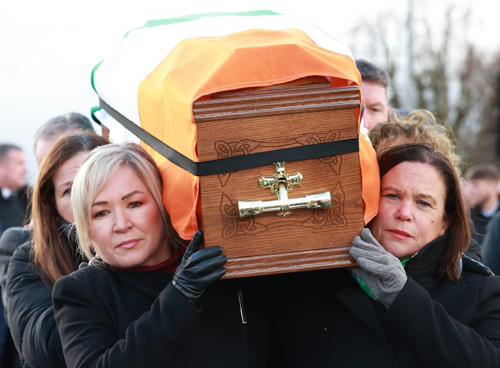
Sinn Féin President Ms Mary Lou McDonald and Sinn Féin vice president Ms Michelle O’Neill pallbearers at funeral of Mr Ted Howell. Above Photograph:Courtesy Liam McBurney.
These debates resurfaced after his death. The attendance of senior Sinn Féin figures at his funeral, including party president Ms Mary Lou McDonald, attracted considerable attention. Ms McDonald paid tribute to Howell’s contribution to the republican cause, reflecting the high regard in which he was held within the party. Alongside Ms Michelle O’Neill and Mr Gerry Adams, she helped honour a man whom many republicans regarded as a pivotal figure in the movement’s evolution.
For Sinn Féin supporters, these tributes were entirely appropriate. They viewed Mr Howell as a dedicated activist who helped steer republicanism towards democratic politics and constitutional engagement. They emphasised his role in peace negotiations and his commitment to Irish unity through political means.
But for others, particularly victims’ groups and critics of the IRA, the public recognition of Mr Howell revived painful memories of the conflict. Some questioned whether individuals associated with paramilitary organisations should be celebrated by contemporary political leaders. The sight of prominent Sinn Féin representatives honouring a former IRA member prompted renewed debate about how Ireland and Northern Ireland should remember “The Troubles”.
The relationship between Mr Gerry Adams, Ms Mary Lou McDonald, and Mr Ted Howell also symbolises a broader transition within Sinn Féin itself. Mr Adams represented the generation that led republicanism through conflict and into negotiations. Mr Howell was one of the key strategists working behind that transformation. Ms McDonald, by contrast, represents a newer generation of leadership seeking to position Sinn Féin as a mainstream political force across the island of Ireland. Yet the party’s history cannot be separated from the individuals who shaped it. Mr Howell’s life serves as a reminder that many of the architects of modern Sinn Féin came from a movement deeply intertwined with the IRA. Whether viewed as a peacemaker, strategist, activist, or controversial figure, his influence on republican politics is difficult to deny.
Ultimately, Mr Ted Howell’s legacy depends largely on the perspective from which it is viewed. To supporters, he was a committed republican thinker. To critics, he remained a figure whose association with the IRA raises unresolved questions about responsibility and remembrance. What is certain is that, despite spending much of his life out of the spotlight, Mr Edward “Ted” Howell left a significant imprint on Sinn Féin, on the republican movement, and sadly on the political history of Ireland.
Dr Michelle Walsh’s Election to GREVIO Strengthens Ireland’s International Role on Ending Gender-Based Violence.
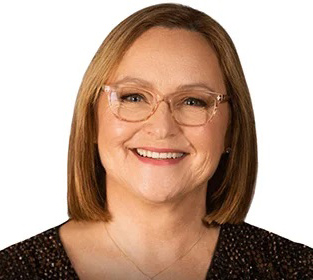
Dr Michelle Walsh.
Ireland has secured an important place in European efforts to prevent and combat violence against women and domestic violence following the election of Dr Michelle Walsh to GREVIO, the Council of Europe’s Group of Experts on Action against Violence against Women and Domestic Violence. Her election was welcomed by Minister for Justice, Home Affairs and Migration Mr Jim O’Callaghan, who presented the result as recognition of her professional standing and Ireland’s commitment to tackling gender-based violence.
GREVIO is the independent expert body that monitors how countries implement the Council of Europe Convention on preventing and combating violence against women and domestic violence, widely known as the Istanbul Convention. Dr Walsh was elected after a competitive selection process at a meeting of the Committee of the Parties to the Convention in Strasbourg, where five experts were chosen to begin four-year terms on 1st September 2026.
Dr Walsh’s success on the first count reflected the strength of her candidacy, her specialist knowledge, and her extensive practical experience, the result of which remains linked to Ireland’s reputation for engaging with domestic, sexual and gender-based violence at national and international levels.
Dr Walsh is Chief Executive Officer of MOVE Ireland, the national programme working with perpetrators of domestic abuse. She has more than 15 years of experience across the DSGBV field and is a fully accredited psychotherapist, clinical supervisor and trainer. Her career includes frontline programme delivery, applied research, policy development, evaluation of systems and services, professional education, and specialist training. She has also contributed to European cooperation through her work as a board member of the European Network for the Work with Perpetrators of Domestic Violence.
The Minister also recognised the service of Ellen O’Malley Dunlop, Ireland’s current member of GREVIO, whose term is due to conclude in August. Her contribution, including her role as Vice-President of the Committee, was acknowledged as an important part of Ireland’s engagement with the Convention.
Ireland’s domestic policy is closely connected to the Istanbul Convention. The State is a party to the Convention, and its Zero Tolerance Third National Strategy on Domestic, Sexual and Gender-Based Violence 2022–2026 is organised around the Convention’s four pillars: prevention, protection, prosecution, and coordinated policies. Dr Walsh’s election reinforces Ireland’s role in promoting stronger standards, better accountability, and more effective responses to gender-based violence across Europe.
Ireland Faces EU Court Action Over Peat Cutting Enforcement And Why It Matters for Our Bogs.
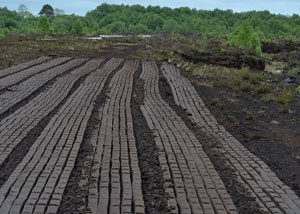
The European Commission has referred Ireland to the Court of Justice of the European Union over what it says is a failure to properly enforce EU environmental rules on peat cutting.
The case centres on Ireland’s obligations under the Environmental Impact Assessment Directive, which requires projects likely to have significant environmental effects; including peat extraction, to be assessed before they proceed.
According to the Commission, there is still “significant peat cutting activity” taking place without planning permission or environmental impact assessment, particularly on sites under 50 hectares. While Ireland has made legislative changes over the years, Brussels says those changes have not been matched by effective enforcement on the ground.
The issue is not new. It dates back to EU environmental rules first introduced in 1985, with Ireland previously brought before the European Court of Justice in the late 1990s. Although Irish laws were later amended, the Commission says follow-up enforcement remained inadequate.
Since 2020, Ireland has taken major steps to halt peat cutting by Bord na Móna, and rehabilitation of former industrial bog sites is now underway, with support from EU recovery funding. The Environmental Protection Agency has also pursued enforcement against private commercial operators on sites over 50 hectares, leading some operators to cease activity. However, the Commission says illegal or unauthorised peat cutting continues, and that local-level enforcement has not been sufficient.
This issue is also relevant to Co. Tipperary, where protected raised bog habitats form part of the county’s natural heritage. Sites such as Kilcarren-Firville Bog highlight the importance of safeguarding peatlands from extraction, drainage and habitat damage.
It is also worth noting the political sensitivity of this issue. Ireland currently has public representatives in both Leinster House and the European Parliament whose political careers were strongly shaped by the turf-cutting and bog-rights campaigns. Mr Michael Fitzmaurice TD, now a Roscommon–Galway TD, was previously chairperson of the Turf Cutters and Contractors Association, while Mr Luke “Ming” Flanagan MEP has long been associated with defending traditional turf-cutting rights in rural Ireland. Their continued presence in national and European politics shows how deeply this issue remains rooted in rural communities, livelihoods, tradition, conservation, and EU environmental law.
Peatlands are more than traditional landscapes. They store carbon, support biodiversity, help regulate water, and form part of Ireland’s environmental identity. The EU court referral is therefore not just a legal matter — it is a reminder that protecting bogs requires clear rules, strong enforcement, and real action on the ground.
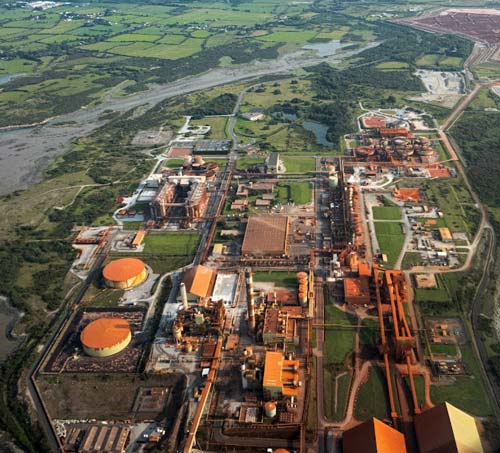
Russian-owned refinery, Aughinish, County Limerick.
Ireland says it stands with Ukraine. Our politicians speak about democracy, freedom, sovereignty, and the right of a nation to defend itself against invasion. But there is now a deeply uncomfortable question Ireland can no longer avoid; why is a Russian-owned refinery on the west coast of Ireland still sending alumina to Russia?
The refinery at Aughinish, County Limerick, is one of Europe’s largest alumina plants. Alumina is not a harmless by-product. It is the key raw material used to make aluminium, latter a metal that is essential across modern industry, including military production.
Recent investigations have raised serious concerns that alumina exported from Ireland is entering Russian supply chains connected to arms manufacturers. The evidence does not allow us to say that Irish alumina has been directly identified inside a specific missile or drone. But it does point to something almost as alarming; Irish-refined alumina appears to be feeding a Russian aluminium system linked to companies supplying Russia’s war industry.
That distinction matters, but it does not make the situation acceptable. There is also an unavoidable comparison with Ireland’s attitude towards Israel. Irish politicians have often been outspoken in condemning Israel’s actions in Gaza, calling for accountability, sanctions, and a tougher international response. Many of those criticisms may be justified on humanitarian grounds. But that only makes the silence around Russia-linked alumina exports more striking. If Ireland is willing to take a strong moral position on one conflict, it must be prepared to apply the same standard to another. Selective outrage weakens Ireland’s credibility. Human rights, civilian protection, and international law cannot depend on which country is easier to criticise.
Russia’s war is not sustained by tanks and soldiers alone. It is sustained by finance, logistics, raw materials, shipping routes, shell companies, legal structures and loopholes. Every supply chain that keeps Russian industry moving deserves scrutiny, especially when that industry is connected to the weapons used against Ukrainian civilians.
The Irish Government argues that sanctioning alumina could hurt Europe. That may be a real concern. Jobs matter. Energy security matters. Industrial supply chains matter. But so does moral consistency.
Ireland cannot claim to stand with Ukraine while allowing a Russian-owned company here to continue exporting a critical raw material into Russia without the highest level of public scrutiny.
The question is not whether workers in Limerick should be protected. They should be. The question is whether protecting jobs should mean protecting a supply chain that may benefit Russia’s war economy. If the Government believes these exports are safe, then it should show the evidence. Where exactly is the alumina going? Which smelters receive it? Who buys the aluminium produced from it? What due diligence has been done to ensure it does not reach sanctioned arms manufacturers? And why has it taken so long for Irish politics to confront this issue openly?
Neutrality should never mean looking away. Ireland’s position should be clear; no Irish-based industry should help sustain Russia’s capacity to wage war on Ukraine. If this trade cannot be proven clean, it should not continue.
The Minister for Justice, Home Affairs and Migration, Jim O’Callaghan, will this week undertake a series of bilateral engagements with EU Member States ahead of Ireland assuming the Presidency of the Council of the European Union on 1st July.
Minister O’Callaghan will travel to Prague for meetings with his Czech counterparts, Lubomír Metnar, Minister of the Interior, and Jeroným Tejc, Minister for Justice. He will then travel to Warsaw, where he will meet Waldemar Żurek, Polish Minister of Justice and Prosecutor General, and Marcin Kierwiński, Minister of the Interior and Administration.
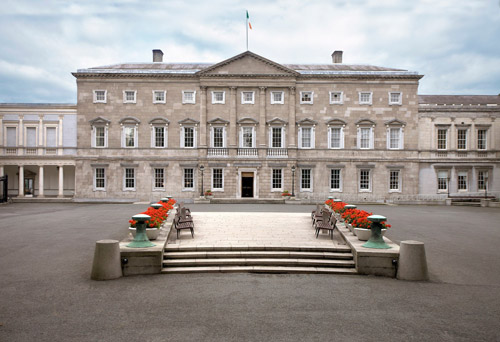
Leinster House, Seat of Ireland’s Parliament.
While in Poland, the Minister will visit the EU’s eastern border with Belarus, where he will receive a briefing on the current border security situation. Discussions during the visit will focus on preparations and priorities for Ireland’s Presidency, as well as areas of mutual interest including migration, organised crime and the rule of law.
Speaking ahead of the meetings, Minister O’Callaghan said: “I look forward to meeting with my Czech and Polish counterparts and building on the already strong relationships Ireland has with both nations. During Ireland’s Presidency of the Council of the European Union, our relationships with other Member States will be crucial to advancing our priorities of competitiveness, values and security. This visit will also provide an opportunity to hear first-hand how Belarus has instrumentalised migration, unacceptably exploiting human beings for political purposes.”
Minister O’Callaghan will conclude the week in Luxembourg at the Justice and Home Affairs Council on Thursday and Friday, where he will continue bilateral engagements with a range of other Member States.
This website uses cookies to improve your experience. We'll assume you're ok with this, but you can opt-out if you wish.AcceptRead More
Privacy & Cookies Policy
Privacy Overview
This website uses cookies to improve your experience while you navigate through the website. Out of these, the cookies that are categorized as necessary are stored on your browser as they are essential for the working of basic functionalities of the website. We also use third-party cookies that help us analyze and understand how you use this website. These cookies will be stored in your browser only with your consent. You also have the option to opt-out of these cookies. But opting out of some of these cookies may affect your browsing experience.
Necessary cookies are absolutely essential for the website to function properly. This category only includes cookies that ensures basic functionalities and security features of the website. These cookies do not store any personal information.
Any cookies that may not be particularly necessary for the website to function and is used specifically to collect user personal data via analytics, ads, other embedded contents are termed as non-necessary cookies. It is mandatory to procure user consent prior to running these cookies on your website.



Recent Comments