|
|
 Independent North Tipperary County Councillor Micheál Lowry has announced that new lighting is to be installed on the Templemore road north of Thurles town.
Speaking to Thurles.Info, Micheál stated “I am pleased to advise that I have now obtained funding and full approval for the installation of seven new street lights on this stretch of roadway”.
Thurles.Info understands that three of these street lights will be installed between Thurles Co-Operative Creamery and the Cluain Glás residential estate, while a further four lights will be installed to cover the distance out to the junction at Knox’s Lane.
The North Tipperary County Council will undertake preparatory works shortly and the Electricity Supply Board (ESB) have committed to connecting the lights in the coming months.

When famous portrait painter William Cuming (1769 -1852) sat painting his portrait of John Kearney in oils, on canvas, little did he comprehend that he was painting the ancestor of President Barack Obama, first African American to be elected President of the United States of America.
Little appears known of portrait painter William Cuming himself, except, that which can be gleaned from his surviving paintings, many of which depict Lord Mayors of Dublin City. We know that Charles Cromwell Ingham (1796-1863) born in Dublin, Ireland; studied painting under William Cuming. He, the former, moved to New York in 1816, where he opened a studio. He was a founder of the Academy of Design and became its Vice-President. He excelled in portraits and painted many prominent people of the day, including Lafayette, De Witt Clinton and Gulian C. Verplank.
John Kearney,
Trinity Provost 1799 -1806.
During William Cuming’s own life time, the Atlantic slave trade was at its peak, with the largest number of slaves captured by raiding expeditions into the interior of West Africa, being sold. These expeditions were typically carried out by African kingdoms who were waring against weaker African tribes. Europeans rarely entered the interior of Africa, due to a fear of disease and a fierce African resistance. Slave traders were happy to purchase their slaves from stations on the coast in exchange for cowrie shells. These cowrie shells or money shells were fastened, in some cases, together in strings of 40 or 100 with each fifty or twenty representing money. Before the shipping of slaves was completely outlawed in 1853, over 15 million slaves had arrived in the Americas.
John Kearney, the subject of Cumming’s portrait, was born in Dublin in 1742 the son of a surgeon-barber. He was elected Scholar of Trinity at the age of 18 years in 1760 and a Fellow of Trinity four years later, in 1764. He held the Chair of Oratory from 1781 until his appointment as Provost in July 1799. The Irish 1798 rebellion then had won little sympathy among the senior members of Trinity College. A majority of the Fellows of the college together with the this new Provost were opposed to it and Kearney was appointed despite his then political stance.
Kearney played an important role in recognizing and encouraging the talent of the Irish poet, translator, and balladeer Thomas Moore, who had been an undergraduate at Trinity during the turbulent years in Ireland of the 1790s. This is the same Thomas Moore of “The Harp That Once Through Tara’s Hall” and “The Meeting of The Waters” fame, latter better known as “Moore’s Melodies” published in 1846. Moore had gained access to Trinity College to study Law at this time because the college had recently allowed entry to Roman Catholic students.
John Kearney presided over Trinity College for six and a half years before resigning to take up a new appointment as Bishop of Ossory in January 1806.
This portrait by William Cumming, of President Obama’s ancestor presently hangs in the Provost Hall of Trinity College today.
Evidence is also, now, emerging that the Kearney family may have originally come from Cashel, Co. Tipperary, thus further strengthening President Obama’s Tipperary connection. A document exists dating back to 1777, in which Michael Kearney, latter a sixth great grand uncle of President Obama, purchased a 160 acre estate from another Kearney family in Cashel. This document predates the civil registration of births/marriages and deaths, and most other sources including parish registers.
While slavery as such today is outlawed, the ideals of cheap labour and easy profit are still fostered by the “Captains of Industry”. Much debate is needed on this subject. Profitable factories are being closing down in first world countries and transported to start up again in second and third world countries, to avail of a cheap labour force. “Much now need more” . Are we now involving ourselves in a new form of slavery? Have slave ships like the Jesus of Lubeck, the Adelaide,the Kron-Printzen and the Henrietta Marie been replaced by factory moving to third world countries? Are the scales of time swinging backwards? Your comments please.
 Thurles.Info has learned that North Tipp Deputy Michael Lowry has gained assurances from the Minister for Justice, Equality and Law Reform, Dermot Ahern, that fifteen additional staff from the Equality Authority will now transfer to Roscrea, Co. Tipperary. This will bring the staff serving in Roscrea up to thirty.
The Office of Public Works are finalising matters in relation to the office accommodation and the target date for the transfer of staff is the first week of January 2009.
This staff cohort includes the top management team of the Authority and other staff, who were either recruited or promoted on the basis of moving to Roscrea under the Department’s decentralisation programme.Lowry welcomed the move as an important boost for Roscrea.
This good news comes on the back of an earlier announcement from Mr Lowry that significant funding of €20.8 million for Tipperary is on the way under the LEADER Rural Development Programme for 2007 to 2013.
This allocation is divided into €9,708,008 for North Tipperary and €11,106,187 for projects in the South of the County. Thurles.Info understands that this is the largest amount of funding ever announced for rural projects in Tipperary.
The funding will be aimed at furthering the continued development of rural communities all over the county over the course of the next 5 years.
The projects will include:
- Encouragement of Tourism Activities
- Helping with Diversification to non-agricultural activities
- Support for Business Creation
- Village Renewal & Development
- Conservation & Heritage
- Training & Information
In the North of the county the projects included in the scheme will be administered by the North Tipperary Partnership Company and cover a wide range of activities. This partnership comprises of Roscrea 2000, and Nenagh Community Network. Both of these organisations are now together under the umbrella of North Tipperary LEADER Partnership Co. The CEO of the new company is Michael Murray.
In the South of the county a similar company called the South Tipperary Integrated Local Development Company is to be set up and will be led by John Devane from their offices in Tipperary town.
Of the funding provided 55% comes from the European Union with the remaining 45% coming from the Irish exchequer
Speaking to Thurles.Info Lowry stated: “The LEADER approach has been highly successful for Tipperary and is based on the needs of individuals and communities within its area. It is therefore a ‘bottom up’ approach to development. We are exceptionally lucky in Tipperary to have staff of the calibre of John Devane and Michael Murray and I am confident that they will ensure that their projects deliver for the people of Tipperary. Rural development is an area that I have campaigned vigorously on throughout my political career, and I am delighted that the EU and the State recognise the value of the role of properly funded rural development programmes in ensuring the future viability of rural Ireland.”
Overall national funding for this programme amounts to €425.4 million and represents a central plank of the EU’s Rural development programme for the member states.
LEADER is an EU initiative set up in the early 1990’s to address the problems caused by: –
- The declining significance of agriculture and a mismatch between the skills of those leaving agriculture and the skills demanded by employers
- Environmental deterioration, deterioration of natural habitats and a lack of awareness of waste management options such as recycling and possibilities for alternative/renewable energy projects
- An unbalanced approach to tourism development
- A fragmented approach to local development is the communities resulting in a weakened capacity to influence decision makers and to implement projects needed by the community
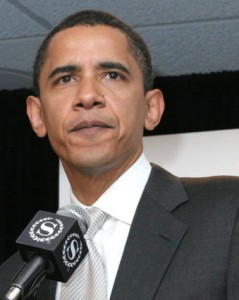
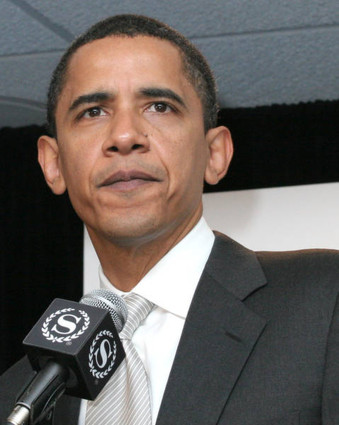
It’s confirmed, US 44th President Barack Obama is the great-great-great-great-grandson of an Irish shoemaker. Joseph and Phoebe Kearney and their son Fulmuth Kearney emigrated from the village of Moneygall, situated on the border separating counties Tipperary and Offaly, to America in 1850.
Records unearthed by the Church of Ireland Rev.Canon Stephen O’Neill show beyond doubt that Mr Obama’s ancestors on his mother’s side lived, worked, married and had children in the area.
It was initially thought that President Obama’s third great-grandfather Fulmuth Kearney, who sailed from Ireland to New York aged 19, was the only member of the family to emigrate, however records now reveal that other Kearney family members had in fact been in America since the 1790s. Indeed Fulmuth’s paternal uncle Francis, had bequeathed land to his brother, Fulmuth’s father Joseph, with the condition that he emigrate in order to inherit. Joseph did so, along with his wife Phebe and four children, including Fulmuth, at various times in the mid-19th century following the Irish Potato Famine 1845-1849 in which at least 1.3 million people emigrated from the shores of Ireland to mainly America, England & Australia. Baptismal records show that Fulmuth Kearney was born to Joseph, occupation a shoemaker, then considered a wealthy and skilled trade.The family eventually resettled in Tipton County, Indiana.
However the family connections go further back than 1850. President Obama’s great granduncle Michael Kearney was a prominent Dublin business man in the 1700s. As a wig maker he would have transacted business with Dublin’s aristocracy on a daily basis. He used the profits of this business to buy and sell property throughout the country. He become a Freeman of Dublin in 1718 and was very active in the politics of his wig makers trade guild. However economic changes, brought about following the Act of Union in 1801 and the decline in the fashion of wig wearing, saw the Kearney family fortunes slide into rapid decline.
A distant cousin John Kearney served as the head of Trinity College and Bishop of the Diocese of Ossory in the early 19th century.
President Obama however still, possibly, has distant Irish relatives. In 1760, one Joseph Kearney of the parish of Moneygall married a Sarah Healy also of the parish. Local current resident John Healy can trace his family’s presence in Moneygall right back to Sarah’s Healy’s time. Marriage records exist in the parish that show that at least two members of the Kearney and Healy families married in 1760. A field still known as Kearney’s Gardens, where the sunken remains of the house of the shoemaker Joseph Kearney, Fulmuth’s father, lived and worked, still exists. Records from the area show that Fulmuth and his siblings, attended the school locally and that this school later became Templeharry chapel.
 Today local TD Michael Lowry has confirmed the sanction of major funding to support job creation initiatives in North Tipperary.
This includes a €450,000 capital grant to establish a new Community Enterprise centre in Thurles that will promote new local businesses under the guidance of the Thurles Chamber of Commerce.
The village of Cloughjordan is to get separate significant capital funding also under the scheme that will support ‘Green’ enterprise initiatives.
Coupled with these grants, a €50,000 allocation will be divided between the above projects, together with the successful food orientated Community Enterprise Centre in the village of Rearcross.
Deputy Lowry expressed his delight in confirming these allocations and said “I am confident that the projects will be instrumental in driving forward local enterprise and entrepreneurship”.
In discussions with Thurles.info, Deputy Lowry complimented Thurles Chamber of Commerce, who sponsored the Thurles initiative and stated “I am looking forward to working with the Chamber and its executive to bring this project to a final and successful conclusion, and to capitalize on the opportunities that will arise from it, over the coming years. Mr Austin Broderick and the members of Thurles Chamber should be rightly proud of their achievement, and I would expect that the new enterprises will link up with Tipperary Institute in the town to create a dynamic and innovative area to exploit high value job opportunities”. He went on to further state “I am delighted to see that even in these difficult economic times, Thurles continues to grow. We continue to see significant investment in the town, such as the recent Dew Valley announcement, and the continuation of major projects such as the upgrade of Liberty square and the advancement of the Ring Road. I am sure with the help of these initiatives that Thurles can look to the future with confidence.”
This funding comes under the Community Enterprise Centre Scheme from the Department of Enterprise, Trade and Employment and is managed by Enterprise Ireland.
Today’s announcement is part of the 2007 – 2009 section Community Enterprise Scheme. Since the launch of the first scheme in 1989, a total of €50.8m has been approved and the impact of the programme at a local level, both urban and rural, is significant. Enterprise Ireland has supported 134 communities, and the 105 completed centres are now home to approximately 1,000 successful businesses, employing approximately 5000 people.
|
Support Us Help keep Thurles.info online by donating below. Thank you.
Total Donated 2026: €300.00
Thank You!
Daily Thurles Mass Livestream
|




Recent Comments