|
|
Car Drivers categorised as Learners who drive unaccompanied could see the real owner of the car imprisoned for a duration of six months and or a €2,000 fine, if new proposals approved by our minority collision Government Cabinet becomes law. These new measures proposed would also give Gardaí the power to impound vehicles, on the spot, if same are found being driven by an unaccompanied learner.
Minister Shane Ross, that Independent politician who currently serves as Irish Minister for Transport, Tourism and Sport (since May 2016), has confirmed that the new amendments will be included in the Road Traffic Amendment Bill, which is due before the House as early as next Tuesday.
Minister Ross, yes, the very same individual who supports plans of invading North Korea on a diplomatic mission to halt a nuclear Armageddon involving America and North Korea; supported by buddies Junior Enterprise Minister John Halligan, and Disability Minister Finian McGrath; envisages that this new legislation will pass into law, before politicians go on their expected 5-week Christmas recess.
Will Opposition Parties support this nonsense?
Let us take a look at An Garda Síochána’s Traffic Statistics hereunder for this year, 2017, to date.
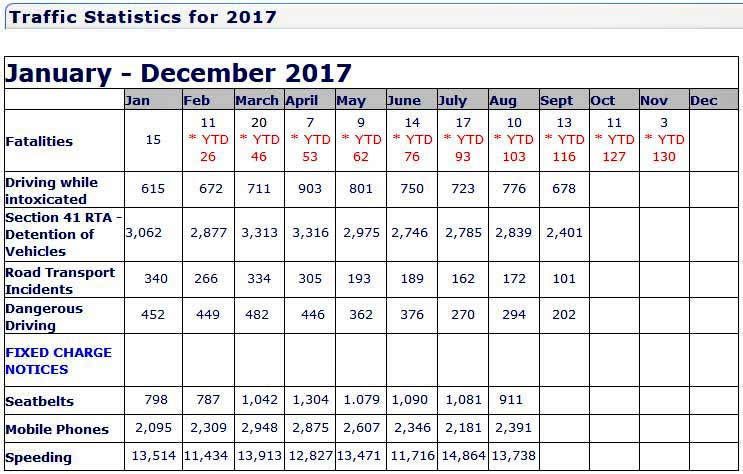
To date, in 2017 some 130 people most regrettably have lost their lives on our Irish roads. Of these we are informed that some 13 people, holding learner driver permits have been killed, 11 of whom we understand were driving unaccompanied by a qualified driver.
Logically, we therefore can conclude that of the 130 now deceased road users, 119 were holders of full permits or were accompanied by persons with qualified driving experience and holding full licences.
AA Ireland believe these new laws will be hard to enforce, where the misdeeds of one could end up punishing the innocent, or merely encourage those offending to become liars in courts of law, e.g. “I took the keys without the car owners permission, Your Honour.”
The real facts are that these new laws are being updated to benefit over populated areas, e.g. in 2016, Dublin (21 deaths) and Cork (21 deaths) had the highest record of road fatalities, while rural Carlow had no road mortalities. The Government therefore stands accused of criminalising people of all ages, especially those residing in rural areas, where young and old are trying to juggle college or employment, to assist in paying for education or ensuring food appears daily on the table. Here also in these rural areas many people have lost public transport facilities in their area, and are forced to use often a borrowed vehicle on which they are a named driver for insurance purposes. Delays in waiting times for Driver Testing are also criminalising those seeking educated, or attempting to obtain employment in the county.
Key findings from the 2016 Pobal HP Deprivation Index (Haase & Pratschke, 2016)
(1) Income levels are continuing to grow much more strongly in Dublin than other parts of the country with rural towns with a population under 5,000 benefiting less from the Irish economic recovery.
(2) Affluence is highest in the urban peripheries and gradually declines as one moves towards rural locations.
(3) Dublin has fared the best over the past 10 years, being less impacted by the effects of the recession, as well as disproportionately benefiting from the recent years of recovery.
(4) Small towns (1,000 – 5,000 people) have been the worst affected over the past ten years, being disproportionately hit by the recession and benefiting less from the recovery than the most urban and the most rural areas.
While we have every sympathy for individuals and their families, who have lost a loved one in a motoring accident, it should be remembered that almost 1 in 4 of all those deceased drivers and passengers are found to be not wearing a seatbelt. Take a look at the figures, shown above, for ‘Driving while Intoxicated’; ‘Mobile Phone Use’ while driving, and of course ‘Speeding’.
The introduction of a new €2,000 motoring fine, must surely be recognised as a further tax gathering scam by this government. If it is not, then why has a rule not been put in place where all cars propelled by L and N plated drivers, must be regulated by a Speed Governor.
Today, believe it or not, BMW, Audi, Volkswagen and Mercedes-Benz limit their production cars to a speed of 250 kilometres per hour (155 mph). So, why are not cars; propelled by L and N plated drivers, limited to 96.56 kilometres per hour (60mph), during the time these plates are required for display purposes? Why are motorists who are caught speeding, (latter a danger to fellow motorists and Learner and Novice drivers) not forced to put Speed Governors on their cars for a 12-month period, instead of receiving a fixed charge fine of €80, together with 3 penalty points? No, there is no revenue to be gained from the installation of Speed Governors.
Obviously, Mr Ross is more under pressure to invade Mr Kim Jong-un’s North Korea, than he is interested in solving real basic problems in his own Transport Ministry.
By the way, it is also interesting to note, (not that it matters in today’s numbed society) but there were 140 deaths among our Irish homeless population over the four-year period, between 2011 and 2014, (54 homeless men and women died in 2014 – a rate of more than one a week, and 4 in just one week of the current year), none of which were found driving cars. No quick financial solutions with our minority government here then, but perhaps we could also fine or imprison their family members.
Next election perhaps we as voters might place out ‘tick’ in the box of a real legislator, instead of selecting ‘headline grabbing’, ‘snake-oil merchants’, as one of our governing 158 overpaid public reps.
 In Flanders Fields
(Poem by Canadian physician Major John McCrae)
In Flanders fields the poppies blow
Between the crosses, row on row
That mark our place; and in the sky
The larks, still bravely singing, fly
Scarce heard amid the guns below.
We are the Dead. Short days ago
We lived, felt dawn, saw sunset glow,
Loved and were loved, and now we lie
In Flanders fields.
Take up our quarrel with the foe:
To you from failing hands we throw
The torch; be yours to hold it high.
If ye break faith with us who die
We shall not sleep, though poppies grow
In Flanders fields.
A Shamrock Poppy badge emblem, to recognises all the Irish soldiers who fought in World War I, has been commissioned to commemorate the 100th anniversary of the Great War, by the Irish branch of the Royal British Legion.
The emblem remembers the 206,000 Irishmen who took part in the fighting; 26,500 of whom, alas, lost their lives in various battles.
Proceeds from this newly commissioned Shamrock Poppy will go to Irish veterans and their families, with a segment retained to go towards the upkeep of memorials to Irish soldiers here in the Republic. Shamrock Poppies can be obtained from the Irish branch of the Royal British Legion.
The full story behind Poppy Sunday can be found HERE.
This commissioned emblem is symbolic of the greater recognition recently afforded in the Republic of Ireland, to the Irishmen who for various reasons chose to fight and die, serving as they did, in the British Army in World War 1, in the years prior to our independence.
The Irish Government previously broke with convention, by attending a Remembrance Day Sunday service in Northern Ireland at Enniskillen, Co. Fermanagh; laying a plain laurel wreath at the town’s war memorial back in 2012, and have done so for every year since then.
This year a representative of the Irish Republic is also expected to attend a service in Enniskillen on next Sunday, November 11th, as the local community marks the 30th anniversary of the notorious IRA Poppy Day bombing in the town, back on that dreadful day on November 8th, 1987.
The Enniskillen IRA Poppy Day bombing, totally disgraced and dishonoured IRA membership to it’s very foundation; this action leading to the spurring of fresh efforts by concerned Irish nationalists, towards finding an agreed political solution to what had now become a cowardly and repulsive bloody conflict.
 “A very significant and positive week for South Tipp General Hospital.” So stated Deputy Michael Lowry today, when he announced that this week will see the first patients accepted into a new 12 bay overflow unit; while later this week tenders will be invited for a new 40 bed modular unit. Both these combined initiatives will amount to a total interim investment of some €8 Million for this medical facility.
“Since the redrawing of the Tipperary Constituency, I have prioritised, for immediate attention, Clonmel as the main hospital serving Co. Tipperary. I have personally invested a vast amount of time and effort in convincing our decision makers of the need to invest in South Tipperary General Hospital, and I am now satisfied that my political role and continuous interaction with all stakeholders, has contributed hugely to this very necessary investment on behalf of the people of Tipperary”, stated the Deputy.
He continued, “I am delighted to confirm that on Friday last, the Department of Health and the HSE formally and officially sanctioned the go-ahead and funding for the proposed new 40 bed modular unit. The tender documents are now prepared and will be published and circulated this week for the invitation of tenders to supply the units. Closing date for tenders will be the 1st week of December, 2017.
Deputy Michael Lowry further confirmed, “Over the past number of months there has been extensive discussions and consultation regarding this new unit. There is now agreement on the overall layout and design. The unit will be two-tiered with 20 single rooms on the ground floor and a further 20 single rooms on the second level. These additional 40 single rooms will be all en-suite. The site and location for the new unit has been identified for placement to the rear of the main hospital and site enabling works are ready to commence. There will be connectivity and access from the new unit to the main hospital through a link corridor.”
Mr Lowry also confirmed that the property/estate section of the HSE has had positive discussions with the planning authority, and the company with the winning tender will be obliged to make a formal application for planning.
“This is a huge step forward for South Tipperary General Hospital and the start of ongoing investment in the hospital facility. It also importantly eliminates any doubt regarding the future status of the hospital; allowing for an increase in bed compliment and extra staff. This will enable better and easier access by the public to the hospital services and also improve standards of patient care,” stated the Deputy
12 Bed Overflow Bay
Deputy Lowry confirmed that the new overflow bay, costing €1.6 million, is now fully complete and ready to accept its first patients this week. It has been fitted out to the highest standard, with its own compliment of designated nursing staff. The standard and comfort of this new bay is equal to the best ward in the hospital; boasting a beautiful, bright, modern interior with all the necessary ancillary services and facilities readily available to hand.
The hospital has successfully recruited the additional staff required to run this unit consisting of 12 new nurses, 3 health care assistants, 3 catering and cleaning operatives. The Hospital’s international recruitment campaign has received an excellent response. Hospital Management are now finding it easier to retain existing staff, who in turn welcome investment in the hospital.
“Everyone in the hospital can see that a genuine effort is being made to address outstanding problems, and this new investment will now foster confidence in the staff and services provided. I am very pleased with the progress made to date and the level of commitment by the Government to South Tipperary General Hospital. The long-standing problems at STGH are at last being acknowledged in a practical way, with a plan to assist and support the hospital into the future”, stated Deputy Lowry.
He continued, “While these interim measures at the hospital are enormously important and hugely encouraging I am very conscious that STGH must also be included in the National Capital Development Plan. I have discussed the case for inclusion with An Taoiseach Leo Varadkar, The Minister for Health Simon Harris and the Minister for Finance Paschal Donohoe. I happy with the responses to date and eagerly await the announcement of the revised capital plan in early December.”
Our Lady’s Hospital Cashel.
“I am also focused on ensuring that the HSE follow through on the commitment by Minister Harris to re-open Our Lady’s Hospital, Cashel, during 2018. The HSE are currently carrying out a thorough evaluation of the necessary structures and supports that need to be put in place to enable Our Lady’s Hospital in Cashel to function as a day hospital and community care centre with particular emphasis on the medical needs of older people.
I also welcome the fact that a new initiative which was specifically funded at the request of Minister Harris has played a significant role in reducing referrals to Clonmel General Hospital. The Community Intervention Team for South Tipperary based at Our Lady’s Cashel is working very effectively and delivering excellent results.” Deputy Lowry Concluded.
“Silence doesn’t truly mean that a person quits, it simply means that one doesn’t want to argue with people who just don’t want to or are incapable of understanding”.
Yesterday evening, unlike Tipperary Council, Cork City Council again voted not to vary the basic rate of Local Property Tax (LPT), following a special meeting.
Sixteen of the twenty six County Councillors assembled, who clench voter authority to alter the basic rate of LPT for their administrative area, (by minus or plus 15% of the basic rate set by the Minister for Housing, Planning and Local Government), voted not to alter their current basic rate.
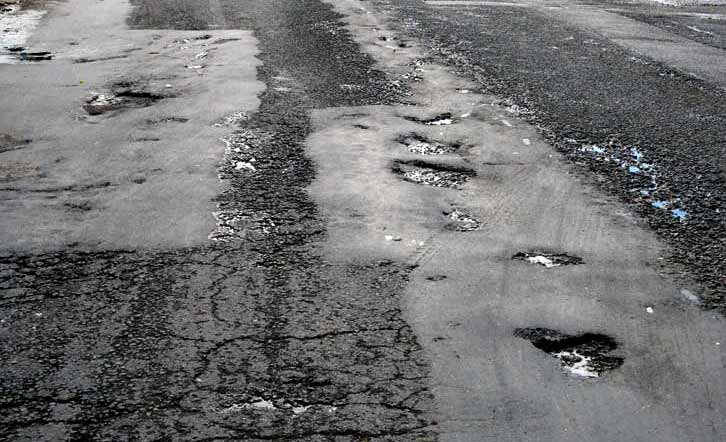 Photographed against the sunshine this morning; (note the surface tyre tracks) just a small section of the road surface on the junction of Slievenamon Road and Clongour Road, Thurles, obviously deemed acceptable by Tipperary Co, Council management and public representatives in their consideration of the tax fleeced motorists, pedestrians and cyclists of Thurles, Co. Tipperary. Photo: G. Willoughby.
Back in 2015 and 2016 Cork City Councillors had also agreed to apply a 10% reduction, but in 2017 a similar decision to yesterdays was also concluded, leaving €777,000 available in the council’s budget, for the fiscal year 2018.
Here in Thurles, for almost two years, promises to resurface the seriously deteriorated Slievenamon Road area of the town; together with stretches of its pavement, continue to fall on deaf ears; with County Councillors elected to the Templemore / Thurles Municipal District displaying little or no ability to stimulate those responsible to undertake this work.
This is the same pre-election, non required and never used ‘Cycle Way / Route’ promoted and introduced in 2015, by the former Tipperary Labour government Minister, Mr Alan Kelly. Today we seriously challenge any cyclist to attempt to cross from Slievenamon Road to the Clongour Road, in its present horrendous condition.
The government fork out millions of tax payers money on promoting, annually, Road Health and Safety issues, but when it comes to rural road surfacing; the grossly over taxed motorist in Tipperary, (through tax on Fuel, NCT costs, Road Tax, Vat, Motorway Tolls etc) is forced to drive on rugged terrain more akin to the physical confines of a river flood plane.
One is reminded of a past quote from Martin Luther King, Jr., which I relate to our Tipperary elected public representatives. The quote reads; “In the end, we will remember not the words of our enemies, but the silence of our friends.”

While Tipperary County Councillors saw fit to raise Local Property Tax by 10%, County Councillors sharing our border in Kilkenny county have, this evening, agreed unanimously that the amount of Local Property Tax to be collected from house owners for the coming fiscal year 2018, will not change.
Dublin City Councillors voted 42-11 against a hike in their Local Property Tax.
This decision was arrived at by County Councillors, despite Council Management again seeking a full 15% increase in order to balance expenditure demands.
Councillors stated that they were mindful of the impact any increase would have on already besieged households, right across the county, and condemned the current framework where a Local Property Tax rate decision is required two months in advance of a local authority’s statutory budget meeting.
Meanwhile An Taoiseach Mr Leo Varadkar has given his views on any dramatic increase in property tax, stating there would be no sudden hikes in property tax rates despite spiralling house price values, particularly in urban areas like Dublin and Cork. (Oh yes, good old Dublin & Cork, the twin capitals must be looked after.)
He stated, “One thing that has not increased, which we don’t want to see, and which we will do might and main to avoid, is any sudden hike in property tax that would come about because of house revaluations. While there has been a very significant increase in property values, particularly in the greater Dublin area, I certainly don’t envisage, nor do I want to see, a sudden dramatic hike in property tax, to that end we will be working hard to avoid that.”
Obviously no one informed Tipperary Co. Councillors of Mr Varadkar’s wishes; and Tipperary Co. Councillors in turn have failed to inform Mr Varadkar and his minority government that Tipperary do not have quality Public Services; just one example being our hospital services situated both north and south of the county.
|
Support Us Help keep Thurles.info online by donating below. Thank you.
Total Donated 2026: €300.00
Thank You!
Daily Thurles Mass Livestream
|



Recent Comments