The EPA announces funding of €10.5m for new environmental and climate research inviting innovative solutions to address medium- to longer-term environmental research needs.
Research proposals are invited for research across the following areas:
Addressing Climate Change Evidence Needs
Delivering a Healthy Environment
Facilitating a Green and Circular Economy
Protecting and Restoring our Natural Environment
Policy Implementation, Effective Regulation and Innovative Governance Models
Successful researchers will be supported by EPA to engage with policy makers to ensure that the research is impactful and effectively informs environmental policy in Ireland.
Yesterday, the Environmental Protection Agency (EPA)announces research funding of up to €10.5 million for new environmental research. The EPA is inviting proposals from the research community for innovative projects to support the development and implementation of environmental policies in Ireland. In particular, multi- and trans-disciplinary teams are welcomed to bring diverse perspectives to complex environmental challenges.
Announcing the EPA funding call, Ms Roni Hawe, Director of the EPA’s Office of Evidence and Assessment said: “The launch of the EPA Research Call 2026 marks a significant opportunity for the research community to contribute to addressing Ireland’s most pressing environmental challenges. This investment will support the generation of robust evidence needed for good policy and for more efficient and effective decision-making, as well as building skills and expertise in critical areas related to climate, the environment and sustainability.”
Opportunities for research are identified in areas such as how to bring mitigation and adaptation together to support Ireland achieving its climate and environmental goals; understanding antimicrobial resistance in the environment; how to accelerate our transition to a circular economy and how we can protect the environment while accelerating infrastructure and simplifying environmental regulation.
Dr Ms Caroline Wynne, EPA Research Manager, said: “This year, we are pleased to invite proposals for larger scale projects that will allow researchers to develop new and innovative solutions as well as supporting the recruitment and training of highly skilled PhD students. We are particularly interested in supporting a wide cohort of the research community to bring social, economic and environmental perspectives together, which is essential to address complex societal challenges.”
The EPA Research Programme is a Government of Ireland initiative funded by the Department of Climate, Energy and Environment. Under this year’s call, the EPA is delighted to be partnering with Met Éireann to co-fund projects in areas of mutual interest.
The deadline for proposals is May 28th 2026.
Further funding: Other EPA funding opportunities this year include EPA Fast-track to Policy Funding; Fulbright-EPA Scholarships and Fellowships; the Research Ireland Public Service Fellowship, as well as opportunities supported through EPA’s participation in European Partnerships. Details are available on our Research Funding webpage.
Government welcomes new graduates at Recruit Prison Officer Ceremony in Croke Park, Dublin.
159 Recruit Prison Officers assigned throughout the Prison Estate.
Over 500 Recruit Prison Officers in the pipeline with the 2026 recruitment campaign to take place later this year.
The Irish Government today welcomed the graduation of 159 Recruit Prison Officers (RPO) at a ceremony in the Hogan Suite in Croke Park, Dublin. The new officers have now completed their Higher Certificate of Arts in Custodial Care (HCCC), developed and delivered jointly by the Irish Prison Service and South East Technological University (SETU).
The new officers have already been placed in prisons throughout the prison estate, and today’s graduation ceremony marks the formal recognition of the new officers’ academic achievement.
Ms Caron McCaffrey.
The Director General of the Irish Prison Service, Ms Caron McCaffrey said: “Today’s graduation is a proud moment for our Service and for the communities we serve. The Higher Certificate in Custodial Care represents far more than academic achievement; it reflects the resilience, empathy and professionalism that define modern prison work. Our new officers have balanced study, family life and the demands of a complex environment, and they have done so with integrity and determination. As they take up duty across the estate, they bring with them diverse skills, strong values and a commitment to supporting safety, dignity and rehabilitation in our prisons. I am confident that each of them will make a meaningful contribution to the people in our care, to their colleagues, and to the wider society we work to protect.”
Recognising the crucial role played by prison officers in delivering an important public service, Pro-Chancellor and Chair of SETU’s Governing Body, Professor Patrick Prendergast emphasised the need to provide a high standard of training and education to support them. Prof. Patrick Prendergast said: “It is vital that we continue to meet the evolving needs of this essential public service. The Higher Certificate in Custodial Care continues to grow in strength and impact each year, reflecting the strong collaboration between the Irish Prison Service and SETU. Since its introduction in 2017, more than 1,000 recruit prison officers have completed the programme, with a further 159 being conferred this evening. These figures reflect both the scale of the programme and the value placed on education, professionalism and continuous development within custodial care. Most importantly, today is about the graduates themselves. I would like to extend my sincere congratulations to this year’s cohort. You should take great pride in what you have achieved and in the important contribution you will go on to make throughout your careers.”
Minister for Justice, Home Affairs and Migration Mr Jim O’Callaghan stated: “It is a privilege to congratulate these graduates today. Their preparation has been thorough, and they now have the knowledge needed to manage this complex role effectively. I want to thank them for their public service and their families for their support. Prison Officers bring strength and compassion to a job that often goes unseen, yet it is crucial for keeping our communities safe. As mentors, they will help offenders in their care to rebuild their futures and to find a better path forward. We are fully committed to supporting them with the resources needed to carry out this challenging duty with dignity.”
The Higher Certificate in Custodial Care is a two-year part-time programme designed to develop the professional competencies of Prison Service staff in working with prisoners. The HCCC is intended to facilitate a greater understanding of how officers can confront challenges through the exploration of different subjects including, Resilience, Mental Health, Social Psychology and Human Rights.
After initial training RPOs are assigned to a prison, with assignments based on the security and operational needs of each individual prison.
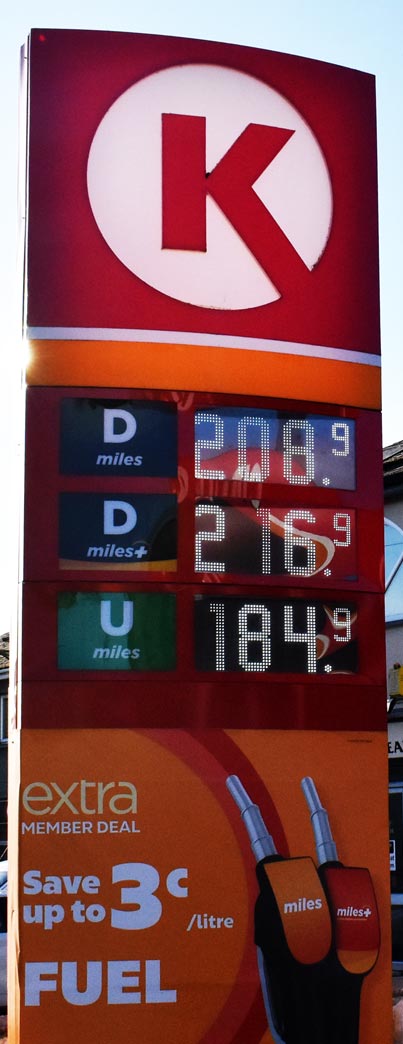
There is a familiar rhythm to fuel prices in Ireland. Costs rise sharply, headlines point to global crises, and frustration builds at petrol stations across the country. Recently, that cycle has repeated itself, with rising tensions involving Iran blamed for sudden spikes that pushed prices close to, and in some cases beyond, €2 per litre.
At first glance, the explanation seems straightforward. Oil is a global commodity, and when conflict threatens supply; particularly in critical regions like the Middle East, prices rise everywhere. In early 2026, motorists saw increases of over 30 cent per litre in a matter of days as markets reacted to geopolitical uncertainty.
But if global events are only part of the story, what explains why Ireland consistently feels more expensive than many of its neighbours? To understand that, you have to look beyond the headlines, and into the structure of the price itself.
The Price Beneath the Price. Strip away the pump display and something striking emerges. In Ireland, the majority of what drivers pay for fuel has little to do with oil at all. According to AA Ireland data, approximately 65% of the price of petrol and 60% of diesel is made up of taxes and levies.
Put simply, when you pay around €1.75 per litre:
Roughly 60 cent reflects the actual fuel cost.
More than €1 goes to the State.
This is not a marginal difference. It fundamentally changes how global shocks are experienced at a local level. If oil prices rise, Irish motorists don’t just pay more for fuel, they pay more tax on that higher price as well. Value Added Tax (VAT), set at 23%, is applied on top of the entire cost, including excise duty and carbon tax. The result is a compounding effect, often described as a “tax on tax,” where price increases are amplified rather than simply passed through. It is here that the gap between global explanation and domestic reality begins to widen.
Global Markets, Local Multipliers. There is no question that international events matter. The recent surge in prices, following Middle East tensions, reflects genuine concern about supply disruption. Oil markets are notoriously sensitive, and even the perception of risk can trigger immediate price increases. But the same global oil price applies across Europe. The difference lies in how each country translates that price into what consumers actually pay.
In Ireland, that Translation is Particularly Heavy. Before tax, Ireland sits roughly in the middle of European fuel costs. After tax, it often ranks among the most expensive. This explains a common experience for motorists near the border, as crossing into Northern Ireland can reduce the cost of a full tank by €15–€20, despite the fuel itself being sourced from the same global market. The conclusion is difficult to avoid, global events may set the baseline, but domestic policy determines the final impact.
The Case for High Taxes Of course, there is a logic behind Ireland’s approach. Fuel taxation is not simply a revenue tool, though it certainly provides substantial income for the Exchequer. It is also a central pillar of climate policy. Carbon tax, currently aligned with a rate equivalent to €71 per tonne of CO₂, is designed to discourage fossil fuel use and encourage a transition to cleaner alternatives. In theory, the principle is sound, make carbon-intensive behaviour more expensive, and people will gradually shift toward more sustainable choices. The revenue generated is also partially reinvested into Ireland’s energy efficiency programmes and social supports, aimed at offsetting fuel poverty. From a policy perspective, this reflects a broader European trend. Governments are increasingly using price signals to drive behavioural change.
Where Policy Meets Reality. The difficulty lies in how that theory plays out in practice. Ireland is not a country where driving is easily optional. Outside major urban centres, public transport options are limited, distances are longer, and reliance on private vehicles is often unavoidable. For many households, fuel is not a discretionary expense; it is a necessity. In this context, higher fuel prices do not significantly reduce consumption. Instead, they increase financial pressure. The burden is not evenly distributed either. Rural households, tradespeople, and lower-income workers are disproportionately affected. A commuter travelling 50 kilometres each day cannot simply switch to an electric vehicle overnight, nor can a small business absorb rising diesel costs indefinitely. What emerges is a tension between long-term policy goals and short-term lived experience.
The Ripple Effect Through the Economy. Fuel costs do not exist in isolation. They flow through the entire economy. When diesel prices rise, transport becomes more expensive. That, in turn, increases the cost of goods, food distribution, construction and services. A sustained increase of just 30 cent per litre can cost the average motorist over €300 per year, but the indirect costs spread far wider. This is why fuel prices often feel like a multiplier of the broader cost-of-living crisis. They do not just affect drivers; they affect everything.
Government Response: Reactive or Strategic? When prices spike sharply, governments tend to intervene. In recent weeks, temporary cuts to excise duty, (up to 20 cent per litre), have been introduced to ease pressure on households and businesses. These measures provide immediate relief, but they also highlight an uncomfortable truth; the government has significant control over fuel prices and can reduce them quickly when it chooses to do so. Critics argue that this reinforces the idea that high prices are, at least in part, a policy choice rather than an inevitability. Supporters counter that such interventions must remain temporary, or risk undermining climate commitments and public finances, and both perspectives have merit.
A System Under Strain – Ireland’s fuel pricing system is not broken, but it is under strain. On one side, there is a clear need to reduce emissions, meet climate targets, and transition toward a more sustainable energy system. On the other, there is the immediate reality of households struggling with rising costs in a country where alternatives are not yet fully in place. The current approach attempts to balance these competing pressures. But balance is difficult to maintain when external shocks, such as global conflicts, push prices sharply higher. In those moments, the structure of the system becomes more visible, and more contested.
So Who Is Responsible? The honest answer is not simple. Global events like the Iran conflict undeniably influence fuel prices. They set the direction of travel and can trigger rapid increases. But Ireland’s tax structure determines how steep that journey feels. It is not a question of either/or, it is both.
At a Crossroads Ireland now faces a deeper question about the future of its fuel policy. Should taxes remain high to drive long-term change, even if that increases short-term hardship? Or should the burden be eased, at least until viable alternatives are available for all? There are no easy answers. But one thing is clear: for many Irish drivers, the issue is no longer abstract. It is not about global markets or climate targets in isolation.
It is about the price on the pump, the cost of getting to work, and the growing sense that something in the system is no longer quite in balance.
There’s something deeply unsettling about numbers that keep rising, month after month, especially when each number represents a person without a secure place to call home.
The latest figures show that 17,308 people are now living in emergency accommodation, including 5,457 children. That’s not just a statistic, it’s the population of a small town, displaced and uncertain about what comes next.
What makes this moment particularly striking is not just the scale, but the trajectory. Only a month earlier, the Irisn homeless figure had already crossed 17,000 for the first time. Now it has climbed again. The direction of travel is clear and extremely worrying.
The Visible Crisis, and the Invisible One. Official data captures those in emergency accommodation, but it doesn’t tell the full story. It leaves out those sleeping in cars, staying on couches, or moving from place to place in unstable arrangements. Charities working on the ground warn that demand is pushing services to their limits. Some report engaging with multiple new individuals at risk of homelessness every day, while emergency accommodation systems are described as operating “at capacity.” This suggests that the real scale of housing insecurity is likely far greater than the official figures reveal.
Pressure Points: Evictions and Affordability. A key factor behind rising homelessness appears to be growing instability in the rental sector.
Eviction notices increased by 41% in late 2025 compared to the previous year.
Over 5,000 notices were issued in just three months.
A large share of these were linked to landlords selling properties.
Each notice represents more than paperwork; it’s a household forced into uncertainty, often with limited options. At the same time, affordability remains a major barrier. Rent levels continue to rise, and for many households, especially families needing larger homes, suitable properties are simply out of reach.
New Rental Rules: Stability or Side Effects? Recent changes to rental rules aim to bring more stability, introducing longer tenancy durations and limiting certain types of evictions. On paper, these reforms are designed to create security for tenants and encourage investment in housing supply. But housing systems are delicate ecosystems. Changes intended to stabilise one part can create pressure elsewhere. Some property owners argue that tighter regulations may encourage landlords to leave the market. If that happens at scale, it could reduce the number of available rental homes, thus pushing prices higher and intensifying competition. Others worry about unintended consequences such as rent increases over time, particularly when new tenancies allow prices to reset after a fixed period. In short, the reforms aim to fix instability, but they also arrive at a moment when the system is already under significant strain.
The Supply Problem at the Core. Underlying everything is a simple imbalance: there are not enough homes. Even with tens of thousands of new homes built in recent years, population growth and demand continue to outpace supply. Smaller units dominate new developments, while larger family homes, three and four bedrooms, remain scarce.
This Mismatch has Real Consequences.
Families struggle to find suitable accommodation.
People remain stuck in emergency housing longer.
Transitioning out of homelessness becomes increasingly difficult.
Without enough appropriate housing, the system becomes clogged; fewer exits mean more people entering crisis situations.
A Crisis Beyond Numbers. Perhaps the most troubling aspect of the current situation is how normalised it risks becoming. When figures climb steadily over years, there’s a danger that society begins to accept them as inevitable. But homelessness on this scale is not inevitable, it is the result of multiple pressures converging:
Rising rents.
Limited supply.
Increasing eviction activity.
Gaps in support systems.
And behind every statistic is a person navigating uncertainty, families in hotel rooms, children growing up without stable homes, individuals trying to rebuild their lives without a foundation.
Where Does this Leave Us? The current moment feels like a tipping point. There are efforts underway, investment, policy changes, and commitments to increase housing delivery. But the gap between supply and demand remains wide, and the human impact is growing more visible. What’s clear is that no single solution will resolve this. Addressing homelessness at this scale requires:
Faster and more targeted housing delivery.
Stronger prevention measures.
Better pathways out of emergency accommodation.
A rental system that balances security with supply.
Until then, the numbers may continue to rise, but more importantly, so too will the number of lives shaped by housing insecurity. In the end, this isn’t just a housing issue. It’s a reflection of how a society meets one of its most basic responsibilities; ensuring people have a place to live.
The Minister for Justice, Home Affairs and Migration, Mr Jim O’Callaghan has secured approval, in principle, from Government, for a new approach to applications for the consideration of a Presidential Pardon.
Historically, Presidential pardons have been granted sparingly in exceptional cases only. Between 1937 and 2014, only three Presidential pardons were granted, none of which were granted posthumously and none related to cases pre-dating the founding of the State in 1922. Since 2015, five further pardons have been granted. Four of these relate to convictions that pre-date the foundation of the State.
To grant pardons, a State must acknowledge that it has responsibility for miscarriages of justice administered by that State. There are also significant challenges associated with processing historical cases which predate the foundation of the State, including the likelihood that many of these cases may not be sufficiently documented.
Consequently, under this new approach, only convictions which have been imposed after the foundation of the State in 1922 would be eligible for consideration for Presidential pardons going forward.
In recent years, the volume of requests for Presidential pardons has increased. While pardons were granted in the past related to cases prior to the foundation of the State, the Government now wishes to ensure that the power to pardon is not in some way devalued by overuse, especially in circumstances where the threshold of proof grounding any proposal for a pardon is lowered due to the passage of time.
The new approach to applications for consideration will adhere to the statutory scheme under the 1993 Act.
This website uses cookies to improve your experience. We'll assume you're ok with this, but you can opt-out if you wish.AcceptRead More
Privacy & Cookies Policy
Privacy Overview
This website uses cookies to improve your experience while you navigate through the website. Out of these, the cookies that are categorized as necessary are stored on your browser as they are essential for the working of basic functionalities of the website. We also use third-party cookies that help us analyze and understand how you use this website. These cookies will be stored in your browser only with your consent. You also have the option to opt-out of these cookies. But opting out of some of these cookies may affect your browsing experience.
Necessary cookies are absolutely essential for the website to function properly. This category only includes cookies that ensures basic functionalities and security features of the website. These cookies do not store any personal information.
Any cookies that may not be particularly necessary for the website to function and is used specifically to collect user personal data via analytics, ads, other embedded contents are termed as non-necessary cookies. It is mandatory to procure user consent prior to running these cookies on your website.







Recent Comments