Lyrics and Vocals: American gospel singer and songwriter, the late Dottie Rambo, (1934–2008).
The late Dottie Rambo.
It’s Me Again Lord.
It’s Me Again Lord.
Troubles come and I can’t find an answer. Lonely nights I spend in agony. I have no other friend that I can turn to, So here I am Lord back upon my knees.
It’s me again Lord I’ve got a prayer that needs an answer. It’s me again Lord I’ve got a problem that I can’t solve. And I don’t mean to worry you, but here I am facing something new. And I need help that only comes from You. It’s me again Lord.
I know You’re mighty busy in Your heaven, Forming worlds and hanging stars to shine. But You promised if I’d ask that I could see them, So here I am Lord asking one more time.
It’s me again Lord I’ve got a prayer that need an answer. It’s me again Lord, I’ve got a problem that I can’t solve. Well I don’t mean to worry you, but here I am facing something new. And I need help that only comes from You. It’s me again Lord.
I don’t mean to worry you but here I am facing something new. And I need help that only comes from You. It’s me again Lord.
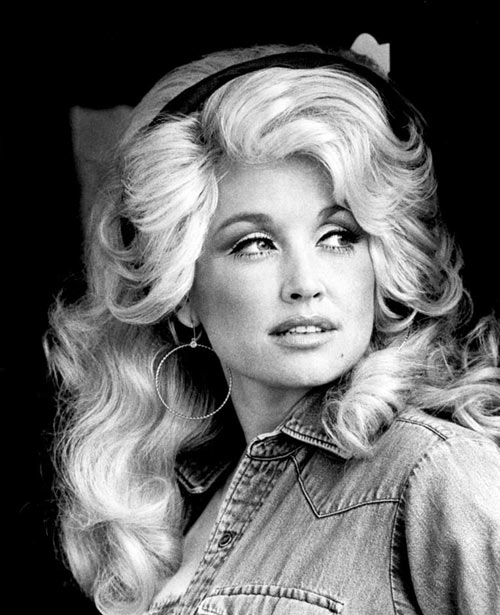
Lyrics: American singer, songwriter, actress, philanthropist, and businesswoman MsDolly Rebecca Parton. Vocals: American country music singer Porter Wagoner and Dolly Parton.
Ms Dolly Rebecca Parton.
“Tomorrow Is Forever” is a tender country ballad written by Dolly Parton and recorded with Porter Wagoner in 1970. Filled with quiet longing and hope, the song speaks about letting go of past pain and choosing love in the present, trusting that tomorrow holds something lasting and true. Its gentle message reminds us that even after heartbreak, love can still feel endless.
Tomorrow Is Forever.
Tomorrow Is Forever.
Take my hand and run with me, Out of the past called history, And walk with me into the future of tomorrow. Yesterday must be forgot, No looking back, no matter what, There’s nothing there but memories that bring sorrow. Yesterday is gone, But tomorrow is forever. No more crying, tears leave tracks, And memories find their way back, Tomorrow’s waiting, let’s journey there together. Yesterday is gone, But tomorrow is forever. I care not for yesterday, I love you as you are today, Yesterday just helped to pass the time while waiting. We must forget, the passing time, My love for you is the real kind. The kind that won’t hurt you, no, never. Yesterday is gone, But tomorrow is forever. Yesterday is gone, But tomorrow is forever. END
A proud Tipperary native was among the international visitors gathered at Space Center Houston ahead of one of the most historic moments in modern space exploration; the launch of NASA’s Artemis II mission.
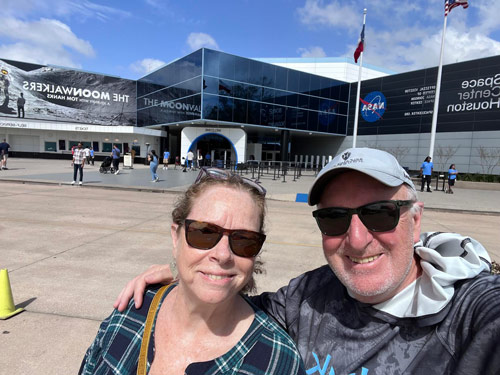
Mr Seanie Ryan, originally from Kennedy Park, Thurles, and a former member of the Tweed and Kenny Ryder Superband, travelled to the renowned visitor centre prior to the launch of the Artemis II mission from Kennedy Space Center, Florida, on Wednesday, April 1st.
The landmark mission saw four astronauts embark on humanity’s first crewed journey around the Moon in over 50 years, marking a major milestone in global space exploration.
Mr. Seanie Ryan and his wife Pamela, at Houston Space Center for Artemis II Moon Mission.
Mr. Ryan and his wife Pamela, (pictured above), who previously lived in Houston and now resides in Sand Springs, Oklahoma, was joined by family members for the memorable visit. His daughter, Sarah, works locally as an American Sign Language teacher, near the Space Center, while his son, Kevin; a former member of the White House Press Corps, was present in a professional capacity, reporting on the historic launch.
The Artemis II mission has captivated millions worldwide, as the crew of four astronauts. including the first woman assigned to a lunar mission, undertake a journey orbiting the Moon before returning to Earth.
A well-known musician on both sides of the Atlantic, Mr Seanie Ryan has performed with numerous bands in Ireland and the United States. He is currently working as a professional soccer referee in America and remains a loyal supporter of Port Vale Football Club.
Mr. Seanie Ryan is also the brother of Thurles-based journalist Mr Tom Ryan, Rahealty, Thurles, whose poem commemorating the Artemis mission has featured in coverage of the event by his son Kevin.
The Ryan family’s presence at Space Center Houston added a personal Irish connection to an event of global significance, as the world once again turns its attention to the Moon and the future of human space exploration.
Bon voyage Artemis 11. By Poet & Author Tom Ryan.
When there’s a bridge, Between stars and sod, Who knows all men may yet find God. And so at last in one another See ourselves as sister – brother Bon voyage Artemis 11. END.
Lyrics: Co-written by American singer, songwriter and guitarist the late Roy Orbison and award-winning American singer/songwriter Joe Melson. Vocals: The late Roy Orbison(1936–1988).
The Late Roy Orbison.
This song hereunder; written by Orbison and Joe Melson, was released in 1963, and is known for its longing, nostalgic tone about returning to a peaceful place and a lost love.
Blue Bayou.
Blue Bayou.
I feel so bad, I got a worried mind. I’m so lonesome all the time, Since I left my baby behind on Blue Bayou. Saving nickels, saving dimes, Working till the sun don’t shine, Looking forward to happier times on Blue Bayou. I’m going back someday, come what may to Blue Bayou, Where you sleep all day and the catfish play on Blue Bayou. All those fishing boats with their sails afloat, if I could only see, That familiar sunrise through sleepy eyes, how happy I’d be. Go to see my baby again, And to be with some of my friends, Maybe I’ll be happy then on Blue Bayou. I’m going back someday, gonna stay on Blue Bayou, Where the folks are fine, and the world is mine on Blue Bayou. Oh, that girl of mine by my side, the silver moon and the evening time, Oh, on some sweet day, gonna take away this hurtin’ inside. I’d never be blue, my dreams come true, On Blue Bayou.
Lyrics and Vocals: American country music singer/songwriter , the late, great, Don Williams. [Donald Ray Williams (1939- 2017) ].
The late, great, Don Williams.
The song “Atta Way To Go” is a quietly powerful country ballad that captures the emotional aftermath of a broken relationship. The song reflects on love, loss, and resignation, as the narrator responds to a partner who has chosen to walk away. Rather than anger or bitterness, Williams conveys a restrained sadness, highlighting the emotional distance that follows a breakup and the quiet acceptance of things left unsaid. The understated lyrics and gentle melody exemplify his ability to turn everyday experiences into deeply relatable moments. “Atta Way To Go” stands as an early example of Don Williams’ enduring appeal; his talent for expressing complex feelings with simplicity, sincerity, and a uniquely soothing presence that would define his career throughout the 1970s and beyond.
Atta Way To Go.
Atta Way To Go.
Atta way to go you finally broke it off. Atta way to go we can’t even talk or cry, Or even wonder why that a way to go. Didn’t you believe me when I loved you. I guess you thought we were playing games. All this time I tried to think I’ve known you, I guess I really only knew your name. Atta way to go you finally broke it off. Atta way to go we can’t even talk or cry, Or even wonder why that a way to go. I thought you knew I lived my life just for you. There was just no price to big to pay, And even though I know I still live for you, The feeling’s that you show won’t let me stay. Atta way to go you finally broke it off. Atta way to go we can’t even talk or cry, Or even wonder why that a way to go. END
This website uses cookies to improve your experience. We'll assume you're ok with this, but you can opt-out if you wish.AcceptRead More
Privacy & Cookies Policy
Privacy Overview
This website uses cookies to improve your experience while you navigate through the website. Out of these, the cookies that are categorized as necessary are stored on your browser as they are essential for the working of basic functionalities of the website. We also use third-party cookies that help us analyze and understand how you use this website. These cookies will be stored in your browser only with your consent. You also have the option to opt-out of these cookies. But opting out of some of these cookies may affect your browsing experience.
Necessary cookies are absolutely essential for the website to function properly. This category only includes cookies that ensures basic functionalities and security features of the website. These cookies do not store any personal information.
Any cookies that may not be particularly necessary for the website to function and is used specifically to collect user personal data via analytics, ads, other embedded contents are termed as non-necessary cookies. It is mandatory to procure user consent prior to running these cookies on your website.








Recent Comments