There’s something deeply unsettling about numbers that keep rising, month after month, especially when each number represents a person without a secure place to call home.
The latest figures show that 17,308 people are now living in emergency accommodation, including 5,457 children. That’s not just a statistic, it’s the population of a small town, displaced and uncertain about what comes next.
What makes this moment particularly striking is not just the scale, but the trajectory. Only a month earlier, the Irisn homeless figure had already crossed 17,000 for the first time. Now it has climbed again. The direction of travel is clear and extremely worrying.
The Visible Crisis, and the Invisible One. Official data captures those in emergency accommodation, but it doesn’t tell the full story. It leaves out those sleeping in cars, staying on couches, or moving from place to place in unstable arrangements. Charities working on the ground warn that demand is pushing services to their limits. Some report engaging with multiple new individuals at risk of homelessness every day, while emergency accommodation systems are described as operating “at capacity.” This suggests that the real scale of housing insecurity is likely far greater than the official figures reveal.
Pressure Points: Evictions and Affordability. A key factor behind rising homelessness appears to be growing instability in the rental sector.
Eviction notices increased by 41% in late 2025 compared to the previous year.
Over 5,000 notices were issued in just three months.
A large share of these were linked to landlords selling properties.
Each notice represents more than paperwork; it’s a household forced into uncertainty, often with limited options. At the same time, affordability remains a major barrier. Rent levels continue to rise, and for many households, especially families needing larger homes, suitable properties are simply out of reach.
New Rental Rules: Stability or Side Effects? Recent changes to rental rules aim to bring more stability, introducing longer tenancy durations and limiting certain types of evictions. On paper, these reforms are designed to create security for tenants and encourage investment in housing supply. But housing systems are delicate ecosystems. Changes intended to stabilise one part can create pressure elsewhere. Some property owners argue that tighter regulations may encourage landlords to leave the market. If that happens at scale, it could reduce the number of available rental homes, thus pushing prices higher and intensifying competition. Others worry about unintended consequences such as rent increases over time, particularly when new tenancies allow prices to reset after a fixed period. In short, the reforms aim to fix instability, but they also arrive at a moment when the system is already under significant strain.
The Supply Problem at the Core. Underlying everything is a simple imbalance: there are not enough homes. Even with tens of thousands of new homes built in recent years, population growth and demand continue to outpace supply. Smaller units dominate new developments, while larger family homes, three and four bedrooms, remain scarce.
This Mismatch has Real Consequences.
Families struggle to find suitable accommodation.
People remain stuck in emergency housing longer.
Transitioning out of homelessness becomes increasingly difficult.
Without enough appropriate housing, the system becomes clogged; fewer exits mean more people entering crisis situations.
A Crisis Beyond Numbers. Perhaps the most troubling aspect of the current situation is how normalised it risks becoming. When figures climb steadily over years, there’s a danger that society begins to accept them as inevitable. But homelessness on this scale is not inevitable, it is the result of multiple pressures converging:
Rising rents.
Limited supply.
Increasing eviction activity.
Gaps in support systems.
And behind every statistic is a person navigating uncertainty, families in hotel rooms, children growing up without stable homes, individuals trying to rebuild their lives without a foundation.
Where Does this Leave Us? The current moment feels like a tipping point. There are efforts underway, investment, policy changes, and commitments to increase housing delivery. But the gap between supply and demand remains wide, and the human impact is growing more visible. What’s clear is that no single solution will resolve this. Addressing homelessness at this scale requires:
Faster and more targeted housing delivery.
Stronger prevention measures.
Better pathways out of emergency accommodation.
A rental system that balances security with supply.
Until then, the numbers may continue to rise, but more importantly, so too will the number of lives shaped by housing insecurity. In the end, this isn’t just a housing issue. It’s a reflection of how a society meets one of its most basic responsibilities; ensuring people have a place to live.
There are many great engineering feats across the world. The Pyramids. The Great Wall of China. The Hoover Dam. And now, proudly joining that list… The Invisible Night-Time Car-Destroying Humps of Liberty Square, Thurles car park.
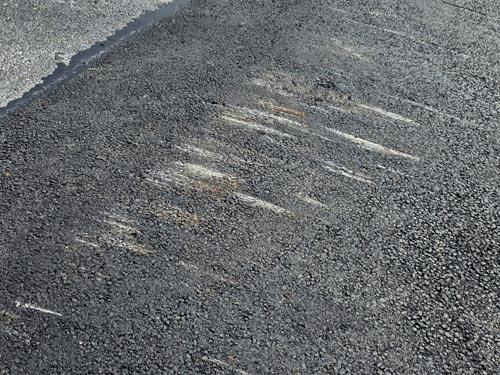
Yes, nestled in the thriving town of Thurles; a place known for its culture, history, and increasingly, its ability to test a car’s suspension beyond factory specifications; two magnificent road humps have been installed in the new car park situated south of Liberty Square. Not just any humps. Extremely high humps.The kind that don’t slow traffic; they redefine it.
Picture the scene. It’s dark. You’re driving home. All is calm. Then suddenly, BANG. Yes you’ve just discovered one of Thurles’ newest attractions; “Guess Where the Hump Is.” No reflective paint. No triangular hazard markings. No “hazard teeth.” Not even a polite hint. Just raw, unfiltered suspense. In fact, the lack of proper road markings is not even new to the area, concerns have previously been raised that road markings around Liberty Square are confusing and unsafe. But why stop at confusing when you can go full invisible ambush?
Vehicle Undercarriage Adjustment Programme, (V.U.A.P.). Locals report that cars are now receiving what engineers are calling: “Unscheduled structural realignment.” Others might call it: “The exhaust is now optional.” Between these humps and existing road issues, Thurles is quietly becoming Ireland’s leading centre for :- Suspension stress testing; Shock absorber retirement schemes, and spontaneous undercarriage redesign. And if you think that’s dramatic consider this: Tipperary has already seen over €50,000 paid out in compensation for pothole-related vehicle damage in recent years.
So clearly, the strategy is evolving; If potholes don’t finish the job, the humps will. While Thurles boldly pioneers the construction of Everest-sized speed ramps, meanwhile, the Potholes Live On. Oh, the potholes are heritage sites now. Protected. Preserved. Possibly getting listed. Residents have long complained about roads in poor condition, with some routes described as “full of potholes” and “very poor” , and even “deplorable” in broader Tipperary reports.
But filling them? Ah no, sure that would be reckless. Why eliminate a pothole when you can simply install a hump nearby and let drivers experience both?
It’s about balance. Engineering Brilliance (Or Something Like It), so let’s admire the process:-
Build two extremely aggressive road humps ✔️
Forget the hazard markings ✔️
Leave them practically invisible at night ✔️
Place them where unsuspecting drivers will absolutely hit them ✔️
This is not a mistake. This is performance art. A bold statement on modern infrastructure. A physical metaphor for life in Thurles: “You won’t see the problem… until it hits you.”
Final Thought:- Add a scoreboard; Give out prizes for best airborne moment, and rebrand the car park as: “Liberty Square Adventure Zone”.
Application Ref: 2611. Applicant:Arcona Developments Ltd. Development Address: Stradavoher Road, Stradavoher, Thurles. Development Description:a) construct 36 No. two storey houses consisting of 11 no. two bedroom townhouses, 21 No. three bedroom townhouses, 4 No. three bedroom semi-detached dwellings. b) demolish 2 no. existing dwellings to allow for the creation of a new site entrance. c) construction of an electrical substation. d) erect estate name signage and e) all associated site works. Status: Unconditional. Application Received: 28/01/2026. Decision Date: 12/03/2026. Further Details:http://www.eplanning.ie/TipperaryCC/AppFileRefDetails/2611/0.
Application Ref: 2660038. Applicant: Independent Trustee Company Limited. Development Address: Kenneth House, Parnell Street, Thurles Co Tipperary. Development Description: Internal alterations to the existing first floor apartments and full planning permission for the conversion of attic storage space to include 1no. 1 bedroom apartment and all associated site works. Status:Refused. Application Received: 20/01/2026. Decision Date: 12/03/2026. Further Details:http://www.eplanning.ie/TipperaryCC/AppFileRefDetails/2660038/0.
At first glance, that can make insulation, heating upgrades, or a heat pump seem like poor value. But that would be the wrong conclusion, especially in a county like Tipperary, where many homes are older, more rural, more exposed to weather, and more likely to depend on oil, solid fuel, or outdated heating systems. The same CSO data that raised eyebrows also shows that better-rated homes generally use less energy per square metre, which remains one of the fairest ways to compare homes of very different sizes. In 2023, A and B rated homes using electricity for heating consumed 39 kWh per square metre, compared with 66 for C-rated homes and 58 for F and G rated homes.
That matters in Tipperary because house size and dwelling type play a big role in energy demand. Detached houses use far more energy overall than mid-terrace homes simply because there is more space to heat. The CSO found detached homes had the highest mean electricity consumption in 2023, at 7,388 kWh, 77% higher than mid-terrace houses. For a county with a large stock of detached and one-off rural homes, that makes efficiency upgrades especially relevant.
There is another reason this matters locally. CSO figures published in 2025 showed that Tipperary had one of the highest proportions of G-rated homes in the country, at 10%. That suggests a significant number of households in the county are living in homes that are harder and more expensive to keep comfortable. In practice, many families in lower-rated homes are not “saving” energy in a meaningful sense. They may simply be under-heating rooms, avoiding turning the heat on, or living with draughts and cold spots, because the cost of comfort is too high. That is very different from saying an upgrade has no value.
This is the key point often lost in the national argument: retrofitting is not only about cutting a bill on paper. It is also about comfort, health, resilience, and future-proofing. A warmer, drier home is easier to live in. It is healthier for children and older people. It is less exposed to fossil fuel price shocks. And it is more attractive in the property market. The BER is not a perfect measure of human behaviour, but it is still a useful measure of the building itself: its insulation, airtightness, and heating potential.
For Tipperary homeowners, the smarter question is not “Are upgrades worth it at all?” but “Which upgrades make sense for my house, my budget, and my timeline?” A full deep retrofit may not be realistic for every household. Nationally, the government supported 53,984 home energy upgrades in 2024, and more than €1.2 billion has been invested in 186,000 homes since 2019. Low-cost retrofit loans are also now available to help with upfront funding. That means households can often take a phased approach: attic insulation first, then wall insulation, then heating controls, solar PV, or eventually a heat pump.
And heat pumps should not be dismissed. SEAI says they use less than a third of the energy of an oil or gas boiler and work well in cold climates, which is why they are so common in countries like Sweden and Norway. In Tipperary Town, the local Sustainable Energy Community is already backing projects involving solar upgrades, public housing retrofit, and an air-to-water heat pump for a sports centre redevelopment.
So yes, the headlines deserve scrutiny. BER ratings do not tell the whole story. But for many homeowners in Co. Tipperary, energy upgrades are still a sound investment. Not because every retrofit instantly transforms the numbers, but because a better home is about more than a spreadsheet. It is about comfort, control, and making older Tipperary houses fit for the future.
Application Ref: 2660203. Applicant: Rory Purcell. Development Address: Caraig Rua, Monadreen, Thurles, Co. Tipperary. Development Description: a) the as constructed domestic garage to the rear (South West side) of the dwelling, b) as constructed extension to the rear of the existing kitchen area, c) as constructed sunroom to the side (South east side) of the dwelling, d) as constructed single storey structure incorporating utility room/bath room, home gym/store room and home office/study, and permission to construct a corridor link to same with all associated siteworks. Status: N/A. Application Received: 05/03/2026. Decision Date: N/A. Further Details:http://www.eplanning.ie/TipperaryCC/AppFileRefDetails/2660203/0.
Application Ref: 2660199. Applicant: Albert Stone. Development Address: No. 3 Brittas, Thurles, Co. Tipperary. Development Description: an extension to the side of existing bungalow and all associated site works. Status: N/A. Application Received: 05/03/2026. Decision Date: N/A. Further Details:http://www.eplanning.ie/TipperaryCC/AppFileRefDetails/2660199/0.
One new commencement notice: Windsor Grove, Mill Road, Thurles, Co. Tipperary. Work Dates: 17/03/2026 – 16/03/2027 (proposed) Development Type: Residential (Dwellings). Development Overview: Construction of 2 no. semi detached bungalows, entrances, and all associated site works.
This website uses cookies to improve your experience. We'll assume you're ok with this, but you can opt-out if you wish.AcceptRead More
Privacy & Cookies Policy
Privacy Overview
This website uses cookies to improve your experience while you navigate through the website. Out of these, the cookies that are categorized as necessary are stored on your browser as they are essential for the working of basic functionalities of the website. We also use third-party cookies that help us analyze and understand how you use this website. These cookies will be stored in your browser only with your consent. You also have the option to opt-out of these cookies. But opting out of some of these cookies may affect your browsing experience.
Necessary cookies are absolutely essential for the website to function properly. This category only includes cookies that ensures basic functionalities and security features of the website. These cookies do not store any personal information.
Any cookies that may not be particularly necessary for the website to function and is used specifically to collect user personal data via analytics, ads, other embedded contents are termed as non-necessary cookies. It is mandatory to procure user consent prior to running these cookies on your website.








Recent Comments