Technological University of the Shannon (TUS) [who have educational centres locations in Thurles, Clonmel, Limerick City, Ennis, and Athlone], congratulate their Limerick School of Art and Design Students on wining the ‘First Frame’ Best Documentary award for a second year in a row.
Pictured L to R:- Ms Tania Notaro, (VMDIFF First Frame Programmer); Mr Mark Griffin, (Lecturer, Creative Broadcast and Media Production LSAD); Ms Muireann de Barra, (Co-Programme Leader & Lecturer, Creative Broadcast and Media Production LSAD); Ms Gráinne Humphreys, (Festival Director, Virgin Media Dublin International Film Festival (VMDIFF) and Ms Jennifer Kimber, (Warner Media), at the ‘First Frame’ Best Documentary event in Dublin’s Lighthouse Cinema .
President of TUS Professor Mr Vincent Cunnane has congratulated the second year TUS LSAD (Limerick School of Art and Design) Creative Broadcast and Film Production students, latter who won the ‘First Frame’ Best Documentary award at the Virgin Media Dublin, International Film Festival 2022. This year is the second year in a row that students from the acclaimed TUS LSAD have won this national award.
Directed by Corinne Gibbons and Shane Joyce, the winning documentary “Underground Éire” tells the story of three underground Limerick musicians who each struggle with their personal identities and relationships with being artists.
The film producers Jordan Guerin and Corinne Gibbons, Sound Mixer and Boom Operator Heather Curtin and runner Zach O’Donnell were also recognised as part of the winning TUS LSAD team.
Congratulating the winners Professor Cunnane said, “We at TUS are very proud of what Corinne, Shane, Jordan, Heather and Zach have achieved at the First Frame Awards. I would also like to acknowledge the work and dedication of the Creative Broadcast and Media Production staff who have encouraged and supported this creativity, and ensured the students have the skillset and training that not only allows them to make award winning films, but ensures they are work ready for the broadcast industry on graduating from TUS LSAD.”
Professor Cunnane also congratulated fourth year student Marta di Giovanni whose film “Tatiana” was also shortlisted for the competition and screened as part of the film festival.
‘First Frame’, brings together students from 17 film courses, universities and further education institutions from across Ireland, as part of an international film event.
Speaking following the ceremony in Dublin’s Lighthouse Cinema, Muireann de Barra, Joint Programme Leader Creative Broadcast and Film Production Programme said she was thrilled for the TUS LSAD students, describing the win as a richly deserved recognition of their work, among a high calibre of submissions from across the country.
“This documentary adds a trio of fresh, new and authentic voices to the wealth of talent at the heart of Limerick’s multicultural music scene. We couldn’t be prouder of the Creative Broadcasting and Film Production students for capturing their stories and are delighted to see it receive national recognition at the VMDIFF First Frame awards, with thanks to the jury members. Returning to in-person film screening events was a welcome change and this award really is the icing on the cake,” she added.
In a joint statement, directors Shane Joyce and Corinne Gibbons, said, “Winning this award is an honour. We are so grateful to have had the opportunity and trust to capture the stories presented in the film. Now to be sharing these stories in front of audiences and hearing the connection people are having with them is just sensational. Being a part of the Dublin International Film Festival has been fantastic and we couldn’t be happier with our award and screening of Underground Éire.”
The documentary has also been accepted into First Cut! Youth Film Festival in Youghal, Co. Cork – (9th – 12th March), and The Catalyst International Film Festival in Limerick in April 2022, which prioritises stories and storytellers, currently under-represented, both on screen and behind the camera.
Thurles Rock music lovers, will be saddened by the news this morning that the singer of “Bat Out Of Hell”, latter one of the best-selling albums of all time, has sadly died at the age of 74.
Meat Loaf’s passing, born Marvin Lee Aday, was confirmed on the singers Facebook page, by family members.
The family has stated, “Our hearts are broken to announce that the incomparable Meat Loaf passed away tonight with his wife Deborah by his side. Daughters Pearl and Amanda and close friends have been with him throughout the last 24 hours. We know how much he meant to so many of you and we truly appreciate all of the love and support, as we move through this time of grief in losing such an inspiring artist and beautiful man,”
The renowned actor and singer sold some 100 million albums worldwide, while appearing in movies like “Rocky Horror Picture Show”, “Fight Club”, and“Wayne’s World”.
“Now the court square’s just a set of streets, That the people go round, but they seldom think ‘Bout the little man that built this town, Before the big money shut ’em down And killed the little man.“
Remember in the weeks coming up to Christmas, when shopping, use locally owned businesses rather than foreign or nationally owned outfits; more money remains in your local community, because locally-owned businesses continue to purchase from other local businesses, service providers and farmers.
Often forgotten, is the fact that the unique character of the Thurles local community, is defined mostly by the businesses that reside here and same plays a factor in our overall satisfaction, with where we live as a community and the value placed on our homes or other properties.
Nationally, small local businesses are the largest employers of a labour force. On the jobs front, our Tipperary politicians of all parties, and our local councillors have lamentably and continuously, down through the years; let us down, in their direct actions taken without the consent of their electorate. They forget that the more jobs that exist here in our local community, the less people that are going to have to commute, which means more time and less traffic and pollution, something so far forgotten in discussions at COP26.
Let us all stop and think about the ‘Little Man’ and ‘Think Local’ when Christmas shopping here in Thurles; if at all possible.
Read the Lyric’s – Listen to the song and Support Thurles
Little Man
written by Singer / Songwriter Alan Jackson
I remember walkin’ ’round the court square sidewalk, Lookin’ in windows at things I couldn’t want. There’s Johnson’s Hardware and Morgan’s Jewellery And the ol’ Lee King’s Apothecary. They were the little man, The little man. I go back now and the stores are empty, Except for an old coke sign, dated 1950. Boarded up like they never existed, Or renovated and called historic districts. There goes the little man. There goes the little man.
Now the court square’s just a set of streets, That the people go round, but they seldom think ‘Bout the little man that built this town, Before the big money shut ’em down And killed the little man. Oh the little man. He pumped your gas and he cleaned your glass. And one cold rainy night he fixed your flat. The new store came, where you do it yourself, You buy a lotto ticket and food off the shelf. Forget the little man. Forget about that little man. He hung on there for a few more years, But he couldn’t sell slurpees And he wouldn’t sell beer. Now the bank rents the station To a man down the road And they sell velvet Elvis and second-hand clothes. There goes little man. There goes another little man. Now the court square’s just a set of streets That the people go ’round, but they seldom think ‘Bout the little man that built this town, Before the big money shut ’em down And killed the little man. Oh the little man. Now the stores are lined up in a concrete strip. You can buy the whole world in just one trip, And save a penny ’cause it’s jumbo size They don’t even realize They’re killin’ the little man. Oh the little man. Now the court square’s just a set of streets That the people go round, but they seldom think ‘Bout the little man that built this town, Before the big money shut ’em down. And killed the little man. Oh the little man. It wasn’t long ago when I was a child An old black man came with his mule and his plough. He broke the ground where we grew our garden Back before we’d all forgotten About the little man. The little man. Long live the little man. God bless the little man. END
Three Wooden Crosses on the Highway Composed by Kim Edwin Williams & Doug Johnson
A farmer and a teacher, a hooker and a preacher, Ridin’ on a midnight bus bound for Mexico. One’s headed for vacation, one for higher education, An’ two of them were searchin’ for lost souls. That driver never ever saw the stop sign. An’ eighteen wheelers can’t stop on a dime.
There are three wooden crosses on the right side of the highway, Why there’s not four of them, Heaven only knows. I guess it’s not what you take when you leave this world behind you, It’s what you leave behind you when you go.
That farmer left a harvest, a home and eighty acres, The faith an’ love for growin’ things in his young son’s heart. An’ that teacher left her wisdom in the minds of lots of children: Did her best to give ’em all a better start. An’ that preacher whispered: “Can’t you see the Promised Land?” As he laid his blood-stained bible in that hooker’s hand.
There are three wooden crosses on the right side of the highway, Why there’s not four of them, Heaven only knows. I guess it’s not what you take when you leave this world behind you, It’s what you leave behind you when you go.
That’s the story that our preacher told last Sunday. As he held that blood-stained bible up, For all of us to see. He said: “Bless the farmer, and the teacher, an’ the preacher; “Who gave this Bible to my mamma, “Who read it to me.”
There are three wooden crosses on the right side of the highway, Why there’s not four of them, now I guess we know. It’s not what you take when you leave this world behind you, It’s what you leave behind you when you go.
There are three wooden crosses on the right side of the highway.
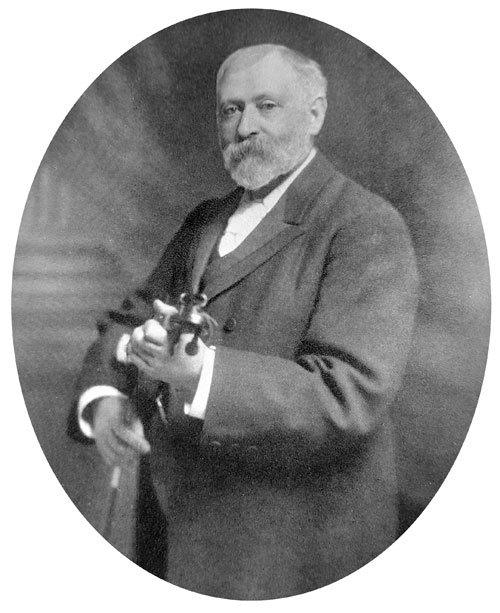
The year was 1914; the visiting English tourist to Thurles was Mr M. W. Quirke. Details of his experience as a tourist here in Thurles is contained in a book entitled “Recollections Of A Violinist”, with same dedicated to his seven sons, Conal, Dathy, Brian, Frank, Terence, Raymond and Septimus.
Those responsible for marketing our ‘Tourism Product’, take note.
With the chat locally nowadays mostly about the supposed 9 – 12 million upgrade to Liberty Square in Thurles, this unabridged passage from Mr Quirke’s published travel book reads as follows:-
Thurles
“I continue walking along the dusty road, and after a long weary plodding, I come to two rows of houses facing each other. On the whitewash walls of each facing me is an advertisement running thus:-
Mary Doolin Entertainment for man and beast, To be drunk on the premises.
and a curious drawing of two pipes crossed. I have now arrived at Thurles and on entering one of those houses I asked if I can have lunch.
I am received with a look of curiosity mixed with surprise and asked if I didn’t know it was Friday, as of course there is no meat in the house. I thank the good woman and enquire if there’s anywhere else I might find accommodation and start for a place indicated, but history repeats itself, only this time I am informed that “Friday is the day the Lord died, there would be no use at all, at all cooking mate, as no dacent-minded Catholic would ate it”.
After this second defeat, which, by the way, did not appease my hunger in the least, I proceed through the city in quest of an hotel, and arrive at a kind of square in the centre of which stands a large haystack. This looks strangely incongruous with shops around it. But, welcome sight, an Inn occupies a corner and not far off is a Cathedral with beautiful stained windows. Albeit a somewhat small building to be so termed, it contains paintings and a sculpture of a high order.
I now direct my steps to the hotel, which I find is Mr Michael Ryan’s Inn. This establishment is reached by mounting three stone steps, but as the second one has, for some reason been removed, or fallen out, I find it necessary to jump from the bottom step to the top, holding on to the half-door meanwhile.
I am soon in a small space, presumably the bar, behind which stands a young woman, to whom I address myself and ask if I can have lunch. With a look of surprise she says “Why sir today is Friday”. I acknowledge I have been reminded of that fact several times before. She continues, “I don’t think we have anything in the house, but will you please ask Mr Ryan”, pointing to the yard where I can see but one man who looks like an ostler [Latter a man employed to look after the horses of people staying at an Inn], with a sponge in one hand and a bucket in the other.
Approaching, I enquire if he is Mr Ryan, and ask if I can have some food, as I have a long journey before me, being on my way to Dublin. He scratches his head and says, “You see, Sir no respectable Catholic would be seen doing business with a butcher on the day the Lord died, but I don’t like to be beaten for I know you won’t have another chance of getting a meal until you get to Dublin. Could you put up with a salmon?” My reply is “Certainly and only too happy to be so well provided for”.
“Well so just take a walk over to the Cathedral, if you have never been inside of it before. If you have time ask Timm Cassidy, the cobbler whom you will observe sitting near the haystack, why the people allows such a disfigurement to exist in the heart of the city. Be here in half an hour’s time and we will have something for you. Don’t worry about the train” he adds, “as it will be time to leave here when it is supposed to leave the junction, for goodness knows what time you may get away”. I assure Mr Ryan I am quite content to place myself in his hands and went my way to the Cathedral.
Passing the haystack I am again struck with the absurdity of its position, as with the loose hay lying about in the vicinity, it gives a most untidy appearance to what would otherwise be a nice little Square. But here I observe a man sitting at one end of the stack, sewing with waxed thread, a shoe held between his knees; and every time he draws the thread through his hands he makes a peculiar noise by breathing hard through his teeth. This interests me, so I draw near to him and one or two other idlers who seem to be also interested.
Remembering the hotel keeper’s hint, I asked him, “Why do the people allow this haystack to stand here?” I am at once treated to a heated denunciation of the family who persist in their old claim to have a haystack in the heart of the town, which at every election or other gathering is sure to get burnt down. And the people of the Square pay for it’s resurrection, as they have done hundreds of times before.
A peculiar hissing noise made whilst the wax thread is being used and the quick spasmodic tones of the speaker, add a most grotesque accompaniment to his tale.
I now remember the Cathedral and quicken my pace for I have used a good deal of my half hour. After making a fairly good jump I land on the other side of a large lock and in one step am just outside the building.
How shall I describe the view that meets my eye? Here is wealth, beauty and art; splendid marbles, superb paintings and every indication of culture, taste and comfort, all provided by subscriptions from the poor hard-working peasantry. Lost in reflection on a museum of such refinement existing in the midst of the deepest poverty, I retrace my steps and again jump the small swamp which separates all this grandeur from the real hard life around it.
Soon I am comfortably seated before a fine salmon weighing 7 or 8 pounds; a large dish full of floury potatoes; two or three tiny bottles of the Claret one meets with in the cafés on the other side of the Channel; and a large rhubarb tart.
I soon make a good meal off the salmon’s shoulder and after a most satisfying lunch seek the proprietor to thank him for his courtesy and settle my bill. I cannot help noticing a merry twinkle in his eye as I approach him. And now occurs a scene which I venture to say could not have been enacted anywhere but in Old Ireland.
Inquiring the amount of my indebtedness, Mr Ryan, taking two steps back, explains, “Do you think, Sir, I could charge anybody for a little bit of salmon after the treatment you have received in the city?I should be ashamed if you went to England and told them what a mean lot we were over here. Tis a nice opinion they would have of us. I am only sorry you did not have any good solid food, only I had none in the house and I am ashamed to own it”.
“Mr Ryan”, I reply, “I cannot allow myself to leave Thurles without discharging my obligations. I assure you I heartily appreciate your extreme kindness in the treatment I have received, but beg of you to be kind enough to allow me to pay”.
Here he burst into a fit of laughter and says, “I suppose you will be by asking next for me to make a special charge for the Claret, for drinking which, heaven knows, the Humane Society should award a medal”.
Seeing I have no chance of settling what I have had, I now boldly invite him to have some of the best whiskey in the house with me. He responds he will do so with pleasure and adds “I have an old drop my mother gave me years ago and it is the real John Jameson”.
Together we repair to an inner room, passing on to which I overheard Mr Ryan instructing his assistant to say that if anyone wishes to see him he is very particularly engaged. Then he opens a box of Havana cigars and ere I can possibly prevent him, forces nearly a dozen into my overcoat pocket. He also put two more on the table to be smoked with the whisky.
What amazing intelligence did I find in this man! How comprehensive was his query “Did I form any opinion as to how much of the money spent on the Cathedral might have been devoted to relieving the poverty round it?
To conclude he put a horse into a trap and drove me himself to the train, leaving me sore from kindness and with plenty of time to ruminate over one of my experiences in this remarkable country. Nor can I easily forget his last words as turning away from me with an air of impatience, when I tried to thank him for his generous conduct, he said “Goodbye come again any day but Friday and we will try to redeem our characters for the shabby treatment we’ve given you and remember you can’t lose your train, for ’tis always most conveniently late.”
This website uses cookies to improve your experience. We'll assume you're ok with this, but you can opt-out if you wish.AcceptRead More
Privacy & Cookies Policy
Privacy Overview
This website uses cookies to improve your experience while you navigate through the website. Out of these, the cookies that are categorized as necessary are stored on your browser as they are essential for the working of basic functionalities of the website. We also use third-party cookies that help us analyze and understand how you use this website. These cookies will be stored in your browser only with your consent. You also have the option to opt-out of these cookies. But opting out of some of these cookies may affect your browsing experience.
Necessary cookies are absolutely essential for the website to function properly. This category only includes cookies that ensures basic functionalities and security features of the website. These cookies do not store any personal information.
Any cookies that may not be particularly necessary for the website to function and is used specifically to collect user personal data via analytics, ads, other embedded contents are termed as non-necessary cookies. It is mandatory to procure user consent prior to running these cookies on your website.






Recent Comments