Alleged School Bus Tender Collusion Case Hears Claims of ‘Loaded Dice’ in Tipperary and Surrounding Counties.
The Central Criminal Court has heard allegations that five school bus operators attempted to “load the dice” in their favour by distorting competition in the tender process for school transport services across five counties.
Five Tipperary men are being prosecuted by the Competition Authority in connection with the provision of school transport services. All five deny the charges.
The accused are: Mr Andrew Walsh aged 62, Derrymore, Roscrea, Co. Tipperary. Mr Raymond Heney aged 54, Camas, Cashel, Co. Tipperary. Mr Noel Browne aged 77, Bansha, Co. Tipperary. Mr Larry Hickey aged 73, Ardmayle, Cashel, Co. Tipperary. Mr Anthony Flynn aged 51, Golden Road, Cashel, Co. Tipperary.
Each man faces a single charge under the Competition Act 2002. It is alleged that, between 1st November 2014 and 31st December 2016, they engaged in a concerted practice which had as its object or effect the prevention, restriction or distortion of competition in trade in the provision of school transport services.
The trial has heard that all of the accused were involved in bidding for tenders to provide school bus routes during the period in question. It is alleged that, rather than competing independently, the men colluded in how they would bid.
The jury was told that one of the accused arranged meetings with other bus operators, ostensibly to assist with administrative processes. At these meetings, it is alleged that operators discussed the allocation and pricing of school bus routes and agreed to bid for tenders in a coordinated manner.
Counsel for the prosecution, Dominic McGinn SC, said that parties in a tender process cannot lawfully discuss who is bidding for what, or at what price. He told the jury that there was a “degree of coordination” between the parties so that tender prices would end up higher than they would be in a genuinely competitive process.
Mr McGinn explained that competition law exists to protect consumers and taxpayers by ensuring value for money and preventing manipulation of markets. He told the jury that: “Agreements or understandings not to charge below a certain amount, amounted to price fixing and provided no benefit to consumers. Market sharing”, where competitors agree among themselves to allocate specific areas or routes so that there is effectively only one provider, is also prohibited. Any manipulation of that or distortion of that is unfair to us,” he said, noting that, as this case concerns public contracts, the people ultimately affected are taxpayers.
Mr McGinn said the alleged conduct did not require a formal written agreement, but involved collusion, an exchange of information and coordination that led to “the disappearance of competition” in the relevant tenders.
He told the jury that the case was not about the importance of school transport for children in Tipperary, nor about the fact that the accused men are approaching retirement and are alleged to have committed the offences late in their careers. Rather, he said, the case concerns whether the five men, and possibly others, attempted to “load the dice” to distort competition in the school transport market.
All five accused have pleaded not guilty. The trial continues today, Thursday, before Mr Justice David Keane and a jury of seven men and four women.
Electronic Monitoring service provider, for 12 month pilot, requested through tender process.
The Irish Government is moving forward on its commitment to introduce electronic monitoring (EM) for appropriate categories of offenders.
Minister O’Callaghan committed to the publication of a Request for Tender (RFT) for the provision of an electronic monitoring service provider, same being sought by the end of 2025.
This Request for Tender has now been published.
The Department of Justice is tendering for an EM service provider for a 12-month pilot phase, which will focus on individuals on temporary release nationally and those admitted to bail in a pilot area.
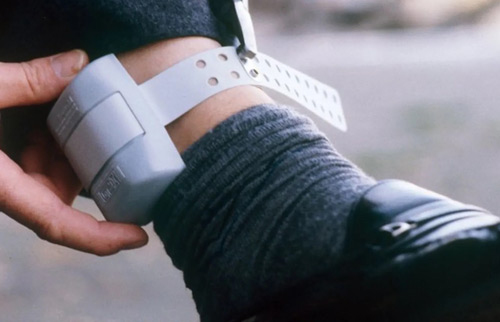
It is proposed to utilise up to 50 electronic tags during this pilot phase. Electronic tagging is a form of surveillance that uses an electronic device affixed to a person to monitor their location or physiological state. It is a specific application of asset tracking technology where the “asset” being monitored is a person.
In some jurisdictions, an electronic tag fitted above the ankle is used for individuals as part of their bail or probation conditions. It is also used in healthcare settings and in immigration contexts. Electronic tagging can be used in combination with a GPS tracking unit for wide-area monitoring, but for short-range monitoring of a person, radio frequency technology is often used.
The pilot approach will allow for processes and procedures to be tested before a wider scale national rollout, while also supporting the agencies involved to build capability and knowledge of the EM system. Insights from the pilot will inform any future national rollout and procurement.
A fund of €2.1m in Budget 2026, for the project, will allow for staffing, procurement, and other set up costs.
The closing date for the RFT is January 16th 2026 at 5:00pm.
The Government has approved a €2.18 billion Sectoral Investment Plan for Justice for the period 2026–2030, with Tipperary set to benefit significantly through the delivery of the new Clonmel Garda station and further investment in Templemore Garda College.
The five-year capital package; an increase of more than €800 million on the previous National Development Plan for justice, will fund new Garda stations and courthouses, expanded prison capacity, major upgrades to Garda technology and cyber security, and modern infrastructure across the wider justice sector.
Major investment in Clonmel Garda Station Under the plan, the construction of the new Garda station at Kickham Barracks in Clonmel is confirmed as a priority capital project for An Garda Síochána.
Construction is already under way on the Clonmel station, with works to continue into the early years of the 2026–2030 programme. The new facility will replace the existing Emmet Street station, long acknowledged as no longer fit for purpose, and will provide modern, fit-for-purpose accommodation for Garda members and staff serving the Clare/Tipperary Garda Division.
The development will deliver:
A new district headquarters for Clonmel and its hinterland.
Enhanced custody and operational facilities to support frontline policing.
Dedicated space for community policing and engagement with local organisations and vulnerable groups.
Modern IT and security infrastructure in line with national Garda technology upgrades.
Templemore Garda College to benefit. The plan also confirms substantial capital investment in Garda College, Templemore, strengthening its role at the heart of Garda training and continuous professional development. This will support the recruitment and training of additional Gardaí and ensure facilities in Templemore remain modern and fit for growing class sizes over the lifetime of the NDP.
Nationally, the €2.18 billion Sectoral Investment Plan for Justice will deliver:
€495 million for the Irish Prison Service to increase prison capacity, including major construction projects at facilities such as Castlerea, Cloverhill, Mountjoy, Portlaoise, Wheatfield, Midlands, Dóchas and Cork prisons, as well as planning for a new prison at Thornton, Co Dublin A further €32 million for prison fleet and technology. €460 million for Garda technology, including the nationwide roll-out of body-worn cameras, a digital evidence management system, core policing systems and upgraded HR and corporate ICT. €364 million for Garda buildings, funding the completion of new stations in Portlaoise, Newcastle West and Bailieborough, and progressing new builds in Clonmel, Macroom, Castletroy, Carndonagh and a new Dublin North regional headquarters, alongside investment in Templemore Garda College. €35 million for a rolling programme of minor refurbishments to Garda stations nationwide – including accessibility, health and safety and essential infrastructure works – and €69 million for the Garda fleet, supporting expansion, modernisation and electrification, as well as the delivery of a second new Garda helicopter, further drone capability and upgraded facilities for the equine and canine units.
Strengthening community safety in Tipperary.
For Tipperary, the combination of a new divisional headquarters in Clonmel and ongoing investment in Templemore Garda College represents the largest single capital boost for policing in the county in decades. The Government says these projects will:
Enhance visible policing and response capability across South Tipperary and the wider Clare/Tipperary Division
Provide modern working conditions for Garda members and staff
Support recruitment and training of additional Gardaí destined for frontline duties in Tipperary and beyond
Underpin the delivery of safer, stronger communities through better facilities, technology and infrastructure
The Department of Justice has said that the overall plan will ensure that communities in Tipperary, urban and rural, will see tangible benefits from the record national investment in the justice sector over the coming five years.
€1.5m will be made available to 37 NGOs and community organisations to progress projects to combat racism and promote racial equality and community cohesion.
Successful organisations will receive grants of up to €100,000 and will fund a range of projects from promoting employability, to educational supports and training needs as well as a range of community based initiatives.
The fund is key part of the National Action Plan Against Racism.
The Irish Government, today, announced €1.5m will be made available to 37 NGOs and community organisations to progress projects to combat racism and promote racial equality and community cohesion.
Successful organisations will receive grants of up to €100,000 and will fund a range of projects from promoting employability, to educational supports and training needs as well as a range of community based initiatives.
The 2025 Ireland Against Racism Fund for proposals ran from 16th July 2025 – 27th August 2025. €1,539,234 has been made available in 2025 to support anti-racism projects through grant funding of €40,000 – €100,000 per successful Scheme A project and €5,000 – €10,000 per successful Scheme B project.
Tipperary features in the Successful Scheme B projects:
Organisation Name:
Project Name:
Amount Awarded:
Geographical Scope:
Waterford Integration Services (WIS)
A Future Without Bias: Youth Convention on Combating Racism Through AI & VR applications
€10,000
Carlow, Kilkenny, Tipperary, Waterford & Wexford
The fund is key part of the National Action Plan Against Racism today announced the 37 projects set to receive over €1.5m in funding under the Ireland Against Racism Fund 2025.
The Fund enables non-government and community organisations to provide national and regional projects and local initiatives that combat racism and promote racial equality.
A number of successful organisations will use the funding to deliver promotional campaigns in the community, including in schools and youth groups, about how to tackle racism and discrimination. Organisations will also use the funding to provide training to staff and initiatives focusing on increasing the skills and employability of migrants.
The Fund is a key part of the National Action Plan Against Racism (NAPAR) which was informed by the experiences of people who have been directly affected by racism.
A newly married couple have withdrawn a joint €120,000 personal injuries claim after their own honeymoon photos undermined their case.
Mr Arthur McInerney, aged 22 years, of Highfield Meadows, Portlaoise, Co. Laois, and Ms MaryMarie McCarthy, aged 21 years, of Cabra Grove, Holycross Road, Thurles, Co. Tipperary, had alleged they were injured when a Bentley limousine taking them from a wedding to Dublin Airport, was struck on a roundabout near Swords.
According to their claim, Mr McInerney suffered a back injury, while Ms McCarthy claimed she struck her forehead against a rear side window.
However, during cross-examination, their defence barrister produced photos of the couple apparently enjoying activities such as water-slides and a jeep safari, during their honeymoon in Santa Cruz de Tenerife, just hours after the collision. On seeing these images, both individuals withdrew their respective €60,000 compensation claims.
Under questioning, the couple admitted they had taken over-the-counter painkillers to “make the best of the holiday,” and conceded they had not sought medical treatment for up to two months after returning to Ireland.
When Justice, Mr James O’Donohoe, noted there was no visible mark on Ms McCarthy’s forehead in a photo taken on the first night of the honeymoon, she stated that she had covered it with fake tan. The court was told of further photos, including one showing Mr McInerney climbing Croagh Patrick, posted online after their return, which also damaged the couples claim.
Following a brief adjournment, both parties informed the court that their claims were being withdrawn and could be struck out. The defendant’s insurers did not seek legal costs.
This website uses cookies to improve your experience. We'll assume you're ok with this, but you can opt-out if you wish.AcceptRead More
Privacy & Cookies Policy
Privacy Overview
This website uses cookies to improve your experience while you navigate through the website. Out of these, the cookies that are categorized as necessary are stored on your browser as they are essential for the working of basic functionalities of the website. We also use third-party cookies that help us analyze and understand how you use this website. These cookies will be stored in your browser only with your consent. You also have the option to opt-out of these cookies. But opting out of some of these cookies may affect your browsing experience.
Necessary cookies are absolutely essential for the website to function properly. This category only includes cookies that ensures basic functionalities and security features of the website. These cookies do not store any personal information.
Any cookies that may not be particularly necessary for the website to function and is used specifically to collect user personal data via analytics, ads, other embedded contents are termed as non-necessary cookies. It is mandatory to procure user consent prior to running these cookies on your website.







Recent Comments