|
|
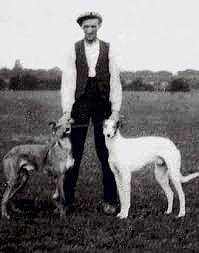 Pardoned – Mr Harry Gleeson The recently pardoned Mr Harry Gleeson, latter wrongfully executed in Mountjoy Jail, Dublin in April 1941 for the murder of unmarried mother, Miss Mary (Foxy Moll) McCarthy, latter found shot dead in New Inn, Tipperary on November 21st 1940, now raises further controversy with the publication of a new book entitled “The Framing Of Harry Gleeson”.
The new publication, by author Kieran Fagan, has caused some disquiet here in Co. Tipperary, as its contents suggest possible names for the fathers of Miss McCarthy illegitimate children.
Unmarried mother Miss McCarthy had six children in total, all born to possibly five different married men and it is the naming of these possible fathers, all now long deceased, that appears to have re-opened old wounds in the village of New Inn, which heretofore believed time had erased its guilty secret.
Children born from these same men’s marriages are understood to be furious over new revelations that their fathers possibly had other children outside of marriage. This in turn has led to some demands to view this publication prior to its recent release on the grounds that it contains names of men, one of whom author Kieran Fagan believes was possibly responsible for Miss McCarthy murder.
The real culprits appear to be local ex-IRA men and this serious travesty of justice appears to have suited the local parish priest, Gardaí and indeed other apparently respectable family members whose sons, brothers and husbands may have fathered Moll’s seven children, one of whom was still in her womb at the time of her death.
Did Mary McCarthy’s daughter Mary, approaching her own death some fifty years later in a Dublin hospital, inform a nurse stating “I saw my own mother shot on the kitchen floor and an innocent man died ?” This publication will attempt to answer such questions, while also naming some of those involved in Harry Gleeson’s framing and details of the possible cover-up of the truth.
Harry Gleeson, who is to be awarded the first posthumous pardon in the history of the Irish State, was acknowledged as being innocent by the Irish Government just last month, following a full review of the case history.
 A boy, just six-year-old and from Co. Tipperary, has been taken into the care of the Child and Family Agency, following an investigation by Europol into European child pornography. A boy, just six-year-old and from Co. Tipperary, has been taken into the care of the Child and Family Agency, following an investigation by Europol into European child pornography.
Last week an emergency care order, made at a District Court hearing in South Co Tipperary, was granted to gardaí and social workers. The order was given to remove a male child from where he resided and that an immediate medical examination be undertaken.
A social worker with the Child and Family Agency (Tusla) informed the court that Gardaí had first contacted her office on Monday, 24th March last, informing her that a search of a house in the county would be undertaken. Concerns, based on video footage of abuse uploaded online, that a child living at an address, may have suffered sexual abuse, were further conveyed to the agency .
This suspected abuse was communicated by Europol to the Garda Paedophile Investigations Unit in December 2014, latter who then traced same to a internet providers address here in Co. Tipperary. It is understood that social workers, in the company of gardaí, then searched the address and took the child immediately into care.
It is understood that detectives, involved in examining the discovered online information, identified that the boy in the house was indeed the child depicted in photographic footage and items found at the house including blankets etc. were also clearly identified. The child has now been removed and placed into foster care.
Over some 12 days experts in victim identification from 11 police agencies in nine different countries have worked together at Europol in an attempt to identify victims of sexual abuse and exploitation. It is now expected that future similar initiatives will result in a better chance of child victims being identified, through the combined effort of all European agencies.
 Gardaí from the Clonmel area of Co Tipperary are today searching for at least two individuals who were involved in an attempted armed robbery yesterday in the south east of the county. Gardaí from the Clonmel area of Co Tipperary are today searching for at least two individuals who were involved in an attempted armed robbery yesterday in the south east of the county.
The attempted armed robbery took place at Slattery’s Garage on the Main Street of Drangan at around 7.30pm last night, (6th, March, 2015).
The individuals who wore balaclavas and were armed with a shotgun, threatened staff and demanded cash; however no one was injured and no cash was stolen. Staff were left very shaken following this incident.
The suspects quickly fled from the crime scene in a motor vehicle, turning in the direction of O’Connor’s public house and down the Newtown Road in the general direction of Glengarrig.
Both individuals are believed to be male and described as being about 5 feet-10 inches tall, wearing dark clothing and possibly aged in their early to mid 20s.
Clonmel Gardaí are appealing for anyone who may have seen anything or noticed any unusual or suspicious behaviour to contact them at Tel No: 052-6177640 or on the Garda Confidential Line Tel: 1800 666 111.
A Gardaí investigation is under way in Tipperary following the discovery of a man’s body, latter found in suspicious circumstances at McDonagh Street, Nenagh.
The alarm was raised at around 6.00pm yesterday evening, following the discovery of the body of a 36 year old male, which, according to reports was found soaked in blood.
It is understood that the body was found in the shower area of the bathroom of the residence and was pronounced dead by an ambulance crew and a local doctor who both attended at the scene a short time later following the discovery.
The area was immediately sealed off pending a full technical examination by Gardaí and the State Pathologist notified is expected to carry out a full post-mortem examination later today at University Hospital Limerick.
Nenagh Gardaí are investigating all aspects of how the man may have met his death, but currently are treating same as suspicious.
Gardaí have not yet released any information regarding the man’s injuries.
Go ndéana Dia trócaire ar a anam dílis.
Gardaí from the Co Tipperary Division conducted searches at four premises in the Roscrea area of County Tipperary yesterday (February 12th 2015).
During these searches a quantity of Cocaine was recovered with an estimated street value in excess of €40,000.
During the searches four men, aged in their early 20’s were arrested and detained under Section 2 of the Drug Trafficking Criminal Justice Act 1996. The four arrested were detained at Roscrea, Nenagh, Thurles and Templemore Garda Stations.
Three of those arrested have since been released and a file will now be prepared for the information of the Director of Public Prosecutions. One man continues to remains in custody at Templemore.
The searches were carried out as part of ‘Operation Overwatch’, which was set up to target persons involved in the distribution of controlled drugs in the Roscrea and wider area.
Newly appointed Garda Inspector Mr Oliver Henry praised the help given by the local Roscrea community and the ‘Roscrea Stands Up’ group for the success of this operation.
|
Support Us Help keep Thurles.info online by donating below. Thank you.
Total Donated 2026: €300.00
Thank You!
Daily Thurles Mass Livestream
|



Recent Comments