A newly married couple have withdrawn a joint €120,000 personal injuries claim after their own honeymoon photos undermined their case.
Mr Arthur McInerney, aged 22 years, of Highfield Meadows, Portlaoise, Co. Laois, and Ms MaryMarie McCarthy, aged 21 years, of Cabra Grove, Holycross Road, Thurles, Co. Tipperary, had alleged they were injured when a Bentley limousine taking them from a wedding to Dublin Airport, was struck on a roundabout near Swords.
According to their claim, Mr McInerney suffered a back injury, while Ms McCarthy claimed she struck her forehead against a rear side window.
However, during cross-examination, their defence barrister produced photos of the couple apparently enjoying activities such as water-slides and a jeep safari, during their honeymoon in Santa Cruz de Tenerife, just hours after the collision. On seeing these images, both individuals withdrew their respective €60,000 compensation claims.
Under questioning, the couple admitted they had taken over-the-counter painkillers to “make the best of the holiday,” and conceded they had not sought medical treatment for up to two months after returning to Ireland.
When Justice, Mr James O’Donohoe, noted there was no visible mark on Ms McCarthy’s forehead in a photo taken on the first night of the honeymoon, she stated that she had covered it with fake tan. The court was told of further photos, including one showing Mr McInerney climbing Croagh Patrick, posted online after their return, which also damaged the couples claim.
Following a brief adjournment, both parties informed the court that their claims were being withdrawn and could be struck out. The defendant’s insurers did not seek legal costs.
National Cyber Security Centre Launches 2025 National Cyber Risk Assessment revealing Escalating Threat Landscape.
Rapidly evolving cyber risks put country’s critical infrastructure at risk.
Today (December 2nd) the National Cyber Security Centre (NCSC) launched its 2025 National Cyber Risk Assessment. This is a comprehensive review of the cyber threats, systemic risks, and sectoral vulnerabilities facing the State.
Launched at the NCSC’s annual conference, the assessment provides the most detailed national overview to date of Ireland’s cyber risk environment and builds on the foundation laid by the 2022 assessment.
The assessment identifies key developments in the national and global cyber threat landscape, including increasingly sophisticated nation-state activity, the accelerating pace of cybercrime, and the growing likelihood of cascading impacts across interconnected sectors such as energy, transport, healthcare, and financial services.
Key findings of the 2025 National Cyber Risk Assessment include:
As technology has advanced and reliance on digitalisation has intensified, the cyber threat landscape has become more complex with an increased risk of incidents, leading to significant cross sectoral impacts.
Taking an all-hazards approach, the 2025 National Cyber Risk Assessment has identified three key systemic risks:
The dynamic geopolitical environment,
Evolving technology and its implications on security.
Supply chain security.
If any or all these risks were to be realised, it could undermine Ireland’s delivery of essential services, disrupt its critical sectors, and erode trust in government, institutions, and organisations.
To mitigate Ireland’s identified risks, five recommendations have been identified:
Strengthen visibility and detection – investing systems and structures to enhance national visibility will reduce systemic blind spots and allow the State to be better positioned to anticipate and respond to risks before they escalate.
Implement proactive cyber defence capabilities – reactive responses alone are not sufficient to protect society and the economy from the potential cascading effects of attacks on critical systems. Ireland must enhance its proactive cyber defence posture, disrupting the cyber-attack lifecycle earlier to prevent incidents at scale.
Enhance national resilience –by implementing EU frameworks in full and extending resilience beyond infrastructure to society itself, Ireland will ensure that both services and democratic institutions remain robust in the face of systemic cyber risks.
Secure critical supply chains – the State must strengthen our supply chain through strengthening procurement rules in government, embed security-by-design and risk management practices, and increase visibility of vendor ownership.
Invest in national cyber resilience – investment in people, innovation and our indigenous industrial base will ensure that Ireland has the capacity not just to respond to today’s threats but to anticipate and shape the next generation of resilience measures.
These recommendations provide a framework for the next National Cyber Security Strategy, ensuring that systemic vulnerabilities are reduced and national resilience strengthened.
The 2025 National Cyber Risk Assessment is now available HERE.
Tipperary man remanded, after €8.1 million cocaine seizure in Laois.
A 39-year-old man from Wood View, Boulick, Gortnahoe, Thurles, Co. Tipperary, latter named in court as Mr Thomas Ryan, has been remanded in custody following a major seizure of suspected cocaine in Co. Laois.
Under the banner of Garda National Drugs & Organised Crime Bureau’s (GN-DOCB) Operation TARA, Gardaí carried out searches at a residential address, associated lands and a wooded area in Killnaseer, Rathdowney, on October 28th, 2025. The operation led to the seizure of approximately 116 kg of suspected cocaine, same with a street-value estimated at around €8.1 million, along with several electronic devices.
At his bail hearing on November 3rd last at Portlaoise District Court, defence counsel Mr Aonghus McCarthy argued that Ryan, latter a qualified carpenter with a two-decade working history, had strong community ties. His father, a 74-year-old farmer, offered a substantial surety.
However, Garda evidence, led by Mr Stephen Gillespie of GN-DOCB, strongly opposed bail. Gardaí claimed Mr Ryan had been identified as allegedly involved in the storage and distribution of drugs on behalf of an organised criminal group. They reported that two vehicles were seized from his address; one of which contained a “sophisticated motorised concealment.”
A search of a wooded area later, allegedly revealed the cocaine blocks, some bearing various markings and stamps, with one sample block, reportedly valued at €70,000, which has since tested positive for the drug cocaine.
According to court reports, Mr Ryan was interviewed six times at a Garda station following his arrest and is said to have made admissions relating to the storage and distribution of the drugs.
Prosecutors indicated the case will almost certainly proceed on indictment, and additional charges could follow.
Rejecting the bail application, Ms Justice Susan Fay remanded Mr Ryan in custody. The matter was adjourned to December 15th for directions from the Director of Public Prosecutions (DPP); with the accused most likely to appear by video link.
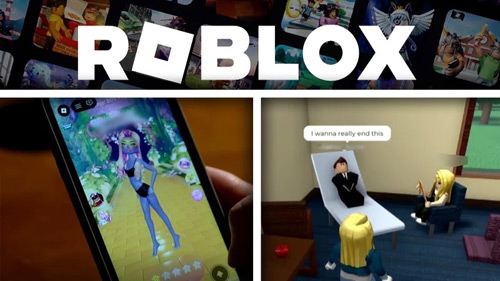
A senior officer with the Garda National Cyber Crime Bureau has warned that children are being groomed and exploited on online gaming platforms, at what he described as an “alarming scale.”
Detective Superintendent Michael Mullen told RTÉ’s Prime Time that Gardaí are now regularly encountering cases of grooming, sexual exploitation and abuse linked to platforms such as Roblox, which is particularly popular among younger children. He said he was “very concerned” about the level of exploitation occurring “on a daily basis.”
Sexual Exploitation and Abuse linked to Childrens Roblox platform, says Senior Detective.
Roblox, which has over 150 million daily users, allows children as young as five years old to set up accounts without age verification or mandatory parental approval. During a Prime Time investigation, test accounts accessed games containing simulated sexual behaviour, dating role-play, racial slurs and suicide references; all prohibited under Roblox’s rules. Gambling-style features and users soliciting the platform’s virtual currency were also identified.
Det Supt Mullen cited cases where Irish children were coerced into buying items for other users and, in some instances, pressured to self-harm. In one case, a nine-year-old seeking virtual currency was targeted by adults demanding explicit acts in return.
Roblox is facing mounting international scrutiny, including legal actions in several US states alleging failures to protect minors. Former Garda and ex-Interpol specialist Mr Mick Moran, now CEO of Hotline.ie, said similar risks exist in Ireland. “Absolutely, children here are being groomed,” he said.
Experts highlighted the ease with which adults and children can interact on the same servers, with Prime Time observing attempts by older users to move minors onto private messaging apps. Researchers, testing Roblox, also reported widespread sexualised behaviour and abusive language.
Roblox says child safety is a “top priority” and that it removed content highlighted by the programme. It will introduce age verification for chat functions in Ireland early next year, though specialists warn that determined predators can still bypass such measures.
Gardaí and online safety advocates emphasised the vital role of parents. They advised parents to set up accounts alongside their children, know the games being played, use parental controls, and reinforce rules around avoiding private chats with strangers.
A Must Watch For Parents. NOTE:Prime Time’s full investigation airs on this evening, November 27th at 9:35pm on RTÉ One and RTÉ Player.
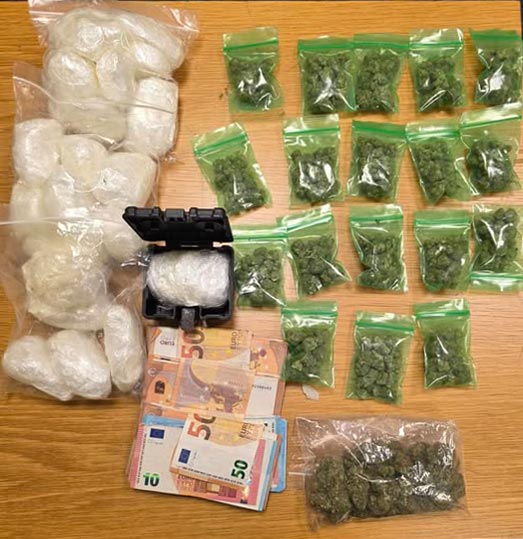
Gardaí, armed with a search warrent, carried out a search of a house in Cahir, Co. Tipperary, yesterday November 26th, resulting in the seizure of an estimated €55,000 of suspected cocaine and cannabis.
Officers also recovered more than €4,000 in cash and a substantial quantity of drug-dealing paraphernalia.
The operation involved the Tipperary South Divisional Drugs Unit, the Divisional Crime Task Force, the Garda Dog Unit and the Tipperary Central Community Policing Unit.
No arrests have as yet been reported at this time.
A file will now be prepared for the Director of Public Prosecutions.
This website uses cookies to improve your experience. We'll assume you're ok with this, but you can opt-out if you wish.AcceptRead More
Privacy & Cookies Policy
Privacy Overview
This website uses cookies to improve your experience while you navigate through the website. Out of these, the cookies that are categorized as necessary are stored on your browser as they are essential for the working of basic functionalities of the website. We also use third-party cookies that help us analyze and understand how you use this website. These cookies will be stored in your browser only with your consent. You also have the option to opt-out of these cookies. But opting out of some of these cookies may affect your browsing experience.
Necessary cookies are absolutely essential for the website to function properly. This category only includes cookies that ensures basic functionalities and security features of the website. These cookies do not store any personal information.
Any cookies that may not be particularly necessary for the website to function and is used specifically to collect user personal data via analytics, ads, other embedded contents are termed as non-necessary cookies. It is mandatory to procure user consent prior to running these cookies on your website.







Recent Comments