Dr Michelle Walsh’s Election to GREVIO Strengthens Ireland’s International Role on Ending Gender-Based Violence.
Dr Michelle Walsh.
Ireland has secured an important place in European efforts to prevent and combat violence against women and domestic violence following the election of Dr Michelle Walsh to GREVIO, the Council of Europe’s Group of Experts on Action against Violence against Women and Domestic Violence. Her election was welcomed by Minister for Justice, Home Affairs and Migration Mr Jim O’Callaghan, who presented the result as recognition of her professional standing and Ireland’s commitment to tackling gender-based violence.
GREVIO is the independent expert body that monitors how countries implement the Council of Europe Convention on preventing and combating violence against women and domestic violence, widely known as the Istanbul Convention. Dr Walsh was elected after a competitive selection process at a meeting of the Committee of the Parties to the Convention in Strasbourg, where five experts were chosen to begin four-year terms on 1st September 2026.
Dr Walsh’s success on the first count reflected the strength of her candidacy, her specialist knowledge, and her extensive practical experience, the result of which remains linked to Ireland’s reputation for engaging with domestic, sexual and gender-based violence at national and international levels.
Dr Walsh is Chief Executive Officer of MOVE Ireland, the national programme working with perpetrators of domestic abuse. She has more than 15 years of experience across the DSGBV field and is a fully accredited psychotherapist, clinical supervisor and trainer. Her career includes frontline programme delivery, applied research, policy development, evaluation of systems and services, professional education, and specialist training. She has also contributed to European cooperation through her work as a board member of the European Network for the Work with Perpetrators of Domestic Violence.
The Minister also recognised the service of Ellen O’Malley Dunlop, Ireland’s current member of GREVIO, whose term is due to conclude in August. Her contribution, including her role as Vice-President of the Committee, was acknowledged as an important part of Ireland’s engagement with the Convention.
Ireland’s domestic policy is closely connected to the Istanbul Convention. The State is a party to the Convention, and its Zero Tolerance Third National Strategy on Domestic, Sexual and Gender-Based Violence 2022–2026 is organised around the Convention’s four pillars: prevention, protection, prosecution, and coordinated policies. Dr Walsh’s election reinforces Ireland’s role in promoting stronger standards, better accountability, and more effective responses to gender-based violence across Europe.
Roscrea seizures by Gardaí highlight confusion around CBD, cannabis and Vape products.
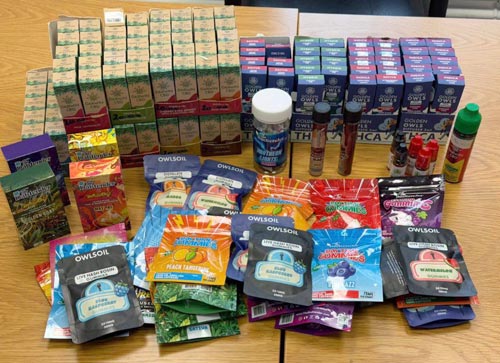
Today’s searches of two vape shops in Roscrea, Co. Tipperary, by the Tipperary Divisional Drugs Unit, where cannabis and cannabis-infused products valued at over €14,000 were seized pending analysis, raise an important question for the public: what exactly is CBD, and is it legal in Ireland?
CBD, short for cannabidiol, is a compound found in the cannabis/hemp plant. Unlike THC, it is not the main intoxicating compound associated with the “high” from cannabis. However, that does not mean every product labelled “CBD”, “hemp”, “cannabis-infused” or “natural” is automatically legal or safe to sell.
Cannabis Infused Products.
In Ireland, the key issue is often whether a product contains THC or another controlled cannabinoid. Cannabis remains illegal to possess, supply, produce, import or export except under licence. CBD itself is not classed as a controlled drug, but CBD products can still fall foul of Irish and EU rules, depending on what they contain, how they are made and how they are sold.
This is especially relevant when it comes to vapes, oils, edibles, jellies and so-called cannabis-infused products. A product may be marketed as CBD, but if analysis shows it contains THC or other controlled substances, it may be treated very differently under Irish law.
That is why today’s Roscrea, Co. Tipperary seizure matters. The final legal position will depend on laboratory analysis, but the incident is a reminder that consumers and retailers need to be extremely careful. Labelling alone is not enough. A product being available over the counter does not necessarily mean it is compliant, safe, or legal.
For members of the public, the message is simple: know what you are buying, be wary of cannabis-infused products, and do not assume that “CBD” means fully legal. For retailers, the responsibility is even greater. Products must be properly sourced, compliant, and free from controlled substances.
Roscrea Co. Tipperary, is not alone in seeing enforcement action around these products. Across Ireland, Gardaí continue to focus on cannabis, THC vapes, oils and edibles, where there are concerns about illegal cannabinoids, public safety, and the sale or supply of controlled drugs.
The bottom line: CBD is not the same as cannabis, but CBD products are not a legal free-for-all. The difference between a lawful product and an illegal one may come down to what is actually inside it.
The Minister for Justice, Home Affairs and Migration, Jim O’Callaghan, will this week undertake a series of bilateral engagements with EU Member States ahead of Ireland assuming the Presidency of the Council of the European Union on 1st July.
Minister O’Callaghan will travel to Prague for meetings with his Czech counterparts, Lubomír Metnar, Minister of the Interior, and Jeroným Tejc, Minister for Justice. He will then travel to Warsaw, where he will meet Waldemar Żurek, Polish Minister of Justice and Prosecutor General, and Marcin Kierwiński, Minister of the Interior and Administration.
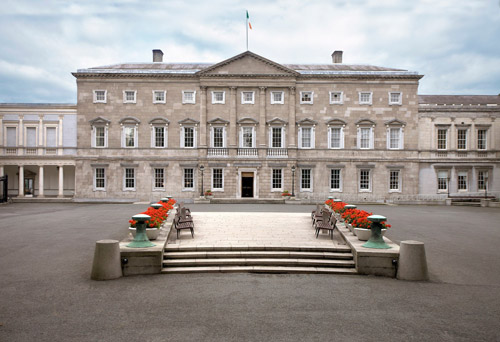
Leinster House, Seat of Ireland’s Parliament.
While in Poland, the Minister will visit the EU’s eastern border with Belarus, where he will receive a briefing on the current border security situation. Discussions during the visit will focus on preparations and priorities for Ireland’s Presidency, as well as areas of mutual interest including migration, organised crime and the rule of law.
Speaking ahead of the meetings, Minister O’Callaghan said: “I look forward to meeting with my Czech and Polish counterparts and building on the already strong relationships Ireland has with both nations. During Ireland’s Presidency of the Council of the European Union, our relationships with other Member States will be crucial to advancing our priorities of competitiveness, values and security. This visit will also provide an opportunity to hear first-hand how Belarus has instrumentalised migration, unacceptably exploiting human beings for political purposes.”
Minister O’Callaghan will conclude the week in Luxembourg at the Justice and Home Affairs Council on Thursday and Friday, where he will continue bilateral engagements with a range of other Member States.
Activism: The use of deliberate, vigorous action to promote, or direct social, political, economic, or environmental change.
Intimidation: The act of making someone feel fearful and powerless. It involves using threats, pressure, or aggressive behaviour to control or influence behaviour. Key aspects are to compel compliance, silence a person, or deter them from taking an action. The legal implications in Ireland, identifies same as a civil or criminal offence.
Actress Dame Helen Mirren, an 80-year-old Academy Award-winning actress, was verbally abused in the street and called an “Evil Zionist” after publicly defending Israel’s right to exist and opposing the idea that Jews should be made targets for who they are.
There is no moral cause advanced by screaming abuse at an elderly woman in public. There is no justice in intimidation. There is no humanity in treating support for Jewish survival as something shameful.
Reports indicate that the initial confrontation involving Dame Helen Mirren was not a new incident, but resurfaced footage from November of 2025. The video, reportedly filmed near Tower Hill in London while Ms Mirren was walking with her husband, (Mr Taylor Hackford), was originally shared by Antifascist Action UK, before re-emerging in wider media coverage in May 2026. Yes, that timing matters; the abuse itself was already disturbing, but its resurfacing now shows how quickly hostility toward public figures perceived as sympathetic to Israel can be revived, amplified, and normalised.
People can debate politics. They can criticise governments. They can protest policies. But when the response to someone’s support for Jewish existence is harassment, misogynistic abuse, and public humiliation, the mask slips.
Sport politicians Mr Patrick O’Donovan and Mr Charlie McConalogue, should also take note. When two sports ministers refuse to attend a football match involving Israel, the message travels far beyond the stadium. Whatever they intend, such gestures risk giving legitimacy to the idea that Israelis and, in practice, many Jews who are made to answer for Israel, should be singled out, shunned, and treated as untouchable. That does not lower tensions. It feeds hatred Ministers.
The Irish people, as a whole, care little whether politicians get free tickets to attend sports games or not, but expressing views or verbally attacking people for refusing to accept Jewish murder or erasure, does not help your cause.
Well unless, of course, that is your cause.
Hopefully, people will continue to behave at any planned future football protests. But yesterday I suppose, was a slow news day for political journalists.
Gardaí are investigating an armed robbery at Fethard Post Office on Main Street in Co Tipperary after a man entered the premises and allegedly threatened staff while brandishing, what is believed to have been a firearm.
The incident happened on yesterday (Wednesday afternoon), prompting a local Garda response and an appeal for public assistance. The man fled the scene on foot with an undisclosed sum of cash. No injuries were reported, although it has not yet been confirmed how many people were inside the post office when the robbery took place.
The raid has caused concern in the local community, particularly given that it occurred during daytime business hours in the centre of Fethard. Gardaí are now working to establish the full circumstances of the incident, including the route taken by the suspect after leaving the post office.
According to local reports, the suspect was described as a lone male wearing a dark-coloured, long-sleeved hoodie with a grey front. Gardaí are appealing to anyone who was in the Main Street area, or elsewhere in Fethard, around the time of the robbery to come forward.
Investigators are particularly interested in hearing from anyone who may have noticed suspicious behaviour between 2:00pm and 3:00pm, or who may have dashcam, mobile phone, CCTV, or doorbell camera footage from the area.
Anyone with information is asked to contact Clonmel Garda StationTel: (052) 617 7640 or the Garda Confidential LineTel: 1800 666 111, or indeed anyGarda Station.
This website uses cookies to improve your experience. We'll assume you're ok with this, but you can opt-out if you wish.AcceptRead More
Privacy & Cookies Policy
Privacy Overview
This website uses cookies to improve your experience while you navigate through the website. Out of these, the cookies that are categorized as necessary are stored on your browser as they are essential for the working of basic functionalities of the website. We also use third-party cookies that help us analyze and understand how you use this website. These cookies will be stored in your browser only with your consent. You also have the option to opt-out of these cookies. But opting out of some of these cookies may affect your browsing experience.
Necessary cookies are absolutely essential for the website to function properly. This category only includes cookies that ensures basic functionalities and security features of the website. These cookies do not store any personal information.
Any cookies that may not be particularly necessary for the website to function and is used specifically to collect user personal data via analytics, ads, other embedded contents are termed as non-necessary cookies. It is mandatory to procure user consent prior to running these cookies on your website.




Recent Comments