€17 Million To Maintain Seized Drug Ship – Handed Over for $1 – Irish Taxpayers Deserve Answers.
The seizure of the MV Matthew was an extraordinary success for Ireland’s law-enforcement and Defence Forces. It prevented approximately 2.2 tonnes of cocaine, valued at more than €157 million, from reaching the streets and dealt a serious blow to international organised crime. The members of Revenue, An Garda Síochána, the Naval Service, Air Corps and Army Ranger Wing involved deserve recognition for an exceptionally difficult and dangerous operation.
But praising that operation does not mean taxpayers must remain silent about what happened afterwards. Revenue has now confirmed that safely managing and maintaining the MV Matthew cost the State approximately €17 million. After almost three years in Cork Harbour, the vessel was transferred to an international shipping company for the nominal consideration of just one US dollar.
Cocaine.
That outcome is extremely difficult for ordinary taxpayers to accept. The issue is not that Revenue seized the ship. It was entirely right to seize a vessel being used for international drug smuggling. Nor can we pretend that the ship could simply have been abandoned, ignored or immediately sold. It was evidence in major criminal proceedings, and the State had obligations relating to security, maintenance, ownership, maritime registration, safety and environmental protection. However, €17 million is an enormous amount of public money. At one point, the vessel was reportedly costing around €120,000 every week to manage and maintain. When expenditure reaches that level, the public is entitled to ask whether every reasonable step was taken to reduce the cost.
Why was Ireland apparently unprepared for the financial consequences of seizing a large commercial vessel? Why was there no established procedure allowing the State to secure the necessary evidence digitally and physically, resolve ownership rapidly and seek an earlier sale, scrappage arrangement or cost-sharing agreement? ►Could international partners, insurers, port authorities or maritime agencies have helped reduce the burden? ► Were alternative berthing, crewing and maintenance arrangements properly examined? ► Who monitored the accumulating expenditure, and at what point was ministerial intervention sought?
These questions do not undermine the criminal investigation. Accountability strengthens public confidence in such operations. Revenue has explained that the disposal process was complicated because the ship had been used for international drug smuggling, nobody claimed ownership, and legal and regulatory requirements had to be resolved with international authorities. Those explanations must be considered fairly. Nevertheless, describing the case as “unprecedented” cannot become a complete answer for every euro spent. Public bodies must be prepared for unprecedented events. Once weekly costs began running into six figures, an urgent cross-government task force should have been examining every lawful option to protect the taxpayer.
The State ultimately spent approximately €17 million maintaining an asset from which it recovered a nominal $1. Although the true benefit of the seizure cannot be measured merely by the ship’s sale price, the cocaine was removed, criminals were imprisoned and organised crime was disrupted; the financial outcome still exposes a serious weakness in how seized maritime assets are handled.
The Government should now publish a transparent breakdown of the expenditure, including berthing, crewing, repairs, insurance, security, legal work and professional fees. The Comptroller and Auditor General and the Public Accounts Committee should examine whether the spending represented value for money and whether delays could have been avoided. Most importantly, Ireland needs a permanent protocol for future seizures of ships, aircraft and other high-cost assets. It should establish clear deadlines, ministerial oversight, spending controls, international cooperation arrangements and options for rapid disposal once evidential requirements have been satisfied.
Taxpayers support robust action against drug traffickers. They understand that major operations cost money. What they should not be expected to accept is an open-ended bill without detailed scrutiny. The seizure of the MV Matthew was a victory against organised crime. The €17 million aftermath must now become a lesson in accountability, preparedness and respect for taxpayers’ money; not another example of enormous public expenditure being explained only after the money is gone.
An Garda Síochána’s Annual Report 2025 (which can be downloaded here), presents a police service managing major organisational reform, while responding to increasingly complex demands. The year combined visible operational achievements with persistent concerns around road safety, domestic abuse, cybercrime, public order and limited resources. It also marked the beginning of a new governance era following the commencement of the Policing, Security and Community Safety Act and the establishment of the Garda Board.
Workforce growth was one of the clearest priorities. Garda numbers increased by approximately 230 during the year, bringing the organisation’s total strength to 18,405, including 14,425 Gardaí, 308 reserves and 3,672 Garda staff. Two trainee recruitment competitions attracted more than 11,000 applications, while a November intake of 220 trainees was the largest class in a decade. These figures suggest a stronger recruitment pipeline, although the report also makes clear that further growth is necessary to reach the longer-term ambition of more than 15,000 Gardaí.
Community visibility received renewed attention. High-visibility patrols were introduced in Dublin city centre and later extended to suburban Dublin and Cork. The report associates these patrols with reductions in several crime categories and improved reassurance for residents, businesses and visitors. National data also recorded fewer burglaries and robberies in 2025 than in 2024, with burglary incidents falling by 13.2 percent and robbery incidents by 11.8 percent. The wider operating model was fully implemented across all 21 divisions, aiming to deliver more consistent services and improve local access to specialist capabilities, including domestic-abuse and cybercrime expertise.
Organised crime remained a major operational focus. The Garda National Drugs and Organised Crime Bureau, supported by divisional units, seized illicit drugs valued at €126 million, along with more than €2.8 million and £268,860 in cash. A total of 165 arrests were made for offences including drug trafficking, money laundering and firearms crime. One significant maritime operation involving Gardaí, Revenue Customs and the Naval Service recovered 440 kilograms of cocaine valued at approximately €30.8 million. These results demonstrate the growing importance of intelligence-led policing and international cooperation against transnational criminal networks.
Technology and equipment also featured prominently. The Garda fleet reached a record 3,650 vehicles, including 298 electric vehicles, which represented 8.2 percent of the total fleet. A Taser pilot began in December for 128 specially trained frontline Gardaí at four stations, operating alongside body-worn cameras. The Investigation Management System expanded into additional regions, and mobile technology was upgraded to give officers greater access to operational information while on patrol.
Victim protection showed progress but remained an area requiring improvement. A new Victims of Crime Policy was published, the High Risk Victim Support Programme became fully operational in three regions, and a data-sharing agreement with Tusla was completed to strengthen safeguarding for children in care. At the same time, Garda leadership identified domestic abuse, particularly the quality of first contact with victims, as a continuing concern. The report also highlights the increasing misuse of technology in abusive relationships and the need for consistent specialist responses.
Road safety was another serious challenge. Although detections for key offences increased, including a 22 percent rise in speeding detections, road deaths were higher than the previous year. The organisation acknowledged that enforcement, culture, training, structures and equipment all require further attention. This gap between increased enforcement and worsening fatality figures underlines the need for a broader, coordinated response involving Gardaí, transport authorities and road-safety partners.
Staff wellbeing was also recognised as an operational issue. More than 4,500 personnel received mental-health first-aid training, while culture and wellbeing surveys were used to identify improvements in working conditions and organisational resilience.
The report records meaningful progress, but it is not presented as a story of completed reform. Of 18 policing-plan targets, 10 were achieved, while eight were partially achieved or not achieved. Preparing for Ireland’s 2026 presidency of the Council of the European Union will add further pressure through major security, public-order and traffic-management responsibilities. The central challenge will be maintaining everyday frontline policing while expanding capability, improving accountability and protecting vulnerable people. Overall, the 2025 report portrays an organisation modernising at pace, achieving notable operational successes, but still facing difficult questions about capacity, consistency and public safety.
Ten suspected illegal IPTV resellers across Ireland have been served with legal warnings as authorities step up efforts to disrupt the sale and distribution of unauthorised television subscriptions.
The latest action by the Federation Against Copyright Theft and Sky targeted suspected operators in Carlow, Cork, Dublin, Kildare, Galway, Laois and Limerick. The individuals were identified following investigations into services allegedly providing customers with unlawful access to premium television channels, films and live sporting events. Cease-and-desist notices have instructed the suspected resellers to stop supplying illegal IPTV subscriptions immediately. Those who continue operating could face civil proceedings or be referred to An Garda Síochána.
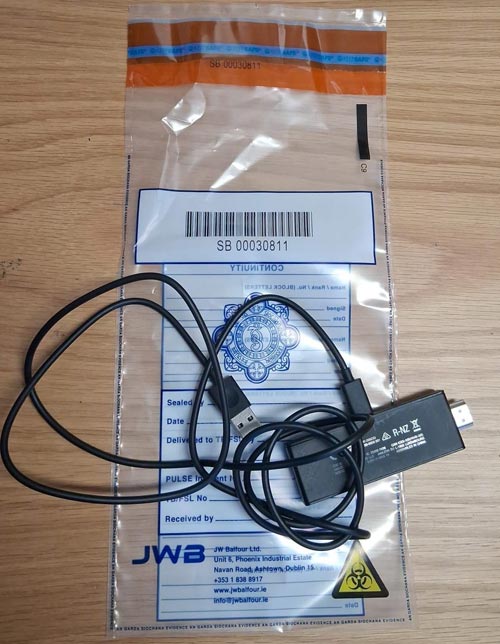
The services are believed to have supplied thousands of customers. Users have also been warned that information held by illegal providers, including names, contact details and payment records, could potentially be identified during investigations and passed to the relevant authorities. The action follows a Garda operation in Thurles, County Tipperary, in March. Gardaí searched a residential property as part of an investigation into suspected illegal streaming and money laundering offences. Electronic equipment was seized for examination and more than 500 accounts believed to be receiving illegal streaming services were shut down. No arrests were made during the Tipperary search, but a file was being prepared for the Director of Public Prosecutions.
The latest developments show that enforcement is expanding beyond major suppliers to include local resellers and the customers connected to their services. Illegal IPTV operations are frequently promoted through social media, messaging applications and personal recommendations. Authorities and broadcasters have also highlighted the risks associated with these services, including fraud, malware, theft of personal information, sudden loss of access and possible legal consequences.
The operation is part of a continuing nationwide campaign aimed at dismantling the networks that advertise, sell and distribute unauthorised television, film and sports content.
Ten charter deportation operations carried out from Ireland between February 2025 and June 2026 returned 377 people at a combined departmental cost of just over €3.9 million.
The flights, which travelled to destinations including Georgia, Nigeria, Pakistan, Romania, Poland, Lithuania and South Africa, involved 988 Garda escorts. Based on the Department of Justice’s detailed expenditure figures, the operations cost an average of approximately €10,355 for each person returned.
The figures were provided to the Oireachtas Public Accounts Committee by Department of Justice, Home Affairs and Migration Secretary General Doncha O’Sullivan in correspondence dated July 2nd, 2026.
The Department said escort numbers were determined by the assessed risks associated with each operation. Factors included the number of adults travelling, whether passengers had criminal backgrounds, the likelihood of resistance and the need to maintain a reserve team in case of injury, illness or another unexpected incident.
Garda escort leaders receive training through the EU border agency Frontex and follow its operational guidance. Their role is to ensure that forced returns are completed safely and professionally, with particular care required when children or family groups are among the passengers. The largest Garda deployment was recorded on a flight to South Africa on February 28, 2026, when 133 officers accompanied 63 returnees. A further 119 Garda members escorted 34 people on a flight to Poland and Lithuania on May 24, 2026.
Aircraft charter costs accounted for most of the expenditure, totalling €3.55 million. The single most expensive operation was a South Africa flight on June 19, 2026, for which the aircraft cost €904,050. Other departmental expenditure included almost €162,917 for doctors and paramedics, €106,348 for commercial return travel and €60,165 for flight-management services. Additional charges of €21,740 included €8,653 associated with an emergency landing during a Nigeria operation in June 2025 and €13,087 for de-icing the aircraft used for a Poland and Lithuania flight in January 2026.
Each group was also accompanied by a human-rights observer. The observer service cost €36,307 for nine of the operations, with the cost relating to the most recent flight unavailable when the Department prepared its response. Routine Garda escort duties are generally funded through the annual Garda budget. However, the Department has also awarded funding to the Garda National Immigration Bureau through the EU Asylum, Migration and Integration Fund to support non-EU deportation operations. The funding agreement covers the period from January 2025 until the end of 2027. Two payments worth a combined €1.84 million had been made to the GNIB at the time of the Department’s correspondence. Eligible expenses include additional Garda pay, accommodation, travel, subsistence and interpreter services.
Up to 75 per cent of qualifying expenditure may be recovered through the EU fund. The Department expects the overall repayment to the Exchequer to be in the region of €3.45 million and is seeking reimbursement for eligible charter and commercial-flight costs.
Justice Minister Mr Jim O’Callaghan must surely deserve full support for refusing to abandon the Government’s new criminal legal aid payment system, simply because it has encountered organised opposition.
This reform replaces the previous payment-per-appearance arrangement with a flat fee of €520 for representing one accused person from the beginning to the conclusion of a District Court case. Under the former model, solicitors received €239.38 for an initial appearance and €59.86 for each subsequent hearing.
The minister’s central argument is reasonable; a public payment system should not financially reward cases for remaining before the courts longer than necessary. That does not mean solicitors deliberately seek adjournments. Court delays arise for many legitimate reasons, including difficulties with evidence, prosecution readiness and overcrowded lists. Nevertheless, the State is entitled to remove a fee structure that links additional payments directly to additional appearances.
The Department of Justice says the reform is intended to improve efficiency by paying one fee from the beginning to the end of a case. It also forms part of a wider Government commitment to restore and reform criminal legal aid fees.
Mr O’Callaghan has already demonstrated a willingness to compromise. The original proposed fee of €455 was increased to €520 before the new system took effect. This was a substantial movement by the minister and should be recognised by those accusing him of refusing to engage.
Ireland’s former criminal legal aid system, which paid solicitors an initial fee followed by another payment for each subsequent District Court appearance, differed from the more structured approach used in much of Europe. England and Wales generally use standard fees for categories and stages of lower-court work, Scotland combines fixed payments with scheduled and supplementary fees, while Germany regulates lawyers’ remuneration through statutory fee frameworks. Ireland’s new €520 payment for representation from the beginning to the end of a District Court case therefore brings the country closer to the European preference for case-based or fixed remuneration and removes the direct link between State payments and repeated adjournments. However, many European systems also provide supplements or separate assessment for unusually complex or demanding cases, suggesting Ireland should retain the reform while allowing additional payments in genuinely exceptional circumstances.
The concerns raised by solicitors should, of course, be taken seriously. The Law Society argues that a single payment may not adequately reflect cases involving numerous hearings or exceptional complexity. Its survey also indicated that many practitioners feared the model would make criminal legal aid work financially unattractive. Those concerns justify continued monitoring and carefully targeted adjustments. They do not justify immediately reversing a reform before there has been sufficient time to assess its operation.
Withdrawing from legal aid panels and disrupting court business risks placing defendants, victims and the wider justice system under additional pressure. Public policy cannot be decided by whichever professional group can create the greatest disruption.
Mr O’Callaghan must be seen as therefore correct to keep the regulations in place while reviewing their impact. If unusually long or complicated cases require supplementary payments, sensible exceptions can be introduced.
But the basic principle remains sound;taxpayers should fund fair legal representation, not an outdated payment structure that can increase costs as cases are repeatedly adjourned. The minister is right to pursue greater efficiency and right not to surrender reform in response to political pressure.
This website uses cookies to improve your experience. We'll assume you're ok with this, but you can opt-out if you wish.AcceptRead More
Privacy & Cookies Policy
Privacy Overview
This website uses cookies to improve your experience while you navigate through the website. Out of these, the cookies that are categorized as necessary are stored on your browser as they are essential for the working of basic functionalities of the website. We also use third-party cookies that help us analyze and understand how you use this website. These cookies will be stored in your browser only with your consent. You also have the option to opt-out of these cookies. But opting out of some of these cookies may affect your browsing experience.
Necessary cookies are absolutely essential for the website to function properly. This category only includes cookies that ensures basic functionalities and security features of the website. These cookies do not store any personal information.
Any cookies that may not be particularly necessary for the website to function and is used specifically to collect user personal data via analytics, ads, other embedded contents are termed as non-necessary cookies. It is mandatory to procure user consent prior to running these cookies on your website.






Recent Comments