Tipperary Firefighters responding to the major wildfire on Slievenamon mountain returned to Cahir, to discover that vehicles belonging to crew members had allegedly been broken into and damaged.
The incidents occurred on Barrack Street, in Cahir, Co Tipperary, during the early hours of Saturday morning, while local crews were continuing their prolonged effort to control the mountain fire. Tools, personal possessions and equipment used by some of the firefighters in their everyday work were reported stolen. Several cars, vans and jeeps were also damaged.
Gardaí are investigating a number of incidents of theft and criminal damage involving vehicles parked on Barrack Street between 12.30am and 1.30am on Saturday, 25 July. A technical examination of the area has been carried out. Anyone who witnessed suspicious activity or travelled through the vicinity during that period is being asked to contact Cahir Gardaí.
Investigators are particularly interested in footage from dash cams or other recording devices.
The incident is considered as deeply demoralising for firefighters who had spent days away from their families battling the Slievenamon blaze. These selfless individuals haven’t been home to their families for days, while selfish disgusting lowlifes have taken advantage of them.
A fundraising page has since been established to support the firefighters affected by the thefts and help replace stolen equipment and damaged property. The break-ins happened as emergency crews continued to tackle flare-ups and hotspots across Slievenamon. Tipperary Fire and Rescue Service reported another difficult period on Saturday, with renewed fire activity on the mountain’s southern side, following an earlier reduction in intensity.
Ground operations were intensified today, Sunday, as crews responded to flare-ups and monitored the wider affected area. Specialist equipment has been deployed to help firefighters operate across the mountain’s challenging terrain.
A coordinated, multi-agency operation remains in place to contain the fire and prevent further spreading or reignition. Smoke may remain visible at times, particularly on the eastern side of Slievenamon. Residents, especially people with respiratory conditions, have been advised to take appropriate precautions when necessary.
The public is also being urged to remain clear of the affected areas and avoid interfering with emergency operations.
A teenage motorist has lost his life following a single-car collision near Ballynonty,Thurles, County Tipperary during the early hours of this morning, Sunday July 26th, 2026.
The fatal crash happened at approximately 3:45am on the L4101 at Lanespark, close to Ballynonty and Thurles.
Emergency personnel attended the scene, but the young driver, described by Gardaí as a male teenager, was sadly pronounced dead a short time later. He was the driver of the only vehicle involved in the incident. His remains have been taken to the mortuary at University Hospital Waterford, where a postmortem examination is expected to be conducted later. The local coroner has also been informed.
The teenager’s death brings to at least seven the number of people reported killed in road collisions in County Tipperary since the beginning of 2026.
The L4101 has been closed while Garda forensic collision investigators carry out a detailed technical examination of the scene. Motorists are being redirected through local diversions while that work continues.
Gardaí have urged anyone who saw the vehicle or witnessed the collision to contact the investigation team.
They are particularly interested in hearing from drivers or other road users who travelled through the Lanespark and Ballynonty area between 3:00am and 3:45am on Sunday. Anyone with dash-cam, mobile-phone or other camera recordings from that period is asked to preserve the footage and provide it to Gardaí.
Information can be given to Thurles Garda Station, Tel: 0504 25100, the Garda Confidential Line on Tel: 1800 666 111, or indeed at any Garda station.
206 New Gardaí Join the Ranks as Recruitment Drive Builds Momentum.
An Garda Síochána has received a major personnel boost following the attestation of 206 new members at the Garda College in Templemore.
The graduating class, comprising 142 men and 64 women, is the largest single group of Gardaí to attest since 2019. It is also the third attestation ceremony held in 2026, reflecting the continued expansion of recruitment and training activity at the college.
Following their graduation, the probationer Gardaí will be assigned by the Garda Commissioner to divisions throughout the country. Their deployment is expected to strengthen frontline policing, increase visibility in communities and provide additional operational capacity during Ireland’s Presidency of the Council of the European Union.
Almost half of the new members will again serve in the capital. A total of 94 probationer Gardaí have been allocated to the Dublin Metropolitan Region. The Eastern Region will receive 56 members, while 31 will be deployed to the North-Western Region and 25 to the Southern Region.
The new Gardaí will begin their careers at a time when policing responsibilities are becoming increasingly complex. Alongside traditional community and frontline duties, members must respond to organised crime, cybercrime, online offending and evolving national and international security threats. Ireland’s EU Presidency will create further operational demands, with Garda personnel responsible for supporting the security and smooth running of meetings and official events. Extensive planning and coordination have already taken place, and the additional members will help ensure that regular policing services can be maintained while these responsibilities are delivered.
The latest graduation represents another step in the Government’s plan to increase the strength of An Garda Síochána. Three recruitment competitions have taken place during the past 18 months, attracting more than 15,000 applications. The training pipeline is also set to continue growing. More than 200 additional trainees are due to enter the Garda College during the week beginning 27th July, with further classes expected to commence at regular intervals throughout the year.
Budget 2026 provided more than €2.74 billion for An Garda Síochána. The funding supports the recruitment of sworn members and civilian staff, as well as investment in training, technology, equipment and other resources required to deliver modern policing services.
Following the latest attestation, An Garda Síochána has 14,733 sworn members. The organisation also includes 3,683 Garda staff and 304 Garda Reserve members, while another 604 trainees are progressing through their education and training.
The arrival of the 206 probationer Gardaí will provide an immediate increase in personnel across Ireland’s policing regions. Their deployment will also support the wider objective of building a larger and more sustainable Garda workforce capable of meeting the changing safety and security needs of communities throughout the country.
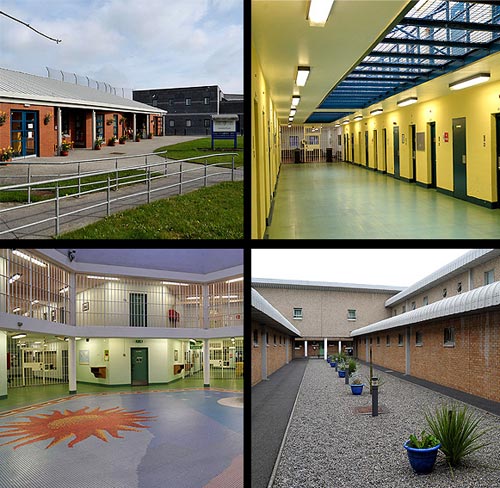
A major expansion of Cloverhill Prison is set to begin, following the signing of a construction contract for a new accommodation block at the west Dublin facility.
The project, awarded to JJ Rhatigan & Co., is expected to take 22 months to complete. Once finished, it will increase Cloverhill’s capacity from 433 places to more than 700, adding 267 spaces to an institution that has faced sustained pressure from overcrowding.
At the centre of the development will be a four-storey extension to Block D. The new building will contain 143 cells and will be designed to accommodate up to 270 prisoners. It represents the largest construction project undertaken by the Irish Prison Service in several years and forms a central part of the State’s wider programme to modernise and expand the prison estate. The expansion is intended to provide safer, more suitable accommodation for people in custody while improving working conditions for prison staff. It is also expected to support rehabilitation services by creating a more modern environment in which education, healthcare and structured prison programmes can be delivered. Cloverhill is one element of a broader capital plan that aims to provide more than 1,500 additional prison spaces between 2024 and 2031. The programme has been developed in response to rising prisoner numbers, overcrowding and the need to replace or extend ageing facilities.
Cloverhill Prison.
Since 2024, some 265 spaces have been completed across the prison system. This includes 126 places delivered in 2024, 106 in 2025 and 33 during the first part of 2026. A further 32 spaces are due to be completed before the end of this year, followed by another 70 in 2027.
Other major projects planned under the programme include a substantial extension to Cork Prison on the site of the former prison, a new accommodation block at Wheatfield Prison and an additional block extension at the Midlands Prison. Further capacity is also being developed at Castlerea, Mountjoy, the Dóchas Centre and Limerick Male Prison.
The Government has allocated €67.9 million in capital funding to the Irish Prison Service for 2026. This forms part of a €528 million investment package covering the period from 2026 to 2030, with €495 million earmarked for prison construction and expansion projects. The investment also reflects a shift toward long-term capacity planning, rather than relying solely on short-term measures to manage growing pressure throughout the prison system.
Planning work is also due to advance on a new prison at the Thornton site in north County Dublin. A master plan is expected to determine how the site will be shared by the Irish Prison Service, International Protection Accommodation Services and An Garda Síochána. Construction work at Thornton is currently planned to begin in 2030.
The Cloverhill contract marks a significant step in the prison building programme. With construction now moving forward, the project is expected to deliver badly needed capacity and help reshape the prison estate for the demands of the coming decade.
A 17-year-old boy has pleaded guilty to the manslaughter of a man, following a fatal incident in County Tipperary last year.
The teenager appeared before the Central Criminal Court today Wednesday, July 22, where he was formally charged with murdering the man at an undisclosed location in Tipperary on March 10th, 2025.
Because the defendant is under the age of 18, he is legally protected from being identified publicly. When the charge was put to him, the teenager entered a plea of not guilty to murder. However, he admitted responsibility for the lesser offence of manslaughter.
Mr Dean Kelly SC, representing the Director of Public Prosecutions, informed the court that the State was prepared to accept the manslaughter plea. No details about the circumstances surrounding the man’s death were outlined during the brief hearing. The court was told that the defendant was 15 years old, when the offence occurred and has since turned 17 years of age. Mr Kelly asked for a probation report to be prepared before the teenager is sentenced. Such a report can provide the court with information about a defendant’s personal circumstances, background and prospects for rehabilitation.
Mr Justice Tony Hunt provisionally scheduled the sentencing hearing for September 28, 2026. The teenager was remanded on continuing bail and is expected to return to the Central Criminal Court on Wednesday next, July 29th. The court may reconsider or confirm the proposed sentencing date at that appearance. The judge also directed that victim-impact reports be prepared. These reports will allow those affected by the man’s death to explain the emotional, personal and practical consequences of their loss, before the sentence is imposed.
The case remains before the courts, and the teenager has not yet been sentenced.
This website uses cookies to improve your experience. We'll assume you're ok with this, but you can opt-out if you wish.AcceptRead More
Privacy & Cookies Policy
Privacy Overview
This website uses cookies to improve your experience while you navigate through the website. Out of these, the cookies that are categorized as necessary are stored on your browser as they are essential for the working of basic functionalities of the website. We also use third-party cookies that help us analyze and understand how you use this website. These cookies will be stored in your browser only with your consent. You also have the option to opt-out of these cookies. But opting out of some of these cookies may affect your browsing experience.
Necessary cookies are absolutely essential for the website to function properly. This category only includes cookies that ensures basic functionalities and security features of the website. These cookies do not store any personal information.
Any cookies that may not be particularly necessary for the website to function and is used specifically to collect user personal data via analytics, ads, other embedded contents are termed as non-necessary cookies. It is mandatory to procure user consent prior to running these cookies on your website.







Recent Comments