|
|
The Office of the Irish Attorney General has appointed a leading Senior Counsel to independently review the conviction of Tipperary farmer Harry Gleeson, 72 years after he was hanged. Justice Minister Alan Shatter has sanctioned a cold-case review following a request by Gleeson’s surviving relatives and friends, who have amassed what is believed to be new forensic evidence and which they believe will now clear Gleeson’s name.
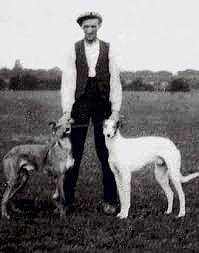 Harry Gleeson, a bachelor, whose favourite pastime was hare coursing, was found guilty of the murder of his neighbour, Mary (Moll) McCarthy, whose mutilated body he found on November 21st 1940, in a remote spot on his uncle’s farm near New Inn, Co Tipperary. Miss McCarthy had been shot twice, once in the face by her assailant or assailants . Harry Gleeson, a bachelor, whose favourite pastime was hare coursing, was found guilty of the murder of his neighbour, Mary (Moll) McCarthy, whose mutilated body he found on November 21st 1940, in a remote spot on his uncle’s farm near New Inn, Co Tipperary. Miss McCarthy had been shot twice, once in the face by her assailant or assailants .
A fresh pathologist’s report has been conducted which may undermine the prosecution’s case regarding the timing of the death of Miss McCarthy, who was decried from the altar by a local priest, because she was an unmarried mother.
The Justice for Harry Gleeson Group based at Dublin’s Griffith College, turned to the Irish Innocence Project, part of the global wrongful conviction organisation, to help strengthen its exoneration case. The Innocence Project, wrote to Mr Shatter last year seeking a pardon after reviewing Gleeson’s case.
Dean of Law at Griffith and director of the Irish Innocence Project Barrister David Langwallner stated that he believed the new evidence was now sufficient to establish that the Harry Gleeson case was a miscarriage of justice.
Previously this story was documented by the late broadcaster and journalist Cathal O’Shannon (1928 – 2011) in a TV series entitled “Thou Shalt Not Kill, ” back in 1995.
Henry “Harry” Gleeson was born in 1897 at the family homestead at Galbertstown Lower, Holycross, Thurles, Co. Tipperary. He was the ninth child of farmer Thomas Gleeson and Catherine (Maiden name Caesar). His parents were married in 1883 and had a family of 12 children. Harry went to work for his mother’s brother John Caesar, at Marlhill Farm, near New Inn. Harry’s younger brother Patrick would ultimately inherit Marlhill after John Caeser’s death, aged 83, in 1951.
According to a fictional Novel The Dead Eight by Carlo Gebler, Moll McCarthy’s story truly begins with her mother, who was reportedly a woman of ‘ill repute,’ and who sold sex to improve her impoverished lifestyle during a sojourn in Dublin city. Moll, her daughter, lived in a children’s home here in Thurles for the first sixteen years of life and was never acquainted with her actual father. Carlo Gebler paints Moll, like her mother, as somewhat of a promiscuous woman, even by the then standards of her time, having had numerous relationships with local men, both married and unmarried and also used these encounters to gain basic economic support, e.g. Unexplained Loads of Turf, Bags of Spuds, Groceries paid for at local shop etc..
“Foxy Moll’s” believed demise appears to have begun with a new discreet tryst with one Sergeant Anthony Daly, a married man, almost immediately upon his arrival to a new post at New Inn Garda station early in 1940. According to the novel Moll had been previously in a relationship with a local IRA activist, one Mr Johnny (JJ) Spink. He reportedly had possibly fathered her seventh and last child, latter who died as an infant and as with possibly previously relationships, this pregnancy appears to have ended her affair, due possibly to the scandal which almost certainly would have surrounded it.
Sergeant Daly’s then role in the Gardaí was to find and eradicate the remnants of the IRA who were still active in the Tipperary area. The Sergeant had been stationed at several locations over the course of his career and was notorious for the rough justice he had previously handed out. His now relationship with Moll presented a threat to Spink, who possibly feared that pillow talk might be passed on about the latter’s activities, thus this may have provided a motive for murder.
The novel suggests that Spink and two of his IRA associated brought Moll to a deserted house near Marlhill on the Wednesday evening, got her drunk, shot her and then planted her body where they knew Harry Gleeson would stumble on it the following morning. Spink then may have blackmailed Sergeant Daly, threatening to reveal his relationship with the deceased unless Sergeant Daly was prepared to frame Harry Gleeson. Sergeant Daly stands accused of coaching one of Moll’s sons to say that Harry Gleeson was the father of Moll’s last child and the whole case now pointed to Gleeson as having a motive for murder.
Early in 1941, Harry “Badger” Gleeson was convicted of Moll McCarthy’s murder. It appeared that justice had been done however everyone in New Inn was aware that Gleeson had never had a relationship with Moll McCarthy, they also knew that Moll McCarthy never had a child by him. Harry also had a cast iron alibi in the company of others. Her killer, as was also widely speculated on and was more than likely the father of her seventh child.
British Hangman Albert Pierrepoint (1905 – 1992) executed Harry Gleeson in Mountjoy jail in April 1941. Pierrepoint executed at least 433 men and 17 women during his time as a hangman.
A decision on a pardon, based on new believed evidence, is expected to be made within a matter of months.
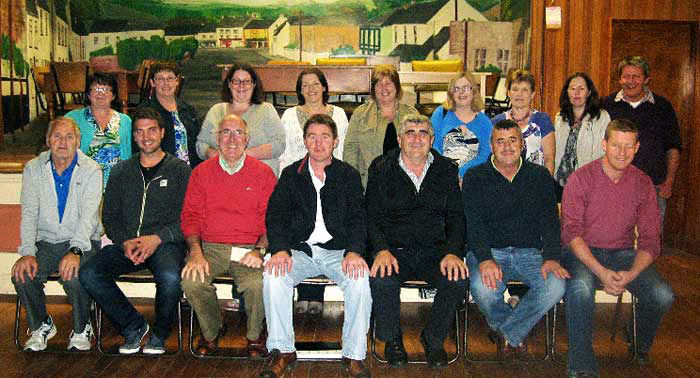
Borrisoleigh Gathering Festival 2013 is all set to take place on October 4th, 5th & 6th 2013.
Borrisoleigh Festival Organising Committee Pictured Above
Back Row:- Nuala Ryan, Breda Ryan, Fiona Ryan (Joint Treasurers), Kathleen Scanlon, Fiona Max (Joint Secretary), Lisa Ryan, Phil Mason, Theresa Kiely, Derry O’Donnell (PRO).
Front Row:- Paddy Dolan (Joint Secretary), Declan Curtis, Michael Delaney, Joe Loughnane (Chairman), Sean Shanahan, Tony Murray, John Cummins.
Over the past several weeks a busy stream of volunteers have been beavering away on organising this annual festival which this year is sure to provide a wonderful opportunity for residents and visitors alike, while experiencing all that is great in Borrisoleigh, Thurles, Co.Tipperary.
Whether you are a current resident, a visitor from overseas or living in partial exile in another part of Ireland, you are guaranteed to have a fantastic time, while enjoying locally presented drama in the village hall, or music and dancing on the streets. Do bring the kids to the family fun day. Take a trip down memory lane with a historical walking tour of the town. Enjoy the wonderful views and fresh mountain air on a guided walk of the Devil’s Bit Mountain.
Meet Ireland’s Strongest Man – Test your ability to score a goal past Tipperary Goalkeeper Brendan Cummins – Try your hand at Sean Nós Dancing – View and purchase local craft products – Buy a large delicious sample of locally produced Tipperary food – Welcome back the hurling Team of 1963.
Events Calendar Over This October Borrisoleigh Weekend Festival
Friday 4th: – 8:00pm – Official opening of this festival by a very ‘special’ guest in Marian Hall.
followed by a Borrisoleigh Drama Group presentation – “Spreading the news” (A one-act truly comical play by Lady Gregory, which she first wrote for the opening night of the Abbey Theatre in Dublin, on December 27th 1904.)
Saturday 5th: – 11:00am – A three hour walk on the Devils Bit Loop (Beautiful Scenery) or also at 11:00am – A Sean Nós Dancing work shop.
12:00pm – Craft Fair in Square
2:30pm – “Down Memory Lane” – Historical walk around the streets of Borrisoleigh.
8:30pm – Variety Concert in Village Square.
Sunday 6th: – 12:00pm-4:00pm – Busking Competition.
(Note: Musicians entering the busking competition can still register their intent by logging onto the festival website by clicking Here.)
1:00pm – Family Fun Day including bubble soccer, score goals past Brendan Cummins, Ireland’s strongest man display, Tug of war, Sheaf toss, BBQ and lots, lots more.
Local entertainment in Square and celebration honouring the Juvenile North Hurling Champions of 1963
For more information do visit borrisoleighfestival.com or join them on Facebook and Twitter.
It is just an idea for Thurles Town Council, North Tipperary Co.Council and the Principal Landscape Architect operating with URS Ireland Ltd., latter tasked with planning and managing the upcoming refurbishment of Liberty Square.
Proposed Idea: Check the names of all great Irish men, natives of Thurles, Co Tipperary who have made a considerable contribution not just to Ireland, but to the world. Have their names cast in brass and placed into our pavements on Liberty Square, in similar style to the now world famous “Hollywood Walk of Fame.”
Believe me when I state that you will be greatly surprised at the contribution Thurles has made down through the years, as indeed my profile sketched hereunder is a true testament.
“Death the Leveller,” by Poet/Dramatist James Shirley B.A. (1596 – 1666)
“The glories of our blood and state are shadows, not substantial things;
there is no armour against fate; death lays his icy hand on kings.
Sceptre and crown must tumble down and in the dust be equal made,
with the poor crooked scythe and spade.”
Architect Patrick Charles Keely (1816 – 1896) today sleeps peacefully in Holy Cross Cemetery, Kings County, New York, USA, (Plot: St Peters, range E). Patrick incapacitated by age, died following a heat stroke and rests today in this cemetery with organized crime figures like Louis Capone (1896 – 1944) and Frankie Yale (1893 – 1928), with U.S. Representatives John Michael Clancy (1837 – 1903) and Ardolph Loges Kline (1858 – 1930), with racehorse trainer “Sunny Jim” Fitzsimmons (1874 – 1966) and jockey Edward R. Garrison (1868 – 1930), with Major League Baseball player and manager Gil Hodges (1924 -1972) and the Irish-American businessman William Russell Grace (1832-1904).
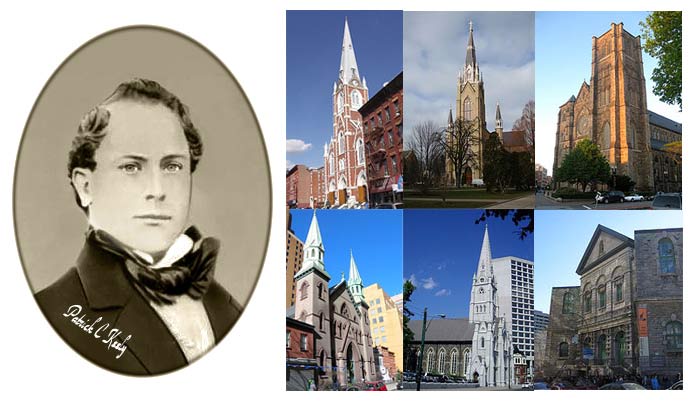 Patrick Charles Keely, Aug 9th, 1816 – Aug 11th, 1896. In a telephone conversation with one of our regular history readers here on Thurles.Info recently it was correctly suggested to me that Ireland and Tipperary should perhaps begin to celebrate the period of the Great Irish Famine, not only through just viewing its darker moments, mainly depicted through forced emigration, death, disease and starvation, but also from the viewpoint of our countries major contributions to every continent worldwide, during this same catastrophic period in our countries history.
Focusing on the latter, let us take a close look at the architect Patrick Charles Keely (possibly originally spelt Kiely) who was born here in Thurles, Co. Tipperary, “in comfortable circumstances,” on August 9th 1816.
Little is truly known of his early education, however he most certainly was apprenticed to his father John, latter a Kilkenny native who came to Thurles as skilled carpenter and builder (Possibly John Kiely of Stradavoher Street, Thurles, whom history records as a listed carpenter and builder.) and who is credited with building St. Patrick’s College in 1829-37 and the Thurles then St. Mary’s Fever Hospital begun in 1838-40.
At the age of twenty six, Patrick emigrated to the United States and settled in Brooklyn. He immigrated through Castle Gardens to Brooklyn, New York, in 1842, which may have been the reason for the spelling of his name changing from ‘Kiely,’ to ‘Keely.’ Castle Clinton or Fort Clinton, once known as Castle Garden, is a circular sandstone fort now located in Battery Park at the southern tip of Manhattan Island, New York City. It should be noted that since many Irish people then coming into America were illiterate, (Not so Mr Keely). Names often were spelt by those recording immigrants incorrectly, based on individual verbal accents and pronunciations. Castle Gardens is perhaps best remembered as America’s first immigration station (pre-dating Ellis Island), then giving access to more than 8 million people worldwide then arriving in the U.S. particularly between 1855 and 1890.
Arrived at a time when Catholicism in the United States was much on the increase, Keely initially worked as a carpenter for a number of years without attracting much attention. However it was during this time, his path crossed with the Rev. Sylvester Malone, a Roman Catholic priest. Fr. Malone had been sent to form a parish near the waterfront at Williamsburgh, Brooklyn, Kings County, New York, in 1846. Now together with Keely, they would work on plans to build a Gothic style church. A Gothic revivals had begun in the mid-18th-century continuing throughout 19th century in Europe and America and was largely chosen as the construction style for most ecclesiastical and university buildings.
Thus the new Church of Sts. Peter and St. Paul was to be Patrick C. Keely’s first designed ecclesiastical edifice, duly dedicated in 1848. Regrettably, facing a decline in parish enrolment during the 1950’s this structure was eventually demolished in February of 1957. However not before an article in the “Irish World” on September 19th, 1896 entitled, “The Late Architect Keely,” described a requiem Mass to be celebrated at Sts. Peter and Paul Church one month following Keely’s own death. The article gives us a ‘mind’s eye’ glimpse of the decorations for his Requiem Mass; “The altar was draped in purple, and in front of the altar, in the centre aisle, stood a handsome catafalque (platform or box used to stand in place of the body of the deceased) and candelabra. Two palms surmounted the catafalque, while the candelabra contained twenty-six lights. A special musical programme was rendered under the direction of the organist, Frederick Bradles, and the choir of the church.”
Patrick Keely’s reputation for honesty and integrity quickly now made him a popular choice amongst the hierarchy and clergy of all main religious denominations throughout the eastern United States and his would eventually lead to his designing over 600 buildings that would include The University Of Notre Dame Basilica of the Sacred Heart, Saint Francis Xavier in New York New York, Cathedral of St. John the Evangelist in Cleveland Ohio, and The Immaculate Conception Church in Boston, to name but a few. The locations of his churches range from Nova Scotia all the way south to Louisiana and as far west as Iowa.
He was called on to prepare plans for many new churches, by those who had observed, first hand, evidence of his skill, not just as a carpenter and builder but also as a wood carver. Evidence of his carving ability can be seen at the St Mary’s Roman Catholic Church, in Boston’s oldest neighbourhood of Charlestown, which today proudly displays a Hammerbeam ceiling, personally hand carved by Keely.
Keely was the second man to receive a gold medal annually awarded by the University of Notre Dame, Indiana, in recognition of his architectural genius. His design for the Jesuit church in Sixteenth Street, New York, is still considered as the best example of Roman ecclesiastical architecture, anywhere in today’s America.
Keely’s funeral took place after 9.30am Mass, from St. John’s chapel, Clermont and Greene Avenues, with the Rev. J.H. Mitchell, chancellor of the diocese, being celebrant followed by interment in the family plot in the cemetery of The Holy Cross. At the time of his death Patrick Charles Keely was survived by eight children, (Two sons, one unmarried daughter and five married daughters).
Go ndéana Dia trócaire ar a anam dílis.
Autumn months according to our National Meteorological Service, Met Éireann, are September, October and November, however according to our Irish Gaelic traditional Calendar, autumn constitutes the months August, September, and October. Harvest or ‘Fall,’ was the term usually used rurally to refer to autumn and came to refer only to the actual activity of reaping crops sown.
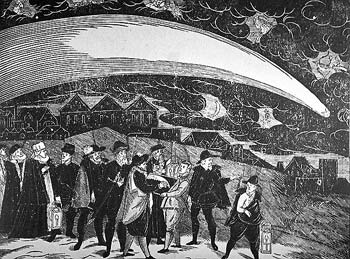 Great Comet of 1577. Whatever month autumn begins, August brings into focus thoughts of future winter weather, flu epidemics and hopes of general well being. Generally these thoughts are based on our own previous experiences of health issues or unprecedented winter conditions experienced during our own lifetimes.
So what awaited past Irish generations before modern day scientists came up with the theory of ‘Global Warming.’ ?
Let’s take a look at what history has recorded in Ireland between the years 1178 and 1603 with regard to health and unusual occurring weather.
1178. (Four years after the Battle of Thurles and the same year Donal O’Fogarty, Bishop of Ossory, died.) A great wind this year by which many trees were uprooted and many churches laid prostrate. Some 120 trees fell at Derry Columkille. The river of Galway dried up for several days so that things lost in it from time immemorial were recovered, great quantities of fish were taken by the inhabitants.
1224. An awful and strange shower fell in Connaught and there followed diseases in cattle, and those who drank their milk got extraordinary internal diseases.
1236. Great storms and rain and violent wars prevailed this year.
1252. A great heat and drought this summer, so that people passed over the principal rivers with dry feet and trees became ignited with the heat of the sun.
1326. Small-pox raged though Ireland and great numbers died.
1328. According to Annals of Ireland by the Four Masters, an awful thunder and lightning occurred by which vegetation and fruit were extensively damaged and corn blighted. An epidemic disease called Slaodan (Translated. influenza) prevailed, and continued for four days on those afflicted with it, and proved almost fatal to them.
1329. Crops remained un-reaped until after Michaelmas, (Michaelmas derives its name from the Feast of St Michael and All Angels, which falls annually on 29 September 29th), in consequence of wet weather.
1349. A great plague in Ireland particularly in Moylurg (Magh Luirg Roscommon North east of the province of Connacht ); an immense number died of it.
1383. An awful and very fatal plague raged throughout Ireland. Judith, daughter of the Earl of Ormond, the wife of Teige O’Carroll, lord of Tigh Muna (Timoney, near Roscrea, Co Tipperary) and the daughter of O’Brien, wife of O’Kennedy died of the plague.
Continue reading Past Health & Weather Records Reviewed
Minister for Arts, Heritage and the Gaeltacht, Mr Jimmy Deenihan is to travel to Hyde Park Barracks, Sydney, Australia on Sunday to lead the ceremonies for the 2013 International Commemoration of the Great Irish Famine. Here he hopes to meet descendants of Irish orphan girls who travelled to Australia between 1848 and 1850, during the great famine period of 1845-1851.
More than 4,000 women and girls left from Irish workhouses aged between 14 and 20 years old, during the years between 1848 and 1850 under the Earl Grey Scheme. Like the young unemployed of today’s Ireland many went to Australia in search of hope and a new beginning. The difference between today and back then is that today, to our shame, those leaving our shores for Australia are highly educated, while back then those leaving were made up of abandoned, or orphaned children, many untrained, without in many case the ability to read or write.
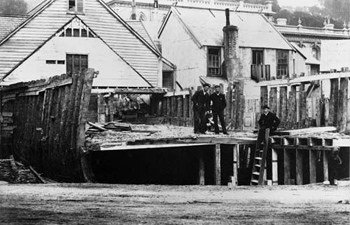 The rotting Hulk of “Inconstant,” wrecked at Wellington, New Zealand in 1851 & which had previously transported young girls from workhouses in Tipperary to Australia. To call them orphan girls in this period of Irish history (1845-1851) perhaps is an inaccurate statement, for it was quite common for Irish destitute families to leave their children abandoned at the gates of local workhouses, the parents fearing they could no longer care for them. At the beginning of the Nineteenth Century here in Ireland, poverty was widespread. It was estimated that over two million were nearly destitute and at levels of starvation.
Workhouses to assist those starving arose from the July 1838 British Governments “Act for the Effectual Relief of the Destitute Poor in Ireland,” and some 130 such buildings throughout Ireland were eventually established between 1840 and 1845, with each building depending on local population, to accommodate somewhere between 2000 and 700 persons. One such building, now demolished, was the former Hospital of The Assumption, here in Thurles, Co Tipperary.
The Earl Grey Scheme
The ‘Earl Grey Scheme,’ was an operation carried out between March 1848 and 1850. Earl Henry George Grey, Secretary of State for the Colonies, specifically set-up this scheme to send orphaned or abandoned girls from workhouses in Tipperary, Roscrea, Ballina, Tullamore, Dublin, Cork, Skibbereen, Mountmellick, Newcastle, Mullingar and Loughrea, amongst others north of the country like Belfast, Cookstown, Dungannon and Magherafelt. Thus, encouraged and partially forced emigration became Grey’s brain-child, primarily designed to meet an Australian demand for domestic servants and marriageable young women. In the eyes of the then so called Imperial social engineers of this time who supported his plan, these Famine orphans were being observed as young marriageable women who would bring a somewhat stabilising influence to an existing rough male colonial society. Grey believed he could alleviate the worsening problem of overcrowding in Ireland’s famine filled workhouses, while at the same time solving Australia’s problems of a shortage of labour and an imbalance of the sexes.
Arrivals
From the very first arrival via the ships “Roman Emperor,” “Maria,” “Inconstant,” “Ramilies,” “Earl Grey,” and “Elgin” between 1848/49 and for years afterwards these young girls would confront often angry, heated, local Australian hostility. Hatred centred on their being young, their complete and utter incompetence, their lowly workhouse origins, their total inexperience in any form of household service and possibly also their being Irish.
The 1850’s onwards was also the period when native Aboriginal people were being forced into reservations. Those who believed they had an inside tract on social mores, began eroding Aboriginal traditional ways of life through the banning of Aboriginal names and their traditional customs, while perceiving the need to keep Aboriginal people, a primitive race doomed to extinction, separate from their superior white population, while their race died out. Aboriginal people lost all basic human rights such as their freedom of movement, labour, custody of children and control over personal property.
Continue reading Irish Girls – Stunted Figures, Thick Waists, Clumsy Ankles
|
Support Us Help keep Thurles.info online by donating below. Thank you.
Total Donated 2026: €290.00
Thank You!
Daily Thurles Mass Livestream
|





Recent Comments