The controversy around Ireland’s scheduled football fixtures against Israel in 2026 is real, serious and understandable. People are entitled to strong political and moral views. They are entitled to protest, to criticise governments, to question sporting bodies, and to demand consistency from international organisations. But there is still an important principle worth defending: where possible, politics and sport should be kept separate.
That does not mean sport exists in a fantasy world, untouched by history or suffering. It plainly does not. Ireland knows that better than most.
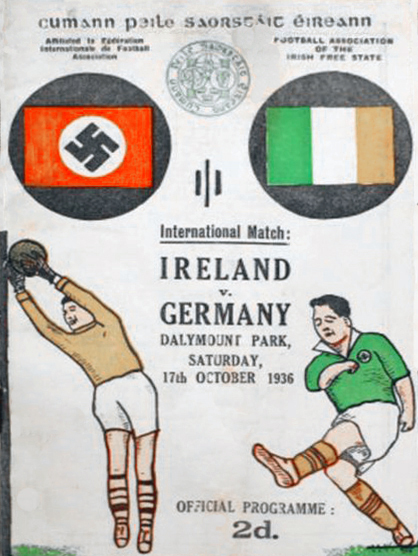
In October 1936, Ireland played Germany at Dalymount Park, at a time when Hitler’s regime was already in power. The German team gave the Nazi salute before the match. Looking back now, the images are deeply uncomfortable. Yet the match itself has also survived in Irish football memory as a sporting occasion, with Ireland winning 5–2, and the players on the pitch did what players are supposed to do; – they played football.
That example does not excuse the politics of the time. It does not make the symbolism harmless. But it does show the danger of making every football match a referendum on world affairs. Once we insist that teams may only play countries whose governments we approve of, sport becomes impossible to organise fairly. The rule will always be applied unevenly. Some states will be punished, others ignored. Some causes will become fashionable, others forgotten.
The recent Ireland match against Qatar also shows why consistency matters. Qatar has faced years of serious criticism over the treatment of migrant workers, especially around the 2022 World Cup. Amnesty International and Human Rights Watch have reported abuses including exploitation, unpaid wages, unsafe conditions and cases amounting to forced labour, even while acknowledging that some labour reforms have been introduced. Yet Ireland still played Qatar in Dublin in May 2026. That does not mean those concerns were unimportant. It means that, in practice, international football has continued to operate even when the opposing state has a deeply controversial human-rights record. If sport is to become a tool of political exclusion, the rule must be clear, consistent and applied equally; not selectively according to which controversy is most prominent at a given moment.
The players themselves are then placed in an impossible position. They are selected to represent their country in football, not to solve foreign policy. Asking them to carry the burden of international diplomacy is unfair. A footballer may have personal views, moral doubts, or sympathy with victims of conflict. But when a national team is drawn in an official competition, the decision to play should not be dumped on the shoulders of the players alone.
The same applies to supporters. Fans can protest. Fans can refuse to attend. Fans can display conscience. But the existence of protest does not automatically mean the fixture itself should be cancelled. A democratic society should be capable of allowing both: the match and the protest; the sporting contest and the political opinion.
There is also a practical issue. International sport depends on agreed rules. If Ireland refuses to fulfil a fixture, the consequences may not fall on the government whose actions are being criticised. They may fall on Irish players, Irish supporters, the FAI, and Ireland’s future standing in competition. That may satisfy a political demand in the short term, but it may do little to change the conflict itself.
None of this means sport should be morally blind. There are extreme cases where exclusion may be justified, particularly where international sporting bodies agree a clear, consistent and rules-based position. But that decision should be made transparently by the governing bodies responsible for the competition, not improvised country by country, match by match, under public pressure.
The lesson from Dalymount in 1936 is not that politics does not matter. It is that sport often becomes a stage onto which politics intrudes. The challenge is to prevent that stage from being completely consumed by it. Ireland can condemn injustice. Ireland can speak strongly in international forums. Irish citizens can protest, campaign and argue, but the national team should not automatically become a substitute foreign ministry.
Football cannot fix war. It cannot settle borders. It cannot undo suffering. What it can do, at its best, is preserve a small space where people compete under rules rather than slogans.
That space is worth protecting, not because politics is unimportant, but because sport matters too.
The True Story of Villa Emma – The Village That Chose to Save Children.
At a time when Israel’s very presence on the football field is again the subject of protest, including the disruption of Ireland’s friendly against Qatar in Dublin over upcoming fixtures with Israel, the story of Villa Emma carries a particular force. The protests are framed by many as opposition to Israel’s conduct in Gaza, but for Jews and Israelis they also echo a longer and painful history: a people repeatedly attacked, excluded, and told that even their children, athletes, and symbols of ordinary national life are not entitled to safety or normality. From the Jewish children hidden in Nonantola in 1943, to the children killed at Majdal Shams, to Jewish children reportedly targeted in Skokie, the question is not only political but moral: when Jewish or Israeli children and communities are made vulnerable, do bystanders turn away, join the hostility, or choose protection?
In the summer of 1942, a group of Jewish refugee children arrived in the small Italian village of Nonantola, near Modena. They had already been on the run for years, fleeing Nazi persecution across Central and Eastern Europe. Most came from Germany, Austria, and the Balkans. Many had lost their families. An Italian Jewish aid organisation, DELASEM, arranged for them to stay in an abandoned countryside mansion known as Villa Emma. By the spring of 1943, their number had grown to around 70–73 children and teenagers, cared for by a small group of adult educators.
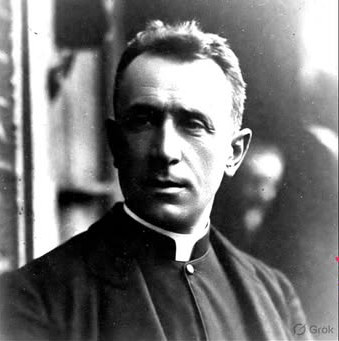
Catholic Priest & Teacher, Don Arrigo Beccari.
A fragile refuge. For about a year, life in Nonantola was unexpectedly peaceful. The children attended lessons, worked, and gradually adapted to village life. Local residents helped furnish the villa, brought food, and supported daily life. Two local figures became especially important, namely Don Arrigo Beccari, a Catholic priest and teacher, and Dr. Giuseppe Moreali, the village doctor. Both formed close ties with the children and helped organise their care. At this stage, despite anti-Jewish laws, Italy had not yet begun systematic deportations in the same way as Nazi-occupied territories but that would soon change.
By September 1943: everything shifts. On September 8th, 1943, Italy surrendered to the Allies. German forces quickly occupied northern Italy. The danger was immediate and clear. Within hours, the people responsible for the children realised that staying at Villa Emma would likely lead to arrest and deportation. What happened next was decisive. A village acts. In less than two days, often described as under 36 hours, the children were dispersed and hidden. Younger children were sheltered in the local seminary Others were taken in by families across the village and countryside Around 30–35 families, along with clergy and others, participated in hiding them. This was not a centralised operation directed by a government or military. It was a coordinated local response involving priests, doctors, educators, and ordinary villagers.
Forged identities and a dangerous plan Hiding the children was only a temporary solution. German patrols were active, and a search could happen at any time. Beccari, Moreali, and others began preparing an escape. They obtained blank identity documents and created false papers to disguise the children’s identities. The plan was to move them north, across the Alps, into neutral Switzerland.
The escape. Between early and mid-October 1943, the children left Nonantola in small groups. They travelled by train and on foot, guided through checkpoints using forged papers, and eventually crossed the Swiss border, often at night.Most of the group made it safely. One known exception was Salomon Papo, a boy who had been too ill to travel. He was later arrested and deported to Auschwitz, where he died.
Aftermath and consequences The rescue did not go unnoticed. Don Arrigo Beccari was later arrested and imprisoned by Fascist authorities. He was interrogated and beaten but did not reveal information about the network that had helped the children. He survived the war and returned to his life as a priest in the same community.
What this story really represents The rescue of the Villa Emma children was not the work of a single hero. It involved Jewish organizers who arranged the children’s refuge – Local clergy and medical professionals and dozens of ordinary families willing to take risks. Together, they protected and ultimately saved the lives of dozens of young people. After the war, many of those children emigrated to Palestine and later Israel, where they built new lives.
Why, then, are so many Christian communities silent? Perhaps because Israel has become politically contentious, and many fear that defending Jews or Israelis from hatred will be treated as taking a side in every aspect of the Middle East conflict. But this is a false moral trap. One can grieve Palestinian suffering and still condemn antisemitism. One can criticise Israeli policy and still defend Jewish children from intimidation, exclusion, and violence. The legacy of Villa Emma should make Christians especially uneasy about silence. When Jewish children were in danger, Don Arrigo Beccari and others did not hide behind complexity. They protected life. That remains the standard.
A legacy of quiet courage. In 1964, Don Arrigo Beccari and Giuseppe Moreali were recognized by Yad Vashem as Righteous Among the Nations for their role in the rescue. Today, the story of Villa Emma is remembered not just as an act of individual bravery, but as an example of collective moral choice. In a time of fear and occupation, a small rural community chose to help. and because of that, dozens of children survived.
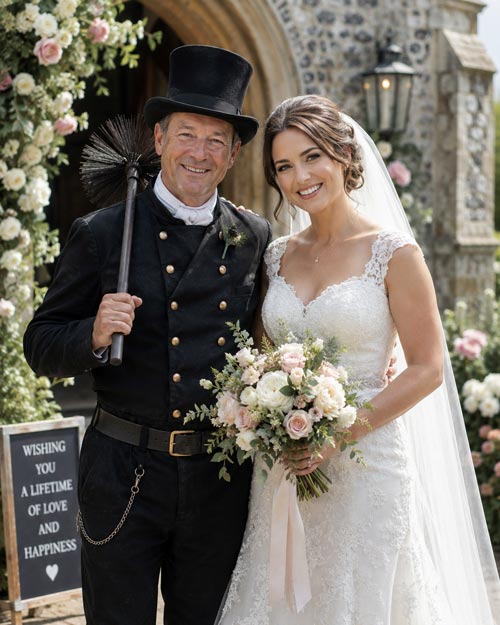
There was once an old wedding tradition that believed it was good luck for a bride and groom to meet a chimney sweep on their wedding day. The story is often linked to a royal legend: a chimney sweep is said to have helped save a king from runaway horses, after which sweeps became known as bringers of good fortune. Whether the tale is fact or folklore, the symbolism is easy to understand. The sweep was connected with the hearth, the fire, and the warmth of the home; all powerful images for a newly married couple beginning life together.
Today, this tradition has become a charming wedding extra. A chimney sweep may appear outside the church, registry office, or wedding venue to greet the couple, shake hands with the groom, kiss the bride on the cheek, pose for photographs, and offer a few words of good luck. It is unusual, memorable, and full of character, exactly the kind of detail many couples now look for when planning a wedding. Wedding venues and professional photographers could also adopt the idea as an added service for couples looking for something traditional, quirky, and memorable.
“Wishing you a lifetime of love, luck, and happiness.”
A venue might offer a “lucky chimney sweep” as part of a heritage or vintage wedding package, while photographers could suggest it as a characterful photo opportunity after the ceremony. Some couples may worry about soot marking the bride’s white dress, but this can be easily avoided. The sweep can arrive in clean ceremonial clothing, use a display brush rather than a working one, avoid close contact with the dress, and pose carefully at the bride’s side. With a little planning, the charm of the tradition can be kept without any risk to the gown.
For modern chimney sweeps, this old custom could also offer a useful additional income stream. The trade is changing. With cleaner heating policies, reduced reliance on fossil fuels, and the gradual move toward low-carbon homes, traditional chimney work is not the same as it once was. Gas, oil, coal, wood, and smokeless-fuel use are all under closer environmental scrutiny, and many households are moving toward heat pumps, better insulation, and electric heating. At the same time, sweeps remain important for homes with working fireplaces, wood burners, and multifuel stoves, where regular sweeping is still essential for safety.
That creates a challenge but also an opportunity. A wedding appearance does not replace the practical work of chimney sweeping, but it can sit alongside it. It makes use of the sweep’s traditional clothing, local reputation, storytelling, and historic image. It can be offered as a weekend or seasonal service, especially during the spring and summer wedding months, when demand for chimney maintenance may be lower.
A Chimney Sweep could offer packages such as: ► A lucky sweep appearance after the ceremony. ► Photographs with the bride and groom. ► A short traditional blessing or good-luck greeting. ► A certificate or keepsake for the couple. ► Optional attendance at the reception for photos with guests.
The idea works especially well for historic venues, country weddings, church weddings, vintage-themed ceremonies, and couples who want something different from the usual wedding entertainment. It also gives younger generations a chance to see a trade that was once central to everyday life but is now becoming less visible. In that sense, the wedding chimney sweep is more than a novelty. It is a way of keeping an old craft in public view, preserving folklore, and helping working sweeps adapt as heating habits change.
For chimney sweeps looking to diversify, the message is simple: the soot may be less common, but the story still has value. A clean chimney keeps a home safe; a lucky sweep at a wedding brings a smile, a photograph, and a tradition that couples will remember for years.
“Come on, lads — let’s bring a little imagination to wedding events.”
Ireland’s political and media class increasingly seems trapped in a cycle of outrage, where emotion appear to matters more than realism.
The recent arrest of Dr. Margaret Connolly; sister of Irish President Mrs Catherine Connolly; on board a Ga, so called aid flotilla immediately caused uproar in Irish political and media circles. Government figures condemned Israel, activists treated the incident as a major international drama, and RTÉ coverage became highly emotional.
At the same time, Eurovision exposed another reality that many activists do not want to face. Despite loud campaigns demanding Israel be excluded, Israel still took part in Eurovision and finished in second place. RTÉ and several other broadcasters boycotted the contest over Israel’s participation, but Eurovision went ahead anyway without their participation. So will RTE, who this year ignored licence fee payers, decide to repeat this boycotting scenario again next year?
That raises a very simple question; what exactly is the long-term plan? If the goal is somehow to make Israel disappear, that is not serious politics. Israel is not going anywhere. It is a strong country with major international alliances, a powerful economy, and the world’s largest Jewish population.
If the goal is to isolate Israelis from international events, that also appears to be failing. Eurovision continued. International organisations continue working with Israel. Trade continues. Sporting and cultural events continue. And if Israel competes again next year in Sofia, Bulgaria, the wider world will largely move on, regardless of any Irish outrage.
This is where many ordinary people are beginning to lose patience with what critics now call the “Paddystinian” movement.
Many feel the movement has gone far beyond criticism of Israeli government policy and has become something more obsessive and even hostile. Criticising Israel is perfectly legitimate, just as criticism of any government is legitimate. But when every issue becomes centred around Israel, people naturally begin asking questions.
There is also growing concern about the atmosphere being created for Jewish people living in Ireland. Across Europe, Jewish communities have reported rising hostility and intimidation since the Gaza conflict intensified. Many Irish Jews now feel increasingly uncomfortable speaking openly about their identity or opinions. That should rightly alarm decent people.
A country can support Palestinian civilians without turning hostility toward Israel into a national obsession. It is possible to care about Gaza while also rejecting hatred, intimidation, and political hysteria.
Many people now treat attending such weekend protests in major cities as a kind of social pastime, with large numbers taking part, despite having only a limited understanding of the history or complexities behind the issues involved.
Unfortunately, parts of Irish public debate no longer seem interested in balance or nuance. Too often, disagreement is treated as proof of moral failure. Anyone who questions the dominant activist narrative, risks abuse, smears, or social pressure. That is not healthy democratic debate.
Ireland once had a reputation as a calm, sensible country known for diplomacy and peace-building. Increasingly, however, parts of Irish politics and media appear more interested in performative outrage than practical solutions. Meanwhile, the rest of the world simply keeps moving.
Israel continues trading internationally, participating in global events, building alliances, and developing economically. Eurovision survived the RTE boycott. International audiences still voted for the Israeli entry in huge numbers. That reality may be uncomfortable for activists, but it is reality nonetheless.
Movements built mainly on anger and grievance eventually run into a problem: outrage alone is not a strategy. Shouting louder does not necessarily change minds. In fact, constant moral lecturing often pushes ordinary people away, and that may ultimately be the biggest danger for Ireland itself. Because countries that become consumed by ideological crusades can end up isolating themselves far more than the people they are trying to punish.
In the end, most people simply want balance, common sense, and a bit of perspective, not this endless outrage, division, and political theatre pumped out on news bulletins and via social media.
If the Roads Around Cashel Fall Silent, Best Turn for Home.
If you find yourself out late around the town of Cashel, Co. Tipperary, take a bit of advice from the old people; go home before the road goes quiet.
Tourists especially beware, because according to the folklore of the Galtee country, there are worse things abroad at night than a Garda checkpoint or a missed Fish & Chipper.
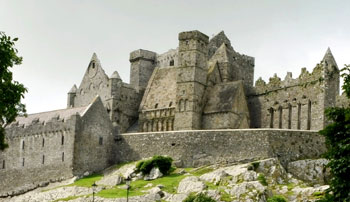
Rock of Cashel, Co. Tipperary.
Long before horror films discovered the headless horseman, Ireland already had the Dullahan, latter a charming individual who travelled the roads carrying his own head under his arm and announcing death wherever he stopped. No door lock kept him out. No gate latch held him back. The only known deterrent was gold, which feels very Irish altogether. Even supernatural evil respects inflation.
The most entertaining version of the tale comes from an old story called “The Good Woman”, collected by Thomas Crofton Croker in the nineteenth century. The story is set around the Galtee Mountains and Cashel, where a horse dealer named Larry Dodd makes the sort of decision that proves Irish folklore exists mainly to warn men against acting the maggot after dark.
Larry is riding home from Cashel one June evening after buying a horse. He’s feeling pleased with himself, no doubt after “just the one pint” that became several. Along the road he meets a mysterious cloaked woman walking alone at twilight.
Now, any sensible person in rural Ireland knows there are only three explanations for a woman silently appearing on a lonely road after sunset; a banshee, a fairy, trouble. Larry, unfortunately, ignores centuries of accumulated wisdom and offers her a lift. She says nothing. Climbs up behind him. Still says nothing, which, to be fair, should have been the first warning sign to any member of the male species.
Eventually the horse stops near the ruins of an old church. The woman slips down soundlessly and glides away across the graveyard. Larry, displaying the sort of judgement that has doomed Irish men since mythology began, chases after her looking for a kiss and catches her, only to discover she has no head.
At this point the story becomes considerably less romantic. Larry faints dead away and wakes among a gathering of Dullahans; headless ladies and gentlemen, soldiers, priests, musicians and skeletons tossing skulls around like hurling balls. Naturally enough, someone offers him a drink. Well this is still Ireland after all.
Things go poorly from there but eventually he escapes with his life, though not with his dignity, and his horse disappears entirely which may be the most authentically Irish ending imaginable. Survive supernatural terror if you like, but someone is still stealing the livestock.
So if you’re around Cashel late at night and happen to see a silent figure on the roadside, perhaps keep driving. Do not offer lifts. Do not flirt. And, absolutely do not follow mysterious women into ruined churches.
The old stories survive for a reason, and mainly because somebody ignored obvious warning signs and succeeded to live just long enough to warn the rest of us.
This website uses cookies to improve your experience. We'll assume you're ok with this, but you can opt-out if you wish.AcceptRead More
Privacy & Cookies Policy
Privacy Overview
This website uses cookies to improve your experience while you navigate through the website. Out of these, the cookies that are categorized as necessary are stored on your browser as they are essential for the working of basic functionalities of the website. We also use third-party cookies that help us analyze and understand how you use this website. These cookies will be stored in your browser only with your consent. You also have the option to opt-out of these cookies. But opting out of some of these cookies may affect your browsing experience.
Necessary cookies are absolutely essential for the website to function properly. This category only includes cookies that ensures basic functionalities and security features of the website. These cookies do not store any personal information.
Any cookies that may not be particularly necessary for the website to function and is used specifically to collect user personal data via analytics, ads, other embedded contents are termed as non-necessary cookies. It is mandatory to procure user consent prior to running these cookies on your website.




Recent Comments