|
|
With the Ryan Gathering beginning here in Thurles on the weekend of August 23rd -25th 2013, it is only right that we stop for a moment to remember those heroic Ryan’s scattered around the world in times of past wars.
Ryan’s Awarded The Victoria Cross.
There are at least four Ryan’s, that I am aware of, who were awarded the Victoria Cross, latter the highest and most prestigious award for gallantry in the face of the enemy, that can be awarded to members of British and Commonwealth forces.
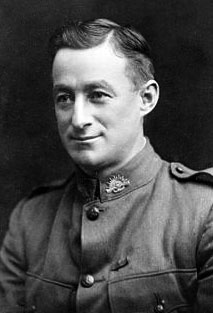 Private Edward John Francis Ryan VC Edward John Francis Ryan VC (9th February 1890 – 3rd June 1941), a Catholic Labourer was better known as John Ryan. He was approximately twenty eight years old, and a private in the 55th Battalion, (N.S.W.), Australian Imperial Force during the First World War when the following deed took place for which he was awarded the VC.
His citation reads:-
“For most conspicuous bravery and devotion to duty during an attack against the Hindenburg defences on 30th September 1918. In the initial assault on the enemy’s positions Private Ryan went forward with great dash and determination, and was one of the first to reach the enemy trench. His exceptional skill and daring inspired his comrades, and, despite heavy fire, the hostile garrison was soon overcome and the trench occupied. The enemy then counter attacked, and succeeded in establishing a bombing party in the rear of the position. Under fire from front and rear, the position was critical, and necessitated prompt action. Quickly appreciating the situation, he organized and led the men near him with bomb and bayonet against the enemy bombers, finally reaching the position with only three men. By skilful bayonet work, his small party succeeded in killing the first three Germans on the enemy’s flank, then, moving along the embarkment, Private Ryan alone rushed the remainder with bombs. He fell wounded after he had driven back the enemy, who suffered heavily as they retired across “No Man’s Land”. A particularly dangerous situation had been saved by this gallant soldier, whose example of determination bravery and initiative was an inspiration to all.”
His recorded character offers the impression that he was, as we say here in Tipperary “His own man.” He was regularly up on charges of overstaying leave passes, disobeying lawful commands, and using insubordinate language to superiors. Sadly and despite receiving, on the 22nd of May 1919, his V.C. from King George V at Buckingham Palace, after the war he was left to wander the roads of Australia, poverty stricken and alone for some 4 years seeking work. In May 1941, in poor health, he was again tramping the streets looking for work and was taken to hospital where he died of pneumonia in the Royal Melbourne Hospital on the 3rd June 1941. He was buried with military honours in the Catholic section of Springvale cemetery where eight other V.C. winners formed a guard of honour.
His Victoria Cross is displayed at the Australian War Memorial (Canberra, Australia).
John Ryan VC (1839 – 29th December 1864) was born in Borrisoleigh, County Tipperary and was an Irish recipient of the Victoria Cross. Ryan was only 24 years old, and a Lance Corporal in the 65th Regiment of Foot British Army during the invasion of Waikato (one of the campaigns in the New Zealand Wars), when the following deed took place on the 7th September 1863, for which he was awarded his VC.
Continue reading Thurles Ryan Gathering – Lest We Forget The Military
Six degrees of separation is the theory that everyone and everything is six or fewer steps away, but no need of six degrees when we take a look at this man. He does not appear in any list of Thurles Town’s most notable ancestors as yet, but was born in Chicago, Illinois on November 11th, 1909 and died on July 11th, 1973, just 40 years ago this month.
He stood 6ft-4in in height and despite being an American actor who constantly played the screen parts of hardened cops and ruthless villains, the kind of characters that in real life he found totally despicable, he would remain until his death from lung cancer in New York City in 1973 aged just 63 years, a confirmed pacifist.
He graduated from Dartmouth College in 1932, having held the school’s heavyweight boxing title during all four years of his attendance, to begin employment as a stoker on a ship, a WPA worker, and later a ranch hand in Montana.
He was a joint founder of “The Committee for a SANE Nuclear Policy’s Hollywood Chapter.” He served in the cultural division of the Committee to Defend Martin Luther King and together with Bill Cosby, Robert Culp, Sidney Poitier, and other actors, he helped organize the short-lived “Artists Help All Blacks,” and was an outright opponent of McCarthyism. Despite his earlier military service in the United States Marine Corps, he fully supported civil rights issues in America.
He will be possibly also remembered for subletting his apartment in Manhattan, ‘The Dakota,’ at 72nd & Central Park West, to John Lennon and Yoko Ono. It would be here that at around 10:50 pm on December 8th 1980, as John Lennon returned to this same New York apartment, that the madman Mark David Chapman would shoot Lennon in the back four times, as the latter entered this building.
Yes, you have probably guessed it by now, I speak of Robert (Bushnell,) Ryan, famous American actor extraordinary, who played lead roles in more than 60 films and whose grandmother (Maiden Name Johanna Ryan,) and grandfather John came originally from our town of Thurles, both emigrating to America just after the Civil War sometime in the end of the 1860’s.
This same Thurles born grandfather, John Ryan, became a carpenter who quickly founded a boat yard, his aim to supply boats for the Illinois and Michigan Canal, latter which ran through Lockport. His grandfather, at some time during these years, was superintendent of that section of the Canal, thus holding a position of some importance in his small adopted town.
The township was largely Irish and Catholic and these Ryan’s were a devout Catholic family. This devout faith did not however prohibit Robert Ryan’s father, Timothy Aloysius Ryan, from marrying a Protestant girl, one Mabel Bushnell. The Ryan’s, by all the standards of then civilized society, were a very fine family, hard working, devout, honourable, and handsome. While not showing intellectual or artistic merit, they are described by Robert himself, as conventional in both their private and public lives.
Actor Robert Ryan, as already stated, was born in Chicago, Illinois, the first born child of Timothy and his wife Mabel Bushnell Ryan. He himself would go on to marry Jessica Cadwalader, a Quaker, on March 11th 1939 and father two sons, Cheyney, a research fellow at Oxford University and a Professor of Philosophy and Law at the University of Oregon, and Timothy (“Tim” named after his father,) and one daughter, Lisa.
His film career which began in 1940 with “Ghost Breakers,” and ended with “The Iceman Cometh,” in 1973, also included the silver screen greats; Crossfire(1947); as Nick Bradley in Born to Be Bad (1950); On Dangerous Ground (1951); as Howard Wilton in Beware My Lovely (1952); as Cass Silver in The Proud Ones (1956); Battle of the Bulge (1965); The Professionals (1966) which obtained three Academy Award nominations; The Dirty Dozen (1967); as Lieutenant General Carson in Anzio (1968); The Wild Bunch (1969); and of course The Outfit (1973).
Maybe Thurles Town Council should unveil a plaque to the memory of his grandparents during “The Ryan Gathering,” to be held here in Thurles, Co.Tipperary, on the weekend of August 23rd -25th 2013, what do you our readers think?
Here in Tipperary we do not have to invent ‘Gatherings.’ Indeed same have been part of our culture down through the centuries with impressive communal gatherings taking place at major sites like the Rock of Cashel, a mere 22 km down the road.
Assemblies here in the county, from the most local to the provincial were always vital to our medieval communities and it was here kings were proclaimed, justice was doled out, legal arguments were sorted & new laws given approval, political alliances were cemented, marriages agreed, armies mustered, saints invoked and ancestors revered.
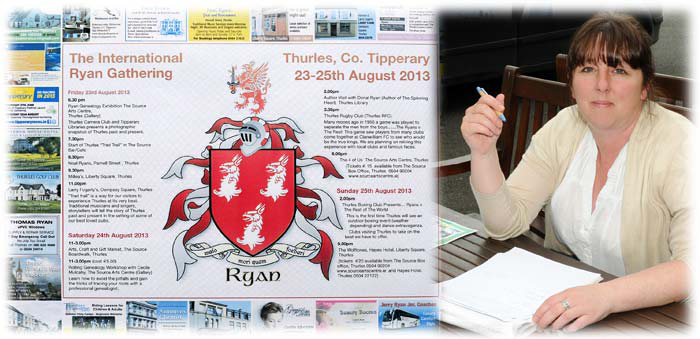 Ryan Gathering 23rd to 25th August Inclusive. No surprise then that Jane Ryan (Ryan Busty Clan) thought it would be a great idea, last year, to get all of the ‘Busty Ryan Clan,’ together and to investigate their genealogy. Gradually the idea grew and with “The Gathering 2013,” being advertised, she thought it would be a good idea to perhaps turn this same smaller annual clan event into something with a little more International flavour.
Using the facilities at The Source and being experienced previously in Event Management in the UK, Jane thought it would be something that would attract much needed tourism to the town, while also developing a central location here in Thurles, where Ryan’s from anywhere on our planet, could gather to “Proclaim their Royalty, Agree Laws, Revere Ancestors and yes, subject to the dowry of course, Arrange Marriages, both parties being agreeable.”
While some sporting events (e.g. including boxing and rugby,) are included on her programme, (Ryan’s v the Rest,) flexibility will be the important order of this promising weekend, allowing people to mingle and meet new family connections, while sampling some of the local attractions, (e.g. Sports, Crafts, Exhibitions, History, Literature, Food and Drink,) and a chance to witness & experience the natural scenic beauty of the indisputable richest farmland in Europe.
To this end, arrangements are now in full swing for the holding of a special crafts market, numerous sporting events, visits to St Mary’s Famine museum & The Source Exhibition, latter which will furnish Ryan families with the opportunity to locate their own kinsfolk. (Remember the widely used Irish remark ” All Ryan’s are Rogues, but all Rogues aren’t necessarily Ryan’s.”
Rogues or not, Jane is desperately seeking, both worldwide & from here in Ireland, the following Ryan family Clans:-
Ryan (Preston’s) of Kilcommon; Ryan (Connie’s) of Upperchurch; Ryan (Sean Mor’s) of Newport; the Ryan (Man’s) of Gurtovalla; the Ryan (Ladie’s) of Kilfeacle; the Ryan (Carpenter’s) of Dundrum; the Ryan (Manager’s) of Hollyford; the Ryan (Bawn’s) of Cappamore; the Ryan (Roger’s) of Newport; the Ryan (Chicken’s) of Pallasgreen; the Ryan (Coopers); the Ryan (John’s); the Ryan (Donal’s); the Ryan (Rogues); the Ryan (Foxes); the Ryan (Seanig); the Ryan (Bulleens); the Ryan (Brigid); the Ryan (Scarteen’s); the Ryan (Dick’s); the Ryan (Cnoic’s); ah for God’s sake Jane you have me index finger worn down to half its size, sure look, if you are named Ryan, truth is we want to meet you here in Thurles, Co.Tipperary, on the weekend of August 23rd -25th 2013.
Seriously though, it is interesting to note that there are approximately 40,000 bearers of the Ryan surname & Ryan is the tenth most numerous surname in use in Ireland today. The greatest concentration of the name appears here in West Tipperary, where the Ryan’s have been in continuous occupation for time immemorial.
Of course one of the last major gathering of Ryan’s in Thurles was on March 20th 1826, when they made an ungodly show of themselves in the main square. Women standing on the sidelines, enjoying the spectacle of a local Faction Fight or Bataireacht, somehow got it into their heads, as women are wont, that their men folk required support. These interfering women began firing large rocks, latter secreted away in their shopping baskets, at the opposing faction. According to reports of this event, the stones fired missed intended targets and broke many of the windows of the local shop keepers in the square. The police who intervened were “desperately attacked,” and shots were fired killing 3 men.
This serious riot was only quelled by the intervention of the 15th. Royal Foot Regiment, then garrisoned in Thurles, who were prevailed upon to support the local authorities. Believe me when ye arrive this time, as the Chief Superintendent of the Gardaí said to me, as she gently tapped her 400ml can of Pepper Spray on her desk, “There will be no repeat performance, by those Ryan clans, with regard to that kind of behaviour in Thurles, this time out.”
Seriously, best to ‘Bookmark‘ this site now and keep an eye out for more updated information on The Ryan Clan Gathering 2013.
I have often stated, OK possibly to the point of boredom of our readers, that Thurles & Tipperary both as a town & county have contributed more to Irish history nationally, than any other county in Ireland.
Realise how Thurles is being, dare I say ‘brutally victimised,’ yet again, in not being allowed to reveal to the world its undisputed contribution to Ireland’s powerful historic past.
The Morpeth Roll is about to embark on a 14-month tour of Ireland, from NUI Maynooth to Westport, Derrynane, Clonmel, Kilkenny, Belfast, Dublin and back to NUI Maynooth, hopefully free of charge. Disappointingly however there is no mention of Thurles in this list of viewing venues.
(Imagine this Morpeth Roll displayed beside the Derrynaflan Chalice in ‘The Source,’ exhibition centre, but alas we continue to elect indifferent, unimaginative town & county Managers, politicians & county/local councillors, all whom remain hell bent on stealing bread from the mouths of Tipperary’s future generations.)
What has Thurles got to do with the Morpheth Roll, I hear you say? Answer quite a lot really, in fact in association, this Roll has more to do directly with Thurles than possibly anywhere else it will visit on this proposed tour, particularly with regard to the Great Famine period here in Thurles, (1845-1850).
This testimonial Morpeth Roll comprises a farewell address signed by approximately 275,000 people on 652 individual sheets of paper. These sheets were subsequently joined together to create a continuous length of paper, approximately 412 meters in length (Note: In relation to length Croke Park is only 145 meters long), which was rolled onto a mahogany spool. The idea for the Morpeth Roll came as the brain child of Augustus Frederick FitzGerald, (1791-1874) 3rd Duke of Leinster, residing in Carton House, Co Kildare and it was presented to George Howard (Lord Morpeth) at the Royal Exchange, Dublin, in September 1841, following his defeat in the 1841 general election, latter which consequently led to Lord Morpeth’s departure from Ireland as then Chief Secretary.
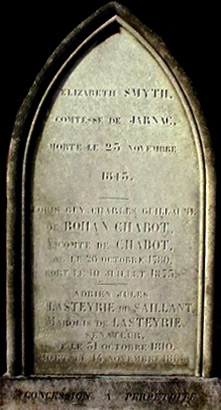 French Tomb of Elizabeth Smyth (Countess de Jarnac). Meanwhile, Francis James Mathew, 2nd and last Earl of Llandaff, had been a spendthrift. To pay his enormous racing and gambling debts, he had sold all the family estates in Wales and some of his Irish estates, while heavily mortgaging the remainder including Thurles & Thomastown. He died suddenly and intestate in Dublin on 12th March 1833, leaving no issue by his wife Gertrude La Touche, of Harristown, Co. Kildare.
Lady Elisha Mathew
These divided estate lands in Tipperary then passed to his sister, Lady Elisha (Elizabeth) Mathew, an eccentric individual, born in 1781, and who died unmarried at her house in Molesworth St., Dublin, on 14th December 1841, the same year the Morpeth Roll was presented to the aforementioned George Howard. (Click on images left for greater definition.)
Following her death, Lady Elisha Mathew, through her Will, bequeathed the Mathew, Earl of Llandaff (Welsh: Eglwys Gadeiriol Llandaf,) estates, including Thurles, Tipperary, (1,713 acres in the barony of Eliogarty and part of the Thomastown estate containing 2,378 acres in the barony of Clanwilliam,) to:-
(1) Her cousin the Comte de Jarnac,Viscount Chabot, of the Rohan family of France who had married Elizabeth Smyth (Feb 5th 1777), (Sister of Sir Skeffington Smyth of Tinny Park, county Wicklow,) Elisha’s aunt, sister of Elisha’s mother.
(2) Captain William Mathew, Elisha’s son (Born out of wedlock & fathered by the Prince Regent, latter who became King George IV ) former who died without issue in 1845.
(3) James Daly, later 1st Baron Dunsandle, who married Maria, daughter of Sir Edward Skeffington Smyth, maternal uncle of Lady Elisha.
Lady Elisha’s early death, possibly caused by alcohol abuse, revealed that there were mortgages amounting to £104,200 on her estates, £66,200 on Thurles and £38,000 on Thomastown. The total annual rents expected from both estates were only £4,500 per year.
Continue reading Morpeth Roll & The Forgotten Thurles Connection
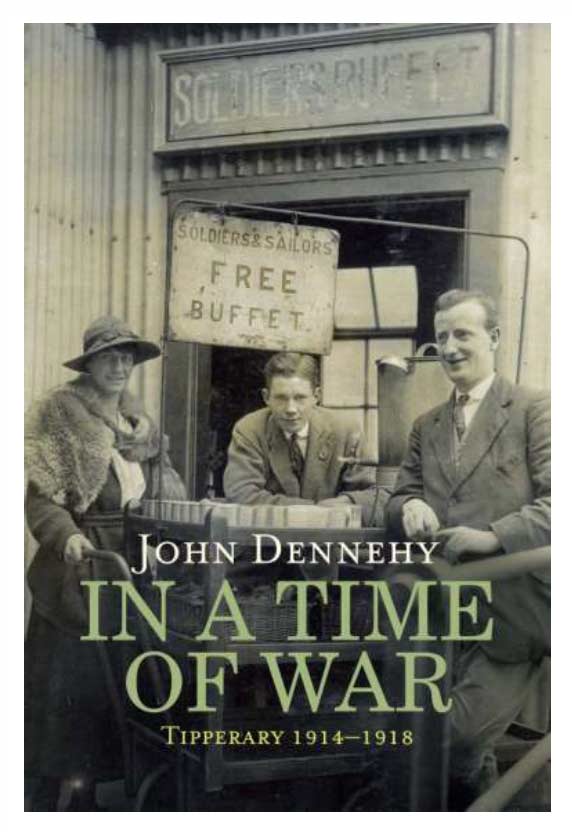 A new book by author John Dennehy will be officially launched in Thurles Library, situated in The Source building, Cathedral Street, on Thursday next, June 20th 2013, at 7.00pm. A new book by author John Dennehy will be officially launched in Thurles Library, situated in The Source building, Cathedral Street, on Thursday next, June 20th 2013, at 7.00pm.
Guest speaker for this event will be Mr Denis Marnane.
In this captivating new history book, entitled “In A Time Of War,” (1914 – 1918,) Tipperary native John Dennehy explores in great detail the profound political, economic, military and social impact of the Great War on just one Irish county; his own County Tipperary.
Little has been written about the impact of World War I on everyday life – food prices, the role played of women, soldier suicide, foreign refugees, etc.
It was a time of contested loyalties at home and unparalleled brutality abroad, and while the ordinary citizens were well aware of the bloody toll, thousands still continued to enlist. With the men now moved to fight, the women were mobilized to assist, playing a central role in all aspects of the home front from fund-raising to training in first-aid, yet all contributing to the emergence of women’s freedoms in Ireland after the war.
Yet, the insensitive handling of recruitment and the aborted attempt to impose conscription thus ensured there would be no successful transition from war to peace and Tipperary emerged radicalised and divided from this conflict.
The dramatic general election of December 1918 and the battle for independence that followed, muffled the trauma and emotion Tipperary experienced during World War I and set the scene for the political convulsions that would follow.
This is the story of that time – a microcosm for the impact of the Great War on Irish society as a whole. A truly excellent & factual read.
About The Author:
John Dennehy is a journalist from Clonmel, Co. Tipperary. He gained his PhD in history at University College Cork and has contributed to several publications on the subject of Tipperary during the First World War.
|
Support Us Help keep Thurles.info online by donating below. Thank you.
Total Donated 2026: €300.00
Thank You!
Daily Thurles Mass Livestream
|



Recent Comments