“Little Miss Muffet, she sat on her tuffet, eating her curds and whey. Along came a spider, who sat down beside her, and frightened Miss Muffet away.
As promised on April 21st, 2024, a 269 year old recipe, adapted from the manuscript book of Catherine Hughes, Killenaule, Thurles, Co. Tipperary, dated 1755, and published by Mrs Theodora FitzGibbon, in her book ‘A Taste Of Ireland’, published 56 years ago, in 1968, is published hereunder.
Milk going to the creamery, pictured in thelate 19th century,at Killenaule, Thurles, Co. Tipperary.
Cottage cheese, once considered to be the least desirable item to pick up in your supermarket’s dairy aisle, is now being heralded as one of the best items to put in your shopping basket.
Cottage cheese, as the name implies, is a type of cheese made up of curds and whey liquid (yes, the very thing Miss Muffet was eating before being rudely interrupted by that spider). It hasn’t always been celebrated for it lumpy wet consistency, but health enthusiasts highlight that it is a good source of calcium. More importantly, cottage cheese is naturally very high in protein, with on average, a whopping 11g of protein per 100g. Protein is essential for human growth and repair and for helping us to maintain our muscle as we get older.
A quick internet search will yield hundreds of cottage cheese recipes including pancakes, breads and desserts, but here’s a recipe for cottage cheese that is 269 years old.
Curds (Grut in Irish) formed an extensive part of the diet of the ancient Irish. They are mentioned in the earliest documented sources. Various early cheeses were made from them; one cheese being ‘faiscre grotha’, (Irish meaning literally ‘pressed curd’). The Reverend Richard Hopkins Ryland* in ‘The History, Topography and Antiquities of the County and City of Waterford’, dated 1824, says “Cheese made from skimmed milk and called ‘Mullahawn’ was formally an article of commerce in Waterford and was exported in large quantities…”
*Reverend Richard Hopkins Ryland was born in 1788, the descendant of 16th century Protestant planters who had settled in Dungarvan, Co Waterford. Generations of the family became ‘Church of Ireland’ ministers. Rev. Ryland married Isabella Julia Fleury (latter nine years his junior), the daughter of the Rev. Archdeacon George Louis Fleury of Waterford in 1818; at St. Patrick’s Church, Waterford. The couple had six sons and two daughters. His best known historical work was ‘The History, Topography and Antiquities Of The County And City Of Waterford’, (published 1824), which was dedicated to the Duke of Devonshire, while he also published religious pamphlets. He died in 1866, aged 78 years, followed by his wife Isabella Julia in 1873; aged 76 years, in South Kensington, Middlesex, England. The Tipperary ‘Clonmel Chronicle’ newspaper published her official ‘Death Notice’.
Pastry. 6 oz (6 heaped tablespoons) of flour. 3 oz (3 heat tablespoons) butter. 1 tablespoon sugar. ½ teaspoon salt. Water.
Filling. ½ lb (2 cups) sweet curds or cottage cheese. 2 eggs, separated. 2 heaped tablespoons sugar (vanilla sugar if possible). Grated peel and juice of half lemon. 1 tablespoons of butter.
For the topping. 1 egg and one tablespoon each of sugar, flour and melted butter.
First make the pastry by mixing the fat into the flower, sugar, and salt, to a firm pliable dough with a few tablespoons of water. Cool if possible before using. Make the filling by well mixing the curds with the sugar, soft butter, grated peel and juice of the lemon and the beaten egg yolks. Beat is well, then add the stiffly beaten egg whites. Roll out the pastry to fit a flan-tin, 7 in-8 inch across, line the tin with it and paint the bottom with beaten egg (this prevents the bottom pastry becoming heavy).
Put the filling into the pastry case, and, using the rest of the egg, mix it with the topping sugar, melted butter, and flour. Pour this evenly over the top. Bake in a moderate oven (350° F. electric; gas regulo 4) for 35 to 40 minutes, or until the top is golden brown. Serve cold, but not chilled, cut into wedges.
The Food Safety Authority of Ireland (FSAI) today announced the launch of its new ‘Learning Portal’, latter an easy-to-navigate digital platform designed to consolidate best-in-class compliance training content and resources on food safety and hygiene. The introduction of this new desktop and mobile compatible learning portal aims to strengthen adherence with food safety legal requirements and supplement the food safety training provided by food businesses to their staff.
The new learning portal, now available to more than 51,000 food businesses, is free to use and offers a wealth of specialised content to assist users in keeping up to date with the latest food safety requirements. The learning portal’s materials can be easily incorporated into food safety courses, staff meetings, or used for self-learning, allowing learners to study at their own pace and convenience. It was developed to assist in building compliance by food businesses and it includes eLearning modules, webinars, short videos, and explanatory materials covering a broad range of relevant topics.
Welcoming the new learning resource, Dr Pamela Byrne, CEO, FSAI said: “The launch of the ‘Learning Portal’ underscores our commitment to ensuring the highest level of food safety standards are achieved across Ireland. It is imperative that all food businesses recognise the importance of food safety training and the consequences if their staff are not properly trained. Untrained staff can lead to serious non-compliances, which can put consumers’ health at risk. It is the food business’s legal requirement to ensure the food they are producing, selling or distributing is safe to eat. We believe ongoing training and development is an essential component of every food business. I strongly encourage all food businesses across the country to avail of this free resource to assist in creating an ongoing positive culture of food safety compliance in their business”.
The primary content areas of focus include: Food Safety Culture: This module provides guidance on how to develop and maintain an appropriate food safety culture in a food business, in order to be able to demonstrate this to inspectors and customers. Food safety is legally required to be placed at the core of every food business.
Food Safety Controls in Ireland: This module outlines the role of the FSAI and other official agencies responsible for supervising food businesses in Ireland. It also provides training and information around the latest resources and supports available to food businesses to ensure the highest standards in operational food practices.
Why Food Safety Matters: A module designed to highlight and create understanding around the importance of food safety in protecting the public health and the risks associated with non-compliance.
Product Recall: In line with the latest Irish and EU legislation this topic includes easy to understand short videos outlining what steps need to be taken in the case of a product recall.
The FSAI calls on all food businesses and relevant food professionals to access the new ‘Learning Portal’ and take advantage of its valuable resources to enhance food safety practices across the country.
Food Safety Authority of Ireland (FSAI), recall a batch of Bigi Mama ginger powder, due to the presence of Salmonella.
Alert Summary dated Thursday, April 25th, 2024. Category 1: For Action Alert Notification: 2024.15 Product Identification: Bigi Mama ginger powder; pack size: 50g Batch Code Best before: 01/12/2025 Country Of Origin: India
Message: The above batch of Bigi Mama ginger powder is being recalled due to the presence of Salmonella. Recall notices will be displayed at point-of-sale.
Nature Of Danger: People infected with Salmonella typically develop symptoms between 12 and 36 hours after infection, but this can range between 6 and 72 hours. The most common symptom is diarrhoea, which can sometimes be bloody. Other symptoms may include fever, headache and abdominal cramps. The illness usually lasts 4 to 7 days. Diarrhoea can occasionally be severe enough to require hospital admission. The elderly, infants, and those with impaired immune systems are more likely to have a severe illness.
Action Required: Manufacturers, wholesalers, distributors, caterers & retailers: Retailers are requested to remove the implicated batch from sale and display recall notices at point-of-sale.
Consumers: Consumers are advised not to eat the implicated batch.
The next lecture in the Environmental Protection Agency (EPA) Climate Change lecture series will be delivered by Professor Ms Lea Berrang Ford, Deputy Director at the UK Health Security Agency.
Professor Ms Lea Berrang Ford is Head of the UKHSA Centre for Climate and Health Security and a Research Chair in Climate and Health at the Priestley International Centre for Climate. She is an expert in climate change impacts on health, adaptation to the health effects of climate change, and the health implications of decarbonisation.
Prof. Berrang Ford was a Lead Author on the 2022 Intergovernmental Panel on Climate Change (IPCC) 6th Assessment Report, is a co-author on the 2022 report of the Lancet Countdown on health and climate change, and led the Global Adaptation Mapping Initiative, an international collaboration of 125 scientists to assess evidence on progress on global adaptation to climate change.
She has led international, interdisciplinary projects on climate and health for over a decade, working with a range of global research and policy partners, in particular in Uganda, Peru, and the Canadian Arctic. Ms Berrang Ford is a former Research Chair in Climate and Health with the Canadian Institutes of Health Research and former a Royal Society Wolfson Research Fellow.
This lecture, entitled ‘Climate change and health: from paralysis to pragmatism’, will provide an overview of the landscape of climate change and health including risks, intervention opportunities and state of the evidence. It will address the challenge of coordinating research and governance and move from ‘paralysis to pragmatism’ in the face of daunting and uncertain climate change and health risks.
Welcoming Professor Berrang Ford, Ms Laura Burke, Director General, EPA, said: “We are delighted to welcome Professor Berrang Ford to give the first EPA Climate Lecture of 2024 on the topic of climate change and health. Climate change will have wide ranging global consequences for human health, arising from extreme weather events such as heatwaves, storms and flooding, increasing suitability of regions for invasive species, implications for mental health, and impacts on antimicrobial resistance.
Ms Burke further added: “Ireland’s Climate Change Assessment highlights the climate-related health impacts and the opportunities that face Ireland. Effective climate action in response to this challenge will make us more resilient to the coming changes and bring benefits for individuals, public health, and society.”
Professor Berrang Ford will draw on the experience of the new Centre for Climate and Health Security within the UK Health Security Agency and will lay out an optimistic vision for how public health and environmental agencies begin to respond and prepare for the grand challenge of climate change threats to health.
The public lecture will take place tomorrow Tuesday, April 23rd at 6:30pm at The Banking Hall in the College Green Hotel, Dublin and will also be streamed online. This free event requires registration through the following link HERE. The event will also be recorded and uploaded to the EPA YouTube channel, located HERE.
This lecture forms part of the National Dialogue on Climate Action, and people can also follow the discussion on Twitter using the hashtag #ClimateLecture2024, See HERE.
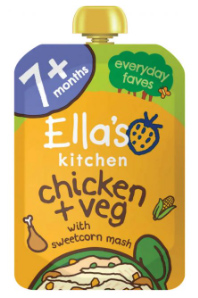
Food Safety Authority of Ireland recall a batch of Ella’s Kitchen Chicken and Veg with Sweetcorn Mash, due to the presence of furans and methylfurans.
Alert Summary dated today, Friday, April 19th 2024.
Category 1: For Action. Alert Notification: 2024.14 Product Identification: Ella’s Kitchen Chicken and Veg with Sweetcorn Mash; pack size: 130g. Batch Code: 3250 03:53 B5 LC; best before: 10/2024. Country Of Origin: France. Message: The above batch of batch of Ella’s Kitchen Chicken and Veg with Sweetcorn Mash is being recalled due to the presence of furans and methylfurans. Recall notices will be displayed at point-of-sale.
Nature Of Danger:Furan and methylfurans are process contaminants that can form when food is heated. While consuming the contaminated product doesn’t present an immediate health risk, long-term, continuous intake may pose a potential risk to health. Therefore, exposure to these substances needs to be minimised.
Action Required: Manufacturers, wholesalers, distributors, caterers and retailers are requested to remove the implicated batch from sale and display recall notices at point-of-sale.
Consumers:Parents and guardians are advised not to use the implicated batch.
This website uses cookies to improve your experience. We'll assume you're ok with this, but you can opt-out if you wish.AcceptRead More
Privacy & Cookies Policy
Privacy Overview
This website uses cookies to improve your experience while you navigate through the website. Out of these, the cookies that are categorized as necessary are stored on your browser as they are essential for the working of basic functionalities of the website. We also use third-party cookies that help us analyze and understand how you use this website. These cookies will be stored in your browser only with your consent. You also have the option to opt-out of these cookies. But opting out of some of these cookies may affect your browsing experience.
Necessary cookies are absolutely essential for the website to function properly. This category only includes cookies that ensures basic functionalities and security features of the website. These cookies do not store any personal information.
Any cookies that may not be particularly necessary for the website to function and is used specifically to collect user personal data via analytics, ads, other embedded contents are termed as non-necessary cookies. It is mandatory to procure user consent prior to running these cookies on your website.









Recent Comments