Food Safety Authority recall Russell Meats Sliced Corned Beef, Sliced Turkey and Sliced Roast Beef due to unapproved processing, packaging and labelling.
Alert Summary dated Tuesday, May 20th, 2025.
Category 1: For Action Alert Notification: 2025.20 Product Identification: Russell Meats Sliced Corned Beef, Russell Meats Sliced Turkey, Russell Meats Roast Beef Sliced. Batch Code: All batch codes, all use by dates.
Message: All vacuum packed ready-to-eat Russell Meats Sliced Corned Beef, Sliced Turkey and Roast Beef Sliced are being recalled as they were processed, packaged and labelled without approval and were therefore not subject to official controls. Recall notices will be displayed at point-of-sale.
Wholesalers/Distributors: Same are requested to contact their affected customers and recall the implicated products and provide a point-of-sale recall notice to their retail customers.
Retailers: Same are requested to remove the implicated products from sale and display recall notices at point-of-sale.
Consumers: Consumers are advised not to eat the implicated products.
Afternoon Tea in Cashel Library tomorrow afternoon at 2:30pm
‘How Are You?asks, Ms Maura Barrett, (Cashel Library) who now reports:
“Hello, How Are You?” is a campaign about connecting with those around us and engaging in open conversations about mental health. It’s about asking the question, ‘How Are You?’ with meaning, and really listening to the response.
Following on from the successful Afternoon Tea last year, Cashel Library invites you once again, to come along and meet people; form a new friendship and discover the well-being effect that talking and listening to each other can have.
Sometimes all we need to do is ask the question “HELLO HOW ARE YOU?“
Afternoon Tea is a free event but please remember booking is essential in order to facilitate the necessary catering requirements for this event. To confirm attendance contact Tel: 062-63825.
Visitors attending this eventcan locate the Cashel Library building; situated on Friar Street, Lady’s Well, Cashel, Co. Tipperary, HERE. (G487+RX).
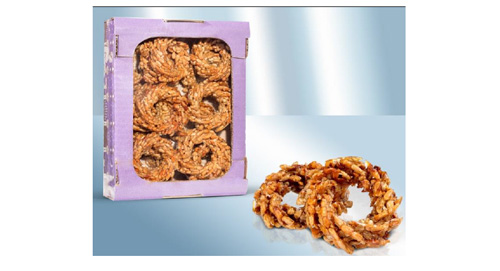
FSAI Recall Batch Of Süßware aus Sonnenblumenkernen Due To Possible Metal Pieces.
[повідомлення: Управління безпеки харчових продуктів Ірландії відкликає партію Süßware aus Sonnenblumenkernen через можливі шматки металу.]
Alert Summary dated Thursday, 15th May 2025.
Category 1: For Action. Alert Notification: 2025.19. Product Identification: Süßware aus Sonnenblumenkernen; pack size: 250g. Batch Code Best before date: 21/08/2025. Country Of Origin: Ukraine. [Країна походження: Україна].
Message: The above batch of Süßware aus Sonnenblumenkernen (sunflower seed confectionery) is being recalled due to the possible presence of metal pieces. Point-of-sale recall notices will be displayed in stores.
Action Required:Manufacturers, wholesalers, distributors, caterers and retailers:
Retailers: Are requested to remove the implicated batch from sale and display recall notices at point-of-sale. Wholesalers/distributors: Are requested to contact their affected customers and recall the implicated batch and provide a point-of-sale recall notice to their retail customers.
Consumers: Consumers are advised not to eat the implicated batch. [Споживачам рекомендовано не їсти зазначену партію.]
Half of septic tanks failed inspection, putting householders’ health and environment at risk, says EPA.
Local authorities completed 1,390 septic tank inspections in 2024, targeted near rivers and household drinking water wells which are most at risk of contamination by faulty septic tanks.
56% of septic tanks failed inspection. It is critically important that householders maintain their septic tanks as such failures have the potential to be a risk to their family’s health and the environment.
82% of septic tanks that failed during 2013–2024 were fixed by the end of 2024, which shows continued improvement. This has been aided by an increased uptake in grants.
The Environmental Protection Agency (EPA) today released the report on Domestic Waste Water Treatment System Inspections 2024, which details the findings of septic tank inspections completed by local authorities in 2024.
Domestic waste water treatment systems, mostly septic tanks, are used by householders to treat sewage. There are nearly half a million systems in Ireland. The EPA’s National Inspection Plan 2022-2026 requires local authorities to complete a minimum of 1,200 inspections annually, targeted near rivers and in areas where septic tanks are co-located with household drinking water wells. 1,390 septic tanks were inspected in 2024 with 56% (773) failing because they were not built or maintained properly.
When septic tanks fail inspection, local authorities issue advisory notices to householders setting out what is required to fix the problem. The EPA report found that 82% of septic tanks that failed during 2013–2024 were fixed, (81% in Co. Tipperary) up from 75% at the end of 2021. The number of advisory notices open more than two years decreased for the first time, from 576 at the end of 2023, to 523 at the end of 2024.
Water Authority.
Inspections Required 2024
Inspections done 2024.
Failure rate 2024
Systems failing 2013-2024.
Percent fixed at end 2024.
Tipperary.
40.
42.
31%
182.
81%
Commenting on the report, Dr Micheál Lehane, (Director of the EPA’s Office of Radiation Protection and Environmental Monitoring) said: “The reduction in the number of old advisory notices (over two years) is to be welcomed, however, the number not resolved remains unacceptably high, allowing risks to public health and the environment to continue. Greater and sustained enforcement effort is needed by local authorities during their annual septic tank inspections, checking that faulty septic tanks are fixed and taking legal action where necessary.”
The grant schemes for remediation of septic tanks were changed at the start of 2024 to increase the amount from €5,000 to €12,000 and remove the requirement to have registered the septic tank in 2013. There were 265 grants awarded in 2024, totalling nearly €2.5 million, up from 194 grants in 2023.
Mr Noel Byrne, (EPA Programme Manager) said: “More than half of septic tanks failed inspection, which is a real concern. Householders’ water supplies and local rivers may be exposed to contamination from faulty septic tanks, which can pose a serious health risk to individuals and the local environment. By maintaining their septic tank and fixing any problems identified, householders will protect their health and the environment. Householders should take advantage of the enhanced grants where applicable.”
The National Inspection Plan for Domestic Waste Water Treatment Systems 2022 – 2026 was published by the EPA in 2021. The plan requires a minimum of 1,200 inspections from 2023 onwards. There was a shortfall in inspections by four local authorities (Limerick, Donegal, Wexford and Leitrim) in 2024 and these need to be completed in 2025. The EPA will continue to monitor local authorities that are required to make up these shortfalls in 2025.
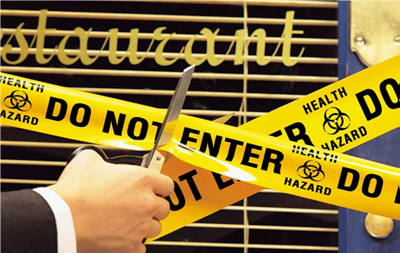
The Food Safety Authority of Ireland (FSAI) today reported that ten Enforcement Orders were served on food businesses during the month of April 2025, for breaches of food safety legislation, pursuant to the FSAI Act, 1998 and the European Union (Official Controls in Relation to Food Legislation) Regulations, 2020. The Enforcement Orders were issued by Environmental Health Officers in the Health Service Executive (HSE).
Two Closure Orders were served under the FSAI Act, 1998 on:
The City Arms Gastro Bar/ Bistro(Closed area: The food storage and preparation area: preparation, cooking and service of food)(Public House), 50 High Street, Waterford.
Tasty(Take Away), The Square Dromcollogher, Charleville, Limerick.
Namaste Indian Cuisine, 88/89 King Street North, Smithfield, Dublin 7.
Bojon Spices (all the activities of the business, establishments, holdings or other premises be ceased and the internet sites or social media sites it operates or employs be ceased)(Restaurant/Café), Summerhill Road, Dunboyne, Meath.
Rio Latte Bar(Restaurant/Café), Unit 7, Park Shopping Centre, Prussia Street, Dublin 7.
Two Improvement Orders were served under the FSAI Act, 1998 on:
Some of the reasons for the Enforcement Orders in April include: no documentation of pest control checks; multiple mouse droppings throughout the premises, including in a cupboard, under a sink and wash hand basin used for storing cleaning equipment; flies observed in the kitchen with no fly screen in place; failure by staff to demonstrate any knowledge of food safety management procedures; inadequate and uncalibrated equipment used to monitor temperatures; lack of evidence to support use-by dates on defrosted food; lack of cleaning and disinfection; no hot water or designated hand wash basin in the food preparation area; a heavily stained kitchen, with visible dirt and grease on cooking equipment and stainless steel surfaces; customer toilets and urinals that had not been cleaned; an outdoor sink unit positioned over an open drainage gully, posing a contamination risk.
Mr Greg Dempsey, Chief Executive, FSAI, warned that there is an obligation for food businesses to act responsibly and ensure the food they provide to their customers is safe to eat.
“Food businesses owe it to their customers that the food they are selling is safe to eat. Not only is it the right thing to do, it’s also a legal requirement under food law. Consumers have a right to trust that the food they buy is safe to eat and that it complies with all relevant food safety legislation. The findings that led to these Enforcement Orders highlight an unacceptable disregard for basic food safety and hygiene practices. These are preventable issues, and there are simply no excuses for failing to comply with the law. Food businesses must remain vigilant, ensuring regular checks, effective pest control, and thoroughly cleaned well-maintained premises to protect their customers’ health and uphold consumer trust in the food chain.”
Details of the food businesses served with Enforcement Orders are published on the FSAI’s website. Closure Orders and Improvement Orders will remain listed in the enforcement reports on the website for a period of three months from the date of when a premises is adjudged to have corrected its food safety issue, with Prohibition Orders being listed for a period of one month.
This website uses cookies to improve your experience. We'll assume you're ok with this, but you can opt-out if you wish.AcceptRead More
Privacy & Cookies Policy
Privacy Overview
This website uses cookies to improve your experience while you navigate through the website. Out of these, the cookies that are categorized as necessary are stored on your browser as they are essential for the working of basic functionalities of the website. We also use third-party cookies that help us analyze and understand how you use this website. These cookies will be stored in your browser only with your consent. You also have the option to opt-out of these cookies. But opting out of some of these cookies may affect your browsing experience.
Necessary cookies are absolutely essential for the website to function properly. This category only includes cookies that ensures basic functionalities and security features of the website. These cookies do not store any personal information.
Any cookies that may not be particularly necessary for the website to function and is used specifically to collect user personal data via analytics, ads, other embedded contents are termed as non-necessary cookies. It is mandatory to procure user consent prior to running these cookies on your website.







Recent Comments