|
|
 Fund raising events in Thurles We have been contacted here today by the Secretary of the ‘Laura’s Lymes Treatment Fund,’ M/s Aisling Crowe.
Aisling wishes to remind all Tipperary people that this organisation was set up just over a month ago, with the express purpose of raising much needed funds for the treatment of a local Thurles girl, 24 year old Laura Cleary, who is infected with Lyme Disease.
Aisling wishes to inform you all regarding this treatment fund’s various fundraising activities & fun events, taking place over the coming days & months ahead and all taking place here within Thurles.
Your full support of these events would be much appreciated by the fundraising organisers, so if at all possible please do attend where possible.
Please log onto their facebook page here @: http://www.facebook.com/#!/lauralymes.treatmentfund.3
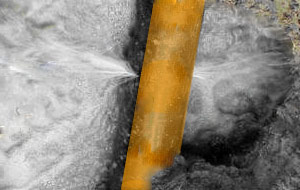 Leaking Victorian Water Pipes The lack of public information & indeed public debate regarding the Thurles Regional Water Supply Scheme paid for by tax payers & the future proposed construction of a local Water Treatment Plant, both estimated at €26 million, prompts Proinsías Barrett to ask some pertinent questions.
Proinsías writes: “It is good to see that Thurles and environs are to receive a modern water system, but I have some reservations about the motives and procedures involved.
It is only now that the Troika and IMF are in town that emphasis has been suddenly placed on water charges and centralised provision, allowing easier ‘management’ and thus easier systems of charging.
I am not completely against water metering because as I have said before, it has proven to be a disincentive to waste and the ridiculous practice of leaving a tap running during cold spells to prevent the pipes from freezing, instead of insulating pipes properly. However with the financial problems in the nation, a reasonable charge is acceptable, provided our water is crystal clean and the infrastructure remains in the public domain.
However so far indications would suggest that these conditions may not be realised.
The €10 million initial cost is obviously coming from the national coffers (Tax payers), but it seems it is impossible for tax payers and citizens (Who just may be interested.) to have any input into or to ask any questions about these projects. I know the majority of the public are possibly not concerned or care little regarding the technicalities of water provision, but some are and all are entitled to know what is planned with their money.
I visited Croatia last year for a month and travelling around its various towns and cities, I was very impressed at the cleanliness of the country and the abundant fresh tasting clean water, which all the tourist publications insisted, was absolutely safe to drink from any tap anywhere in the country, and this is a country with a Mediterranean climate and scorching summers with little rainfall.
I was puzzled. I only purchased one litre of bottled water during that month travelling, and re-filled it as I went.
Continue reading Chemical Fluoride & Our New Thurles Water Treatment Plant
 WHERE: THE DOME, SEMPLE STADIUM, THURLES, CO. TIPPERARY. WHERE: THE DOME, SEMPLE STADIUM, THURLES, CO. TIPPERARY.
WHEN: Monday 25th June, 2012.
TIME: From 2:30pm – 5:30pm
WHEN: Tuesday 26th, Wednesday 27th & Thursday 28th June, 2012.
TIME: From 6pm – 9pm each day.
So do help save a life, & if further details are required please check their website www.giveblood.ie or contact them on Tel: 061-306980
Ten facts which will help demonstrate how precious your gift of blood really makes to others in emergency situations.
- One in four people will need a blood transfusion at some point in their lives.
- Only 5% of the population are regular blood donors.
- Over 1,000 Irish people receive transfusions every week in Ireland
- Just one car accident victim may require up to 30 units of blood, a bleeding ulcer could require anything between 3-30 units of blood and a coronary artery bypass may use between 1-5 units of blood.
- Approximately 70,000 patients will have transfusions in Irish hospitals this year.
- Approximately 3,000 blood donors are needed each week in Ireland.
- A unit of blood lasts for just 35 days.
- Some blood packs for new born babies or cancer treatment only lasts for 5 days.
- There is no substitute for human blood.
- The IBTS supply 71 hospitals in Ireland with blood and blood products 365 days a year.
Thanking you, in anticipation, for this precious gift.
 An investigation is under way after an Air Corps Ambulance Helicopter was forced to make a “heavy but controlled landing,” in a field a few kilometres outside the village of Borrisoleigh, on the main Nenagh road, in Co Tipperary, shortly after 2.00pm today. An investigation is under way after an Air Corps Ambulance Helicopter was forced to make a “heavy but controlled landing,” in a field a few kilometres outside the village of Borrisoleigh, on the main Nenagh road, in Co Tipperary, shortly after 2.00pm today.
It is understood the helicopter may have clipped an overhead power line.
The Air Corps helicopter, which had three passenger on board, was attempting to answer an emergency call & pick up a patient in Borrisoleigh at the time of the incident.
The patient was subsequently transferred by road ambulance from Borrisoleigh, to the Mid Western Regional Hospital in Limerick.
It is also understood that three passengers on board the helicopter, sustained no injuries, while the extent of damage to the helicopter itself has yet to be determined. The Athlone based Air Corps Ambulance had only begun operations fifteen days previously.
The Air Accident Investigation Unit in the Department of Transport, Tourism and Sport has been informed about the incident & contingency plans are underway to resume Emergency Aero-Medical Services as soon as possible.
 According to a report this week in the Irish Examiner a new HSE review of its Child and Family services, shows Tipperary South had the highest level of child neglect in the country at 30.3%, just ahead of Dublin West. According to a report this week in the Irish Examiner a new HSE review of its Child and Family services, shows Tipperary South had the highest level of child neglect in the country at 30.3%, just ahead of Dublin West.
Of the almost 6,000 children in care nationally at the end of 2010, 442 came from the North Lee area of Cork City — the highest figure for any one area in the country.
The review also showed that 31 children had been in residential care for more than five years, half the 2006 figure. The primary reasons for admission into the care system were split into three categories:- Abuse, Child Problems and Family Problems.
The report, under the headline “primary reason for welfare concern following initial assessment“, showed that a family member abusing drugs or alcohol, were a major factor. Other significant issues were where a child displayed emotional/behavioural problems, parent separation/absence, and financial difficulty.
|
Support Us Help keep Thurles.info online by donating below. Thank you.
Total Donated 2026: €300.00
Thank You!
Daily Thurles Mass Livestream
|





Recent Comments