Archives

Repealing The Eighth Amendment

“It’s just one man’s opinion, but it’s my opinion and I reserve the right, above all others, to hold that opinion.”

The movement to ‘Repeal the Eighth Amendment’ is certainly gathering momentum, and various categories of unborn babies are facing an increasing prospect of being legally aborted within Ireland. The law already allows the abortion of the children of suicidal mothers (subject to certification by three professionals that the case comes within the parameters of the Protection of Life in Pregnancy Act 2013), and the danger of abortion is extended by the same Act to children of mothers whose lives are in danger from the pregnancy in the opinion of two professionals in ordinary cases, or just one in emergency cases.

Ms Justice Mary Laffoy Chairperson of the 100-member convention taxed with considering issues including the Eighth Amendment.

The protagonists of the ‘Repeal’ campaign aim to further extend legal abortion in Ireland to other tragic cases, for example, unborn children suffering from a fatal foetal anomaly, anencephaly, various chromosomal or genetic anomalies, and to children conceived through rape or incest. Other ‘Repealers’, depending on the extent of their liberalism, would extend a right of abortion to the mothers of any or all children regarded by their mothers as flawed, unhealthy, unwanted or inconvenient.

It is argued by the protagonists of the ‘Repeal the Eighth’ that this repeal will free the legislators from the restrictions of the Eighth Amendment and enable them to enact laws to cater for these needy cases. But the question remains ‘will it’?

Where do lawmakers get their authority to enact laws anyway? Most people and most democratic constitutions would say that the power of the legislature to make laws comes to them from the people. But are there limits to the powers the people may grant to the legislature? The theory of parliamentary supremacy (or “legal positivism”) would hold that there is no limitation on the laws Parliament may enact. As Sir Leslie Stephen explained in this theory in his book ‘The Science of Ethics’: “If a legislature decided that all blue-eyed babies should be murdered, the preservation of blue-eyed babies would be illegal”.

But differently from many other constitutions, the Irish Constitution in Article 6 says that “All powers of government, legislative, executive and judicial, derive, under God, from the people…”.  These words “under God” were deliberately added to ensure that the Irish constitution would not be guilty of the absurdity to which the theory of absolute parliamentary supremacy leads. The Dáil is not omnipotent, but is subject to the law of God.

The awkward fact for atheists, agnostics, the lapsed, and those in the Dáil who haven’t read article 6 of the Irish Constitution, is that those who did write it and the majority who enacted it in 1937, mostly believed in God, and gave the Dáil no power to enact laws which are contrary to the law of God. When God said “Thou shalt not kill”, the consequence of Article 6 is that no TD, no Seanadóir, no Judge, no Doctor shall kill or authorise the killing of any innocent unborn child.

So, surely before they repeal the eighth Amendment (or Article 40, s.3, 3° which it inserted into the Constitution), abortion advocates need to surely repeal or amend Article 6, and also perhaps paganise or at least de-Christianise that Preamble to Bunreacht na hÉireann whose first words are “In the Name of the Most Holy Trinity, from Whom is all authority…”.
INMO To Ballot Members – Industrial Action Deferred

The Executive Committee of the Irish Nurses and Midwives Organisation (INMO) have agreed to ballot its members on proposals tabled during negotiations at the Workplace Relations Commission (WRC) this morning. This agreement now defers the proposed by nursing staff to take industrial action planned for Tuesday next.
While the dispute had centred around genuine staff shortages and incentives in recruiting and retaining nurses, the INMO Executive Committee are now expected to recommend that members accept these latest proposals, which are expected to cost in the region of some €180m per annum.

This dispute had been clamouring in relation to taking action for months, with members of the INMO voting 90% in favour of industrial action since before Christmas 2016. The organisation will now put in place immediate arrangements for a ballot to take place, with a view to having same completed no later than the end of March 2017 next.

With regards to outstanding outcomes on issues which still require debate on both sides; further dialogue just may result in mutual and acceptable outcomes for both members and their union representatives.

Skeleton Of Tipperary Giant To Remain In Trinity College

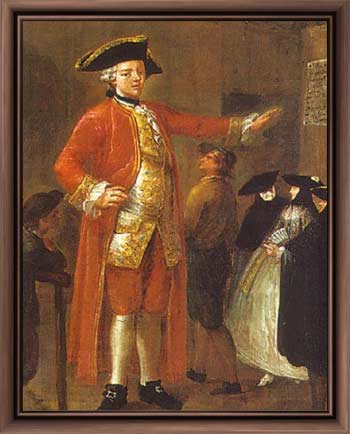
Cornelius Magrath the Silvermines Co. Tipperary giant.

Trinity College Dublin claim that they have no immediate plans to release the skeleton of a giant, born in March 1736, near the Silvermines, Nenagh, Co Tipperary to assist in his burial.

Cornelius Magrath who suffered from gigantism was 7ft 3in tall when he died in 1760. Legend recalls that Trinity students stole his body the day he died and it has been kept at the University ever since.

Of course body snatching was a lucrative business back in the 18th century  and those who were involved were often called “resurrectionists” or “resurrection-men”, who often benefited on the double, stealing personal effects from the corpses sold on for dissection or anatomy lectures in medical schools. Because the only bodies legally available for medical dissection back then were the remains of executed criminals, demand soon outpacing supply.

Such body snatching activity possibly lends itself to the use of the phrase “The Graveyard Shift”.  Graveyards started running out of places to bury people. So coffins were often dug up and bones sent to a “bone-house” allowing for the reuse of grave space. When opening such coffins, it was discovered that a considerable number were found to have scratch marks on the inside lid, confirming that individuals were being burying alive. Based on this evidence it was agreed that a piece of string be tied to the wrist of certain corpses; to be lead through the coffin and up through the ground before being tied to a bell. An individual would sit out in the graveyard all night (the “graveyard shift”) to listen for bell; sounds, hence someone could be “saved by the bell” or was considered to be a “dead ringer.”

The Magrath skeleton today is viewed only by those doing research and continues to inspire scholarship through teaching a great many students, scientists, professors and experts studying his disease.

While it is claimed that Tipperary locals are calling on Cornelius’s skeleton to be released for burial; certainly Thurles.Info has heard nothing about it and Trinity College have released a statement also confirming it also had not been approached by any Tipperary individuals who are requesting his burial. The University in the past admits putting Cornelius’s skeleton on public display, but there are no plans for such similar displays into the future; leaving Cornelius to be only visited by medical students or associated groups involved in research or other educational activities.

Looks like our Dublin Media were stuck for front page sensationalism and national debate again.

You can read all about the Tipperary Giant Cornelius Magrath simply by clicking HERE

HIQA Unhappy With Medication Safety At Nenagh Hospital

Nenagh Hospital

The inspections carried out on a number of hospitals around the country with regard to medication safety, have uncovered cases of under-reporting of medication, near misses and other incidents. It also found that some hospitals do not have an up-to-date approved lists of medications in stock.

The Health Information and Quality Authority (HIQA) have just published the first of these inspection reports on some seven hospitals, with regard to medication safety in such public acute establishments.

Here in Co. Tipperary, a report into Nenagh Hospital has stated: “Near misses in relation to medication-related issues were not being reported. Senior management recognised that this level of reporting was not in line with Internationally accepted norms and were aware of the need for improvement.”

This same report stated: “On the day of the announced inspection Nenagh Hospital did not have essential governance arrangements in place in relation to medication safety. The hospital did not have clear objectives, goals or plans for medication safety.”

Thurles Blood Donation Clinic Wednesday 1st March, 2017

give-blood

M/s Geraldine O’Rourke, of the Irish Blood Transfusion Service, reports:-

The Irish Blood Transfusion Service (IBTS) will attend at The Dome in the grounds of Semple Stadium here in Thurles, Co. Tipperary in the coming days.

Their mobile unit will be in place on Wednesday 1st March, 2017, from 5:30pm to 8:30pm, so where possible do please attend and help save a life by giving blood.

For further details check their website www. giveblood.ie or contact them on Tel: 061 306980.

Remember approximately 70,000 patients will have transfusions in Irish hospitals this year
Some 3,000 blood donors are needed each week in Ireland
A unit of blood lasts for just 35 days.
Some blood packs for new born babies or cancer treatment only lasts for 5 days
There is no substitute for human blood.
The Irish Blood Transfusion Service supplies 71 hospitals in Ireland with blood and blood products 365 days a year so do help save a life … Give Blood.