New 96-bed unit opened today at University Hospital Limerick.
A new 96-bed unit has opened at University Hospital Limerick (UHL), as part of efforts to ease chronic overcrowding at the Mid West’s main hospital serving North Tipperary.
Minister for Health Ms Jennifer Carroll MacNeill officially opened this new facility, which includes four wards of 24 beds each.
Around 400 additional staff are required to operate the unit, most of whom are already in place, according to the hospital.
UHL, which provides the only 24-hour emergency department for North Tipperary, Limerick and Clare, has consistently recorded the highest number of patients on trolleys in the country.
The expansion comes two weeks after the Health Information and Quality Authority (HIQA) urged immediate action and investment to increase bed capacity in the HSE Mid West.
HIQA outlined three options: expanding the Dooradoyle campus, developing a new nearby site, or constructing a new hospital. Ms Carroll MacNeill said all options remain on the table, adding that increasing inpatient capacity is her priority.
Ms Carroll MacNeill also welcomed the recent granting of planning permission for a second 96-bed block at the Dooradoyle site.
According to the Irish Nurses and Midwives Organisation (INMO), 100 people were waiting for treatment at UHL on Monday; 70 in the Emergency Department and 30 admitted patients still awaiting a bed.
Emergency departments in Ennis, Nenagh and St John’s Hospitals were closed in 2009 by under a Fianna Fáil led government, pursuing a reconfiguration of services, centralising emergency care at UHL.
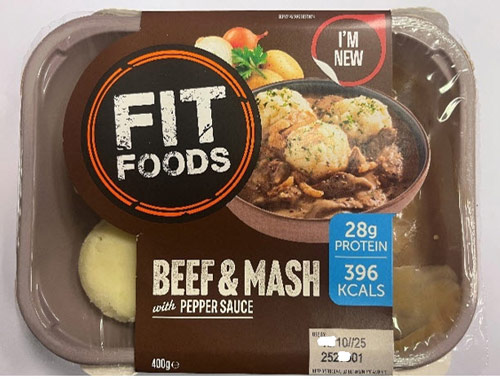
Undeclared sesame, soya and celery in a batch of Fit Foods Beef and Mash with Pepper Sauce.
Alert Summary dated Friday, October 10th 2025.
Allergy Alert Notification: 2025.A35 Allergens: Sesame seeds, soybeans and celery Product Identification: Fit Foods Beef & Mash with Pepper Sauce; pack size: 400g Batch Code: 2528101; use by date: 20/10/2025 Country Of Origin: Ireland
Message: The above batch of Fit Foods Beef & Mash with Pepper Sauce contains sesame, soya and celery which are not declared in the list of ingredients. This may make the batch unsafe for consumers who are allergic to or intolerant of sesame, soya and / or celery and therefore, these consumers should not eat the implicated batch. The affected batch is being recalled.
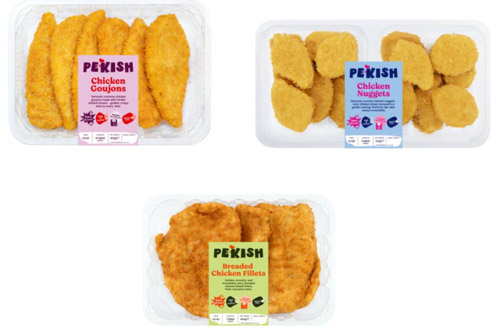
Recall of specific batches of Pekish breaded chicken products due to incorrect cooking instructions on the label.
Alert Summary dated Thursday, October 9th 2025.
Category 1: For Action Alert Notification: 2025.55 Product Identification: Please see table below. Batch Code: Please see table below.
Message: The below batches of Pekish breaded chicken products are being recalled due to incorrect cooking instructions on the label, which are insufficient to cook the products to a core temperature of 75°C. Recall notices will be displayed at point-of-sale.
Product name.
Pack size.
Use by dates.
Pekish Chicken Goujons.
400 g.
All use by dates up to and including 14/10/2025.
Pekish Chicken Nuggets.
320 g.
All use by dates up to and including 16/10/2025.
Pekish Breaded Chicken Fillets.
400 g.
All use by dates up to and including 18/10/2025.
Action Required: Manufacturers, Wholesalers, Distributors, Caterers and Retailers:
Retailer: Same are requested to remove the implicated batches from sale and display recall notices at point-of-sale. Wholesalers/Distributors: Same are requested to contact their affected customers and recall the implicated batches and provide a point-of-sale recall notice to their retailer customers. Consumers: Consumers are advised not to eat the implicated batches.
The Food Safety Authority of Ireland (FSAI) today published a new Guidance Note on Food Safety Culture, which aims to support food businesses in meeting their legal requirements to establish and maintain an appropriate food safety culture in their business. This new resource will assist food businesses in embedding food safety into their everyday practices and will also provide a framework for inspectors to assess food safety culture during inspections.
To produce safe food, behaviour and awareness must align with safe food practices. Food safety culture encompasses how everyone, including managers and employees, think and act in their job on a consistent basis. It reflects the commitment to food safety at every step and within every role. The Guidance Note contains practical tools such as a self-assessment checklist and questionnaires to help businesses evaluate their own culture and prepare for inspections.
By increasing awareness and adopting safe food behaviours, an appropriate food safety culture can:
Maintain high food safety and hygiene standards and regulatory compliance.
Aid in keeping consumers safe from foodborne illness.
Increase transparency and improve communication among all employees.
Help prevent problems that results from unsafe food.
Mr Greg Dempsey, Chief Executive, FSAI, said: “Having the right food safety knowledge and skills is not just a regulatory requirement; it is essential for building and sustaining an appropriate food safety culture within a food business. This reduces food safety incidents, protects public health and also strengthens consumer trust and brand reputation. Our new Guidance Note is designed to support businesses in meeting their legal obligations while embedding best practices that safeguard consumers and support a stronger, safer food system. We encourage all food business operators to make full use of this new resource and commit to promoting a positive food safety culture.”
The FSAI’s Learning Portal also has a training module on food safety culture to assist food businesses that can be used in tandem with the Guidance Note.
Under an amendment to EU Regulation 852/2004, all food businesses with the exception of primary producers are now required to establish, maintain, and provide evidence of an appropriate food safety culture, taking in account the size and nature of the food business.
Wastewater discharged from 59 per cent of Ireland’s existing treatment plants failed to consistently meet standards set in EPA licences to prevent pollution.
Nearly half of these failures are due to poor operational management at existing treatment plants.
Delays by Uisce Éireann in delivering improved infrastructure are prolonging risks to water quality.
EPA will continue to take enforcement action to bring existing wastewater treatment plants up to standard.
The Environmental Protection Agency’s (EPA) Urban Wastewater Treatment in 2024 report, released today, shows that investment at priority areas highlighted by the EPA is delivering improvements with the volume of raw sewage discharged daily halving since early 2024.
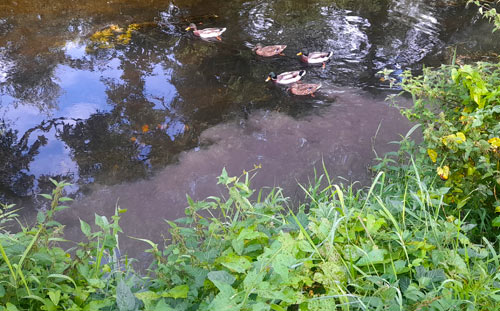
However, wastewater discharges continue to harm water quality in rivers, estuaries, lakes and coastal waters.
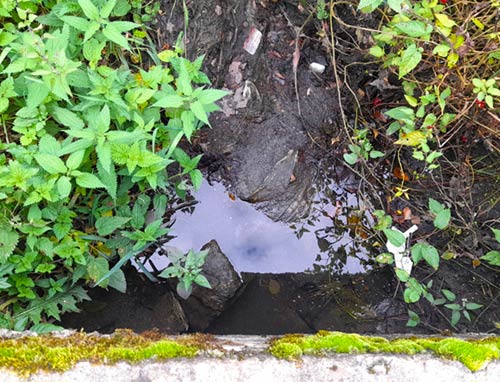
Effluent continues to flow into the River Suir in Thurles Town centre. Pic: G. Willoughby
EPA licences set out the treatment standards necessary to prevent pollution and protect the environment. EPA assessment of wastewater discharges in this report highlights that over half (59%) of licensed treatment plants fail to consistently meet these standards. Failures range from occasional, short-term breaches to persistent discharges of poorly treated sewage. The main causes are inadequate infrastructure and poor operation and maintenance of treatment plants.
Operation and maintenance issues can and must be resolved as a matter of urgency. Addressing infrastructural deficits is a longer-term challenge that requires substantial and sustained investment. As it will take many years to complete all infrastructural upgrades, Uisce Éireann must give priority to the areas where improvements are most needed and will bring the greatest benefits. The EPA has identified 78 priority areas for improvements. Uisce Éireann has not yet started the works needed at half of these.
Effluent continues to flow into the River Suir in Thurlrs Town centre. Pic: G. Willoughby
Launching the report, MrPat Byrne, Director of the EPA’s Office of Radiation Protection and Environmental Monitoring said: “Targeting improvements at priority areas identified by the EPA is delivering environmental benefits. The new treatment plants built to stop discharges of raw sewage from areas such as Arklow and Kilrush are clear examples of this progress. However, delays in designing and delivering infrastructural upgrades required at many more areas are prolonging negative impacts on water quality and the wider environment. Uisce Éireann must accelerate the pace of delivery of essential upgrades at priority areas to ensure cleaner rivers, estuaries, lakes and coastal waters and support a healthier environment for all.”
Treatment at fourteen large towns and cities failed to meet basic, European wide standards set in the Urban Wastewater Treatment Directive. Six of these met the standards in 2023, highlighting the need for Uisce Éireann to take action to prevent previously compliant treatment plants slipping into non-compliance.
Regarding the operation and maintenance of treatment plants, Mr Noel Byrne, EPA Programme Manager, said: “Too many wastewater treatment plants are failing to meet licence standards due to poor management and maintenance practices. This is simply not good enough. When treatment plants break down or are not managed properly, our environment pays the price. The EPA has prosecuted Uisce Éireann on 28 occasions for failing to treat wastewater properly. Poor operational performance will not be tolerated by the EPA. Uisce Éireann must take immediate action to improve the operation and management of treatment plants and implement effective maintenance programmes to prevent equipment breakdowns.”
The Urban Wastewater Treatment in 2024 report and the list of priority areas – including details of the environmental issues at each location and Uisce Éireann’s plans to address them – are available on the EPA website.
This website uses cookies to improve your experience. We'll assume you're ok with this, but you can opt-out if you wish.AcceptRead More
Privacy & Cookies Policy
Privacy Overview
This website uses cookies to improve your experience while you navigate through the website. Out of these, the cookies that are categorized as necessary are stored on your browser as they are essential for the working of basic functionalities of the website. We also use third-party cookies that help us analyze and understand how you use this website. These cookies will be stored in your browser only with your consent. You also have the option to opt-out of these cookies. But opting out of some of these cookies may affect your browsing experience.
Necessary cookies are absolutely essential for the website to function properly. This category only includes cookies that ensures basic functionalities and security features of the website. These cookies do not store any personal information.
Any cookies that may not be particularly necessary for the website to function and is used specifically to collect user personal data via analytics, ads, other embedded contents are termed as non-necessary cookies. It is mandatory to procure user consent prior to running these cookies on your website.







Recent Comments