At first glance, that can make insulation, heating upgrades, or a heat pump seem like poor value. But that would be the wrong conclusion, especially in a county like Tipperary, where many homes are older, more rural, more exposed to weather, and more likely to depend on oil, solid fuel, or outdated heating systems. The same CSO data that raised eyebrows also shows that better-rated homes generally use less energy per square metre, which remains one of the fairest ways to compare homes of very different sizes. In 2023, A and B rated homes using electricity for heating consumed 39 kWh per square metre, compared with 66 for C-rated homes and 58 for F and G rated homes.
That matters in Tipperary because house size and dwelling type play a big role in energy demand. Detached houses use far more energy overall than mid-terrace homes simply because there is more space to heat. The CSO found detached homes had the highest mean electricity consumption in 2023, at 7,388 kWh, 77% higher than mid-terrace houses. For a county with a large stock of detached and one-off rural homes, that makes efficiency upgrades especially relevant.
There is another reason this matters locally. CSO figures published in 2025 showed that Tipperary had one of the highest proportions of G-rated homes in the country, at 10%. That suggests a significant number of households in the county are living in homes that are harder and more expensive to keep comfortable. In practice, many families in lower-rated homes are not “saving” energy in a meaningful sense. They may simply be under-heating rooms, avoiding turning the heat on, or living with draughts and cold spots, because the cost of comfort is too high. That is very different from saying an upgrade has no value.
This is the key point often lost in the national argument: retrofitting is not only about cutting a bill on paper. It is also about comfort, health, resilience, and future-proofing. A warmer, drier home is easier to live in. It is healthier for children and older people. It is less exposed to fossil fuel price shocks. And it is more attractive in the property market. The BER is not a perfect measure of human behaviour, but it is still a useful measure of the building itself: its insulation, airtightness, and heating potential.
For Tipperary homeowners, the smarter question is not “Are upgrades worth it at all?” but “Which upgrades make sense for my house, my budget, and my timeline?” A full deep retrofit may not be realistic for every household. Nationally, the government supported 53,984 home energy upgrades in 2024, and more than €1.2 billion has been invested in 186,000 homes since 2019. Low-cost retrofit loans are also now available to help with upfront funding. That means households can often take a phased approach: attic insulation first, then wall insulation, then heating controls, solar PV, or eventually a heat pump.
And heat pumps should not be dismissed. SEAI says they use less than a third of the energy of an oil or gas boiler and work well in cold climates, which is why they are so common in countries like Sweden and Norway. In Tipperary Town, the local Sustainable Energy Community is already backing projects involving solar upgrades, public housing retrofit, and an air-to-water heat pump for a sports centre redevelopment.
So yes, the headlines deserve scrutiny. BER ratings do not tell the whole story. But for many homeowners in Co. Tipperary, energy upgrades are still a sound investment. Not because every retrofit instantly transforms the numbers, but because a better home is about more than a spreadsheet. It is about comfort, control, and making older Tipperary houses fit for the future.
News that the HSE has acquired a 44-acre site in Raheen, Co Limerick, for €14 million for the development of a new hospital campus aimed at easing pressure on University Hospital Limerick, has been warmly welcomed in North Tipperary.
The newly purchased site at Raheen, is located about 2km from the existing UHL site in Dooradoyle and about 30 minutes travelling time from both Ennis, Co. Clare and Nenagh, Co. Tipperary, thus making it accessible for patients across the much neglected Mid-West health region.
Health Minister Ms Jennifer Carroll MacNeill confirmed the purchase today, Tuesday March 10th, describing the location as strategically important for the wider Mid-West.
The new campus follows one of the recommendations made by HIQA in its review of urgent and emergency healthcare services in HSE Mid West. HIQA found that the region’s main problem is a lack of inpatient bed capacity for seriously ill patients and recommended a mix of measures, including expanding UHL, developing a second site nearby, and planning for a new Model 3 hospital with a second emergency department.
University Hospital Limerick currently operates the only 24-hour emergency department for Limerick, Clare and North Tipperary, while also taking patients from parts of North Cork and North Kerry. It has regularly recorded the highest number of patients waiting on trolleys in the State.
Ms Sandra Broderick, Regional Executive Officer for HSE Mid-West, said the acquisition marked an important step for the region’s healthcare system and for the 10,000 staff working across services in the area. She said the move must help ensure that future patients do not face the experience of receiving care on a trolley.
After months of grey afternoons, persistent drizzle and that familiar winter feeling of the day ending far too soon, Ireland is finally approaching one of the most welcome turning points of the year; the return of brighter evenings.
For many, the true sign of spring is not a date on the calendar or even a rise in temperature, but that subtle, heartening moment when daylight begins to linger. In 2026, the spring equinox falls on Friday, March 20th, marking the official start of astronomical spring and bringing with it the sense that the darker half of the year is, at last, beginning to loosen its grip.
Of course, spring in Ireland rarely arrives in one dramatic flourish. There may still be cold mornings, sudden showers and more than a few overcast skies ahead. But even so, the shift is unmistakable. The days stretch a little further. The light softens and the prospect of leaving work or finishing dinner before sunset begins to feel real again.
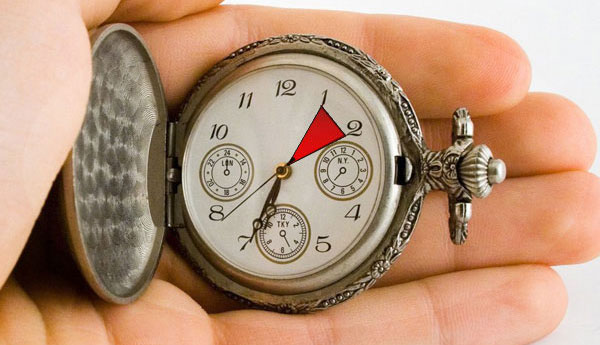
A major part of that seasonal change comes at the end of March, when the clocks move forward for daylight saving time. On Sunday, March 29th, clocks in Ireland will jump ahead by one hour at 1:00am, moving straight to 2:00am. While the change is unlikely to be greeted warmly in the moment. particularly by anyone reluctant to lose an hour of sleep, it delivers an instant reward in the form of longer evenings and more usable daylight at the end of the day.
That is the trade-off many people are more than willing to accept. After all, brighter evenings have a way of transforming everyday life. Suddenly there is time again for an evening walk along that seafront, a run in the park, a coffee outdoors, or simply a chance to enjoy a little fresh air before night falls. What feels impossible in January becomes effortless by late April.
And the improvement happens quickly. By April 18th, sunset in Thurles is expected to fall at around 8:30pm, while by the end of the month it will be approaching 9:00pm. That extra daylight brings with it not just practical benefits, but a noticeable lift in mood. Even the most ordinary routines can feel lighter when they unfold under a brighter evening sky.
This year’s clock change also arrives slightly earlier than it did in 2025, when the switch took place on March 30th. It may only be a matter of a single day, but after a long Irish winter, even that feels worth noting.
There has, of course, been ongoing debate across Europe about whether the twice-yearly clock change should be abolished altogether. While proposals have been discussed at EU level, no final change has been introduced, meaning Ireland will continue to move between winter and summer time for now.
Later in the year, the clocks will go back again in October. But that is a thought for another season. For now, the important thing is this; the brighter evenings are nearly here, and after months of winter gloom, they could hardly come soon enough.
Cashel Branch Librarian Ms Maura Barrett Reports:–
As we celebrate International Women’s Day we invite you to our free Pilates Session with Sasha, followed by refreshments.
Pilates is a form of exercise developed by Joseph Pilates that focuses on core strength, flexibility, and overall body conditioning through controlled movements. It can be performed on a mat and is suitable for people of all fitness levels.
Please Do remember: Spaces are limited, bring your own mat and note booking is essential to Tel: 062-63825
International Women’s Day falls on March 8th and it honours the achievements of women and promotes women’s rights. Sasha is committed to seeing her clients grow in confidence and ability as they develop a shared understanding of the benefits of precise and mindful movement.
Visitors attending this event can locate the Cashel Library building; situated on Friar Street, Lady’s Well, Cashel, Co. Tipperary, HERE. (Eircode E25 K798).
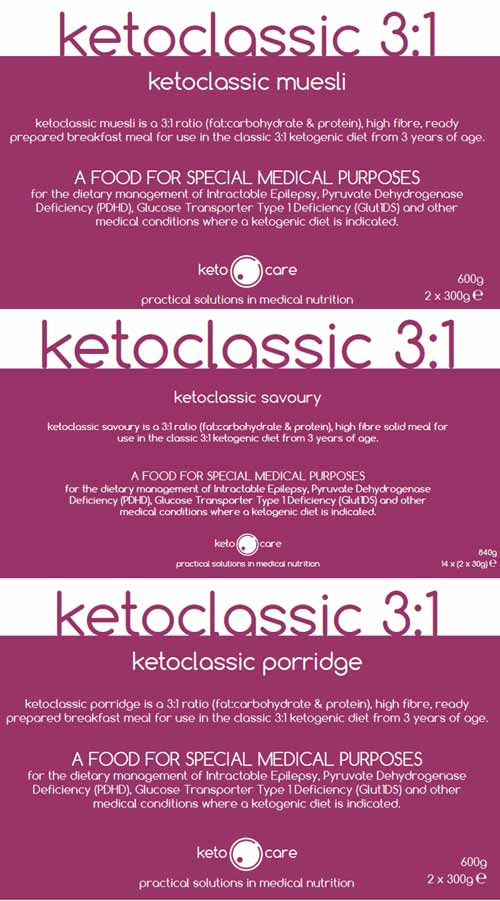
Incorrectly declared allergens in Ketoclassic 3:1 Porridge, Muesli and Savoury.
Alert Summary dated Tuesday, 24th February 2026.
Allergy Alert Notification: 2026.A10 Allergens: Cereals containing gluten, Sulphur dioxide and sulphites, Milk Product Identification: Please see table below for details. Batch Code: All batches and best before dates where allergens are incorrectly declared. Country Of Origin: United Kingdom
Message: As per the table below, the affected Ketoclassic 3:1 Foods for Special Medical Purposes (FSMPs) contain allergens listed in the ingredient declarations that are incorrectly declared. This may make the implicated products unsafe for consumers or who are allergic to or intolerant of cereals containing gluten (wheat), sulphur dioxide and sulphites and / or milk. Therefore these consumers should not eat the implicated products.
This website uses cookies to improve your experience. We'll assume you're ok with this, but you can opt-out if you wish.AcceptRead More
Privacy & Cookies Policy
Privacy Overview
This website uses cookies to improve your experience while you navigate through the website. Out of these, the cookies that are categorized as necessary are stored on your browser as they are essential for the working of basic functionalities of the website. We also use third-party cookies that help us analyze and understand how you use this website. These cookies will be stored in your browser only with your consent. You also have the option to opt-out of these cookies. But opting out of some of these cookies may affect your browsing experience.
Necessary cookies are absolutely essential for the website to function properly. This category only includes cookies that ensures basic functionalities and security features of the website. These cookies do not store any personal information.
Any cookies that may not be particularly necessary for the website to function and is used specifically to collect user personal data via analytics, ads, other embedded contents are termed as non-necessary cookies. It is mandatory to procure user consent prior to running these cookies on your website.








Recent Comments