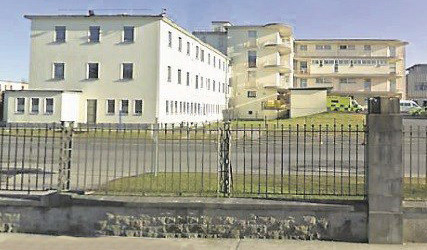
Management at University Hospital Limerick (UHL), latter providing medical services to North Tipperary, have declared a major internal incident, due to the record high attendances at its Emergency Department (ED) today.
A spokesperson for the hospital has stated that patients attending UHL ED with non-emergency care will face an exceptionally long wait before receiving any necessary care, due to the massive surge in patients experiencing respiratory infections, including Covid-19, Flu and Respiratory Syncytial Virus infection (RSV)
Less acutely unwell patients are being asked to first consider Injury Units; GPs; out-of-hours GP services; and pharmacists before attending at UHL’s hospital emergency department.
In order to try to address the worsening situation at the hospital, UHL has sent out an S.O.S call for off-duty staff to return and present themselves to the hospital for work duty; while additional surge beds are being opened at hospitals in Ennis Co. Clare; Nenagh Co. Tipperary, and in St. John’s Co. Limerick.
Day beds at University Hospital Limerick are also being converted to inpatient beds, with a renewed focus on discharging current patients.
All outpatient appointments at UHL, scheduled for tomorrow, Tuesday, January 3rd, have been cancelled and only urgent elective surgery will be undertaken over the coming days.
Note: Injury Units in Ennis, Nenagh and St John’s will continue to operate as normal, while all visiting to UHL is now severely restricted, to parents of children, those visiting patients who are critically unwell and those assisting confused patients (e.g. dementia).
The National Ambulance Service (NAS) have also been asked to divert some patients to other acute hospitals, in an effort to support the extreme levels of demand at UHL.
Provisional road collision figures, in the Irish Republic, show that the number of road deaths in 2022 increased by 13% compared to 2021.
2022 saw the doubling of pedestrian deaths.
Drivers account for 39% of fatalities.
Counties Cork (13), Dublin (13) and Limerick (10) recorded highest number of fatalities with Co. Tipperary (7), featuring in joint 8th position.
1,292 people seriously injured.
Almost 1 in 5 drivers and passengers killed were found not to have been wearing a seatbelt.
Road Deaths Per County
Road User.
2021
2022
Difference
Drivers.
70
60
-10
Passengers.
18
22
+4
Motorcyclists.
22
23
+1
Cyclists.
7
7
0
Pedestrians.
20
41
+21
E-Scooter Driver/Passenger.
0
1
+1
Other.
0
1
+1
Total.
137
155
+18
According to the Irish Road Safety Authority; a total of 155 people died in 149 fatal road collisions in 2022, compared to 137 deaths in 124 fatal road collisions in 2021. This represents an increase of 18 deaths or a 13% rise in road fatalities compared to last year.
[The figures were published by the Road Safety Authority (RSA) today Sunday, January 1st 2023, following an analysis of provisional fatal collision reports from An Garda Síochána.]
The figures also indicate that the number of pedestrians killed in 2022 (41, +21) doubled, when compared to 2021. Despite a decrease in the number of drivers killed (60, -10), drivers still accounted for the highest proportion of fatalities at 39%. The number of passenger fatalities increased (22, +4) a 22% increase. A total of 7 cyclists were killed in 2022, the same number as 2021.
Provisional figures for serious injuries indicate that 1,292 serious injuries were recorded up to the 29 December 2022, compared to 1,342 up to the same period in 2021.
Where it was possible to establish the use of a seatbelt or not among drivers and passengers killed, a total of 19% were found not to have been wearing a seatbelt.
A Covid-19 booster vaccination is to be offered to anyone aged between 18 to 49 years of age, the Health Service Executive (HSE) has confirmed, with appointment bookings being encouraged from today.
Same information comes as hospitals remain under severe pressure with significant numbers of people waiting for admission, lying on trolleys in emergency departments; same situation driven by a sudden rise in respiratory infections, including Covid-19 and the flu.
The number of patients in our hospitals today, having come into contact with the Covid-19 virus is 723, down 14 patients on yesterday’s declared figure, with 38 patients in ICU, the latter being a rise of 6 on yesterday’s number. Just 7 days previously, there were 655 patients with the virus in our hospital wards.
People are being encouraged to attend at central vaccination clinics, and note, booster vaccine will also be available from your local GPs and pharmacies.
Road crater at Lognafulla, Thurles, Co. Tipperary. Pic: G.Willoughby.
The many persons driving, travelling from the west side of Thurles, and having visited St. Patrick’s cemetery on Moyne Road east of Thurles, same on the return journey are being advised to take great care. A large deep crater exists outside the Mace Supermarket at No. 10 Mitchel St, Lognafulla, Thurles, Co. Tipperary. A partially submerged plastic bollard may currently mark the spot. [See picture immediately above.]
Meanwhile; on the Dublin Road, travelling west, at Wrensborough, Thurles, Co. Tipperary, east of Ronayne’s Homevalue Store; an even larger crater currently exists. Pedestrians using the footpaths at both of these locations are being asked to take care to avoid flying stones and airborne mucky water. Stupid attempts to fill these identified water-filled craters, using cold tarmac, are obvious, as shown in the attached pictures. [See pictures immediately above.]
Failure to provide proper public lighting in the area of Thurles Shopping Centre. Pic: G.Willoughby.
Take care also, both motorists and pedestrians; in the area of the raised roundabout, outside Thurles Shopping, Centre, situated on Slievenamon Road, Thurles, Co. Tipperary, (N62) on the south side of the town, the public lighting in this area has not worked for many months. While much of the Thurles public lighting system has remained burning 24 hours each day over many previous months, the failure to ensure that a public lighting exists on this N62 section, which boasts 2 marked, but unlit and uncontrolled pedestrian crossings, now demonstrates a total lack of care by officials and Councillors, employed at the Thurles Municipal District Offices. Christmas Eve saw dangerous interaction taking place between blinded motorists and large numbers of rushing pedestrians, in this new Thurles town centre area, at Slievenamon Road. [See picture with burned out light fixture, inset, immediately above.]
The High Court has awarded €365,000 in damages to a Co. Tipperary man, latter unable to work after injuring his back in a 2017 workplace accident.
The award was made by Mr Justice Tony O’Connor in favour of Mr Patrick Ryan, with an address at Ormonde Crescent, Carrick-on-Suir, Co. Tipperary. Mr Ryan had sued his previous employer, Queally Pig Slaughtering Limited, at the companies meat processing facility located near Waterford City; following injuries he sustained on April 13th 2017, while lifting a bag containing pork.
The claims had been denied.
Mr Ryan claimed he was no longer able to undertake manual work, and claimed that future surgery would not help him. Physiotherapy had not given him any relief, and he had less than an optimal response to injections and other medications provided.
In his judgement, Mr Justice O’Connor said he was satisfied that Mr Ryan was left unable to work due to the pain he was suffering following the accident. Mr Ryan claimed he was unable to go fishing anymore, or attend local sporting events because of the continuous pain; while any long periods of time spent driving, left him experiencing great difficulties.
Mr Justice O’Connor further stated that Mr Ryan’s injuries had resulted in a drastic deterioration of the previously active life, that he had once enjoyed, prior to his accident.
The judge said that that he was satisfied that Ryan, who was “a good manual worker” wished to return to work, despite his significant pain and had attempted to return to work undertaking light duties, some months after the accident. However, his pain and discomfort got worse, and he ceased working for Queally Pig Slaughtering Limited in April of 2018.
Mr Justice O’Connor said Mr Ryan was entitled to damages, including past loss of earnings, future loss of earnings, and general damages same totalling €365,500.
This website uses cookies to improve your experience. We'll assume you're ok with this, but you can opt-out if you wish.AcceptRead More
Privacy & Cookies Policy
Privacy Overview
This website uses cookies to improve your experience while you navigate through the website. Out of these, the cookies that are categorized as necessary are stored on your browser as they are essential for the working of basic functionalities of the website. We also use third-party cookies that help us analyze and understand how you use this website. These cookies will be stored in your browser only with your consent. You also have the option to opt-out of these cookies. But opting out of some of these cookies may affect your browsing experience.
Necessary cookies are absolutely essential for the website to function properly. This category only includes cookies that ensures basic functionalities and security features of the website. These cookies do not store any personal information.
Any cookies that may not be particularly necessary for the website to function and is used specifically to collect user personal data via analytics, ads, other embedded contents are termed as non-necessary cookies. It is mandatory to procure user consent prior to running these cookies on your website.








Recent Comments