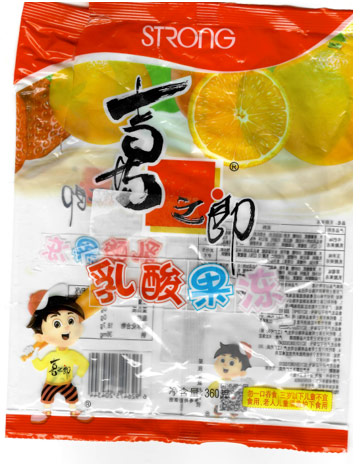
Incorrectly declared milk and choking risk in Strong Branded Mini Jelly cup products.
Alert Summary Dated Friday, December 19th 2025.
Allergy Alert Notification: 2025.A48 and Alert Notification: 2025.73 Allergen: Milk Product Identification: Strong branded mini jelly cups; pack size: 360g. Batch Code: All batch codes and best before dates.
Message: Milk is not emphasised in the ingredients list of these Strong Branded Mini Jelly Cup products. This may make the batches unsafe for consumers who are allergic to or intolerant of milk and therefore, these consumers should not eat the implicated batches. Strong Branded Mini Jelly Cup sweets are also being recalled as they may cause a choking risk, due to the presence of certain unauthorised gel-forming additives.
CareDoc-HSE dispute resolved following mediation; out-of-hours services expected to return to normal across South Tipperary
The Department of Health has confirmed that the issues between CareDoc and the HSE, which were the subject of mediation on Thursday, 18 December 2025, have been resolved by agreement.
In a statement, the Minister for Health said the agreement “should create the conditions” for CareDoc, as the employer, to address staff concerns and make the appropriate remuneration payments, with the aim of bringing the current industrial action to an end. The Minister also noted the importance of these services for patients in the South East, including those relying on out-of-hours GP services and Community Intervention Teams.
Impact in South Tipperary. The dispute had led to significant disruption to CareDoc operations across the region, including South Tipperary, with services such as GP out-of-hours and related supports impacted during the industrial action. In South Tipperary, CareDoc operates treatment centres including Clonmel (The County Clinic, Western Road), Cashel (Cashel Health Centre, Lower Green) and Tipperary Town (St Vincent’s Hospital).
Service status and next steps. Local reporting indicated that CareDoc out-of-hours GP services were due to resume as normal from 6:00pm following the stoppage, subject to confirmation locally. Separately, it was reported that the INMO received a formal offer late on Thursday and that strike action was suspended at midnight, while noting that decisions on planned strike dates over the following fortnight were still pending clarification and member consultation.
Patient information (South Tipperary). CareDoc’s GP out-of-hours service is by appointment only (no walk-in service). Patients are advised to contact the service via their GP’s out-of-hours message or the relevant CareDoc contact number, where calls are triaged by a nurse and patients are advised on next steps. As always, in a medical emergency, patients should Tel: 112 or 999 or attend the nearest Emergency Department.
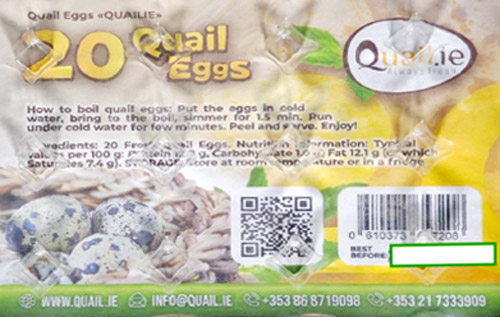
Recall of several batches of Quail.ie Always Fresh 20 Quail Eggs due to the possible presence of Salmonella.
Alert Summary Dated Thursday, December 18th, 2025
Category 1: For Action. Alert Notification: 2025.71. Product Identification: Quail.ie Always Fresh 20 Quail Eggs. Batch Code: All best before dates up to and including 10 Jan 2026. Country Of Origin: Ireland.
Message: The above batches of Quail.ie Always Fresh 20 Quail Eggs are being recalled due to the possible presence of Salmonella.
Recall notices will be displayed at point-of-sale.
Nature Of Danger: People infected with Salmonella typically develop symptoms between 12 and 36 hours after infection, but this can range between 6 and 72 hours. The most common symptom is diarrhoea, which can sometimes be bloody. Other symptoms may include fever, headache, and abdominal cramps. The illness usually lasts 4 to 7 days. Diarrhoea can occasionally be severe enough to require hospital admission. The elderly, infants, and those with impaired immune systems are more likely to have a severe illness.
Action Required:Caterers Retailers and Customers:
Retailers: Same are requested to remove the implicated batches from sale and display recall notices at point-of-sale. Caterers: Same should not use the implicated batches. Consumers: Consumers are advised not to eat the implicated batches.
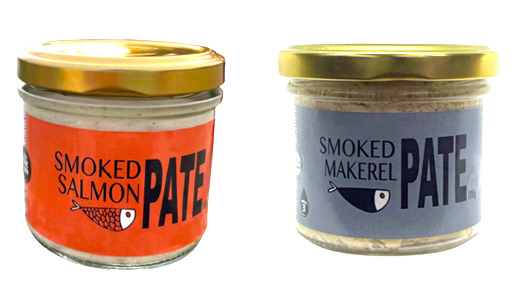
Undeclared sulphur dioxide and incorrectly declared milk in specific batches of Le Paysan Smoked Salmon Pate and Le Paysan Smoked Mackerel Pate.
Alert Summary dated Wednesday, 17th December 2025.
Allergy Alert Notification: 2025.A47 Allergens: Sulphur dioxide and sulphites, milk Product Identification: Please see table below for product details. Batch Code: Please see table below for batch codes and use-by dates. Country Of Origin: Ireland
Message: The below batches of Le Paysan Smoked Salmon Pate and Le Paysan Smoked Mackerel Pate contain sulphur dioxide which is not declared in the list of ingredients. Milk is also not emphasised in the ingredients list. This may make the batches unsafe for consumers who are allergic to or intolerant of sulphur dioxide and/or milk and therefore, these consumers should not eat the implicated batches. The affected batches are being recalled.
Clare Fine Gael TD Mr Joe Cooney has welcomed Health Minister Mrs Jennifer Carroll-MacNeill’s confirmation that the Government will proceed with all three HIQA options to expand hospital capacity in the Mid-West, while paying tribute to hospital and health service campaign groups across the wider Mid-West region for their sustained advocacy.
Deputy Cooney said the Minister’s decision represents a significant milestone that would not have been reached without the persistence and commitment of local campaigners.
“I want to acknowledge and pay tribute to the hospital and health service campaign groups in Clare and right across the Mid-West who have worked tirelessly over many years to keep the pressure on and to ensure the voices of patients, families and frontline staff were heard,” he said. “In my year since becoming a member of Dáil Éireann, and previously during my time as a member of Clare County Council, I have witnessed at first hand the relentless, science-driven and people-centred approach adopted by these campaign groups. Their advocacy has always been grounded in evidence, focused on patient outcomes and carried out with dignity and determination.”
Deputy Cooney said the Minister’s statement also reflects the collaborative political effort undertaken in recent weeks across the Mid-West.
“Over recent weeks, I initiated a grouping of TDs and Senators from across Tipperary, Clare, and Limerick to build political consensus on the options for delivering healthcare services in the Mid-West, as outlined in the HIQA review of urgent and emergency care services,” he said.
“The group met on three occasions, including a detailed engagement with the HSE Mid-West management team, a meeting with the Mid-West Patient and Service Users Council, and a final meeting with the Minister and her officials,” he explained. “There was unanimous agreement among the 14 Oireachtas members that all three HIQA options must be progressed in parallel to relieve the ongoing and unacceptable pressure at University Hospital Limerick.”
In its presentation to the Health Minister and her officials last month, the group fully endorsed a three-tier approach to expanding hospital capacity across the region, which is what has been announced this week. The group held a further meeting with the Minister following her announcement.
Deputy Cooney added that while immediate and medium-term delivery is essential, planning for the long-term solution must now begin in earnest. “With the Government decision now taken to progress all three HIQA options, it is vital that Department of Health officials immediately commence structured engagement with the HSE and with clinical experts to identify a clear and credible timeline for the delivery of Option C and a new Model 3 or Model 4 hospital for the Mid-West,” he said.
“Population growth, patient demand and clinical need all point to the necessity of an additional hospital in the region. Early and transparent planning will be critical to ensuring that this project moves from concept to reality and that the Mid-West finally has the hospital infrastructure required to meet the needs of current and future generations,” he concluded.
This website uses cookies to improve your experience. We'll assume you're ok with this, but you can opt-out if you wish.AcceptRead More
Privacy & Cookies Policy
Privacy Overview
This website uses cookies to improve your experience while you navigate through the website. Out of these, the cookies that are categorized as necessary are stored on your browser as they are essential for the working of basic functionalities of the website. We also use third-party cookies that help us analyze and understand how you use this website. These cookies will be stored in your browser only with your consent. You also have the option to opt-out of these cookies. But opting out of some of these cookies may affect your browsing experience.
Necessary cookies are absolutely essential for the website to function properly. This category only includes cookies that ensures basic functionalities and security features of the website. These cookies do not store any personal information.
Any cookies that may not be particularly necessary for the website to function and is used specifically to collect user personal data via analytics, ads, other embedded contents are termed as non-necessary cookies. It is mandatory to procure user consent prior to running these cookies on your website.







Recent Comments