Archives

FSAI Recall Batch Of Lidl Vemondo Vegetarian Chicken-Style Strips.

Product Identification: Vemondo Vegetarian Chicken-Style Strips, pack size: 175g
Batch Code – Use by date: 07.09.24.
Country Of Origin: Germany.

Lidl Ireland, following the request of the Food Safety Association of Ireland (FSAI), is recalling the above batch of Vemondo Vegetarian Chicken-Style Strips, due to an incorrect year on the use-by date.

The correct use-by date is 07.09.23.
Customers are therefore advised not to consume the product after 07.09.23, when the product may be unfit for human consumption.

Recall notices will be displayed at points-of-sale, in all implicated Lidl stores.

Tipperary Population Growth According To Census 2022 Summary Results.

The Central Statistics Office (CSO) at the end of May this year, 2023, published their Census 2022 Summary Results, which details the population changes at a national level since April 2016.
They have also broken down the results on a county by county level, highlighting some of the main changes, and a full list of all county press releases are available, including county Tipperary, HERE.

Summary Results for Co. Tipperary.
Census 2022 shows that the population of Tipperary grew by 5% to 167,895, which concludes that the number of people in the county rose by 8,342 between April 2016 and April 2022. Over the same period, Ireland’s population grew by 8% from 4,761,865 to 5,149,139.

Tipperary Population – Males and Females.
Of Tipperary’s population, 84,256 were female and 83,639 were male, which means there were 99 males for every 100 females. In Ireland, overall, there were 2,604,590 females and 2,544,549 males or 98 males for every 100 females.

Population by Age.
The average age of Tipperary’s population in April 2022 was 40.3 years, compared with 38.6 years in April 2016. Nationally, the average age of the population was 38.8, up from 37.4 in April 2016.

The number of people aged 65 and over continues to grow. This age group increased by 20% to 29,356 in Tipperary, and by 22% to 776,315 at a national level since 2016.

Dual Irish Citizens.
In Tipperary, the number of dual Irish citizens increased from 2,329 to 3,904, while non-Irish citizens accounted for 9% of the county’s population. Nationally, dual Irish citizenship increased by 63% from 104,784 to 170,597 people and non-Irish citizens made up 12% of the population.

Divorce and Separations
The proportion of separated and divorced people in Tipperary remained steady at 7% of the population (aged 15 and over), compared to 6% in 2016. The national comparison was 6% in both 2022 and 2016.

Health.
In 2022, 83% of people in Tipperary stated that their health was good or very good, compared with 87% in 2016. This is a similar trend to the national figures, which also showed a 4% decrease in the good/very good categories, from 87% to 83%.

Irish Speakers.
The number of people (aged three and over) who stated that they could speak Irish in Tipperary was 66,003 compared with 65,391 in 2016. Within this figure 1,258 said they spoke Irish daily while 3,540 spoke Irish weekly.
Nationally, 1,873,997 people stated they were able to speak Irish, with 71,968 speaking Irish daily and 115,065 speaking it weekly.

Employment.
There were 73,207 people (aged 15 and over) at work in Tipperary, an increase of 9,735 people (+15%) between 2016 and 2022. Nationally, there were 313,656 additional people (+16%) at work.

Working From Home.
In Tipperary, 17,665 people (aged 15 and over) worked from home at least one day a week in 2022. This represented 24% of the workforce. The national figure was 32%.

Childcare.
This was a new question for Census 2022. There were 33,286 children aged 15 and under in Tipperary in April 2022. Of these, 12,173 (37%) were in childcare, compared with 33% nationally.

Tenure.
In 2022, in Tipperary 69% of households owned their own home, with a further 24% renting. This compared with 66% of households owning their home nationally and 28% renting.

Housing Stock.

Between April 2016 and April 2022, housing stock in the county grew by 2% from 69,106 to 70,608. The number of vacant dwellings decreased by 15% from 7,493 to 6,344 and the number of holiday homes rose by 8% from 1,009 to 1,093. Nationally, the housing stock grew by more than 5% from 2,003,645 to 2,112,121. The number of vacant dwellings fell by almost 20,000 (-11%) to 163,433 and the number of holiday homes rose by 8% from 62,148 to 66,956.

It is important to note that a dwelling classified as vacant for census purposes does not necessarily imply that it is available for re-use. Census vacancy is essentially a point in time measure which may be different to other reported measures of vacancy which may focus more on longer term vacancy. For more information on the census definition of vacancy, please see Editor’s Notes below.

Housing Tenure (Owners and Renters).
In April 2022, 43,024 of homes were owner-occupied in Tipperary, compared with 42,030 in April 2016. The number of homes owned with a mortgage or loan fell by 8% from 17,616 to 16,256 since Census 2016 while the number of homes owned outright (without a loan or mortgage) increased by 10%, from 24,414 to 26,768. Homes rented from private landlords showed a 6% increase from 7,894 to 8,336. Nationally, 66% of homes were owner occupied. Some 531,207 homes were owned with a mortgage or loan, while almost 680,000 homes were owned without a mortgage or loan, which was up 11% from 2016. More than 330,000 homes were rented from a private landlord, an increase of 7% since 2016.

There was a significant increase of 83% (up to almost 17,000 households) in the number of over 65s renting from a private landlord in the State. In Tipperary, the number of homes rented in the 65 and over age group was 502 (which was a 92% increase). In the 60 to 64 age group, it was up 83% compared with 69% nationally.

Census 2022 shows that by the age of 36, more than half of householders in Tipperary owned their own home (with or without a mortgage or loan). Nationally this age was 36. This age, which marks the changeover between home ownership and renting, has been increasing over time, up from 26 years in 1991, 27 years in 2002, 28 years in 2006, 32 years in 2011, and 35 years in 2016.
Rent Increases

Renters have continued to face large increases in the amount of rent they pay. Between the 2016 and 2022 censuses, the average weekly rent paid to a private landlord in Tipperary in April 2022 was €161, which was a 30% increase on 2016. The average weekly rent paid to a private landlord (at national level) rose to €273, up €73 (37%). This was more than double the rate of increase (17%) between 2011 and 2016.

Vacancy.
Many properties classed as vacant in the census may only be vacant for a short period of time and for a wide variety of reasons including homes for sale, rent, new build or renovation, owner in a nursing home, etc. However, there were more than 2,242 dwellings classed as vacant both in the 2016 and 2022 censuses in Tipperary, which could be an indication of a longer-term vacancy status. Nationally the figure was just under 48,000.

The Census definition of a vacant dwelling is a point in time indicator taken on Census night which in these cases means that the dwellings were vacant on the census nights for both 2016 and 2022. (For more information on the census definition of vacancy, please see the Editors notes below).
Data from New Household Questions

Census 2022 included new household questions on the number of working smoke alarms and how we use renewable energy sources in our homes. Tipperary had 3,145 homes with no smoke alarms. Homes with solar panels amounted to 4,220 which was 7% of occupied dwellings in the county. Nationally, almost 72,000 homes had no smoke alarms and 119,300 or 6% of occupied homes had solar panels fitted.

An Garda Síochána Tipperary Publish Shocking Statistics.

Within the past 30 days, 26 people have been killed on Irish roads.
This is indeed an alarming number of lives lost in such a short period of time.

So far this year, in the past 8 months there have been 114 fatal road traffic collisions here in the Republic of Ireland.


Same road traffic collisions have resulted in the deaths of 124 people, same categorised as follows :-

* 44 motorists
* 30 passengers ✓
* 27 pedestrians
* 17 motorcyclists ✓
* 3 cyclists
* 3 e-scooters ✓

These people are young and old, from different places and backgrounds, but all have lost their lives far too soon.


We must all take better care of ourselves and one another, on our roads.

Irish Food Safety Authority Recall Ready-Made Avoca Products.

The Irish Food Safety Authority (FSAI) recall numerous ready-made Avoca products due to possible presence of metal fragments.

Country Of Origin is Ireland.

The ‘Ready Made Products’ in question are named as follows and customers are advised not to eat the implicated batches.

Vegetable Lasagne 700g All use by dates up to and including 27/08/2023
Fish Pie Lrg 720g All use by dates up to and including 28/08/2023
Chicken, Ham & Leek Crumble 700g All use by dates up to and including 28/08/2023
Chicken & Broccoli 700g All use by dates up to and including 29/08/2023
Carrot & Parsnip Mash 580g All use by dates up to and including 26/08/2023
Beef Lasagne Lrg 600g All use by dates up to and including 29/08/2023
Beef Lasagne Sml 300g All use by dates up to and including 29/08/2023
Kalamata Olive Tapenade 140g All use by dates up to and including 10/09/2023
Italian Meatballs 580g All use by dates up to and including 31/08/2023
Chicken Liver Pate Loaf 750g All use by dates up to and including 26/08/2023
Duck Liver Pate with Armagnac & Prunes 300g All use by dates up to and including 27/08/2023
Carrot, Coconut, Coriander Soup 580g All use by dates up to and including 28/08/2023
Basil pesto 157g All use by dates up to and including 29/08/2023
Roasted Pepper & Harissa hummus 180g All use by dates up to and including 27/08/2023
Avoca Hummus 180g All use by dates up to and including 27/08/2023
Malaysian Chicken Satay, Snap pea & Cashew 580g All use by dates up to and including 27/08/2023
Sweet & Sticky BBQ Sauce 300g All use by dates up to and including 15/09/2023
Thai Green Chicken Curry 580g All use by dates up to and including 28/08/2023
Fresh Sundried Tomato Pesto 160g All use by dates up to and including 06/09/2023
Vegetable Tikka Masala 600g All use by dates up to and including 31/08/2023
Indian Chicken Curry 600g All use by dates up to and including 29/08/2023
Slow Roasted Tomato Basil Soup 580g All use by dates up to and including 29/08/2023
Root Vegetable Soup 580g All use by dates up to and including 28/08/2023
Mac & Cheese 650g All use by dates up to and including 27/08/2023
Fish Pie Sml 360g All use by dates up to and including 28/08/2023
Chicken & Broccoli Sml 400g All use by dates up to and including 29/08/2023
Banana Bread Cake All use by dates up to and including 25/08/2023

Recall notices will be displayed at point-of-sale.

EPA Calls For Measures To Urgently Tackle Packaging Waste Generation.

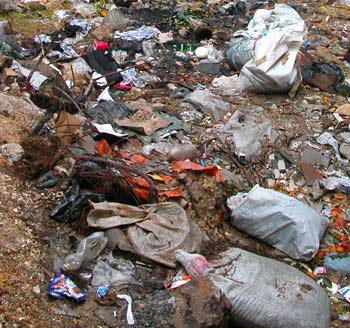
Waste Sent To Landfill.
  • Ireland generated 1.2 million tonnes of packaging waste in 2021.
  • Ireland is continuing to achieve high levels of recycling for glass (84%) and paper/cardboard (73%).
  • Plastics present a serious challenge. Only 28% of plastic packaging waste was recycled in 2021, a long way off the 2025 EU target of 50%. The majority of Ireland’s plastic packaging waste is being incinerated.
  • Ireland’s overall recycling rate fell from 62% in 2020 to 58% in 2021. It must reach 65% in 2025.
  • Fiscal measures to incentivise householders and businesses are also urgently needed. The new levy on waste sent for recovery, and increases to the landfill levy, will reward better practices of segregation of waste.

The Environmental Protection Agency (EPA) has today published its latest figures on packaging waste in Ireland.

Ireland is meeting current EU recycling targets and achieving high recycling rates for some streams such as glass, paper/cardboard and ferrous metals. However, in 2021, the overall recycling rate for packaging waste fell by 4% to 58%, putting the 2025 target of 65% at risk. While the quantity of packaging waste being recycled is increasing every year, it cannot keep up with the total increase in packaging waste being generated in the first place.

Plastic packaging waste recycling rates remain low, at 28%. Most plastic packaging waste was sent for incineration, with less than one third recycled. Ireland will face significant challenges in meeting the 2025 and 2030 recycling targets for plastic of 50% and 55%.

Commenting on the figures, Mr Micheal Lehane, (Director of the EPA’s Office of Environmental Sustainability) said: “Urgent measures are needed to reduce the quantity of packaging waste generated in Ireland each year. Our current rate of production and consumption of packaging represents a poor use of materials and energy and is a growing source of emissions. With Ireland’s packaging waste exceeding 1.2 million tonnes per year, we need to intensify efforts to avoid unnecessary packaging use in the first instance. Packaging waste can be avoided and reduced by replacing single use with reusable packaging, current examples include pallets, boxes and trays, and through better product design such as lightweighting packaging.”

Poor segregation practices at businesses and homes is leading to high volumes of packaging waste being diverted to energy recovery. This includes materials which can be recycled.

Improved separation by householders and businesses at source is needed to collect higher quantities of recyclable packaging materials. Ensuring waste charges to businesses and householders are clearly incentivising reduction and recycling of packaging wastes will support better separation of materials. Continued awareness and enforcement measures are also needed to support better behaviours.

Mr Warren Phelan, (Programme Manager of the EPA’s Circular Economy Programme) noted: “The fall from 62%to 58% recycling in 2021 is disappointing but not unexpected. Better practices are needed by householders and especially businesses, where there are significant opportunities to divert good quality materials from the residual bin. The new levy on waste sent for recovery, and increases to the landfill levy, will reward better practices of segregation provided customer charging is appropriately incentivised.”