Today, Tipperary primary schools, together with all primary schools nationally, were told how many Special Education Teaching (SET) hours would be allocated to their school next year.
According to the Department of Education and Youth almost one third of schools nationally received more hours. Almost half of schools nationally stayed at the same hours as last year, and approximately one fifth had their Special Education hours cut.
The factors that influence how many hours a school gets include enrolment figures, educational profile of literacy and numeracy needs and educational disadvantage.
The Department of Education and Youth has been criticised for the late publication of these hours. Educational groups have consistently pleaded for allocation information to be issued early in the year. Whereas this information was released in early February last year, it was not released this year until today, that is, the end of March.
In the absence of information about hours allocated, it is difficult for schools to predict how many full-time and part-time special education teachers they will have in the forthcoming year. Moreover, the hours allocated are not always enough and to fight for the hours they need, schools must engage in an arduous review process. The review process takes a lot of time and the later it starts, the later and longer schools wait in limbo to find out if they will get the hours they require to support pupils with special education needs in their school.
Today’s late release of allocation information follows significant backlash from parents, school communities and unions with regards to cuts in SNA allocations next year. It only serves to add to growing frustrations and anger in relation to government policy and provision for special education across Ireland.
EPA reports good compliance at licensed sites, but persistent challenges remain across the food and waste sectors.
The EPA carried out 1,681 inspections in 2025. This was an increase of 28 per cent compared to 2024.
Overall compliance among industrial and waste licensed sites is good. However, in 2025, ten licensed sites (1 per cent of the total) were identified as National Priority Sites.
The food and drink sector and the waste sector continue to feature prominently as a focus for EPA enforcement.
Sites in the waste sector had the highest rates of non-compliance with EPA licence conditions in 2025.
In 2025, the food & drink sector continued to receive the most complaints, mostly regarding odour and noise.
Odour emissions and discharges to water remain the most common compliance issues at licensed sites.
The Environmental Protection Agency (EPA) has today published its Industrial and Waste Licence Enforcement Summary 2025. It shows that the EPA carried out 1,681 inspections at 656 licensed sites across all 26 counties in 2025. This was an increase of 28 per cent compared to 2024.
The report shows that there is a good level of compliance overall among EPA licensed industrial and waste sites. However, ten sites, or 1 per cent of all licensed sites, were identified on the EPA’s National Priority Sites List in 2025. The food and drink sector and the waste sector continue to feature prominently as National Priority Sites. Odour and discharges to water were the primary compliance challenges.
Sites in the waste sector had the highest rates of non-compliance with EPA licence conditions in 2025, particularly anaerobic digestion sites, non-hazardous waste transfer stations and landfill sites. Some anaerobic digestion sites had persistent issues relating to the control of odour emissions.
Emissions to water remain a compliance challenge across a limited number of sites. Corrective actions are being actively enforced at sites that pose a risk to water quality, with one site being directed by the EPA to cease their effluent discharge in November 2025 until necessary corrective actions were taken.
Commenting on the report Ms Pamela McDonnell, Programme Manager in the EPA Office of Environmental Enforcement said: “While the overall level of compliance continues to be good, the EPA has seen a continued pattern of non-compliance in a small number of sites. The consequences of non-compliance can be significant for the environment and those living locally. The EPA will continue to maintain strong on-the-ground presence across our licensed community to target those failing to comply.”
The EPA received 1,181 complaints from the public in 2025, most of which related to odour emissions. The food and drink sector accounts for 51 per cent of all complaints received by the EPA during 2025. Just five sites accounted for nearly two-thirds (59 per cent) of all complaints received. The EPA has investigated these sites and is taking appropriate enforcement actions.
Commenting on the levels of complaints received in 2025, Ms McDonnell continued: “Odour is a persistent issue at a small number of licensed sites. Operators must be good neighbours by preventing nuisance odours from impacting on people in their local communities. The EPA will continue to take action where odour nuisance occurs, including escalating enforcement measures. Site operators must run their facilities without causing nuisance by applying all appropriate odour‑control measures and, where needed, investing in additional odour‑control infrastructure.”
Newly emerging data has highlighted significant concerns around public expenditure controls in Ireland, with substantial social welfare overpayments and weaknesses in fraud prevention systems within the Health Service Executive (HSE) drawing increased scrutiny.
Recent figures confirm that millions of euro in social welfare payments have been incorrectly issued, including cases where payments continued after recipients had died. At the same time, a separate audit has identified structural vulnerabilities in the HSE’s payroll systems, raising concerns about the potential for fraud to go undetected.
Social Welfare Overpayments: Scale and Causes. Official figures show that social welfare overpayments remain a persistent issue, with tens of millions of euro identified annually. In 2025 alone, over €24.6 million in overpayments linked to suspected fraud were recorded across more than 5,000 cases. However, fraud represents only a portion of the overall problem. The majority of overpayments arise from administrative or customer-related errors. In recent years, over 60% of overpayments were attributed to customer error, such as failing to report changes in income or personal circumstances.
A notable proportion of unrecovered funds relates to payments made after a recipient’s death. Audit data shows that, in certain schemes, up to 85% of written-off debts are linked to deceased claimants, reflecting delays in notification or system updates. While public discussion has referenced figures as high as €25 million paid to deceased individuals, there is no single official statistic confirming that exact amount. Instead, available data indicates that losses linked to deceased recipients form part of broader overpayment totals accumulated across multiple categories and years.
Recovery Challenges and Financial Exposure. Recovering overpaid funds remains a significant challenge for the State. As debts age, the likelihood of recovery declines sharply, with only a small percentage typically recouped after several years. In some cases, recovery may be pursued through estates after death, but where no assets are available or administrative costs are too high, the State may be forced to write off the debt entirely.
The scale of outstanding overpayments; running into hundreds of millions cumulatively, illustrates the ongoing financial exposure facing public finances.
HSE Audit Highlights Fraud Control Weaknesses.
Separate to welfare concerns, a recent audit into HSE payroll systems has identified “significant risks of fraud” due to weaknesses in oversight and governance.
The HSE payroll system manages billions of euro annually, making it a high-risk environment. Auditors found that:–
There is no comprehensive fraud risk assessment framework in place.
Roles and responsibilities for fraud prevention are not clearly defined.
Existing controls are often informal or inconsistently applied.
These gaps create conditions where fraudulent activity could occur without being promptly detected.
Governance and Accountability Under Pressure. The findings point to broader governance challenges across public systems. In the case of social welfare, delays in data sharing, particularly around deaths or changes in eligibility, can lead to continued payments that are difficult to recover. Within the HSE, the absence of structured risk management processes has raised concerns about accountability and oversight in one of the State’s largest financial operations.
Conclusion: Systemic Issues, Not Isolated Incidents Taken together, the evidence suggests that these issues are not isolated but reflect systemic weaknesses in administrative processes and control systems. While there is no indication of widespread organised fraud across either system, the combination of high transaction volumes, fragmented oversight, and delayed reporting creates an environment where errors, and potential abuses, can occur.
Strengthening data integration, improving real-time reporting, and implementing robust fraud risk frameworks are likely to be key priorities in addressing these vulnerabilities and protecting public funds going forward.
A major new report from the Ombudsman for Children’s Office has delivered a stark assessment of Ireland’s child care system, describing it as “broken” and failing to act in the best interests of vulnerable young people.
The report finds that, in some cases, children experience greater harm after entering State care. Serious concerns include instances of sexual grooming and assault, children going missing for days, and repeated moves between unregulated placements.
It also highlights situations where children have been held in secure care for extended periods, despite not committing any offences, due to a lack of suitable placements. In one case, two young siblings were placed in a facility with teenagers and a large staff presence because no foster home was available.
The Ombudsman, Dr Niall Muldoon, questioned how the State has reached a point where it cannot guarantee safe and stable care for highly vulnerable children.
The report identifies key systemic issues, including shortages of social workers, insufficient placement options, and ongoing difficulties in recruiting and retaining care staff. It also points to an increasing reliance on private providers and the growing use of unregulated accommodation.
Funding pressures remain a central concern. Despite a significant rise in child protection referrals over the past decade, the agency responsible, Tusla, is described as chronically under-resourced and receiving substantially less funding than required.
With nearly 6,000 children currently in care, the Ombudsman is calling for urgent reform. A forthcoming national consultation and the development of Ireland’s first National Alternative Care Plan are being framed as a critical opportunity to overhaul the system and better protect children’s rights.
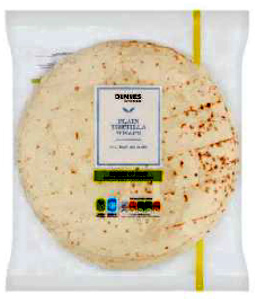
Recall of specific batches of Dunnes Stores Plain Tortilla Wraps due to the possible presence of metal pieces.
Alert Summary dated Friday, 20th March 2026.
Category 1: For Action. Alert Notification: 2026.11. Product Identification: Dunnes Stores Plain Tortilla Wraps; pack size: 512g. Batch Code Best before: 29/5/2026, 30/5/2026 and 31/5/2026. Country Of Origin: Netherlands.
Message: Dunnes Stores is recalling the above batches of its Plain Tortilla Wraps due to the possible presence of metal pieces.
Recall notices will be displayed at point-of-sale.
Action Required:Retailers and Customers. Retailers: Same are requested to remove the implicated batches from sale and display recall notices at point-of-sale. Consumers: Consumers are advised not to eat the implicated batches.
This website uses cookies to improve your experience. We'll assume you're ok with this, but you can opt-out if you wish.AcceptRead More
Privacy & Cookies Policy
Privacy Overview
This website uses cookies to improve your experience while you navigate through the website. Out of these, the cookies that are categorized as necessary are stored on your browser as they are essential for the working of basic functionalities of the website. We also use third-party cookies that help us analyze and understand how you use this website. These cookies will be stored in your browser only with your consent. You also have the option to opt-out of these cookies. But opting out of some of these cookies may affect your browsing experience.
Necessary cookies are absolutely essential for the website to function properly. This category only includes cookies that ensures basic functionalities and security features of the website. These cookies do not store any personal information.
Any cookies that may not be particularly necessary for the website to function and is used specifically to collect user personal data via analytics, ads, other embedded contents are termed as non-necessary cookies. It is mandatory to procure user consent prior to running these cookies on your website.








Recent Comments