|
|
 Kellys of Fantane at work on the N7 motorway It has now been confirmed that up to 100 jobs are to go in the concrete manufacturer plant at Kellys of Fantane over the coming months. The company’s headquarters which are located at Fantane Quarry halfway between Nenagh and Thurles, Co.Tipperary, currently supply a range of quality materials, products and services to local and national customers from quarries located at Latteragh and Inchirourke.
It is understood that the workers will be made redundant over the coming months, as current road project contracts come to an end.
The company previously had benefited from three national road projects since 2006, including most recently the N7 motorway, but says it has no major infrastructural projects in the pipeline, which would ensure continued employment for its current 140 highly skilled and motivated employees.
This news will come as a complete shock to the nearby village of Borrisoleigh.
The company, Kellys of Fantane, had become a household name, nationally, since it began it’s operations in the late 1940’s. Over this period the company had built a very successful business relationships with their clients through their professionalism in providing a high quality product, bound together by an excellent customer service and a recognised consistency down the years. The company had also make a significant contribution to Ireland’s infrastructure through their involvement in some of the Country’s major road projects.
This is the second jobs loss announcement for North Tipperary in just one week, following on from the announcement last weekend of the closure of the Liam Carroll Transport Group in here in Thurles.
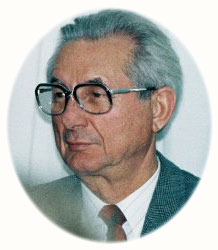 Theodor Paul Albrecht (28 March 1922 – 24 July 2010) Theo Albrecht, the joint founder of the popular budget supermarket giant Aldi, last seen in public after his release from kidnap 39 years ago, has died aged 88. The company said he died on Saturday in his home city of Essen, but gave no cause of death.
The Albrecht brothers, Karl and Theo, co-founders of Aldi, were amongst the two wealthiest people in Germany, with fortunes in excess of €17.35bn and €16.75bn respectively.
Little is known about the two reclusive brother billionaires, with Theo’s last public appearance being in 1971, shortly after his release, after 17 days captivity, by kidnappers who were reportedly paid a $4.67 million ransom.
One rare photo of Theo Albrecht, from the 1980s, shows a nondescript looking man with grey hair and glasses who apparently devoted his spare time to collecting old typewriters, growing orchids and to playing golf on his own private greens.
The first Aldi stores – an acronym standing for “Albrecht Discount” – opened in the early 1960s under the motto: “Concentrating on the basics: a limited selection of goods for daily needs.” The stores began sprouted up all over Germany and are now to be found in nearly 20 countries since their conception.
The Aldi group presently operates about 8,210 individual stores worldwide. A new store opens every week in Britain alone, and the company operates approximately 70 outlets here in Ireland with one popular outlet here in Thurles, Co.Tipperary.
Theo Paul Albrecht was renowned as a hard working man who was always decent with his business partners and employees and who always treated people with the greatest respect.
Mr Albrecht and his elder brother both served as German soldiers in the Second World War, before returning home to Essen and taking over a grocery store their parents owned. They flourished as the German economy, then in shambles after the war, came back to life in what is often referred too as the “Economic Miracle”. If you think Ireland has severe financial problems presently, remember Germany, according to the Potsdam Conference held between July 17 and August 2, 1945, had to pay the Allies $20 billion mainly in machinery, and manufacturing plants. In addition, in accordance with the agreed policy of de-industrialisation and pastoralization, large numbers of civilian factories were dismantled for transport to France and the UK, or simply destroyed. Germany paid Israel 450 million DM in Holocaust reparations, and paid 3 billion DM to the World Jewish Congress to compensate survivors in other countries.
When Forbes featured the brothers in 1992 as two of the world’s richest men, the magazine had to uses silhouettes rather than photographs to illustrate the article since no pictures of them had been published in many years.
The German Retail Federation said that Germany had lost one of its greatest entrepreneurs. “There are only a few people who have stamped their mark on an entire business sector of the economy. Theo Albrecht achieved just that,” the Federation’s managing director, Stefan Genth, said in a statement.
Aldi now has more than 4,000 outlets in Germany alone, where it is known for its no-frills quality shopping environment, streamlined processes and a limited range of discount products.
The brothers retired as CEOs in 1993 and gave most of their wealth to foundations. The Aldi group operates about 8,210 individual stores worldwide, with a new store opening every week in Britain alone.
Go ndéana Dia trócaire ar a anam dílis.
 Ireland's Mid West Region A significant investment boost for the Mid West Region comes on foot of a decision by the European Commission to allow grant aid to help boost employment. Such aid had been phased out two years ago.
This revised European Commission decision on Regional Investment rules could help create employment opportunities in the mid-western region.
The recent decision means that a large company locating to the mid-western region, which covers Limerick, Clare and North Tipperary, will now be able to get grant aid of up to ten per cent of the value of their intended investment, and thus help enterprise agencies to create and attract jobs in the area.
Certainly Grant aid acts as a strong incentive when companies are thinking about locating to an area and this together with language, education, low corporation tax rates, skills, physical and digital infrastructure, does determine a firms investment decisions, when they sit to consider and compare rival locations.
Property Options To Interested Companies In Thurles
Tipperary Technology Park is a fully serviced park with a Business Incubation Centre and quality manufacturing and office accommodation options. Thurles is readily accessible by road, rail and air. It is located on the main Dublin – Cork railway line and just 6km from the main Dublin – Cork motorway. Shannon International Airport has daily direct flights to the US, UK and Europe. International companies in Thurles and the surrounding area include Taro Pharmaceuticals and Procter & Gamble. The town is also well served with a robust broadband telecoms network where a choice of carriers ensure competitive prices and high quality service for all users. Thurles is home to two 3rd level colleges, St Patricks College and the Tipperary Institute, latter a college with an enrolment of over 700 students, with two of the Institutes departments being Business Development and Information / Communications Technologies.
For further information please contact: Brian Keating, Development Manager
Address:Tipperary Technology Park, Thurles, Co Tipperary, Ireland
Tel.: +353 (0) 504 29300 Fax.: +353 (0) 504 29305.
The decision to restore regional aid to the whole mid-west region goes beyond the recommendation in the Report of the Mid-Western Task force which sought aid for a number of business parks in the region.
This decision now puts the much neglected mid-western region in the same position as the south-eastern region, which covers Carlow, Kilkenny, Wexford, Waterford and South Tipperary, where State aid for large investment projects is already allowed.
 Taoiseach Brian Cowen has stated, with not so much as a blush, that the Government’s revised €39bn Capital Investment Programme will lead to 270,000 jobs being provided between now and 2016. However, overall spending on infrastructure is being cut by up to 40%, when compared to the 2007 National Development Plan.
Announcing his plan, the Taoiseach confirmed that Metro North and the €2.5bn Dart Underground will go ahead in Dublin.
Nice one Dublin, and whilst we accept that investment of this kind is welcome, using current estimates, we must keep in mind that it costs €200,000 to construct a simple bus stop.
We continue to over developed and over balance our east coast, while neglecting most of the rest of Ireland. It seems that despite the country being in ruins, Dublin must continue to be nurtured, and rural Ireland must “Eat the crumbs which fall from the masters table“, (Matthew 15:27). In rural parts of Ireland you can damaging your car by taking a short drive on our roads, but we are told there is no money to repair them. In Dublin there is a Railway service, there is the Luas, there is a Bus service, there are Taxi’s, but now they require an Underground as well. Dublin does not need an Underground, Thurles does need a ring road, but it would appear that Fianna Fail are borrowing to buy the next election and the gullible Irish electorate will fall for it again, if there are three successive declines in the unemployment figures in late 2011 and early 2012.
There will, we are informed, be more capital investment in Water Services which really means “lets get those water metres in place, and get our €350 minimum from every household, in water charges, to prop up the City of Dublin, County and Local Councils“. This whole plan fails to realise that people can only spend money if they have it. Soon 80% of all incomes will disappear in stealth taxes before each taxpayer is allowed to pay the “candle maker” and the “shoe maker”.
Continue reading Infrastructure Investment – And The Award Goes To Dublin
Dublin! Dublin! Dublin! everything appears these days to be centred in and around Dublin. A plague on our Capital city say the dwellers from “Beyond the Pale.”
It now appears that this city formally known as “The Pale” is being promoted as a place for “Fun and Craic” in a new solo run using €1 million of our Tourism campaign funding.
 "The Pale" The word “pale ” (An Pháil) derives ultimately from the Latin word palus, meaning a stake, used to support a fence and from this came the figurative meaning of boundary and eventually the phrase “beyond the pale” as something outside the boundary of an area from Dundalk to Carrickmines Castle, Dublin known today as gullible “Rural Ireland.”
Minister for Tourism Mary Hanafin TD said that this new radio and online campaign by Tourism Ireland would be seen by an audience of over 12 million, British tourists. She correctly states that Britain is the largest single source market for visitors to the island of Ireland and provides more than half of all visitors to the island. This campaign will involve direct marketing and social media initiatives, as well as promotions with tour operators and air and sea carriers. It will capitalises on the British market and intensively promote Dublin to the British holidaymaker.
Frank Magee of Dublin Tourism states: “The capital city attracted 1.5 million visitors from Britain last year, which resulted in five million bed nights, but losing its market share in Britain. Dublin has been the driver in Irish tourism, bolstering the Irish figures in recent years and there’s a realisation that if Dublin doesn’t do well, Ireland doesn’t do well.”
What a load of verbal diarrhea Mr Magee. Ireland’s false reputation of being an expensive holiday destination is spread by Tourists who spend too much time in Dublin drinking €3.50 cups of coffee served by staff who do not speak English .
Come on down to Tipperary folks if you want a holiday offering value for your money. Thurles is the ancestral home of your head of state, Her Majesty Queen Elizabeth II, and it is here you can experience friendly relaxation, carefree fun and craic, your children can run wild and run free, the air is clean and you can find your car still parked where you left it the night before.
It would appear rural Irish taxpayers, for far to long, have been the silent and subservient suppliers of ‘money on demand’ to support Dublin tourism, so let us keep things in perspective remembering that in 2009 the Irish Hotels Federation represented almost 1,000 hotels and guesthouses throughout the whole country, which in turn employ over 59,000 people. It seems only proper that those beyond the Pale should like their fair slice of the tourism promotion cake.
How Much Money Was Spent Promoting Our Capital City Dublin In The Past Ten Or So Years?
€5m for “The Monument of Light” or “Spire Of Light” erected in O’Connell Street, better known by the names: ‘The Spike’, ‘The Stiletto in the Ghetto’, ‘The Erection at the Intersection’, ‘The Poker next to Croker’ and ‘The Stiffy in the Liffey’. At the time of its erection on O’Connell Street in 2003, the Spire Of Light was described as “self-cleaning”, but Dublin’s city council now concede that its maintenance cost €205,000 last year and will increase to at least €218,000 this year, and thats before they pick up a discarded chip bag.
Continue reading Dublin – A Plague On Your City Says Rural Ireland
|
Support Us Help keep Thurles.info online by donating below. Thank you.
Total Donated 2026: €300.00
Thank You!
Daily Thurles Mass Livestream
|



Recent Comments