A housing initiative intended to help older homeowners move into smaller and more manageable accommodation has been put on hold while its effectiveness is examined.
Local authorities have reportedly been directed to stop operating the Older Persons Housing Financial Contribution Scheme pending a review by the Housing Agency. Although the decision has been described as the scheme being “shelved,” current information indicates that it has been paused rather than formally abolished.
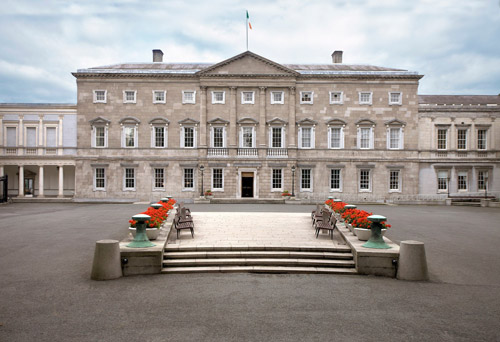
Leinster House.
The initiative offered a potential route for older people whose homes had become too large, expensive or difficult to maintain. Participants could sell their property to a local authority—or sell it privately—and provide the council with an agreed financial contribution from the proceeds. In return, they could receive a tenancy in smaller social housing designed to suit their changing needs.
However, the financial arrangement appears to have discouraged many potential applicants. Age Action explains that participating homeowners could be required to give a substantial proportion of their property equity to the council. After surrendering that equity, they would become social housing tenants and continue paying rent.
According to Age Action, those conditions made the scheme relatively unattractive. An older person could move from owning a valuable asset outright to holding a rental tenancy, while retaining considerably less of the money generated by the sale. For homeowners hoping to preserve savings for future care, living costs or their families, that trade-off may have been difficult to justify.
The scheme’s limited appeal also highlights a wider obstacle facing older people who want to “rightsize”. Ireland does not have enough smaller, accessible and age-friendly homes in suitable locations. Even a more financially attractive programme would struggle if councils could not offer appropriate properties close to participants’ families, healthcare services and established communities.
“Rightsizing” can nevertheless deliver important benefits when it is voluntary and properly supported. A suitable home may be easier to heat and maintain, safer for someone with reduced mobility and better equipped for independent living. Larger properties released through such moves could also become available to families needing additional space.
The Housing Agency’s review now presents an opportunity to reconsider contribution levels, rental conditions, housing availability and the protection of homeowners’ remaining equity. Any replacement or revised programme will need to offer older people genuine choice, financial fairness and a secure home, not simply a smaller property.
Government leaders are considering whether to recall the Dáil ahead of schedule as renewed instability in the Middle East raises concerns about fuel prices.
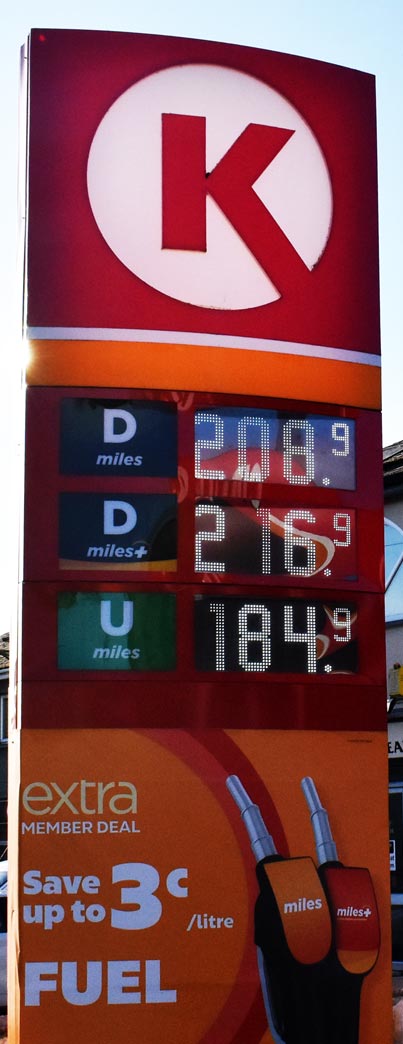
Temporary excise reductions introduced in April are due to be withdrawn gradually from September. The relief amounts to 32 cent per litre of diesel and 27 cent per litre of petrol and formed part of a €750 million package of business supports and cost-of-living measures.
Enterprise Minister Mr Peter Burke indicated that the timetable is being actively reassessed. The international outlook has worsened since the withdrawal schedule was agreed, with developments around the Strait of Hormuz contributing to uncertainty in global energy markets.
The Dáil is currently scheduled to return on September 16th next,. however, an earlier sitting may be required if the Government decides that legislation is needed to postpone the planned excise increases. Rising costs are already placing additional pressure on agriculture and the wider economy. The net price of marked gas oil, commonly known as green diesel, has increased from about 94 cent to €1.24 per litre, a rise of approximately 30%. Any extension of the fuel-tax relief would also have budgetary implications. The Government is preparing an overall Budget 2027 package worth more than €8 billion, including €1.5 billion for income-tax measures and an anticipated spending increase of around 6%.
Ministers are also examining ways to lower grocery prices by reducing transport, production and distribution costs. Because fuel expenses affect farming, manufacturing and the movement of goods, further increases could feed through to prices paid by consumers.
No final decision has been made on either the excise timetable or an early Dáil recall. Both options remain under consideration as the Government monitors international developments and prices at Irish fuel pumps.
‘Not simply an equality issue’ – Network Ireland seeks Budget 2027 investment in women-led businesses.
Women-led businesses should be given greater priority in Budget 2027, with targeted measures needed to help female entrepreneurs overcome barriers to growth and support Ireland’s wider economic performance, according to Network Ireland.
Ms Karen Ronan(Network Ireland National President)
The organisation, which represents more than 1,400 members through 17 branches nationwide, has called on Government to recognise women-led enterprise as a key driver of productivity, resilience and sustainable economic growth.
In its first national pre-Budget submission, Ireland’s longest-established women-only business network has identified seven priority areas for Budget 2027, including reducing the cost of doing business, improving access to finance for female entrepreneurs, expanding childcare supports, investing in skills and artificial intelligence, strengthening innovation, and addressing housing and infrastructure challenges.
The submission is based on a survey of members which found inflation and rising operating costs remain among the biggest challenges facing businesses. It also highlighted the growing use of artificial intelligence, with almost seven in ten members already using the technology and many expecting to increase their use of the technology in 2027.
Network Ireland National President Ms Karen Ronan said women-led businesses were making a significant contribution to the Irish economy but continued to face barriers that limited their ability to grow.
“Women-led businesses are creating jobs, driving innovation and making a significant contribution to Ireland’s economy. Budget 2027 is an opportunity to remove barriers that continue to limit business growth while unlocking the full potential of female entrepreneurship,” she said. “Investing in women in business is not simply an equality issue; it is an economic one. The right supports will strengthen businesses, increase workforce participation and enhance Ireland’s competitiveness.”
Among its recommendations, Network Ireland is calling for targeted tax measures for SMEs, improved access to finance, increased investment in childcare, and stronger supports for innovation and skills development.
Ms Ronan, who is also CEO of Galway Chamber, said the measures would help create the conditions for more women to start, grow and scale successful businesses.
“Our recommendations are practical and achievable and focused on helping businesses thrive. By investing in female entrepreneurship, childcare, innovation and workforce participation, Government can deliver lasting benefits for businesses, communities and the wider economy,” she said.
Founded in 1983, Network Ireland supports entrepreneurs, SME owners, professionals and business leaders through 17 regional branches and a virtual branch. See www.networkireland.ie.
Employment in IDA Ireland client companies across the Mid-West has increased by 18% over the past five years, according to figures provided to Clare TD Mr Joe Cooney.
Mr Joe Cooney TD.
There are now 28,125 people directly employed by 158 IDA client companies across Tipperary, Limerick and Clare, A further 22,500 jobs are estimated to be supported indirectly in the region. Co, Clare accounts for 67 of the companies, employing 6,136 people directly and supporting an estimated 4,909 indirect jobs.
The Department of Enterprise, Tourism and Employment said IDA Ireland recorded 55 facilitated site visits across the three Mid-West counties during 2025. Co.Tipperary recorded only three visits; while Limerick recorded the highest number with 33 visits, followed by Co. Clare with 19 visits. A further 17 visits were recorded across the region in the first quarter of 2026, including two in Tipperary, nine in Limerick and six in Clare.
Deputy Cooney said the increase in employment demonstrated the continued strength of the Mid-West in attracting foreign investment. “An 18% increase in employment among IDA client companies across the Mid-West over the past five years is very positive news for the region, he said. “It shows that the Mid-West is continuing to attract and retain major international employers and that the region has the skills, infrastructure and business environment needed to support high-value jobs.”
He said Co. Clare was playing a significant role in that growth, with more than 6,000 people now directly employed by IDA client companies in the county.
The Department said the Mid-West had attracted significant investment across technology, life sciences, international financial services, and engineering and industrial technologies. It said the availability of suitable property and strategic sites remained critical to attracting new investment.
The Department also cautioned that IDA site visits were only one measure of investor interest and did not necessarily translate into an investment. Potential investors may visit more than one county or return to a location more than once, while final decisions on where to locate an investment are made by individual companies. The Department said IDA Ireland’s regional strategy aims to secure 550 foreign direct investment projects outside Dublin between 2025 and 2029. Deputy Cooney said continued investment in infrastructure, skills and enterprise supports would be important if the Mid-West is to build on the growth of recent years.
Motorists now face significantly higher charges when reclaiming vehicles seized by An Garda Síochána, including scrambler bikes.
Under the revised fees, introduced on 14 August, the charge for the first day of storage has doubled from €125 to €250. Each additional day will cost €70, up from €35.
For vehicles weighing more than 3,500kg, typically heavy goods vehicles, the initial charge has risen from €250 to €500. The daily fee thereafter has increased from €50 to €100.
E-scooters are not covered by these revised charges.
Minister of State at the Department of Transport Mr Seán Canney said vehicle owners should bear the expense associated with removing and storing seized vehicles. He added that the higher fees more accurately reflect those costs while providing a stronger deterrent against road traffic offences.
Ms Susan Gray of road-safety campaign group PARC welcomed the increases, noting that the charges had remained unchanged since 2011.
Ms Gray said the previous €125 fee had failed to discourage some offenders, particularly inexperienced learner drivers travelling without an accompanying qualified driver, who were often able to reclaim their cars and return to the road the next day.
This website uses cookies to improve your experience. We'll assume you're ok with this, but you can opt-out if you wish.AcceptRead More
Privacy & Cookies Policy
Privacy Overview
This website uses cookies to improve your experience while you navigate through the website. Out of these, the cookies that are categorized as necessary are stored on your browser as they are essential for the working of basic functionalities of the website. We also use third-party cookies that help us analyze and understand how you use this website. These cookies will be stored in your browser only with your consent. You also have the option to opt-out of these cookies. But opting out of some of these cookies may affect your browsing experience.
Necessary cookies are absolutely essential for the website to function properly. This category only includes cookies that ensures basic functionalities and security features of the website. These cookies do not store any personal information.
Any cookies that may not be particularly necessary for the website to function and is used specifically to collect user personal data via analytics, ads, other embedded contents are termed as non-necessary cookies. It is mandatory to procure user consent prior to running these cookies on your website.






Recent Comments